





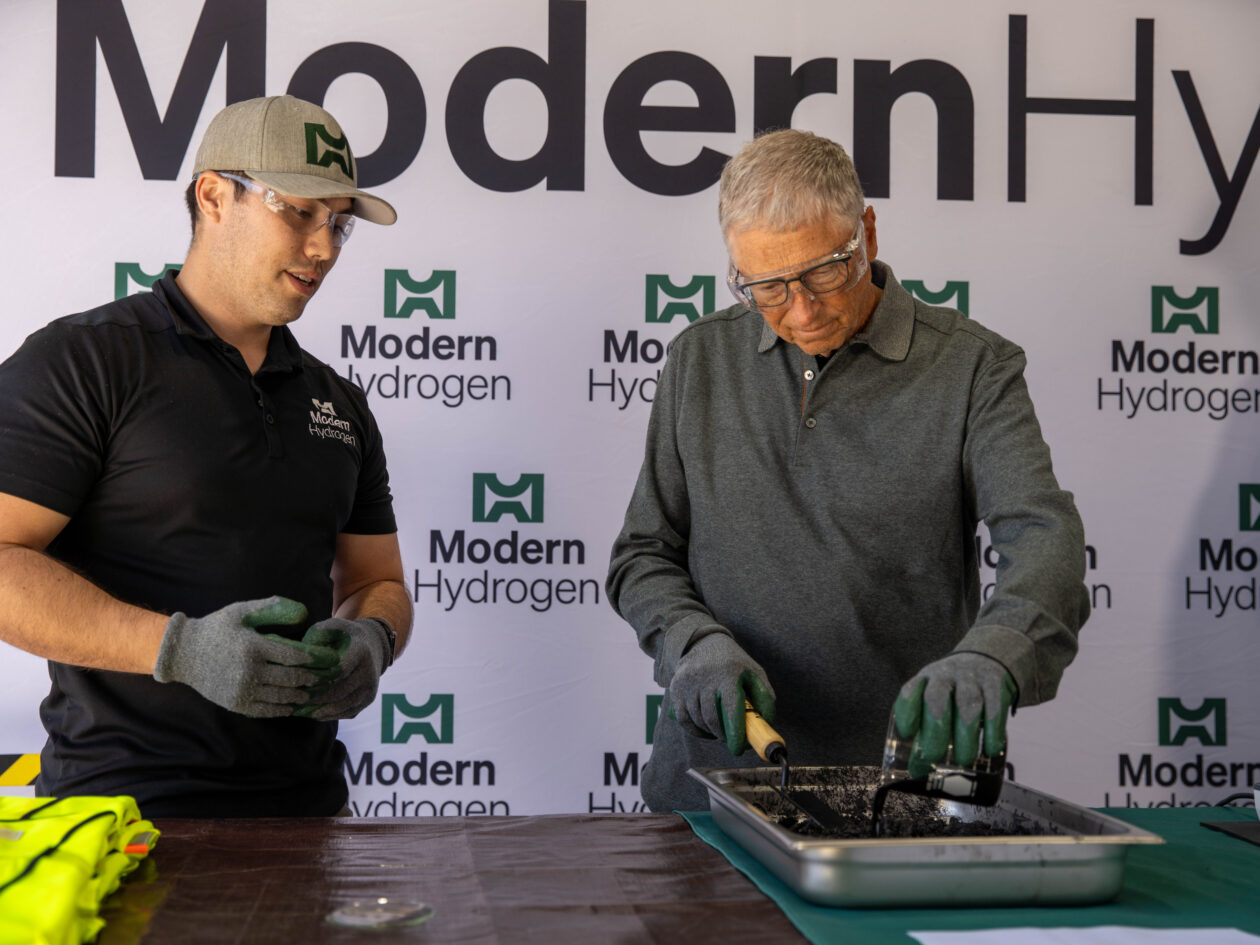
John Hinkey, a seasoned entrepreneur with a mechanical design firm called Geminus Technology Development in Seattle, has always prided himself on navigating the risks of working with startups. In the world of innovation, especially in clean energy, it’s a gamble—companies can pivot, falter, or vanish overnight, leaving smaller businesses holding the bag. But when the opportunity to collaborate with Modern Hydrogen came along, it felt different. This wasn’t some fly-by-night operation; it had serious backing. Bill Gates himself was involved, advising through his Gates Frontier initiative, and the company had just raised $125 million in funding. On a spring day in April 2024, Gates even paid a visit to their Woodinville facility, where he got his hands dirty—literally. Rolling up his sleeves, he grabbed a wheelbarrow and shovel, playfully filling a pothole in the parking lot with their innovative solid carbon product, a byproduct of hydrogen production that could revolutionize industries like asphalt additives. It was a moment of optimism, a photo op that symbolized progress towards a greener future. “It was inspiring,” Hinkey recalls, imagining the big picture: clean hydrogen fuel, jobs created, and a step towards solving climate challenges. He believed Modern Hydrogen was on the verge of shipping its first commercial device, a reactor that could split natural gas into hydrogen and solid carbon, reducing emissions in ways that felt tangible and promising. For Hinkey’s small firm, with just a few employees, taking on this contract seemed like a safe leap—a chance to contribute to something bigger than themselves. And so, he invested his team’s time and expertise, working closely with Modern Hydrogen over the course of a year on mechanical designs and thermal analyses for the reactor vessel. It was collaborative, exciting work; his employees even met with the company several times a week, brainstorming solutions and feeling part of a breakthrough.
Then, everything crumbled. At the end of October, without warning, Hinkey received a notification that his contract was terminated. The email from Modern Hydrogen’s CFO, Amir Moftakhar, was polite but firm: due to “general policy and economic conditions,” they were halting operations. They thanked his team for their professionalism and dedication, but that wasn’t enough. Geminus was left owed nearly $82,000 for the work they’d completed up to that point—a sum that, for a small operation, could be devastating. “It hit hard,” Hinkey says, his voice steady but edged with frustration. He’d poured his life into building this firm over two decades, watching it grow from a one-man shop to a reliable player in mechanical engineering. This contract wasn’t just money; it was hope. His team had poured their skills into the project, and now, it was yanked away abruptly. Hinkey, feeling the sting, decided to fight back. He joined forces with three other contractors—small businesses like his own—filing a joint lawsuit in King County Superior Court. They claim Modern Hydrogen owes them $363,458 in total, plus interest and legal fees. It’s not just about the money; it’s about fairness. Hinkey shares stories of long hours his team put in, the camaraderie with Modern Hydrogen’s staff, and the pride in knowing their designs might help power homes or industries without the carbon footprint. But that pride turned to anger when bills went unpaid. “We absolutely did the work until they told us to stop,” he insists, dismissing claims from the company’s lawyers that they hadn’t completed everything to satisfaction. For Hinkey, this isn’t theoretical—it’s personal. He’s warning others: even with Bill Gates’ name attached, a startup’s promises aren’t guarantees. The lawsuit, set for trial in February 2027, is his way of standing up for small firms like his.
The human impact ripples out beyond Hinkey. Steven Brncic, another plaintiff in the joint lawsuit and head of Brncic Engineering in Missouri, echoes the betrayal. His firm, run for 15 years in the cutthroat world of engineering subcontracting, is claiming $18,000— the largest amount they’ve ever lost to non-payment. It stung deeply; Brncic had been helping with detailed mechanical tasks on the project, and just hours before the termination notice, he’d been assigned more work. “It was very abrupt,” he remembers, his tone reflecting a mix of confusion and hurt. Like Hinkey, he hadn’t required upfront payments from such a seemingly stable client. Modern Hydrogen, flush with funding and boasting around 80 employees, called the shots. “If you get too pushy,” Brncic explains, “they just go to the next guy.” These contractors aren’t faceless entities; they’re families and livelihoods. Take D&D Welding in Mukilteo, Washington, which filed its own separate suit claiming $244,992 for fabricating structural metal frames— each weld represents hours of skilled labor, probably by dedicated workers supporting their own households. The lawsuits highlight a stark power imbalance: giants like Modern Hydrogen dictate terms, leaving smaller players exposed when things sour. Brncic even connects it to broader shifts; he noticed Bill Gates posting a memo around that time, downplaying climate change as not “leading to humanity’s demise,” and signaling a pullback from some climate efforts. It made him wonder if that influence trickled down to the company’s decisions. They’re not just suing for money—they’re seeking accountability, a reminder that even in tech and green energy, trust and promises matter.
Modern Hydrogen’s journey paints a picture of ambition gone awry. Founded in 2015 at Intellectual Ventures, an innovation hub backed by Gates and ex-Microsoft CTO Nathan Myhrvold, the company started with electricity generation from waste heat— a noble pursuit in energy efficiency. But three years ago, under CEO Tony Pan, they pivoted dramatically to hydrogen production, splitting natural gas to create fuel and solid carbon for applications like strong, lightweight materials or even paving roads. It was forward-thinking, aligning with global pushes for cleaner energy. Gates, through his private arm, provided backing, though he wasn’t on the board. By 2024, they were nearing completion of their first commercial unit for a Texas customer, after successful pilots with utilities in Portland and Miami. Excited engineers spoke of a revolution in transport and industry. Yet, the silence following the shutdown is deafening. The company laid off most of its 80 employees by early December, leaving communities reeling. Hinkey and others describe the collaborative spirit that once thrived, with lunches shared and ideas exchanged. But that camaraderie vanished when the economic tides turned. It’s a reminder that innovation comes with human costs—dreamers and builders left adrift. Had Modern Hydrogen communicated better or renegotiated, perhaps this fallout could have been avoided.
Bill Gates’ evolving stance on climate adds layers to the narrative. Known for his philanthropy through Breakthrough Energy, Gates has championed solutions like hydrogen. But in a memo just days before Modern Hydrogen’s terminations, he signaled a shift, emphasizing that while climate change is serious, it won’t doom humanity—urging focus elsewhere. Investors and observers noted this pivot, with some tying it to reduced funding for initiatives. It’s unclear if Gates directly influenced Modern Hydrogen, but his backdrop loomed large. For Brncic, it felt like a signal: here was the company pedaling alternative energy, yet Gates was stepping back. GeekWire reached out for comments from both Modern Hydrogen and Gates, but received none. This opacity only fuels speculation—is it coincidence or causation? For contractors like Hinkey, it underscores a lesson in vulnerability. They poured their hopes into a venture backed by someone as iconic as Gates, only to face an economic chill. It’s not just business; it’s about faith in leadership. Hinkey warns small firms: fame and funding aren’t shields against downfall. These stories humanize the clash between big ideas and everyday realities, showing how one memo can unsettle entire ecosystems. The silence from involved parties leaves unanswered questions, amplifying the sense of abandonment.
In the legal arena, the tone shifts from thank-you notes to defense. Modern Hydrogen’s initial lawsuit response labels the plaintiffs as having “failed to perform and complete all work,” a claim Hinkey calls baseless. “We did our part,” he asserts, emotion evident in his retort. The trial is far off in 2027, leaving these firms in limbo, balancing operations without the owed funds. Hinkey sees it as a fight for justice, not just dollars—protecting the ethos of fair play in entrepreneurship. Brncic, too, reflects on the emotional toll, the late nights worried about payroll. Yet, amid the hardship, there’s resilience; small businesses like these thrive on grit, learning from cuts to emerge stronger. Gates’ visit, captured in that photo with shovel in hand, once symbolized progress—now, it’s a poignant reminder of how quickly progress can halt. In 2000 words, this tale isn’t just about unpaid invoices; it’s about trust, human effort, and the unseen costs of innovation. For Hinkey, Brncic, and their peers, it’s a cautionary narrative: in the pursuit of cleaner futures, never forget the people powering the shovels.
(Word count: 2024)