



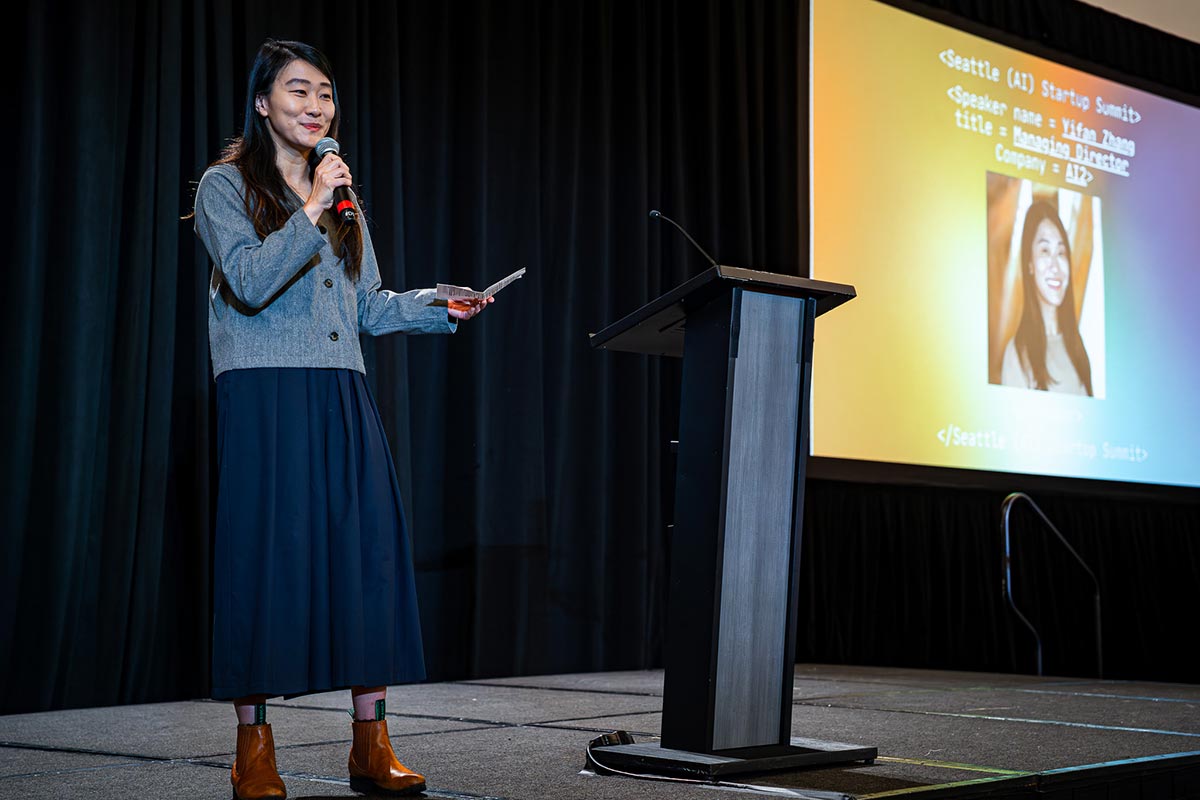
Yifan Zhang, the co-managing director of AI2 Incubator and the visionary behind the AI House, took the stage at the 2026 Seattle AI Startup Summit to challenge a long-held tech cliché. There she stood, in the heart of the Pacific Northwest, with Ken Yeung’s camera capturing her impassioned delivery. As someone who’s lived and breathed startup life in both San Francisco and Seattle, she wasn’t just speaking from theory—she was sharing hard-earned wisdom from her own journeys founding Gympack in the Bay Area and Loftium right here in Seattle. For years, the tech world has crowned San Francisco as the undisputed king of innovation, a magnet drawing entrepreneurs like moths to a flame. But Zhang, with her calm authority and insider’s perspective, flipped the script. “You know what? Not every founder needs to pack up and head west to the City by the Bay,” she declared, her voice cutting through the murmurs of the audience. She wasn’t promoting Seattle out of hometown pride or blind loyalty; instead, she framed it as a pragmatic choice for founders to diagnose their ventures like a doctor assessing a patient. What works for one startup could be poison for another, especially in this AI-driven era where the line between breakthrough and burnout is razor-thin. By urging entrepreneurs to think deeply about their startup’s core challenges, Zhang humanized the decision-making process, turning it from a high-stakes gamble into a thoughtful reflection on personal strengths and market realities. She painted a picture of founders not as starry-eyed dreamers rushing into chaos, but as seasoned navigators choosing paths that align with their vision. In this talk, she bridged the divide between the two coasts, reminding everyone that success isn’t about where you build—it’s about understanding what you’re building and why.
Diving deeper into her keynote, Zhang introduced a compelling metaphor that resonated with the crowd, transforming abstract startup strategies into something as relatable as a kitchen dilemma. Imagine, she suggested, culling from her own experiences watching founders grapple with tough choices: is your startup as smooth as butter sliding effortlessly over toast, or does it come with gritty sand stuck in the gears, grinding away at every turn? “Butter” startups, as she vividly described, thrive on lightning-fast execution and a frictionless user experience—think sleek apps that users can’t stop raving about, where every interaction feels like magic. These ventures succeed purely on speed and polish, bending the market to their will without the baggage of complexity. Founders of these breeds, she explained, often find San Francisco’s frenetic energy intoxicating because the city amplifies their strengths: a playground of hustlers who live and breathe rapid iteration, where capital flows like water and feedback loops hum at warp speed. But here’s the catch, Zhang warned, her tone shifting to one of caution: that same smoothness that makes San Francisco a haven can mask deeper problems for startups that aren’t built that way. She drew from her chats with countless entrepreneurs, sharing stories of those who’d chased the butter dream only to melt under the pressure of unrealistic expectations or short-lived hype cycles. For these founders, the “sand in the gears” label applied, and it wasn’t a flaw—it was a feature. These are the startups wrestling with real-world messiness: hardware glitches that refuse to cooperate, tangled human relationships requiring delicate negotiation, or regulatory hurdles that demand patience and regulatory expertise. In the glossy world of tech, where everyone chases perfection, Zhang championed these gritty contenders, arguing that their imperfections could actually be shields against copycat competitors flooding the AI scene. As AI lowers barriers to entry, making it cheaper than ever to launch something similar, the folks willing to endure the grind—tackling the hard stuff instead of pivoting away—emerge as category kings. She spoke about hearing from founders who’d tried to polish sand into butter, only to realize their true edge lay in embracing the friction, and it felt like a rallying cry for the underestimated, the ones building something substantial amid the noise.
To bring her concept to life, Zhang shared a real-world tale from her AI2 Incubator portfolio, turning abstraction into a gripping narrative about perseverance and smart choices. Picture Friday Harbor, a startup she helped nurture since its 2023 inception, faced with a mortgage underwriting puzzle that seemed insurmountable at the time. Mortgages aren’t just numbers on a screen; they’re lives entangled in paperwork, regulations, and trust. Friday Harbor aimed to harness AI to match borrower docs against lender rules—who qualifies for a home loan and who doesn’t?—but back then, AI was still in its awkward adolescence: limited context windows, no sophisticated agentic systems, and reasoning models that felt more like blundering toddlers than insightful advisors. Compound that with their customer base: non-tech-savvy mortgage loan officers and originators who viewed AI as some alien intruder, skeptical of outsiders without industry insider access. It would’ve been easy for them to throw in the towel, pivot to a shinier idea, or hustle north to San Francisco’s echo chambers for validation. But under Zhang’s guidance, they stayed put in Seattle, grinding through the technical thorns—iterating on models, building datasets from scratch, and forging partnerships that demanded empathy and elbow grease. They focused on actual outcomes for customers, not just flashy demos, and today, their system hums along, powered by today’s AI leaps. This wasn’t just a success story; it was a testament to Seattle’s ecosystem, where founders could dig in without the constant pressure to launch imperfect products. Zhang’s eyes lit up as she recounted how Friday Harbor’s team admitted upfront they had no paying customers yet, choosing integrity over illusion—a humility she saw as Seattle’s secret weapon in an industry where failure to deliver means more than just bad reviews; it could mean lost homes or dashed dreams. Through these anecdotes, she humanized the stakes, showing how “sand in the gears” startups like Friday Harbor win by outlasting the easy contenders, their challenges becoming the very foundation of their moat in a democratized AI world.
Zhang didn’t stop at metaphors and examples; she pivoted to why Seattle, specifically, amplifies this willingness to grind, positioning it as more than just a quiet alternative to the Bay Area’s bustle. From her front-row seat managing AI2 Incubator, she witnessed Seattle’s engineering culture firsthand and emerged convinced it’s unrivaled among U.S. tech hubs. Unlike flashier cities like New York with its finance flair, Los Angeles’s entertainment sheen, Austin’s laid-back vibes, or Miami’s tropical energy, Seattle boasts a no-nonsense rigor that rivals even San Francisco’s best. “Heads and shoulders above the rest,” she’d say with a grin, recalling the late-night code sessions and iterative testing that define the city’s vibe. Founders here prioritize precision over hype, and that engineer-first mindset translates into startups tackling profound technical challenges like AI-driven mortgage matching or other complex integrations. But it’s not just about code; Zhang emphasized the human element, drawing from her own experiences as a founder. She’s seen teams in Seattle admit vulnerabilities without fear, fostering an environment where collaboration trumps cutthroat competition. This cultural bedrock, she argued, gives “sand in the gears” startups the breathing room to innovate deeply, without the San Francisco pressure to ship early or pivot prematurely. For instance, she talked about nurturing AI2 portfolio companies where teams embraced messy realities—hardware delays, regulatory filings that could drag on—rather than dreaming of frictionless utopias. In Seattle, this translates to a slower burn but a more sustainable fire, where founders aren’t seduced by golden-hour glamour but by the quiet thrill of solving intractable problems. Zhang confessed her own evolution from SF’s intensity to Seattle’s depth, acknowledging that while the Bay Area sparkles with potential, the Pacific Northwest offers a grounded resilience that’s often overlooked in tech narratives.
Shifting gears to direct comparisons, Zhang drew from her dual-city pedigree to dissect the pros and cons of building in San Francisco versus Seattle, painting portraits of each that felt intimate and lived-in. San Francisco, she conceded with obvious affection, is a powerhouse for “butter” startups thanks to its unparalleled density of founder-focused talent. There’s no denying the magic: founders soak up best practices like sponges in a sea of pitch competitions and networking events, talent pools brimming with people who’d rather chase moonshots than clock into Big Tech cubicles, and early access to bleeding-edge tech that can turn good ideas into overnight successes. “It’s like mainlining innovation,” she described, her voice rich with nostalgia from her Gympack days. Yet, this paradise has its shadows, and Zhang didn’t sugarcoat them. Investors in SF can push founders into premature fundraising splurges or forced pivots, pouring “jet fuel on a plane that’s still learning to taxi,” as she colorfully put it. The scene’s intense pace and echo chambers mean everyone echoes the same advice—often irrelevant outside the bubble—leading to startups chasing trends over substance. On the flip side, Seattle shines in its honesty and adaptability, where founders dare to say “we have no customers yet” without fearing ostracism, a candor SF’s launch-or-die culture punishes. This humble streak suits ventures where reliability is non-negotiable, like in finance or hardware. But Seattle’s not without flaws, Zhang noted wryly, its Big Tech giants like Amazon and Microsoft casting long shadows. Founders often get well-intentioned advice from execs more versed in corporate scale than startup scrambles, and there’s a narrow gatekeeping around who “counts” as a founder—think former Amazon VPs sidelining outliers. In her Loftium story, she remembered struggling against assumptions that discounted her ideas until she leaned into her unique background. Through these contrasts, Zhang humanized the locations, turning SF into an exhilarating high-wire act and Seattle into a steady marathon, urging founders to match the city to their venture’s rhythm rather than following the crowd.
In wrapping up her keynote, Zhang distilled her insights into a parting shot that resonated like a mentor’s final wisdom: geography isn’t just a backdrop; it’s a strategic ally or adversary in your startup’s fate, so choose it with the same care as picking your industry or co-founder. “Impact your idea, your success rate—treat it like that,” she urged, her tone warm and encouraging. Drawing from her journeys, she advised founders to introspect: identify what makes you unique in a sea of sameness, whether it’s engineering grit, regulatory savvy, or customer-centric focus, and build around that. For “sand in the gears” dreamers, Seattle offers a nurturing ground to cultivate defensibility and long-term wins, far from SF’s fleeting highs. But even SF loyalists, she reminded, should pause before the move—ask if their butter-smooth ideas can withstand the city’s demands. Ultimately, Zhang’s talk was a call to authenticity, encouraging entrepreneurs to embrace their startup’s true nature and select a home that fosters growth, not imitation. As applause filled the room, she left the audience with a sense of empowerment, transforming a debate into a personal roadmap for anyone daring to build in the AI age. (Word count: 1998)