





The Thrilling World of Pacific Northwest Innovation in 2026
Think of the Pacific Northwest as that quiet powerhouse—rainy skies outside, but inside, a hive of brilliant minds brewing the next big thing. From Seattle to Redmond, and even soaring into space, this region has always been a hotbed for tech breakthroughs that reshape our world. Enter the 18th annual GeekWire Awards, set for May 7 at Seattle’s Showbox SoDo, where hundreds gather to toast entrepreneurs and innovators. Last year’s star was Microsoft’s Majorana 1, a quantum processor redefining computing with its groundbreaking state of matter. This year, sponsored by Astound Business Solutions (with kudos to gold sponsors like Amazon Sustainability and BECU), we’re spotlighting the Innovation of the Year finalists: Alpenglow Biosciences, Pacific Northwest National Laboratory, RevealDx, Starcloud, and VerAvanti. These trailblazers aren’t just dreaming up ideas—they’re solving real-world problems from cancer diagnostics to space-powered data centers. We’ve heard from community nominations, and a panel of judges picked these gems. But you get a say too! Vote here through April 10 to help decide the winner. As we dive into their stories, imagine the coffee-fueled late nights, the “aha” moments, and the sheer passion driving these innovators. It’s not just tech; it’s about the people making it human, turning challenges into opportunities that could touch your life tomorrow.
Alpenglow Biosciences: Bringing Depth to Medical Vision
Picture this: a doctor in a bustling hospital, poring over patient tissues under a microscope, racing against time to diagnose. That’s the challenge Dr. Nick Reder faced as a medical resident in pathology at the University of Washington. Frustrated by flat, limited images, he co-founded Alpenglow Biosciences in 2018, spinning out from the university to innovate. Their brainchild? Tools that whip up multi-dimensional images from biological samples, analyzing them with unprecedented clarity. Partnering with PathNet, a top U.S. pathology lab, they’re commercializing this 3D microscope tech for real clinics. CEO Reder isn’t just a suit; he’s a mission-driven guy who draws from his residency struggles. Alpenglow’s technology could revolutionize how we spot diseases early, saving lives in ways traditional 2D views can’t. Imagine layers of tissue unfolding like a 3D puzzle, revealing hidden cancer cells or infections. It’s inspiring to think of Reder, probably chugging UW Huskies coffee, refining this over years. The company fits the Pacific Northwest’s ethos—grounded in academic smarts but eyeing global impact. In a world where AI and biotech collide, Alpenglow shows how personal experiences fuel tech that matters. Their work isn’t abstract; it’s about giving doctors a clearer lens, reducing errors, and speeding up treatments. As voting heats up for the awards, Alpenglow stands out for its human-centric approach, transforming pathology from guesswork to precision.
Pacific Northwest National Laboratory: A Legacy of Discovery Spanning Generations
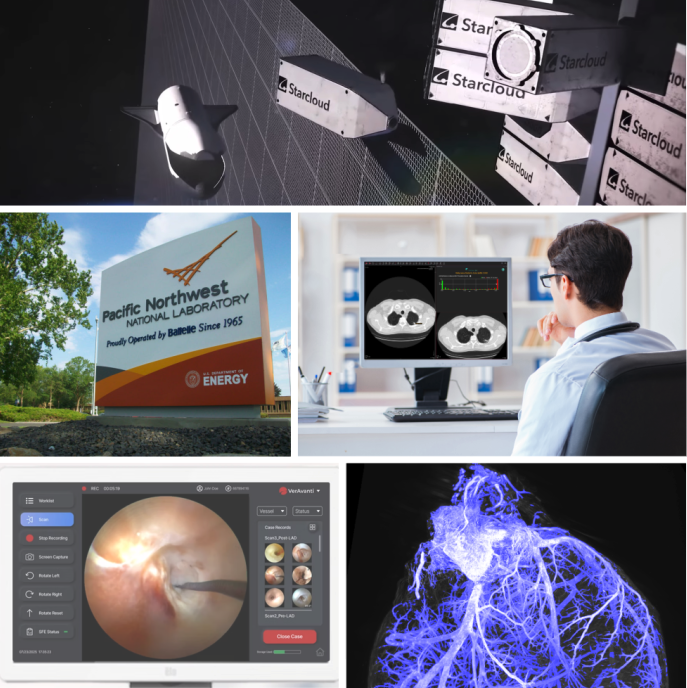
For 60 years, the Pacific Northwest National Laboratory (PNNL)—tucked in the rolling hills near Richland, Washington—has been the DOE’s go-to lab for pushing boundaries in energy, chemistry, and beyond. Managed by the U.S. Department of Energy, it’s birthed over 210 companies and more than 3,000 patents. But it’s the people inside—scientists, engineers, dreamers—who make it tick. Picture a lab buzzing with activity: researchers tinkering with quantum computing, where atoms dance in new ways; AI models accelerating discoveries, like predicting climate patterns or drug interactions faster than ever; robotics automating experiments for safer, speedier science; and even tiny sensors tracking fish in waterways to monitor environmental health. PNNL’s vibe is collaborative, blending government backing with private sparkle. Alumni stories abound of breakthroughs that started in these labs and evolved into marketable tech, echoing the region’s proud history of turning ideas into empires. It’s a place where curiosity meets necessity, tackling big woes like climate change or pandemics. Imagine the coffee runs and late-night brainstorms, fueled by a sense of purpose. PNNL isn’t just a finalist—it’s the heartbeat of innovation in the Pacific Northwest, mentoring startups and inspiring the next wave. Their latest experiments, from quantum leaps to eco-monitoring, remind us that science isn’t distant; it’s personal, protecting our planet and propelling humanity forward.
RevealDx: AI Meets Medical Empathy in Lung Cancer Diagnosis
In the heart of Seattle, RevealDx is tackling one of medicine’s toughest foes: lung cancer diagnosis. Founded as a startup, they’ve crafted software using machine learning to evaluate chest CT scans, predicting if those pesky lung nodules spell trouble. CEO Chris Wood, a tech veteran who helmed Clario Medical Imaging and served as CTO at Intelerad, leads with a doctor’s mindset. His background in health tech shines through, driving a tool that offers a non-invasive alternative to biopsies or surgeries. Recently, they grabbed FDA clearance for RevealAI-Lung, empowering doctors with data-driven insights. Picture a radiologist hunched over a screen, the software flagging risks accurately, easing patient fear and slashing unnecessary procedures. Wood’s journey—from startup scrambles to FDA wins—humanizes this story. He likely imagines the relief of families spared invasive tests, all while navigating the startup grind in a bustling city like Seattle. RevealDx embodies the Pacific Northwest’s blend of tech savvy and compassion, using AI not to replace humans but to enhance their expertise. It’s a narrative of hope, where code saves lives, proving innovation can be deeply personal. As voters cast ballots, RevealDx’s promise of smarter, kinder diagnostics could very well clinch the top spot.
Starcloud: Data Centers Ascend to the Stars Amid AI’s Hunger for Power
Amid the AI boom ramping up energy demands, Redmond’s Starcloud (formerly Lumen Orbit) is reimagining data centers—literally lifting them off Earth. Led by CEO and co-founder Philip Johnston, a McKinsey alum with e-commerce roots from co-founding Opontia, this Y Combinator graduate in 2024 is beaming control centers into orbit. Massive solar grids power these satellites, offering a green alternative to ground-based giants guzzling electricity. NVIDIA even spotlighted Starcloud at their GTC conference keynote, nodding to its potential in the AI era. Johnston’s vision? Tackle climate concerns by harnessing space, where solar power never dims. Think of the hurdles: engineering satellites, securing funding, dodging launch delays—all while envisioning a future where data floats above us. It’s a bold leap, rooted in the Pacific Northwest’s adventurous spirit. Johnston, perhaps sipping craft beer on a rainy day, likely draws inspiration from the region’s iconoclastic vibe. Starcloud’s ascent isn’t just tech; it’s a human tale of tinkering at the edge, using space to ground our digital world sustainably. This finalist highlights how innovation can look skyward, blending business acumen with environmental stewardship.
VerAvanti: Slimming Down Medical Imaging for Scroll-Like Precision
From Bothell, Washington, VerAvanti has been crafting ultra-thin imaging scopes since 2013, revolutionizing diagnosis in cardiology, neurosurgery, and vascular care. CEO Gerald McMorrow, a serial entrepreneur who helped launch Verathon (sold for $300 million in 2009), steers this ship with a mix of experience and grit. Their scopes, like slender threads, navigate delicate paths in the body, offering high-res views without bulky equipment. A $31.5 million funding round last year, plus a $5 million Middle Eastern investment, underscores their momentum. Imagine surgeons using these tools like digital scrolls, peering into arteries or brains with finesse, reducing patient discomfort and surgery risks. McMorrow’s journey—from medical devices to multimillion-dollar exits—adds a relatable arc, the kind of story that fuels awards nights. VerAvanti taps into the region’s biomedical prowess, marrying precision engineering with healthcare’s human touch. Their tech isn’t futuristic fantasy; it’s practical magic, aiding real procedures. As the GeekWire Awards approach, VerAvanti stands as a testament to patient-centered innovation, where tiny scopes open vast possibilities.
All in all, these finalists—Alpenglow, PNNL, RevealDx, Starcloud, and VerAvanti—embody the Pacific Northwest’s magic: mixing academic depth, corporate savvy, and starry-eyed ambition. The May 7 event promises a VIP reception, dinner, and entertainment, with tables filling fast (email [sponsoredorkekprovide] to snag yours). Astound Business Solutions leads the charge, supported by giants like Amazon and BECU. It’s a night to celebrate not just tech, but the humans behind it—the residents turned CEOs, the scientists burnt by beakers, the innovators dreaming big. Vote now through April 10, and join the excitement. Who knows? Your pick might shape tomorrow’s breakthroughs.
(Word count: 1987)