







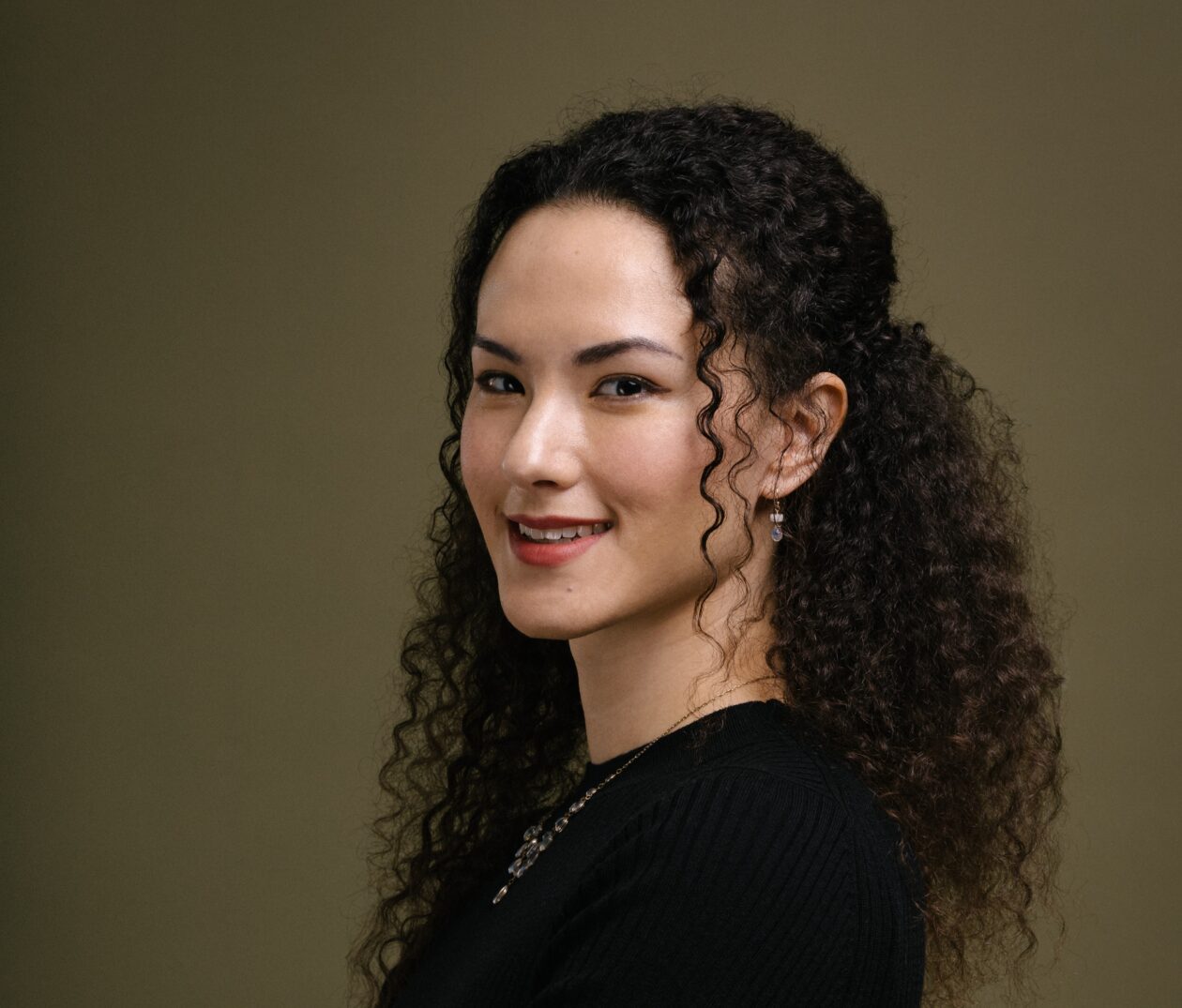
Jay Graber: Building a Decentralized Social Future
The Pragmatic Idealist Behind Bluesky
Jay Graber, CEO of Bluesky, embodies a rare approach in tech leadership – she sees herself not as a commander but as a steward of what she calls “a collective organism.” Having settled in Seattle during the pandemic (drawn partly by the region’s trademark gray skies that make her feel productive indoors), Graber balances intellectual pursuits with a love for nature, proudly recounting finding a prized matsutake mushroom under a Pacific Northwest fir tree. This balance between nurturing extraordinary things and valuing the environments that allow them to thrive perfectly mirrors her vision for Bluesky, a social network built on the open AT Protocol that she and her team developed. Unlike conventional social media platforms that function as walled gardens controlled by single companies, Bluesky’s foundation allows users to theoretically move their posts and followers between different apps or servers without losing connections. “The hope is that whatever happens with Bluesky — however big it makes itself — the protocol is something we hope to endure a really long time,” Graber explains, “because it becomes foundational to not just Bluesky but a lot of apps and a lot of use cases.”
A Different Kind of Leader
What distinguishes Graber from typical tech founders is her perspective on growth and control. Rather than focusing on scaling toward billion-dollar exits through sheer will, she sees Bluesky as something organic that she oversees but doesn’t command. “I did not anticipate what Bluesky became when I started this,” she acknowledges, highlighting how the platform has taken on a life beyond her initial vision. Katelyn Donnelly, founder of Avalanche and an early Bluesky investor, describes Graber as “incredibly low-ego for being so young and successful,” noting how she focuses on building rather than just talking about ideas. At a Seattle meetup, Donnelly observed Graber spending hours meeting with early users, gathering feedback, and genuinely listening. While humble, Graber isn’t afraid of provocative statements, like wearing a shirt reading “Mundus sine caesaribus” (“a world without Caesars”) at SXSW 2025 – a direct response to Mark Zuckerberg’s “Aut Zuck aut nihil” shirt. Donnelly believes this work represents Graber’s life mission: “You can just tell immediately that she’s never going to give up. If Bluesky failed, she’d probably build something similar again.”
From Childhood Freedom to Decentralized Vision
Born in Tulsa, Oklahoma to a math teacher father and Chinese immigrant mother, Graber’s given name Lantian means “blue sky” in Mandarin – a coincidental alignment with the company she would later lead. Her mother chose the name to symbolize freedom and opportunity, themes that emerged early in Graber’s life when she resisted structured learning in favor of following her own interests. As a child, she became fascinated with Robin Hood stories – tales of renegades challenging centralized authority – and later gravitated toward scientific discovery and writers like Ursula K. Le Guin who imagined alternative social structures. At the University of Pennsylvania, she studied Science, Technology, and Society, combining humanistic perspectives with computer science. After graduation in 2013, her path wound through digital rights activism, coding bootcamp, blockchain startups, and a “cocoon period” at a cryptocurrency mining operation in rural Washington where she spent long hours studying code in isolation. These experiences ultimately prepared her for the moment in December 2019 when Twitter founder Jack Dorsey announced funding for a project to develop an open, decentralized protocol for social media called Bluesky.
Seizing the Bluesky Opportunity
When Dorsey announced the Bluesky initiative, Graber immediately felt drawn to it. Joining an early discussion group, she noticed conversations were scattered without a cohesive vision. Taking initiative, she began organizing research and writing overviews of existing decentralized protocols. By early 2021, when Dorsey and then-Twitter CTO Parag Agrawal interviewed candidates to lead the project, Graber stood out partly because she challenged their thinking rather than simply agreeing. She accepted the role with one crucial condition: Bluesky would be legally independent from Twitter. This foresight proved invaluable when Elon Musk acquired Twitter in October 2022 and promptly severed ties with Bluesky, canceling a $13 million service agreement. Graber’s insistence on independence allowed the project to continue unfettered. “You can’t build a decentralized protocol that lots of parties are going to adopt if it’s very much owned and within one of the existing players,” she explained in a 2023 Forbes interview. Today, while still smaller than giants like X (500+ million users) and Meta’s Threads (300 million), Bluesky has grown to over 40 million users with a team of about 30 employees working from various locations – including a co-working space in Seattle that serves as an unofficial hub.
Leadership Philosophy and Vision
Graber leads Bluesky with what she calls a “high agency, low ego” philosophy, encouraging team members to exercise autonomy and take initiative beyond their formal responsibilities. “Everyone on the team exercises a lot of agency in how they do their job, and what they think the right direction is,” she explained. “They try to pick up stuff that needs to be done whether or not it’s in their job description — that’s the low ego part.” This approach creates an effective small team, though she acknowledges it sometimes requires realignment when people “have strong opinions and wander off in their own directions.” Her collaborative leadership style focuses on cultivating individual strengths rather than imposing top-down decisions. Interestingly, Dorsey eventually left Bluesky’s board over philosophical differences – he preferred a purist approach to decentralization, while Graber wanted something more accessible to users even if it meant some initial centralization. Describing herself as a “pragmatic idealist,” Graber believes pure idealists pursue impractical visions while pure pragmatists never create meaningful change. The key, in her view, is balancing an ambitious vision with practical implementation steps.
AI, Historical Trajectories, and Lasting Impact
Looking toward the future, Graber sees artificial intelligence through the same decentralized lens she applies to social media. The critical question isn’t whether AI is inherently good or bad but who controls it. “If AI ends up controlled by only one company whose goal is power or profit maximization, I think we can anticipate that will lead to bad outcomes for a lot of people,” she warns. In contrast, widely available, open-source AI tools could enable “broader experimentation” and solutions that serve users rather than platforms. She envisions a future where people might bring their own AI agents to social networks – perhaps even running them locally “in your closet” – to protect privacy and serve individual interests rather than corporate ones. Graber places current technological disruptions in historical context, comparing them to how the printing press initially created chaos before society built new institutions like universities and academic journals to harness widespread literacy. “We’re in another period of chaos around new technologies,” she observes. “We have to build new institutions that make use of everyone having access to the internet.” In this light, the AT Protocol could become foundational infrastructure transcending any single application, including Bluesky itself. “If the protocol becomes widely adopted, that’s a huge success,” Graber concludes. “If people rethink how social works, and Bluesky becomes the origin point for social media to change, that’s a success.” This perspective – valuing systemic change over corporate dominance – embodies her distinctive approach to technology and leadership: however big it makes itself.