


Blue Origin Makes History with First Wheelchair User in Space
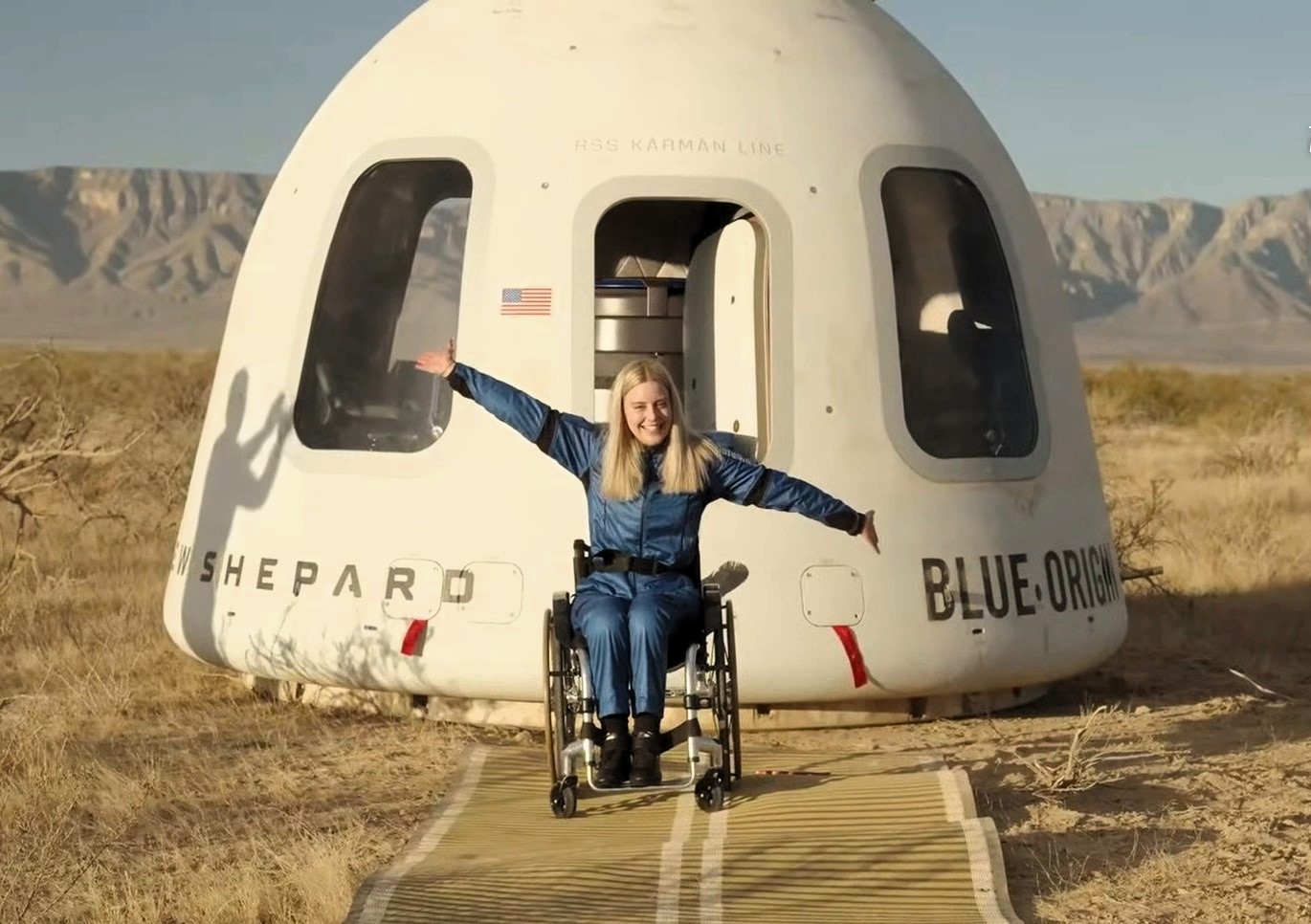
In a groundbreaking moment for space accessibility, Jeff Bezos’ Blue Origin successfully launched the first wheelchair user into space on December 20, 2025. Michaela “Michi” Benthaus, a 33-year-old German-born aerospace and mechatronics engineer at the European Space Agency, described the suborbital journey as “the coolest experience.” Benthaus, who sustained a spinal cord injury in a 2018 mountain biking accident, had dreamed of becoming an astronaut since she was 10 years old. After her accident, she initially believed her space aspirations were over, saying it “was never going to happen.” However, her participation in a zero-G flight through AstroAccess in 2022 and her role as commander of an analog space mission at Poland’s Lunares Research Station last year paved the way for this historic achievement. Upon returning from her journey, Benthaus shared an inspirational message: “You should never give up on your dreams.” The mission, designated NS-37, represents a significant milestone in making space more inclusive and accessible to people of all abilities.
Blue Origin’s New Shepard rocket lifted off from Launch Site One in West Texas at 8:15 a.m. CT following a one-day delay due to unspecified issues with pre-flight checks. This marked the 37th New Shepard mission and the 16th to carry human passengers beyond the Kármán line—the internationally recognized boundary of space at 100 kilometers (62 miles) altitude. With this flight, Blue Origin has now carried 86 individuals to space, including founder Jeff Bezos himself, with six people having flown multiple times. The company has been working for years to improve accessibility at its launch facility, adding features like an elevator to the seven-story launch tower. These efforts were spearheaded by an internal business resource group named “New Hawking,” honoring the late physicist Stephen Hawking, who used a wheelchair. Blue Origin’s CEO Dave Limp celebrated the mission as “another step toward making spaceflight accessible for everyone,” while Phil Joyce, Senior Vice President for the New Shepard program, emphasized that “space is for everyone.”
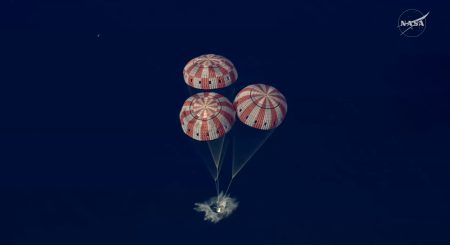
The flight itself required minimal modifications to the New Shepard crew capsule. Instead, Blue Origin focused on ground system improvements, including a bench that helped Benthaus enter and exit the capsule with assistance. During the 10-minute suborbital journey, Benthaus and her five crewmates reached an altitude of 105.5 kilometers (65.6 miles), experiencing several minutes of weightlessness while witnessing Earth’s curvature against the blackness of space. “I tried to turn upside-down,” Benthaus shared afterward, clearly relishing the zero-gravity environment. The mission concluded with the booster making an autonomous landing near the launch pad, followed by a parachute-assisted touchdown of the crew capsule in the West Texas desert. The successful mission demonstrates that with thoughtful accommodations and planning, the barriers to space travel can be overcome, opening the frontier to people with a wider range of physical abilities.
Joining Benthaus on this landmark flight were five accomplished individuals from various backgrounds. Hans Koenigsmann, a German-American aerospace engineer and early SpaceX team member, played a pivotal role in arranging Benthaus’ flight and occasionally assisted her with mobility. After landing, Koenigsmann remarked that the experience was “actually more intense than I thought.” The crew also included Joey Hyde, a physicist and recently retired quantitative investor from the hedge fund Citadel; Neal Milch, a business executive who now chairs the Jackson Laboratory Board of Trustees; Adonis Pouroulis, an entrepreneur with extensive experience in the natural resources sector; and Jason Stansell, a computer scientist and self-described “space nerd” from West Texas. This diverse group represents the democratization of space access that companies like Blue Origin are striving to achieve, moving beyond the era when astronauts were exclusively military test pilots or scientific specialists.
Beyond its human passengers, the NS-37 mission carried more than 20,000 postcards submitted by students and others through Blue Origin’s nonprofit educational foundation, Club for the Future. This initiative, with featured partners including UNIQLO, Arm & Hammer Baking Soda Rocket Day, and Give Kids the World Village, continues the company’s commitment to inspiring the next generation of space explorers and innovators. While Blue Origin typically doesn’t disclose the cost of New Shepard tickets, which can range from complementary flights for invited guests to the $28 million paid by crypto entrepreneur Justin Sun in a widely publicized auction, the emphasis on this flight was clearly on its historic significance rather than its commercial aspects. The mission adds to Blue Origin’s growing list of space tourism milestones, including flying the world’s oldest spaceflier (90-year-old former test pilot Ed Dwight), the youngest (then-18-year-old Oliver Daemen), and the first married couple to reach space together on a commercial spaceship (Marc and Sharon Hagle).
The successful flight of Michaela Benthaus garnered widespread recognition, including congratulations from NASA’s new administrator, Jared Isaacman, who specifically acknowledged Koenigsmann’s contributions to the space industry and his long-overdue journey to space himself. This mission represents more than just another commercial spaceflight—it signals a fundamental shift in our conception of who can be an astronaut and experience the perspective-altering views of Earth from space. As Blue Origin’s Kent, Washington-based team continues to refine their approach to accessible spaceflight, the company is helping to ensure that humanity’s expansion into the cosmos will be more inclusive than our explorations of previous frontiers. Benthaus’ historic journey serves as both proof that physical disabilities need not limit one’s ability to reach space and inspiration for others facing similar challenges to pursue their seemingly impossible dreams, whether in space or on Earth. As space tourism and commercial spaceflight continue to evolve, her flight will likely be remembered as a crucial turning point in making the final frontier accessible to all of humanity.