



From Suborbital Thrills to Lunar Dreams: Blue Origin’s Bold Pivot
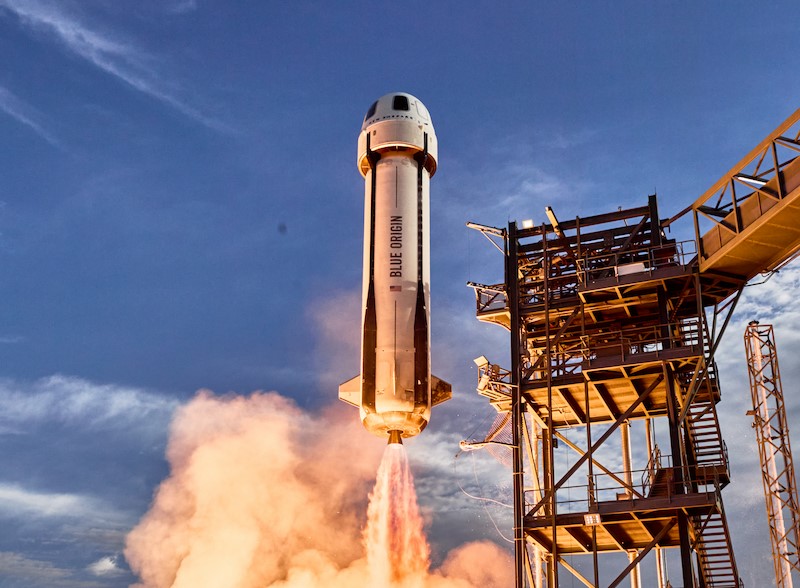
Imagine standing on the edge of the vast American desert in West Texas, the sun beating down as a sleek rocket named New Shepard rumbles to life. It’s April, and Jeff Bezos himself is aboard, part of a crew ready to taste the weightlessness of space. Since its maiden flight in 2015, this reusable rocket has symbolized human ingenuity, ferrying not just the ultra-wealthy but researchers and dreamers alike to the brink of the stars. A total of 38 flights have painted the sky with white plumes of exhaust, sending 98 souls—including Bezos—into brief suborbital journeys that last mere minutes but feel eternal. Among them were celebrities like William Shatner, whose emotional recounting of Earth’s fragility after his trip in 2021 captured the hearts of millions worldwide. New Shepard wasn’t just a machine; it was a bridge to wonder, democratizing access to space in ways that once belonged to nations alone. It launched over 200 payloads for NASA, universities, and private clients, advancing everything from cancer research to climate studies. Yet, as the company now pauses these flights for at least two years, it’s like hitting the pause button on a beloved family vacation to embark on a grander expedition. The reason? Blue Origin, headquartered in a nondescript office park in Kent, Washington, is recalibrating its sights toward something even more audacious: landing astronauts on the Moon. This shift isn’t random; it’s a strategic realignment with the United States’ overarching goals for space exploration, echoing the ambitions that once propelled the Apollo program. For a company built by a visionary like Bezos—who left his CEO role at Amazon to chase these higher horizons—it feels like a logical evolution, transforming thrill rides into tools for humanity’s next great leap.
The announcement came on a crisp Friday in January 2026, delivered through a carefully worded statement that mingled pride with purpose. “We’re aligning our efforts with the national imperative to return humans to the Moon and establish a sustainable presence there,” the company declared. New Shepard, the darling of suborbital flights, was setting for a hiatus, its reusable stages grounded for upgrades or storage. This decision comes amid a backdrop of shifting Space Age priorities. With the International Space Station’s lifespan winding down and private enterprise taking center stage, companies are no longer content with mere orbital dances. Blue Origin’s craftsmen and engineers, many of whom cut their teeth on Amazon’s endless warehouses before pivoting to rocket science, see this as a crucible moment. It’s about more than profits or prestige; it’s about contributing to a legacy that transcends borders and eras. The U.S. government, through NASA and its Artemis program, has made lunar renewal a centerpiece of its strategy, aiming for boots on the Moon by the end of this decade. Blue Origin isn’t just complying—it’s leading the charge from the private sector. But pausing New Shepard isn’t without sacrifice. The rocket boasts a sterling safety record, with all flights successful and many payloads delivering groundbreaking data. Customers lined up, from eager tourists shelling out millions for the experience to scientific partners relying on its precise launches. Delaying means pushing back contracts, renegotiating timelines, and weathering the uncertainty. Yet, for Blue Origin, the Moon’s pull is irresistible. Like a parent choosing to invest in a child’s future education over immediate pleasures, the company is betting on a brighter, more enduring horizon. This pivot underscores a maturing industry where one-off ventures give way to collaborative, long-term missions that could ignite global inspiration.
Diving deeper into New Shepard’s storied past reveals a tapestry of human endeavor that’s as much about stories as it is about science. Take, for instance, the eclectic mix of passengers who’ve graced its capsule. There were educators turning lessons into reality, artists sketching cosmic vistas, and athletes testing limits in zero-gravity flips. Each flight told a tale: a young student payload testing crop genetics for sustainable farming, or a charity mission carrying experiments on Alzheimer’s in search of breakthroughs. The rocket’s design—its uncrewed booster landing back on Earth via thrusters and parachute—was a feat of engineering that saved millions compared to disposable counterparts. Bezos, ever the showman, used his flight in 2021 to underscore the fragility of our planet, gazing down from 70 miles up and sharing how “the contrast between the blue oceans and the arid land makes you realize what a small oasis we have.” His successor as Blue Origin’s boss, Bob Smith, carries that torch, but with a lunar focus. The transition feels personal, too—an acknowledgment that while suborbital jaunts captured public imagination, the real frontier lies in sustained exploration. Pausing the program allows resources to flow like blood to new veins, redirecting talent from desert test sites to facilities engineering lunar marvels. Offices in Seattle hum with the energy of recruitment and training, as physicists, metallurgists, and software wizards collaborate. It’s a human tapestry of ambition, where engineers who’d once meticulously check New Shepard’s parachute systems now pore over schematics for cryogenic fuels that can survive the Moon’s extremes. This redirection isn’t just corporate strategy; it’s a nod to the public’s hunger for progress, informed by films like “The Martian” and books pushing boundaries, making space not a distant dream but a tangible next step.
As Blue Origin shifts gears, the spotlight lands squarely on the Moon, that silver orb that’s beckoned humanity for millennia. The company’s commitment to lunar landings symbolizes a renaissance in spacefaring, moving beyond Earth’s orbit to plant flags among craters and regoliths. Leading this charge is the Blue Moon lunar lander, a behemoth in development since 2019, evolved from the HLS (Human Landing System) concepts bid on under NASA’s contracts. Unlike New Shepard’s quick hops, Blue Moon is built for endurance—a vehicle capable of soft landings on the lunar surface, carrying cargo and eventually astronauts. It’s modular, with versions for uncrewed deliveries and human-rated excursions, ensuring it can adapt to the Artemis program’s phased approach. Collaborations with Lockheed Martin and other partners add layers of expertise, blending Blue Origin’s ethos of reusability with NASA’s rigorous safety standards. The Artemis II mission, slated for later this decade, will orbit the Moon but not land, while Artemis III aims for the South Pole’s water-rich deposits, a spot where future bases could thrive. Blue Origin’s lander is pivotal here, designed to ferry up to four explorers to the surface and back. Engineers describe it as a “lego-like” system, stacking propellant tanks and habitat modules for efficiency. But beyond the nuts and bolts, think of the human element: astronauts like Victor Glover, slated for Artemis II, training in simulators that mimic lunar landscapes, or the families at home awaiting their return. This isn’t just about machines; it’s about reigniting the spirit of exploration that once united a nation during Apollo. By pausing suborbital escapades, Blue Origin ensures its slice of the cosmic pie contributes to this grand narrative, fostering international partnerships and inspiring the next generation of scientists.
For Blue Origin, this lunar pivot aligns seamlessly with NASA’s Artemis vision, a program born from the ashes of Apollo-era dreams deferred. Founded amid the 2010s space surge, Blue Origin emerged as a counterpoint to SpaceX’s aggressive launches, emphasizing methodical, sustainable progress. Under Bezos’s guiding vision—often encapsulated in his visions of giant space cylinders for terran resorts—it was easy to dismiss the company as a billionaire’s toy. Yet, New Shepard proved doubters wrong, accumulating accolades and paving the way for Blue Origin as a trusted ally. Now, Artemis positions them as cornerstone players, with billions in contracts fueling research. The program’s goals extend beyond landings: establishing a Gateway space station in lunar orbit, creating permanent outposts, and enabling resource extraction to sustain deeper space travel—like Mars expeditions. Blue Origin’s Blue Moon isn’t an isolated effort; it’s part of a broader ecosystem, including propulsion from Aerojet Rocketdyne and avionics from European firms. This collaboration feels deeply human, a tapestry of global engineers pooling knowledge lost since the Cold War. Imagine the thrill of loading the lander with instruments from Japanese or Indian universities, or the emotional weight of carrying mementos from Earth, like olive seeds for lunar agriculture. Pausing New Shepard frees up minds and materials, allowing prototypes to iterate faster in vacuum chambers and testing grounds. It’s a calculated risk, but one that mirrors the gambles of pioneers, transforming personal achievements into collective triumphs. As Artemis unfolds, Blue Origin’s role could elevate space from niche endeavor to everyday aspiration, much like the internet did for communication.
In the end, Blue Origin’s pause on New Shepard heralds a new chapter in human spaceflight, one where short thrills yield to epic odysseys. For passengers who’ve already danced among the stars, this hiatus might feel like a farewell, but it’s really a hello to bolder possibilities. The company’s history—from Bezos’s garage tinkering to orbital dominance—echoes resilience, adapting like a phoenix from suborbital flights to lunar legacies. As resources realign toward the Moon, it’s a reminder that progress demands sacrifice, yet promises reward. With Artemis as the beacon, Blue Origin isn’t just building rockets; it’s crafting a future where humanity steps beyond our cradle, exploring the cosmos with purpose and unity. This pivot, set against a backdrop of global challenges like climate change and resource scarcity, positions space as a solution, not an escape. As we look toward 2026 and beyond, the pause feels like a pause for breath before the leap, ensuring that when New Shepard eventually roars back to life, it does so with the wisdom of lunar accomplishments. For dreamers on Earth, it’s a call to wonder—would you hop suborbital, or aim for the Moon? In Blue Origin’s eyes, the choice is clear: the stars aren’t just destinations; they’re destinies waiting to be claimed. This strategic shift, while bittersweet for fans of its suborbital spectacle, embodies the entrepreneurial spirit that has defined American innovation, blending commerce with curiosity to push boundaries and inspire unity in an uncertain world. Readers might ponder how this mirrors their own lives—pausing on familiar paths to pursue grander visions. Ultimately, Blue Origin’s journey reminds us that exploration thrives on evolution, turning personal passions into planetary progress. As the company gears up for lunar sends, anticipation builds, not just for technological feats, but for the human stories that will follow: the laughter in spacecraft, the tears of homecoming, the shared awe of lunar footprints beside our own. In this expansive saga, New Shepard’s rest is merely a prologue to the Moon’s unending narrative.