



INNOVATION AMID CHALLENGES: WASHINGTON STATE’S FORWARD MOMENTUM
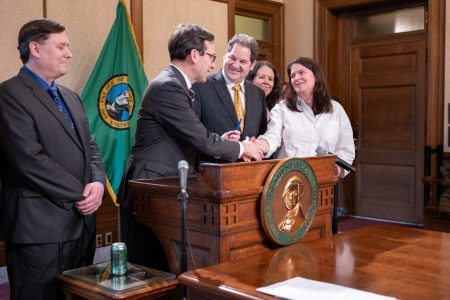
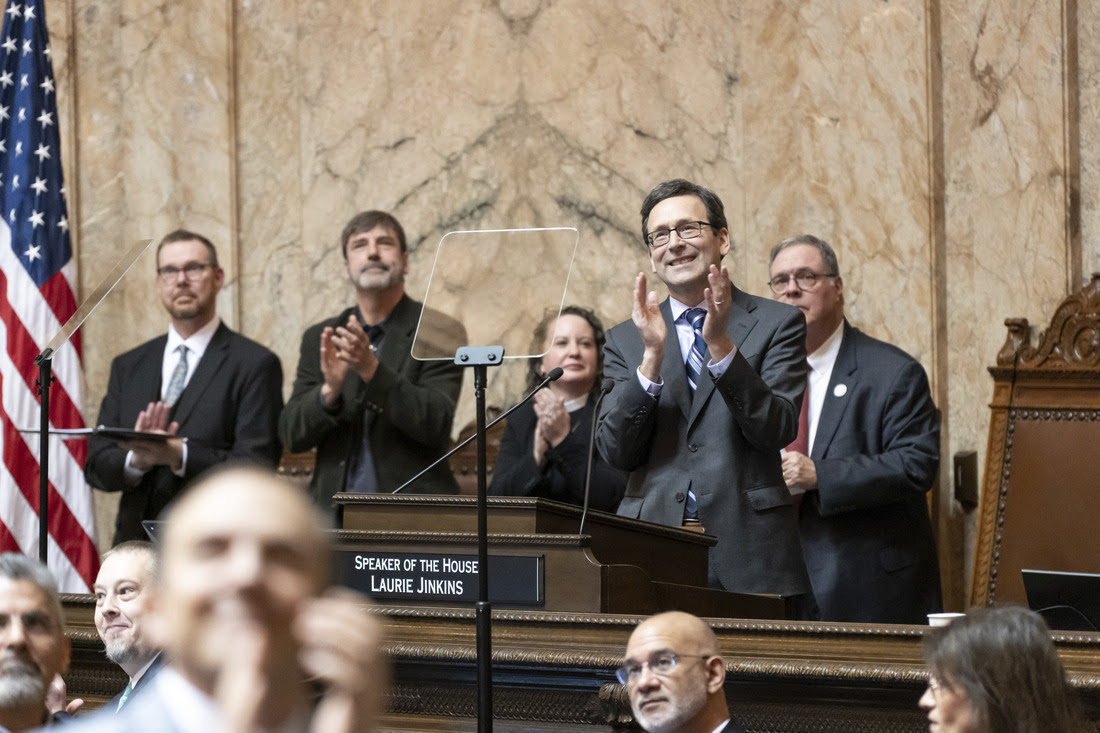
In his State of the State address on Tuesday, Governor Bob Ferguson highlighted Washington’s resilience and innovation while acknowledging significant challenges facing the state. Rather than focusing on the tech giants that have historically defined Washington’s economy, Ferguson chose to spotlight emerging sectors that promise transformative impacts for both the state and the world. His speech painted a picture of a state embracing future-oriented solutions while grappling with immediate crises including historic flooding, housing affordability issues, and infrastructure needs. The governor’s decision to highlight climate technology and healthcare innovation rather than artificial intelligence—despite AI’s current dominance in tech conversations—suggests a deliberate focus on sectors where Washington is pioneering tangible solutions to global problems.
Fusion energy received special attention in Ferguson’s address, with the governor specifically praising Everett-based Helion Energy’s groundbreaking work toward building what could become the world’s first commercial fusion reactor. This isn’t just another energy project—it represents potentially world-changing technology that could revolutionize how we generate power. Helion broke ground on its Orion facility in Eastern Washington last summer with ambitious plans to have it operational by 2028. The project has already attracted significant corporate interest, with Microsoft committing to purchase energy from the plant if Helion successfully harnesses fusion power. This partnership between innovative energy startups and established tech companies exemplifies the collaborative approach that has become a hallmark of Washington’s innovation ecosystem.
The sustainable aviation sector also received significant attention in Ferguson’s speech, highlighting last week’s launch of the Cascadia Sustainable Aviation Accelerator. This initiative brings together major players including Boeing, Amazon, and Alaska Airlines to support research and development while building a marketplace for low-carbon aviation fuels. The governor framed this effort as an opportunity for Washington to “set an example and set the pace for clean energy investment.” This focus on sustainable aviation reflects both environmental priorities and economic strategy—positioning Washington at the forefront of an emerging industry that combines the state’s aerospace heritage with its commitment to addressing climate change. By emphasizing these collaborative initiatives, Ferguson highlighted how public-private partnerships can drive innovation in service of both economic growth and environmental goals.
Washington’s biotech and healthcare innovation ecosystem earned recognition as well, with Ferguson acknowledging the University of Washington, Fred Hutchinson Cancer Center, and the Allen Institute as “part of a globally recognized ecosystem working on next generation drug discovery and treatments.” This acknowledgment highlights the Seattle area’s growing prominence as a hub for academics and startups developing AI-driven therapies. Many of these cutting-edge approaches build upon innovations from University of Washington researcher and Nobel Laureate David Baker’s laboratory. The governor’s recognition of these institutions underscores the vital role that academic research plays in driving economic innovation while addressing crucial human needs—a combination that exemplifies Washington’s approach to development across multiple sectors.
Despite his optimistic highlighting of innovation across the state, Ferguson remained “clear-eyed” about Washington’s challenges, particularly the multibillion-dollar budget shortfall his administration faces. While celebrating these innovation bright spots, the governor acknowledged areas “where we must do better” and emphasized that his first proposed budget is “laser focused on those improvements to keep our growth going.” This balanced approach—celebrating achievements while acknowledging difficulties—characterized the tone of his address. Notably absent from his remarks was significant mention of the traditional tech sector, which accounts for approximately 22% of the state’s economy. This omission may reflect both the sector’s recent volatility and Ferguson’s desire to highlight diversified paths for Washington’s economic future beyond its established tech giants.
The governor’s address ultimately presented a vision of Washington as a state leveraging its intellectual and institutional resources to address pressing challenges through innovation. From fusion energy that could transform global power generation to sustainable aviation fuels that might reshape transportation, Ferguson highlighted initiatives that position Washington at the intersection of economic opportunity and solutions to global problems. His emphasis on healthcare innovation similarly showcased how the state’s research institutions are advancing human wellbeing through cutting-edge approaches. While acknowledging immediate challenges like flooding, housing affordability, and budget constraints, Ferguson’s focus on these forward-looking sectors suggested confidence that Washington’s culture of innovation provides the foundation for addressing even the most difficult problems. The speech portrayed a state not merely weathering current storms but actively building toward a more sustainable and prosperous future.