






The Race for Clean Energy: General Fusion’s Bold Leap into Public Markets
In a dramatic turnaround that highlights the volatile nature of clean energy innovation, Vancouver-based General Fusion has secured a $1 billion SPAC agreement to go public, less than a year after facing layoffs and financial uncertainty. The fusion energy pioneer plans to merge with Spring Valley Acquisition Corp. III in a transaction expected to close by mid-2026, making it one of the first fusion companies to trade publicly. After exploring various funding options, General Fusion was drawn to Spring Valley’s experience in creating publicly traded companies, including their successful SPAC for NuScale Power in 2021. With the ticker GFUZ awaiting on Nasdaq, Chief Strategy Officer Megan Wilson expressed the company’s forward-looking mindset: “We are completely focused on the future. The path of any innovative company is not always linear.”
General Fusion represents a critical player in humanity’s quest to harness fusion energy—the same process that powers stars—by smashing light atoms together to release enormous amounts of clean energy. This pursuit has taken on unprecedented urgency as artificial intelligence and increasing electrification drive global demand for climate-friendly power sources. The SPAC deal brings substantial financial reinforcement, including $230 million from the SPAC’s trust (assuming no redemptions) and an additional $100 million through private investment in public equity (PIPE). This infusion adds significantly to the $400 million General Fusion had previously raised through investors, industry partnerships, and government grants, positioning the company to accelerate its ambitious timeline for commercial fusion energy production.
The announcement comes just one month after fusion competitor TAE Technologies revealed its own public market ambitions through a planned $6 billion merger with Trump Media & Technology Group. Wilson welcomed the competition, viewing it as confirmation that “public markets are ready for fusion.” While these substantial investments signal growing confidence in fusion technology, a sobering reality remains—no fusion company has yet demonstrated the ability to produce excess energy from fusion reactions, the crucial milestone that would transform theoretical promise into practical power generation. Nevertheless, several companies, including TAE and Washington’s Helion Energy, report steady progress toward that goal, with plans for commercial facilities already underway.
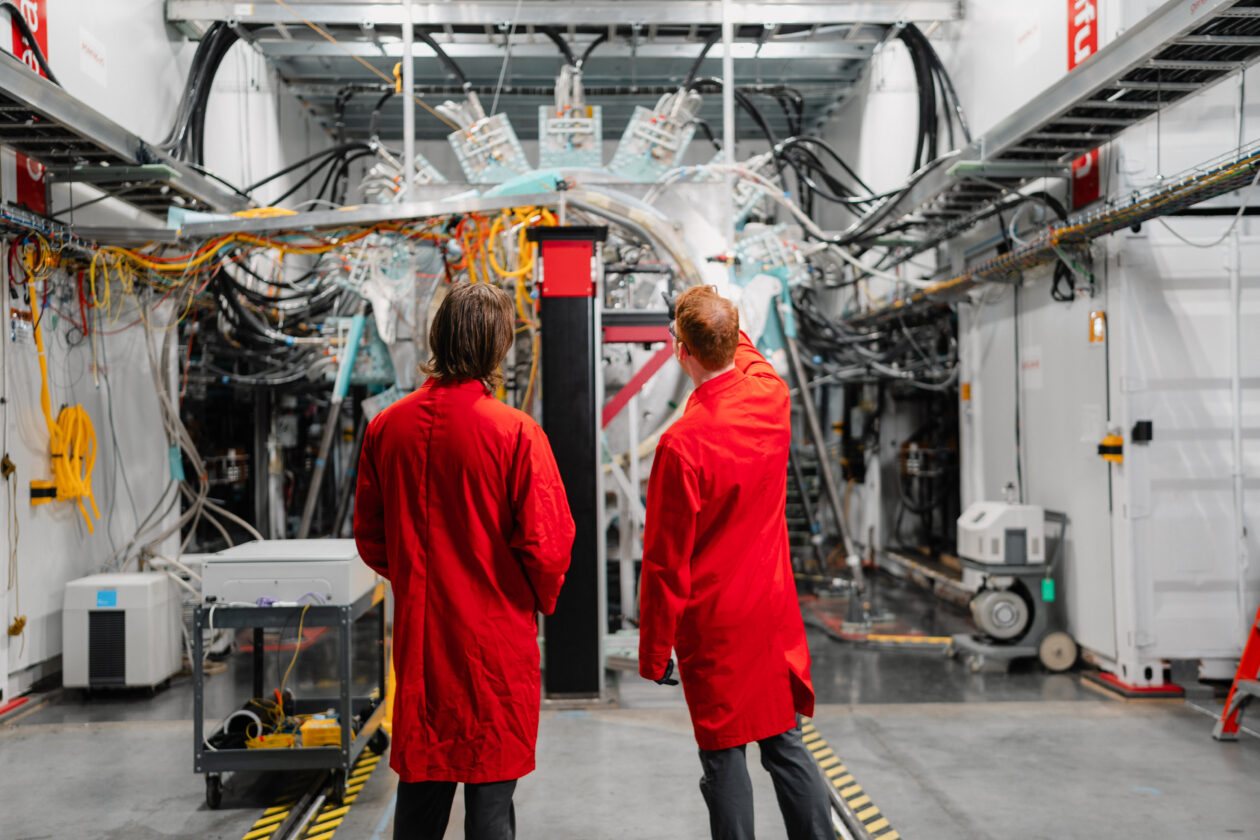
Founded in 2002, General Fusion is currently operating its Lawson Machine 26, a magnetized targeted fusion demonstration device that represents approximately half the size of its planned commercial-scale machine. The fresh capital will fund crucial scientific initiatives aimed at reaching essential milestones by mid-2028. Primary among these goals is achieving temperatures of 100 million degrees Celsius—a target previously set for 2025—and creating the necessary conditions for fusion reactions that produce excess energy. These technical achievements would position General Fusion on a credible path toward deploying commercial fusion technology around 2035, potentially revolutionizing global energy production with abundant, clean power.
The fusion energy sector embodies both the promise and challenges of addressing climate change through technological innovation. Companies like General Fusion are essentially working to recreate the power of stars on Earth—a goal that has remained tantalizingly out of reach for decades despite billions in investment. Yet the intensifying climate crisis and rapidly growing energy demands have created unprecedented motivation to solve the fusion puzzle. The entry of fusion companies into public markets represents a new phase in this scientific journey, where private capital at scale joins government funding in pursuit of what would be one of humanity’s most transformative technological achievements.
What makes General Fusion’s approach particularly noteworthy is its commitment to a methodical, milestone-driven development process in an industry often characterized by ambitious timelines that repeatedly shift rightward. The company’s Lawson Machine 26 serves as a critical proving ground for the physics and engineering concepts that will ultimately enable commercial fusion. “This transaction with Spring Valley positions us with the capital we need to continue operating the Lawson Machine 26 as we pursue really transformative technical milestones that will ultimately put us on a path to the first-of-a-kind plant,” explained Wilson. If successful, General Fusion’s work could help address the dual challenges of climate change and growing global energy demand with a solution that produces no greenhouse gases, minimal waste, and virtually limitless fuel—a combination that represents the holy grail of clean energy development.