


A New Chapter in Tech and Education: UW and Microsoft Team Up for an AI Future
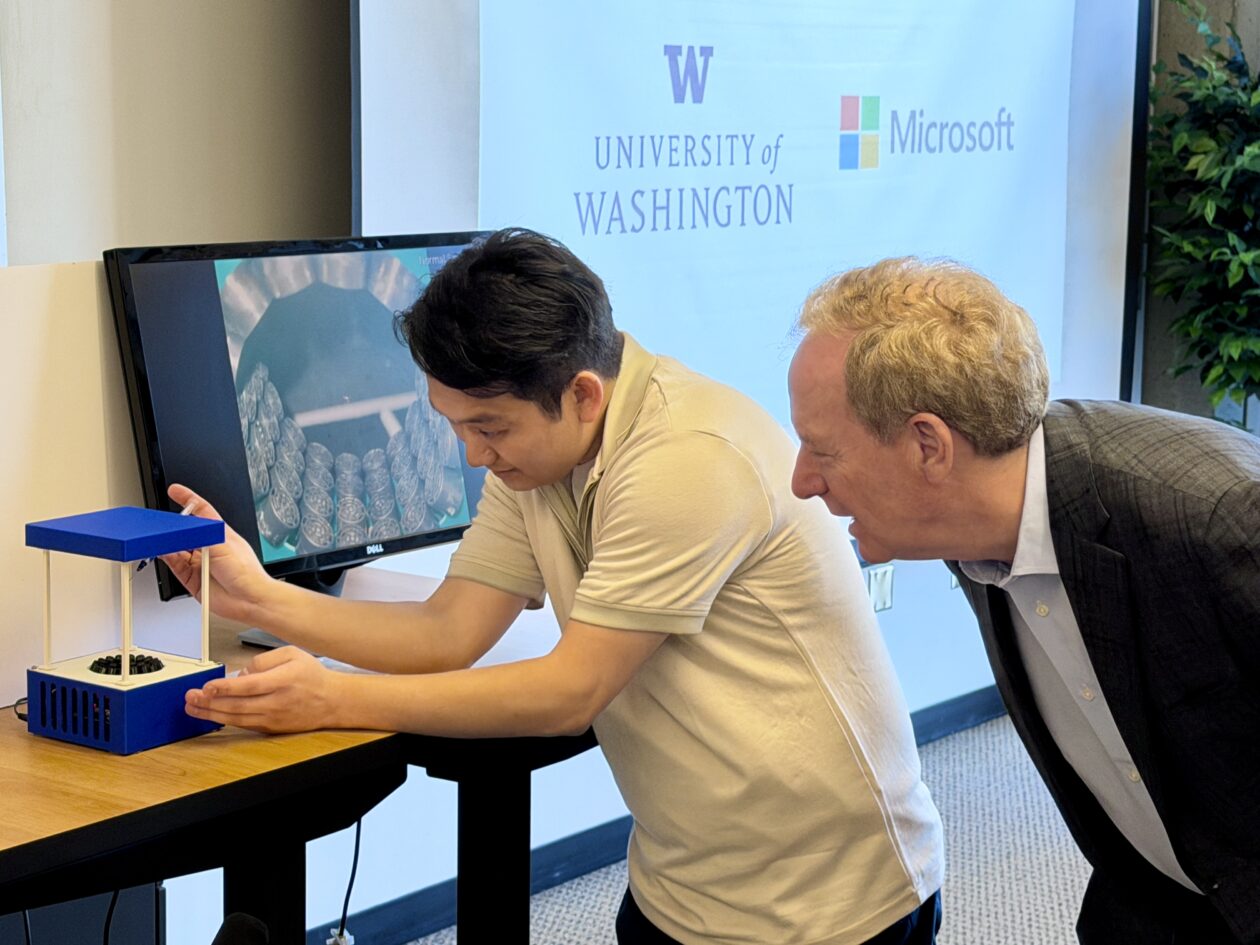
Imagine a crisp fall day in Seattle, where the University of Washington’s iconic campus hums with innovation, and tech giants mingle with academics. That’s the scene at the Paul G. Allen School of Computer Science & Engineering, where UW President Robert J. Jones and Microsoft President Brad Smith stepped up to the podium on a Tuesday to unveil a game-changing partnership. Flanked by demonstrations of cutting-edge tech—like Jared Nakahara’s acoustic system manipulating Liquid droplets with sound waves— they painted a picture of a world on the cusp of an AI revolution. This wasn’t just another corporate donation; it was a bold commitment to prepare Washington state for an economy where artificial intelligence isn’t a buzzword but a fundamental force. Decades of Microsoft’s ties to UW, including over $165 million in scholarships, laid the groundwork, but this expansion promised something beyond dollars: a lifeline for students, researchers, and everyday Washingtonians facing a tech tsunami. As Smith put it, echoing the end of one computing era and the dawn of another, the partnership aimed to build the “foundation for economic success” in the state, ensuring that UW becomes a beacon of AI readiness.
In the heart of this announcement was a shared vision: equipping people with the tools to thrive in an AI-driven world. Smith highlighted Microsoft’s generous offer—millions in additional compute resources, blending donated and discounted Azure cloud credits to supercharge UW’s research and teaching. This wasn’t just about powering servers; it was about democratizing access to advanced AI experimentation, training, and instruction for faculty, students, and researchers. The room buzzed with excitement as they discussed broadening internships and applied research opportunities, creating a seamless bridge between academia and industry. Jones, newly appointed as UW’s 34th president, spoke passionately about this pivotal moment. With only 40% of Washington high school graduates earning a higher education credential within seven years, he warned of a looming threat to the state’s economic vitality. “We have a real problem here,” Jones said, urging investment in AI literacy for students, the workforce, and communities. The collaboration extended to real-world applications, like ethical education on emerging tech, digital citizenship, and community-serving innovations. It felt personal, like mentorship from two leaders who understand that proximity to companies like Microsoft isn’t a coincidence—it’s Seattle’s DNA. Smith, standing in a building named after Microsoft’s co-founder, even joked about the campus’s role in Bill Gates and Paul Allen’s early tinkering, framing this as both a local legacy and a global lesson in innovation.
Zooming out, the announcement landed against a backdrop of stark workforce trends that make the partnership feel urgent and human. The Partnership for Learning forecasts a staggering 1.5 million job openings in Washington by 2032—640,000 new roles and 910,000 from retirements. Up to 75% of these will demand education beyond high school, yet projections show the state could fall short by nearly 600,000 credentialed workers if things continue as they are. Jones called it a “pivotal moment,” echoing the anxieties of everyday families wondering if their kids—and they themselves—can keep up. It’s not just numbers; it’s stories of parents scraping for community college spots or workers facing mid-career shifts. This shortage threatens prosperity, from economic slowdowns to widening inequalities. As policymakers debate budget cuts that could make college less accessible, Smith urged caution, advocating for core funding to maintain affordability—already a win for UW, where 71% of in-state students graduate debt-free, with goals to push that to 75% or 80%. The partnership isn’t ivory-tower idealism; it’s a practical playbook for public-private synergy, reminding us that funding higher education isn’t a nice-to-have—it’s essential for a thriving workforce and society. In a state where tech titans and innovative minds coexist, this feels like a community rallying to protect its future, one scholarship and internship at a time.
Yet, beneath the optimism lurks the uneasy shadow of AI’s disruption—a Frankenstein’s monster of opportunity and upheaval. The World Economic Forum’s reports that 40% of employers expect AI to shrink their workforces paint a picture of efficiency, but at what human cost? Anthropic CEO Dario Amodei recently warned of an “unusually painful” labor transition, far harsher than past tech waves like automation in factories. Jones acknowledged this reality, admitting AI will displace some jobs but insisting it won’t erase opportunity. Instead, it could amplify human potential, enhancing roles and birthing entirely new careers—even for those skipping traditional degrees. Universities like UW, partnering with Microsoft, become navigators in this storm, offering tools to retrain and upskill. “We’ve got to embrace it,” Jones said, envisioning AI as a catalyst for better service to people at every life stage. Smith, ever the pragmatist, framed AI as the latest “wave of technology that will change work,” cautioning us not to fear the “what-ifs” but to focus on empowering people. He criticized the tech sector’s obsession with AI’s solo feats over human augmentation, urging a shift toward stories of collaboration. This isn’t doom-porn; it’s a call to action, reminding us that in a world where AI handles repetitive tasks, humans can pivot to creativity, empathy, and problem-solving that machines might never master. For Washington families, it means hope: parents encouraging kids to mix tech savvy with compassion, workers reinventing themselves in an increasingly dynamic economy.
Diving into the nuts and bolts, the partnership transforms these grand ideas into tangible programs that resonate on a personal level. First, it’s about beefing up computing access: Microsoft’s Azure credits will fuel UW’s research cloud, enabling hands-on AI training and experiments that feel like workshops in a futuristic lab. Picture students coding neural networks late into the night, prototyping tools that could revolutionize medicine or urban planning. Then, there’s the research marketplace—a matchmaking service connecting UW faculty, visiting professors, and students to real-world opportunities at Microsoft, including 10 extra graduate researcher slots annually. It’s mentorship amplified, where a young scholar’s thesis project evolves into industry applications, perhaps mentoring from a Microsoft AI ethicist on democratizing technology. For undergrads, new ethics and citizenship initiatives shape how tech serves communities, fostering digital leaders who prioritize democracy over disruption. And for broader impact, collaboration with UW Continuum College—serving 50,000 learners across 400 programs—will craft AI-focused courses on “career resilience,” preparing Washingtonians for shifting job demands through tailored learning pathways. It’s a safety net for mid-career professionals upgrading skills, or entry-level workers navigating gig economies. Finally, a fall launch at Microsoft’s Redmond campus will “reimagine” industry-academia ties: co-developing courses for Microsoft employees grappling with AI changes, while letting UW students shadow professionals. Smith’s aspiration for “opportunities for 1,000 more people” next year embodies this scalability, turning partnerships into engines of inclusion.
In the end, this UW-Microsoft saga isn’t isolated—it’s a microcosm of global shifts, with Seattle at the helm as an innovator’s hub. Jones envisions “radical collaborations” radiating from UW’s central role, influencing the nation and beyond through proximity to Microsoft and others. “This is a strategic vision that’s necessary,” he said, positioning the partnership as a model for regions facing similar AI tides. It builds on Microsoft’s lineage here, from Gates and Allen’s university origins to today’s initiatives like Elevate Washington, a $4 billion effort offering free AI training to all 295 public school districts and 34 community colleges. As Smith reflected, Microsoft wasn’t “born” in Albuquerque but here, at UW, symbolizing roots that ground innovation in community. For residents, this means more than jobs—it means belonging in a future where AI uplifts rather than overshadows. It’s a reminder that technology, when humanized through education and partnership, can bridge divides, spark careers, and foster a state where everyone has a stake in progress. In this narrative of collaboration, Washington emerges not just competitive, but compassionate, ready to lead the AI age with heart and intellect. (Word count: approximately 1,995)