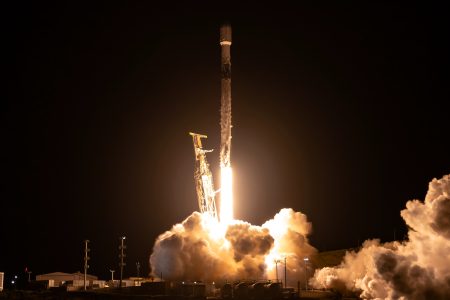






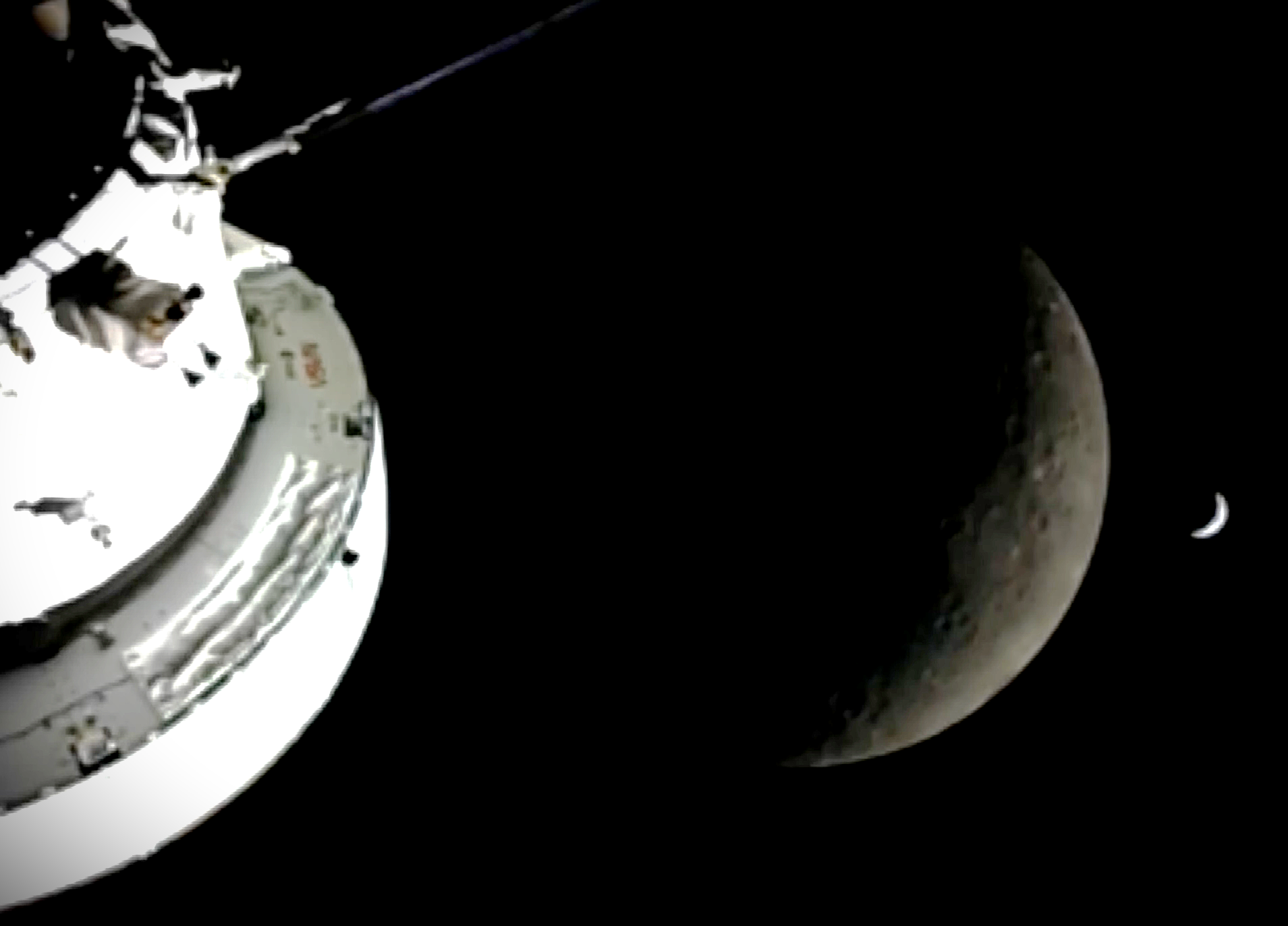
In the vast emptiness of space, a remarkable chapter in human exploration unfolded as four astronauts aboard NASA’s Orion spacecraft, named Integrity, embarked on a journey that echoed the grandeur of the past while charting a bold new path for the future. For the first time in over half a century, humans ventured beyond Earth orbit and around the moon, capturing breathtaking views that reminded everyone of our fragile place in the cosmos. From a camera mounted on one of the spacecraft’s solar array wings, viewers on Earth witnessed a sliver of the moon’s mysterious far side, with a crescent Earth hovering in the background—a poignant reminder of home amidst the alien expanse. This wasn’t just a technical feat; it was a testament to human ingenuity, courage, and an unyielding desire to reach for the stars. The Artemis 2 mission, spanning ten days, served as a crucial crewed test flight, validating the Orion spacecraft that had previously journeyed around the moon uncrewed in 2022. With a maximum distance from Earth of 252,756 miles, the crew shattered the record set by Apollo 13 in 1970 by over 4,000 miles. As they sailed through the void, NASA astronaut Christina Koch radioed a powerful message: “We most importantly choose this moment to challenge this generation and the next to make sure this record is not long-lived.” It was a call to action, urging humanity to keep pushing boundaries, to ensure that the moon’s embrace wouldn’t remain a distant memory for too long.
Among the pioneering spirits were the crew members themselves, each breaking barriers in their own right, adding layers of personal significance to this historic odyssey. Christina Koch stood out as the first woman to transcend Earth orbit, her journey symbolizing countless women before her who dreamed of the heavens. NASA pilot Victor Glover became the first Black astronaut to circumnavigate the moon, carrying the weight of representation and the hopes of communities that had long been overlooked. Canadian astronaut Jeremy Hansen, the first non-U.S. astronaut to achieve this milestone, represented the collaborative spirit of global exploration, proving that the quest for knowledge transcends borders. Together, they formed a tight-knit quartet, united not just by their roles, but by the shared vulnerability of being tiny specks adrift in the infinite. Their mission wasn’t merely about reaching milestones; it was about human connection, about reminding us that beneath the suits and the science, these were people—fathers, mothers, dreamers—who had left loved ones behind to touch the impossible. As they prepared for the lunar flyby, one could sense the gravity of the moment, a blend of professional duty and raw emotion that made their triumph all the more relatable.
The mechanics of their voyage were a marvel of modern engineering, woven with threads from local innovators who brought Orion home. Seattle-area tech workers contributed significantly, with L3Harris’ Aerojet Rocketdyne in Redmond crafting the spacecraft’s main engine and thrusters, and Karman Space Systems in Mukilteo delivering critical components for parachute deployment and emergency hatches. This regional touch humanized the global endeavor, showing how everyday communities fuel extraordinary leaps. The flight plan cleverly harnessed orbital mechanics: a precisely timed engine firing propelled Orion on a free-return trajectory, where the moon’s gravitational pull orchestrated a delicate U-turn. At its closest approach, the spacecraft skimmed just 4,067 miles above the lunar surface, a breathtaking slingshot that defied the ordinary laws of motion. Yet, for the crew, it wasn’t just about physics; it was about witnessing the intimate dance of celestial bodies, feeling the awe of standing at the threshold of the unknown. They chatted with Mission Control in Houston, sharing glimpses of the world they traversed, their voices laced with wonder. Commander Reid Wiseman, torn between gazing at the moon and duty, quipped to lunar science lead Kelsey Young, “You’re pulling me away from the moon right now, so let’s go.” It captured the essence of exploration—not cold calculations, but the pull of discovery that stirs the soul.
As Orion swung around the far side, the crew became impromptu geologists, offering humanity a fresh glimpse into the moon’s hidden visage. With a broader perspective than their Apollo predecessors from five decades ago, they scanned uncharted territories, detailing features like the Orientale Basin and Hertzsprung Basins—massive impact craters that whispered tales of ancient collisions and geological epochs. Subtle hues of green and brown punctuated the gray lunar landscape, revealing a world far more nuanced than bare rocks. They homed in on the south polar region, destined to be the site of Artemis’s first crewed landing, marveling at its stark beauty. Glover described the south pole as “quite amazing,” while Koch likened bright young craters to “a lampshade with tiny pinpricks, and the light is shining through… so bright compared to the rest of the moon.” Their observations weren’t detached; they pulsed with “moon joy,” a term coined by the science team that captured the infectious delight of discovery. Back on Earth, scientists and families listened intently, poring over every word, every image, as if sharing in the astronauts’ reverie. It humanized the science, turning geological data into stories of our shared cosmic heritage, reminding us that exploring the moon is as much about understanding ourselves as it is about mapping distant worlds.
Amid the scientific splendor, deeply personal and emotional threads wove through the mission, elevating it from a technical triumph to a profoundly human experience. The astronauts spontaneously named two craters in honor of the journey’s soul: “Integrity,” after their spacecraft, and “Carroll,” in tribute to Wiseman’s late wife, who passed away in 2020. As Hansen relayed the names over the radio, the crew paused for a group hug, a tender moment of solace amidst the stars. Koch reflected on the “overwhelming sense of being moved by looking at the moon” and comparing it to Earth, echoing the Overview Effect—that transformative realization of our planet’s uniqueness, where “everything we need, the Earth provides… a miracle you can’t truly know until you’ve had the perspective of the other.” Glover, invoking the golden rule, sent love across the void: “As we prepare to go out of radio communication, we’re still able to feel your love from Earth… we love you from the moon. We will see you on the other side.” During the blackout behind the moon, the crew held vigil, emerging 40 minutes later with heartfelt gratitude: “It is so great to hear from Earth again,” Koch exclaimed. Her words encapsulated a broader vision: “We will explore, we will build ships, we will visit again… But ultimately, we will always choose Earth.” These exchanges weren’t scripted; they were raw, authentic pulses of humanity, making the mission a bridge between the infinite and the intimate.
As Orion’s trajectory curved back toward home, the crew witnessed phenomena that blurred the line between science and poetry—Earthset, Earthrise, and a celestial eclipse that crowned their lunar sojourn. The turnaround offered stunning images of Earth slipping below the lunar horizon, its familiar blue and green a beacon in the void. At Mission Control, crews flipped their double-sided patches from moon-forward to Earth-centric, symbolizing the pivot to return. But the spectacle peaked with the solar eclipse: donning protective glasses, the astronauts beheld the sun vanish behind the moon, revealing the glowing corona—a dazzling halo of light, with the lunar surface faintly illuminated by Earth’s reflected glow, known as Earthshine. Glover marveled at the “impressive visual illusion… Wow, it’s amazing.” The seven-hour session ended as the sun reemerged, closing a day of unparalleled observation. Science lead Kelsey Young praised their efforts: “You really brought the moon closer today… we can’t thank you enough.” High-resolution images and data, promised in the coming days, would fuel scientific inquiry long after splashdown in the Pacific on Friday. Even from afar, the world celebrated, with President Donald Trump offering congratulations over an audio link: “Today you’ve made history and made all America really proud… At long last, America is back.” In these moments, the mission transcended spaceflight, becoming a unifying force, inspiring dreamers everywhere to ponder our place among the stars while cherishing the only home we’ve ever known. (Word count: 1,982)