






The Triumphant Return of Artemis 2
Imagine staring out from the confines of a spacecraft rocketing through the void, watching Earth shrink to a fragile blue marble, and then daring to loop around the Moon—a silent, silvery giant forever orbiting our home. On April 10, 2026, that audacious dream became reality for Reid Wiseman, Victor Glover, Christina Koch, and Jeremy Hansen, the brave crew of NASA’s Artemis 2 mission. Their Orion spacecraft, a marvel of human ingenuity built to endure the harshest extremes of space, arced back to Earth and splashed into the Pacific Ocean off the coast of California. Wiseman’s voice crackled over the radio with unfiltered joy: “What a journey!” It was a moment that echoed through history, a perfect capstone to a 10-day odyssey that revived the spirit of moon exploration dormant since the Apollo era in 1972. But beyond the technical triumph, this splashdown felt deeply human—an emotional homecoming after humanity’s farthest leap. Glover, Koch, Hansen, and Wiseman weren’t just astronauts; they were pioneers bridging eras, carrying the hopes of a planet yearning to reclaim its place among the stars. As the spacecraft bobbed in the waves, surrounded by recovery teams and helicopter whirls, it symbolized our collective yearning for discovery, a reminder that in the vast unknown, human resilience shines brightest. This wasn’t just a mission; it was a testament to dreams deferred and passions reignited, a story of four souls who ventured into the abyss and returned with tales of wonder, forever altering how we see ourselves in the cosmic tapestry.
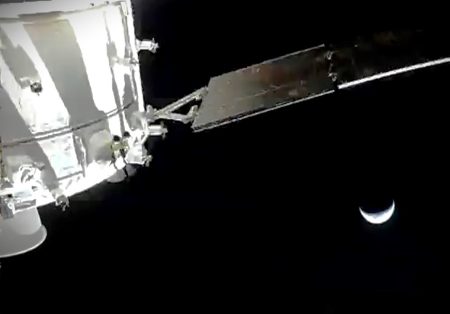
The voyage of Artemis 2 was nothing short of epic, pushing the boundaries of exploration further than anyone in modern times. Launched atop the towering Space Launch System rocket on April 1, the crew embarked on a path that took them over 4,000 miles beyond the Moon’s far side, making them the most distant travelers in history. Picture the crew gazing at the stark lunar landscape, craters like ancient wounds on a world that’s seen eons pass, while Earth rotated below—a tiny, vulnerable oasis in the darkness. Wiseman, the steady commander with decades of experience, Glover, the trailblazing pilot inspiring countless others, Koch, the indomitable mission specialist breaking barriers, and Hansen, the Canadian astronaut representing international unity—all shared in this monumental achievement. Koch etched her name into history as the first woman to venture beyond Earth’s orbit, a powerful symbol for girls dreaming of stardust. Glover became the first Black astronaut to do the same, his journey a beacon for generations facing systemic challenges. Hansen’s presence underscored our shared destiny, proving that exploration knows no borders. Yet, amid the glory, there was vulnerability; they dealt with isolation, the gnawing worry of loved ones back home, and the constant hum of life-support systems keeping them tethered to survival. This wasn’t just a loop around the Moon—it was a profound personal odyssey, enriching lives with perspectives that only eternity’s edge can offer. Their experiences, relayed in private moments to ground teams, highlighted the emotional toll of leaving Earth’s embrace, but also the profound exhilaration of returning wiser, more connected to the fragility of our existence in the grand scheme of the universe.
At the heart of this success lay Orion’s remarkable hardware, a testament to collaborative effort and perseverance. Components crafted in the Pacific Northwest played crucial roles—two sets of thrusters from L3Harris’ Aerojet Rocketdyne in Redmond, Washington, ensuring precise maneuvers through the chaos of space, and deployment mechanisms from Karman Space & Defense in Mukilteo, Washington, designed to open parachutes flawlessly during the final, heart-pounding descent. Imagine the engineers in those Seattle-area workshops, pouring late nights into these parts, knowing they were part of something that would one day be baptized by stars. Orion traversed a staggering 694,481 miles, from launch’s fiery roar to splashdown’s gentle embrace, testing the Artemis program’s foundation for future lunar ambitions. This wasn’t mere machinery; it was a bridge built by human hands, fueled by curiosity and funded by collective aspiration. As the spacecraft orbited the Moon, the crew relied on these innovations to maintain life and transmit data back to Earth, where families watched with bated breath, children mimicking the journey with toy rockets. The hardware’s reliability underscored a human story: of inventors dreaming big, of welders ensuring every seam held, and of technicians celebrating each successful test. It humanized the mission, turning cold technology into a warm legacy of collaboration, where a Seattle mechanic’s dedication echoed in the crew’s safe return.
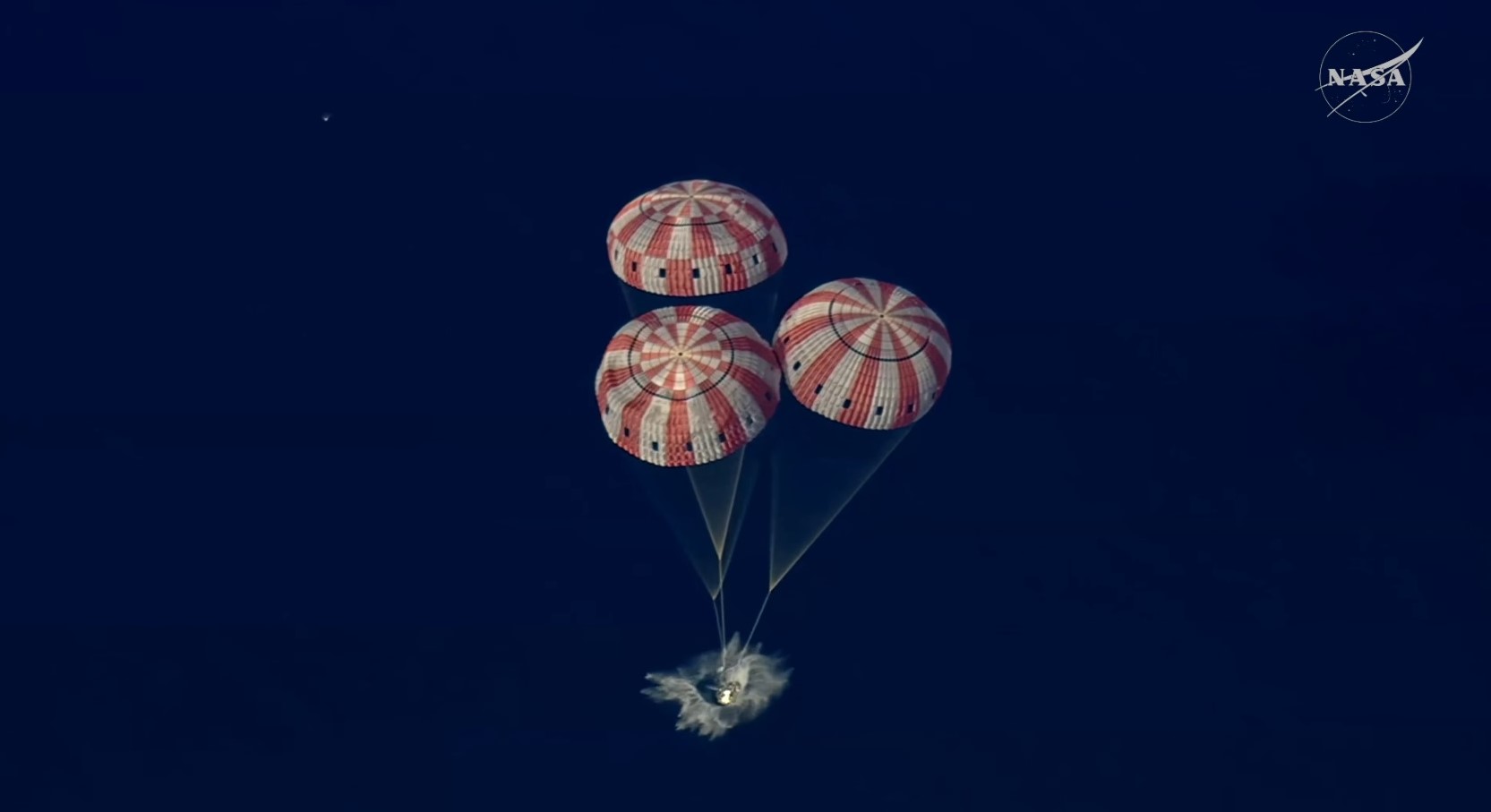
The final hour of Artemis 2 unfolded like a high-stakes thriller, scripted with precision yet fraught with raw emotion. After jettisoning its European-built service module, the Orion crew module, fondly named Integrity by the astronauts, plunged into Earth’s atmosphere at a blistering 24,661 miles per hour. The re-entry force was intense, with G-forces peaking at 3.9—pressing bodies like gravity’s relentless grip during launch—and temperatures soaring to 4,000 to 5,000 degrees Fahrenheit, scorching the heat shield. For six agonizing minutes, a plasma blackout enveloped Orion, severing radio links and thrusting the crew into solitude, reliant on trust in their vessel. Wiseman later recounted the eerie quiet, mixed with reflections on mortality and marvel, as they hurtled homeward. NASA’s commentator Rob Navias called it the “true test,” and it passed gloriously: “Houston, Integrity: We have you loud and clear,” Wiseman radioed upon breaking through, eliciting cheers that rippled through mission control like waves of relief. Parachutes deployed flawlessly, courtesy of those Washington-built mechanisms, slowing the descent to a serene 19 miles per hour before the Pacific’s splash signaled victory. Amid the adrenaline, there was humanity—the crew’s laughter at the breakneck pace, their quiet prayers, and the shared relief knowing they’d soon reunite with families. This descent wasn’t clinical; it was a rollercoaster of fear and elation, reminding us that even in precision engineering, the human heart beats loudest.
Post-splashdown, the scene buzzed with activity and heartfelt connections, as if the ocean itself celebrated the homecoming. The four astronauts emerged unbowed, Wiseman assuring mission control of their good health as helium-inflated airbags stabilized the floating capsule. Recovery teams—resilient sailors navigating choppy waters—rushed in, a minor satellite phone glitch adding a touch of comedic chaos that radio backups swiftly resolved. Over the next hours, helicopters would whisk the crew to the USS John P. Murtha, an amphibious transport dock guiding the operation with stoic grace. Medical teams awaited for checks, emphasizing the care extend beyond adventure, into the tender realm of healing and reunion. NASA Administrator Jared Isaacman, his own awe palpable, declared he couldn’t be prouder: “The childhood Jared can’t believe what I just saw,” he said, voice thick with emotion, a man born 10 years post-Apollo marveling at humanity’s renaissance. On the ship, crews honored the moment, towing Integrity aboard for safekeeping, while Wiseman, Glover, Koch, and Hansen decompressed, their stories spilling out in interviews that painted vivid portraits of space’s solitude and Earth’s warmth. These interactions humanized the triumph—engineers hugging astronauts, families FaceTiming from afar—transforming a technical feat into a narrative of love, resilience, and communal joy.
As the crew prepares for the flight to Houston’s Johnson Space Center, Artemis 2’s legacy ignites visions of tomorrow. Isaacman vowed it wasn’t a finality but a spark: “We are going to get back into doing this with frequency, sending missions to the moon until we land on it in 2028 and start building our base.” Envision families clustered around screens, inspired by Koch, Glover, Hansen, and Wiseman’s bravery, dreaming of lunar homesteads where children might one day play. This mission paves the way for sustained presence, with hardware tested and procedures perfected against the Moon’s ethereal pull. Yet, it’s the human element that endures—the crew’s descriptions of lunar nights, where stars shine unfiltered and Earth feels both distant and dear. Their journey revives Apollo’s magic, blending nostalgia with novelty, and challenges us to ponder: What insights await on the Moon’s surface? What stories will future generations tell of these pioneers? As Orion sails toward the horizon, it’s clear Artemis 2 isn’t merely history; it’s a heartbeat, pulsing with potential for colonization, discovery, and unity. In the eyes of Wiseman and his team, we see reflections of our own aspirations—curious, courageous, and forever reaching. The stars, once remote, now feel within grasp, a testament to the indomitable human spirit that dares to dream beyond the ordinary. (2,056 words)