

PROFESSOR’S PARODY LAND ACKNOWLEDGMENT SPARKS FIRST AMENDMENT BATTLE
In a significant ruling that balances academic freedom against institutional authority, the Ninth Circuit Court of Appeals has determined that the University of Washington violated the First Amendment rights of computer science professor Stuart Reges. The case centers on Reges’ decision to include a controversial parody land acknowledgment in his course syllabus, challenging the university’s recommended practice of recognizing indigenous land claims. This legal battle highlights the ongoing tension between free expression in academia and institutional efforts to create inclusive learning environments, particularly when addressing politically charged topics like colonization and indigenous rights.
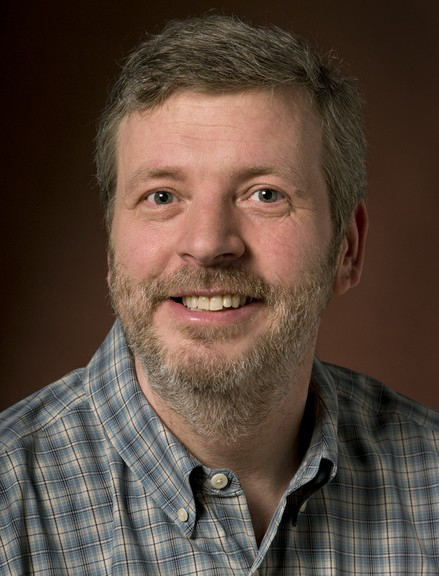
The controversy began in January 2022 when Reges, a teaching professor who had been with UW’s prestigious Paul G. Allen School of Computer Science and Engineering for nearly two decades, included his own version of a land acknowledgment in his introductory programming course syllabus. While the university had recommended faculty include statements recognizing Coast Salish peoples as traditional stewards of the land, Reges crafted a provocative alternative. His statement referenced philosopher John Locke’s labor theory of property to argue that indigenous peoples could claim “almost none” of the land occupied by the university. This deliberate challenge to the conventional acknowledgment immediately sparked backlash among students and faculty, leading to a cascade of institutional responses that would eventually culminate in federal litigation.
The university’s reaction was swift and multifaceted. The Allen School issued a public apology to students, launched a disciplinary investigation that continued for over a year, and took the unusual step of creating a separate section of the same programming course taught by another instructor to accommodate students uncomfortable with Reges’ position. Though Reges ultimately escaped formal sanctions, he received an official warning that repeating similar statements could lead to discipline – a threat that would later become central to the court’s reasoning. Feeling his academic freedom had been compromised, Reges partnered with the Foundation for Individual Rights and Expression (FIRE) to sue the university in 2022, claiming violation of his First Amendment rights as a public university professor.
The legal journey proved complex, with initial setbacks followed by vindication. While a district court initially sided with the university, the Ninth Circuit reversed that decision on December 19, 2025, in a divided opinion that emphasized the primacy of First Amendment protections in academic settings. Judge Daniel Bress, writing for the majority, articulated a principle that could have far-reaching implications for academic freedom: student discomfort alone cannot justify retaliation against professors expressing views on matters of public concern, even when those views may be considered offensive or provocative by some. The ruling acknowledged the special importance of protecting controversial speech within university settings, where the exploration of challenging ideas has traditionally been valued as central to the educational mission.
Not all judges were convinced by this reasoning, however, as evidenced by Judge Sidney Thomas’s pointed dissent. Thomas argued that the significant disruption that Reges’ statement caused to Native students’ learning experience should outweigh his First Amendment interests in this specific context. This dissent highlights the challenging balancing act that educational institutions face: protecting free speech while also ensuring that all students have equitable access to education without undue psychological burden or discrimination. The division within the court itself mirrors the broader societal debate about how to navigate competing values of free expression and cultural sensitivity, particularly in educational environments where power differentials between faculty and students can complicate pure free speech arguments.
As the dust settles on this ruling, the University of Washington now faces important strategic decisions. The institution could pursue further legal challenges by requesting a rehearing from the full Ninth Circuit or appealing to the U.S. Supreme Court. Alternatively, if the university accepts the current ruling, the case will return to district court to determine appropriate remedies for Reges. The university’s statement that it is “weighing its options” while maintaining that it “acted appropriately” to “protect our students” suggests the tension between free speech and student welfare remains unresolved. Whatever path forward the university chooses, this case will likely inform how other public institutions navigate the delicate balance between honoring academic freedom and addressing student concerns about inclusive learning environments – a balance that continues to challenge America’s higher education landscape in an era of heightened political polarization and renewed attention to historical injustices.