




Ring’s Strategic Expansion into Commercial Security: Bridging Home and Business Surveillance
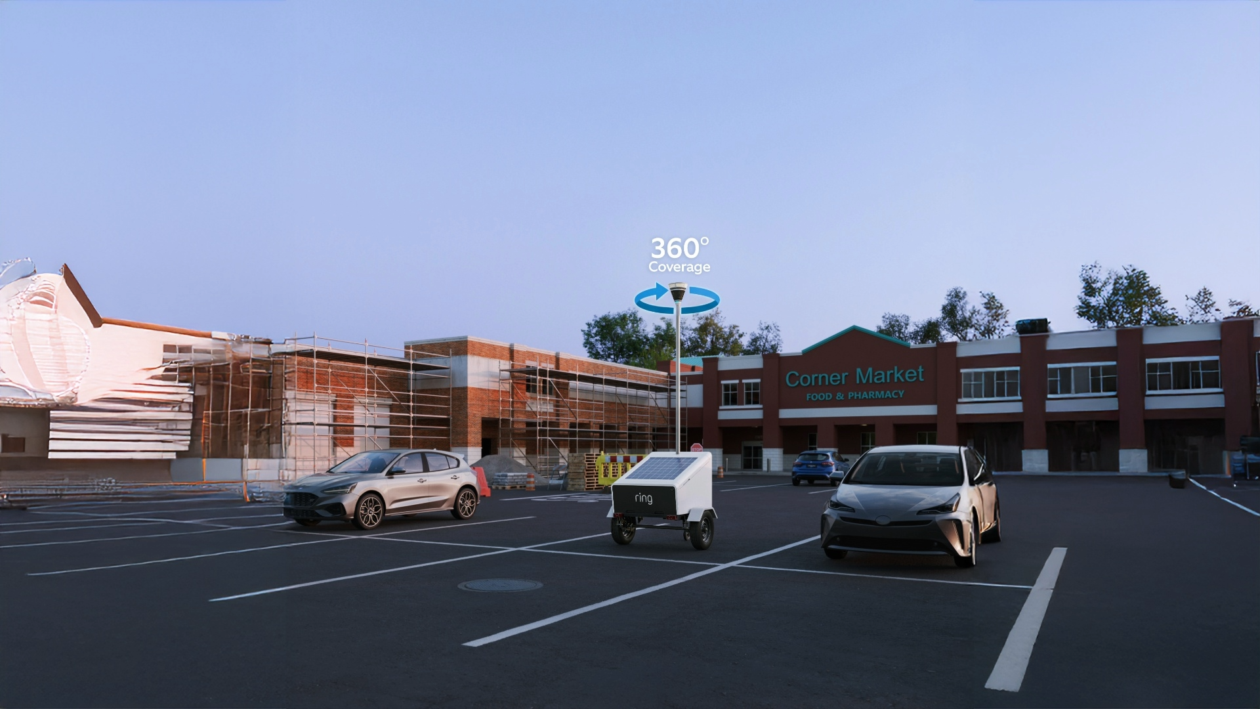
In a bold move that signals Amazon’s broader ambitions in the security market, Ring unveiled its new Mobile Security Trailer at CES this week, marking a significant expansion beyond its familiar doorbell cameras into commercial security applications. This $5,000 solar-powered surveillance platform represents Ring’s calculated entry into spaces typically dominated by industrial security providers, offering a more accessible alternative to the bulky surveillance rigs commonly deployed at construction sites, parking lots, and outdoor events. The trailer features impressive specifications, including a 360-degree camera with 4K resolution that eliminates blind spots while maintaining high-definition visibility—technical capabilities that reflect Ring’s understanding of commercial security requirements while leveraging its consumer-friendly design philosophy.
This strategic pivot comes during an interesting period for Ring, following the return of founder Jamie Siminoff to Amazon last year after his brief departure in 2023. Under his renewed leadership, Ring appears to be refocusing on core security innovation while extending its reach into previously untapped markets. The Mobile Security Trailer isn’t a standalone product but rather the centerpiece of Ring’s newly announced “Jobsite” portfolio, which also includes the new Ring Elite camera line designed specifically for large commercial environments such as logistics yards and corporate campuses. What makes Ring’s approach particularly notable is how it integrates Amazon’s broader technological ecosystem, using Amazon Sidewalk connectivity and AWS cloud services to create a comprehensive security solution that bridges the residential-commercial divide—potentially offering businesses the same user-friendly experience that made Ring’s doorbell cameras a household staple.
The flexibility built into Ring’s new commercial offering reveals thoughtful design considerations for various business scenarios. The trailer can operate on line power with battery backup or function completely off-grid using its solar panels, making it suitable for remote locations without established infrastructure. Its built-in LTE connectivity means it works independently of external internet connections, while its modular design allows for deployment as a trailer, truck-mounted unit, or standalone station—versatility that would appeal to businesses with changing security needs or those managing temporary events. By pricing the system at $5,000, Ring has positioned itself as a more accessible option compared to traditional industrial security solutions, potentially disrupting a market segment where high costs have historically limited adoption among smaller businesses and creating an entry point for Amazon into a lucrative commercial security space.
Beyond hardware innovations, Ring’s announcement included several software advancements that demonstrate the company’s commitment to leveraging artificial intelligence and community features. A particularly noteworthy development is “Fire Watch,” a feature created in partnership with the non-profit Watch Duty that delivers real-time wildfire alerts directly through the Ring app and allows camera owners to voluntarily share periodic snapshots with emergency responders—a functionality that illustrates how private security systems can contribute to public safety efforts. Additionally, Ring introduced “Unusual Event Alert,” which uses AI to learn household patterns and reduce false alarms, and “Active Warnings,” which employs computer vision to identify potential threats and play automated audio deterrents. These features showcase Ring’s efforts to make security systems more intelligent and proactive rather than merely reactive, addressing common pain points for both residential and commercial users.
Ring’s residential product line is also seeing significant updates alongside its commercial expansion, including an improved Ring Car Alarm priced at $50 that uses GPS and Sidewalk connectivity to monitor vehicles even when parked remotely. Perhaps more importantly, Ring announced the creation of the Ring Appstore marketplace, which will allow third-party developers to build specialized applications that integrate with Ring cameras and data—a move that could potentially create an ecosystem of security applications similar to what smartphones experienced with their app stores. The company also introduced a new line of sensors priced between $30 and $70 that connect via Amazon Sidewalk to operate independently of Wi-Fi networks or hubs, covering various security, safety, and smart control functions. These affordable entry points into the Ring ecosystem demonstrate Amazon’s strategy of creating multiple touchpoints for customers while gradually expanding their security footprint.
The international expansion of Amazon Sidewalk—Ring’s low-bandwidth, long-range network that connects devices—forms the technological backbone of this security ecosystem vision. Ring announced that Sidewalk will launch in Canada and Mexico in the coming months before reaching Europe, Australia, and Japan later this year, creating a global infrastructure for connected security devices. This expansion positions Amazon to build a worldwide network of interconnected security products that communicate seamlessly across residential and commercial environments. By leveraging Sidewalk’s unique connectivity advantages, Ring can offer security solutions in locations where traditional internet infrastructure is unreliable or unavailable, potentially reaching markets and use cases that competitors cannot serve effectively. As Ring continues to blur the line between home and business security with products like the Mobile Security Trailer, Amazon appears to be executing a comprehensive strategy to become the default provider of connected security across multiple environments—creating an integrated ecosystem where your doorbell camera, mobile trailer, and business sensors all operate within the same technological framework, managed through familiar interfaces.