


The Quiet Storm at Amazon’s Robotic Heart
Amazon, the e-commerce giant that has reshaped how we shop and deliver, has always been a whirlwind of innovation and ambition. Picture this: a vast network of fulfillment centers humming with activity, where robots scurry about like diligent ants, sorting packages and speeding up the process that keeps millions of orders flowing seamlessly. It’s a world of sleek machinery, advanced algorithms, and relentless efficiency—or at least, that’s the dream. But behind the scenes, even titans like Amazon face tough realities. On March 4, 2026, reports surfaced that the company was laying off an undisclosed number of employees from its robotics division, a move that hit close to home for many in the tech community. It wasn’t just statistics; it was about people, families, and futures tied to cutting-edge tech. Business Insider broke the story first, and Amazon swiftly confirmed it, leaving the industry buzzing with questions about the motives behind such cuts. For those working in robotics, this felt like a small tremor in the earth-shaking machine of Amazon’s operations. These weren’t entry-level roles; they were the engineers, programmers, and technicians pouring their expertise into systems that have deployed over a million robots worldwide. Imagine waking up one day to learn your team, pivotal in building autonomous warehouse helpers, was being pared back. It’s a reminder that even in the fast-paced realm of AI and automation, human hands and minds are still essential—and sometimes, expendable in the name of optimization.
The company’s official statement, delivered to GeekWire, tried to soften the blow with measured, compassionate language. “We regularly review our organizations to make sure teams are best set up to innovate and deliver for our customers,” a spokesperson said, framing the layoffs as a necessary recalibration. But then came the human touch: acknowledging the difficulty of the decision and pledging support for those affected. Severance pay, health insurance benefits, and job placement assistance—it’s like a comfort blanket in a turbulent time. These words weren’t just corporate boilerplate; they reflected a recognition that layoffs ripen with real emotions. Employees in robotics might have spent years at Amazon, collaborating on projects that turned sci-fi concepts into everyday warehouse realities. For instance, think of the engineers who worked late nights debugging code for robotic arms that lift heavy shelves with precision, or the designers who sketched out fleets that navigate crowded aisles without collisions. Now, some are facing the uncertainty of severance packages and résumés in a competitive job market. It’s not just about losing a job; it’s about the dreams deferred, the innovations paused, and the familial impacts—kids’ school tuitions, mortgages, or even mental health tolls. Amazon’s promise of support is a step toward humanity in what could otherwise feel like a cold-hearted pivot, but it also begs the question: is this enough? In past layoffs, stories have emerged of executives texting support or arranging quick redeployment, but for robotics specialists, whose skills are niche, the road ahead might be tougher. Still, it’s reassuring to know the company isn’t abandoning its affected workers entirely, treating them not as collateral damage but as valued contributors whose time at Amazon, though ending, warrants dignity.
This latest round of cuts isn’t happening in isolation; it’s part of a broader narrative of Amazon’s evolving workforce strategy. Just two months earlier, in January 2026, the company announced layoffs impacting more than 16,000 corporate workers, marking the second phase of a massive restructuring that slashed a total of 30,000 positions across the board. That’s not a typo—30,000 jobs eliminated in what Beth Galetti, Amazon’s senior vice president of people experience and technology, described in a memo as the largest workforce reduction in the company’s history. Her words to employees were meant to reassure: “Some of you might ask if this is the beginning of a new rhythm—where we announce broad reductions every few months. That’s not our plan.” It was an attempt to quash fears of an ongoing bloodletting, painting these moves as one-time fixes rather than a slippery slope. Yet, she added a caveat that echoes the unpredictability of the modern business world: teams will keep evaluating and adjusting operations as needed, because “that’s never been more important than it is today in a world that’s changing faster than ever.” For the average Amazon worker or observer, this duality is jarring. On one hand, there’s optimism— the company emphasizes growth in e-commerce, cloud computing, and streaming, where profits are swelling. On the other, there’s the brutal math of rising costs, competitive pressures from rivals like Alibaba or Walmart, and the relentless drive to cut costs in a post-pandemic economy where consumer habits have shifted. Robotics employees, in particular, might feel the sting personally; their division is central to Amazon’s efficiency, yet deemed adjustable. It’s a tale of corporate survival, where innovation often comes at the cost of human capital, reminding us that behind the Amazon logo are thousands of individuals navigating uncertainty.
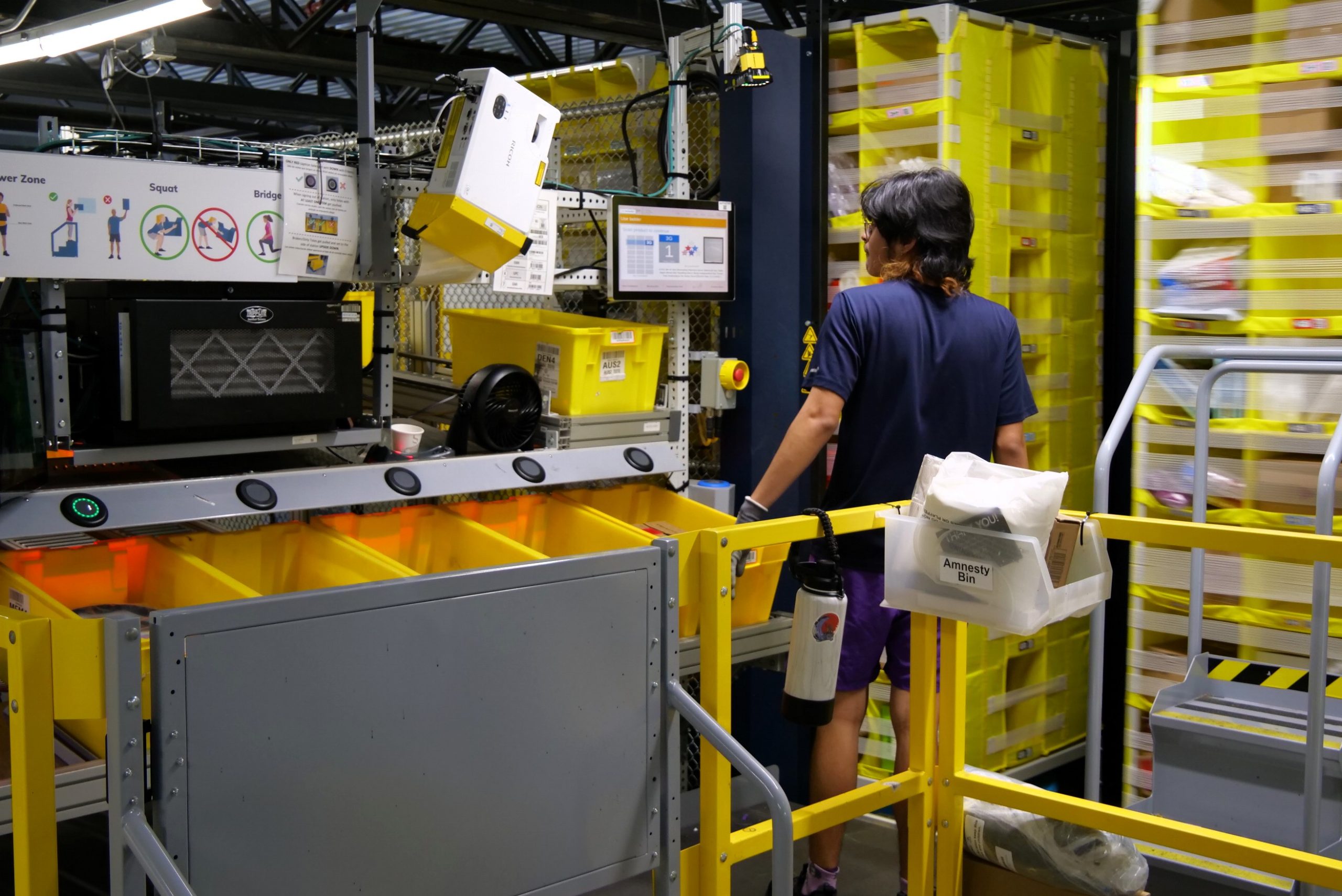
Diving deeper into the robotics unit itself, it’s fascinating to see the triumphs and trials that define it. This division has been Amazon’s secret weapon in the warehouse wars, deploying its 1 millionth robot just last year—a milestone that symbolizes the company’s tech prowess. These robots aren’t your typical Roomba; they’re sophisticated machines designed to move heavy fabric shelving units and products with speed and safety, reducing reliance on human labor in sprawling facilities like the AUS2 fulfillment center in Austin, Texas. Workers there interact with Hercules drives and other automated systems that make the job feel like a sci-fi collaboration between man and machine. But even such advanced setups face hiccups. In January 2026, Amazon shut down its Blue Jay warehouse robotic system, as reported by Business Insider—a project that promised even greater automation but apparently didn’t pan out. It’s a sobering reminder that not all bets win in the robotics game. For employees laid off, this could mean reflecting on projects gone awry or those that redefined efficiency. Imagine the pride in seeing a robot fleet handle peak-season chaos, only to hear about shelved initiatives. The human element shines through here: engineers bonding over late-night code sessions, sharing stories of triumphs like deploying robots in new markets, or venting frustrations about debugging glitches. Robots are tools, but the people behind them are the visionaries. These layoffs might signal a pivot—perhaps toward more cost-effective AI integrations or partnerships— but for those exiting, it’s a chapter closing on a career defined by pushing boundaries.
Beyond robotics, Amazon is recalibrating other ventures that once buzzed with potential. In that same January announcement, the company revealed plans to close all its Amazon Go and Amazon Fresh grocery store locations. These were the futuristic retail experiments, where you “just walked out” with items, thanks to overhead cameras and sensors scanning purchases in real-time—no cashiers, no lines, just seamless shopping. It was revolutionary at launch, a glimpse into a cashless, checkout-free future that excited tech enthusiasts and shoppers alike. However, the stores struggled with foot traffic, scalability, and profitability, leading to a full shutdown. Yet, Amazon isn’t abandoning the technology; it’s reimagining it as a licensing business, allowing other retailers to adopt the “Just Walk Out” model. For employees in these divisions, it’s a mix of heartache and hope—jobs evaporating, but their innovations enduring. Picture the store managers who mastered the art of sensor maintenance or the developers who fine-tuned algorithms for instant detection; now, they’re navigating layoff support while wondering if their skills translate elsewhere. This humanizes the broader Amazon story: it’s not just about profit margins but about the people who built these ideas from scratch. Amazon Go was born in a world obsessed with convenience, born from ideas at Jeff Bezos’ holiday letters, and now, it’s evolving, teaching lessons in adaptation.
Looking back, these 2026 moves echo Amazon’s turbulent history of workforce shifts. The company has never been shy about aggressive optimization, having slashed 27,000 positions across multiple rounds in 2023 alone—a year when corporate roles swelled to around 350,000. That figure was last publicly shared in early 2023, and now, with the robotics layoffs added to the mix, it hints at an even leaner structure. Today, Amazon’s overall workforce stands at 1.58 million, encompassing the warehouses that keep the machine running. In a human sense, these numbers tell stories of ambition and attrition: the website editor turned devop, the picker in the fulfillment center dreaming of a white-collar role, or the robotics engineer holding down the fort amid layoffs. Beth Galetti’s memo assures there’s no intent for endless cuts, but in a hyper-competitive landscape, where AI threatens jobs and global economies demand flexibility, adjustments are inevitable. For those affected, it’s a call to resilience—retrain, network, pivot. Amazon, meanwhile, marches on, balancing innovation with pragmatism, ever the reflection of our times. Who knows what the next chapter holds? More robots, fewer workers, or perhaps a renewed focus on human-centered tech? One thing’s clear: in the world of Amazon, change is constant, and humanity lies in how we navigate it. As layoffs ripple through, it underscores the need for empathy in corporate decisions, ensuring that progress doesn’t come at the expense of the people powering it. After all, it’s the human touch—the engineers sketching robot paths, the managers guiding teams—that turns gears into growth, and stories into legends.