


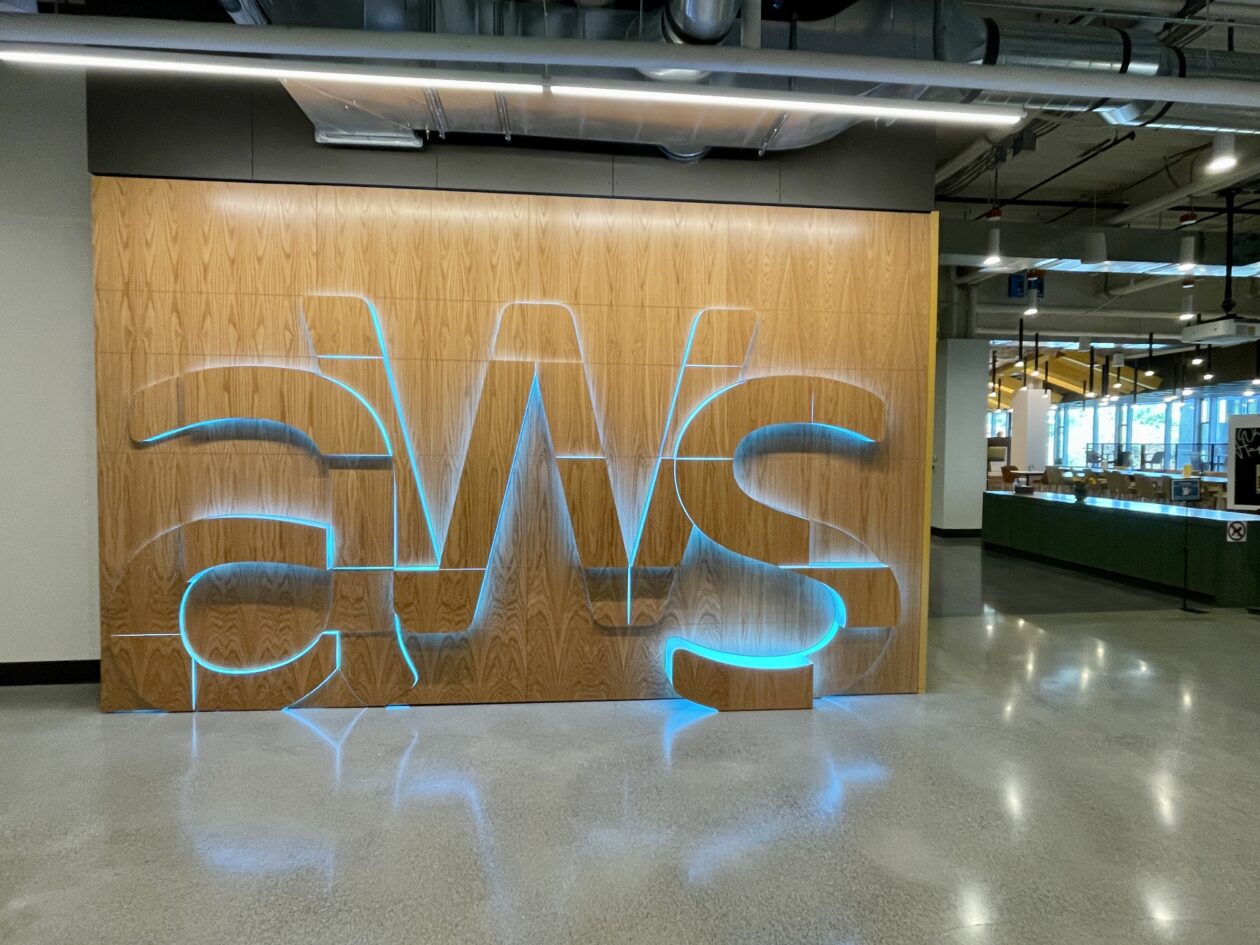
Imagine stumbling upon a blockbuster deal that shuffles the entire tech world, like finding out your quiet neighbor is actually a billionaire in disguise. That’s the vibe this February 27, 2026, announcement from Amazon gave off—right there in their sprawling Seattle fortress, as tech reporter Taylor Soper snapped a photo, jaws might have dropped globally. Amazon isn’t just investing in OpenAI; they’re diving in headfirst with a jaw-dropping $50 billion commitment to the ChatGPT creators. It’s the kind of move that screams “we’re all in on AI,” especially when you consider this is layered onto an already hefty $110 billion funding spree for OpenAI, pulling in heavy hitters like SoftBank and NVIDIA. Pre-money valuation? Astronomic—$730 billion, pinning OpenAI as a mega-giant in the making. Fast-forward a bit, and Amazon starts with a $15 billion initial jolt, eyeing another $35 billion in the pipeline if certain stars align. Think of it as Amazon throwing their chip-laden hat into the AI ring, betting big on the future where AI isn’t just a trendy gadget but the backbone of how businesses operate.
Diving deeper into the mechanics, this partnership supercharges the technical wizardry between OpenAI and Amazon’s cloud giant, AWS. They’re ramping up an existing deal from $38 billion to a whopping $138 billion over eight years—that’s eight long years of collaboration, folks. OpenAI commits to cranking up their AI workloads on AWS, including guzzling 2 gigawatts of power on Amazon’s secret weapon: Trainium chips, those custom-built brains designed specifically for training and deploying AI models. It’s like OpenAI is saying, “Hey AWS, we’re your biggest fans,” dedicating massive compute to new tools and experiments. This isn’t just about money; it’s about weaving OpenAI’s cutting-edge models into Amazon’s infrastructure, spreading their AI magic across businesses and everyday users on a planetary scale. OpenAI’s CEO, Sam Altman, put it eloquently: “Combining OpenAI’s models with Amazon’s infrastructure and global reach helps us put powerful AI into the hands of businesses and users at real scale.” It’s the kind of synergy that reminds you of puzzle pieces finally snapping together, creating something way more powerful than the sum.
On Amazon’s side, CEO Andy Jassy didn’t hold back his enthusiasm, spilling over on LinkedIn about why this feels like a homerun. “We think they’ll be one of the big winners in AI, we can help them grow, and we believe we’ll earn a strong return for Amazon over the long term,” he penned, painting a picture of mutual growth rather than just a transaction. Analysts from William Blair crunched the numbers and came out grinning, calling it a crystal-clear win for AWS. That added $100 billion from OpenAI over eight years? If distributed evenly, it could translate to about $17 billion annually—roughly 11% of AWS’s projected 2026 revenue. And get this: OpenAI’s pledge to gobble up enormous chunks of those Trainium chips is like a glowing endorsement, proving AWS can handle the big leagues of AI workloads. Suddenly, Amazon’s record $200 billion capital expenditure plan for the year makes total sense—it’s not just spending; it’s an investment in the AI arms race.
But wait, this deal ripples outward, especially since Amazon already cozies up with OpenAI’s rival, Anthropic. It’s a strategic chess game where Amazon, Microsoft, and Google battle for AI supremacy, each vying for the cloud contracts that fuel these machine-learning behemoths. Microsoft, though, fired back quickly with reassurance, emphasizing that their longstanding bond with OpenAI stays rock-solid. In a statement, they noted, “Nothing about today’s announcements in any way changes the terms of the Microsoft and OpenAI relationship.” This means revenue-sharing deals remain intact, and they still handle “sharing revenue from partnerships between OpenAI and other cloud providers.” Crucially, Azure keeps its exclusive grip on stateless OpenAI APIs— those quick, one-off interactions like firing off a question and getting a response. It’s the difference between a simple chat and a complex, ongoing AI session that remembers context, multitasks, and collaborates like a team.
Peeling back the layers, this arrangement carves out new territories for both sides. AWS and OpenAI are co-engineering a “Stateful Runtime Environment,” harnessing OpenAI’s brains and channeling them through Amazon Bedrock, the platform where customers craft full-fledged AI apps and agents at production level. AWS also becomes the sole third-party cloud lifeline for OpenAI Frontier, an enterprise tool for managing AI agent teams with shared knowledge, safeguards, and protocols. As Microsoft pointed out, Frontier stays rooted on Azure, but Amazon’s stepping in as the distributor. And get this personal touch: Amazon and OpenAI plan to custom-build models tailored for Amazon’s own user-facing gizmos, weaving AI into everyday experiences like shopping on the site or navigating Alexa.
Looking back with that nostalgic lens, it’s almost poetic—Amazon was OpenAI’s very first cloud buddy back in 2015, doling out compute power when the lab was just a twinkling idea. But they parted ways, reportedly over some nitpicky terms that left a sour taste. Fast-forward a decade, and Amazon’s penning a $50 billion check to reclaim their spot in the spotlight. It’s a redemption arc, turning from “petty” grievances to a powerhouse reunion. In the grand tangle of tech rivalries and breakthroughs, stories like this remind us that AI isn’t just lines of code—it’s about human ingenuity, big bets, and the thrill of innovation. This deal signals a new chapter where giants like Amazon and OpenAI blur lines between competitors and collaborators, potentially unlocking AI’s true potential for everyone, not just the elite few. As developments unfold, keeping an eye on how this shapes the AI landscape will be fascinating—will it level the playing field, or just amplify the winners? Only time, and perhaps a few more announcements, will tell. For now, buckle up for an AI-fueled ride that’s more blockbuster than buzzword.