







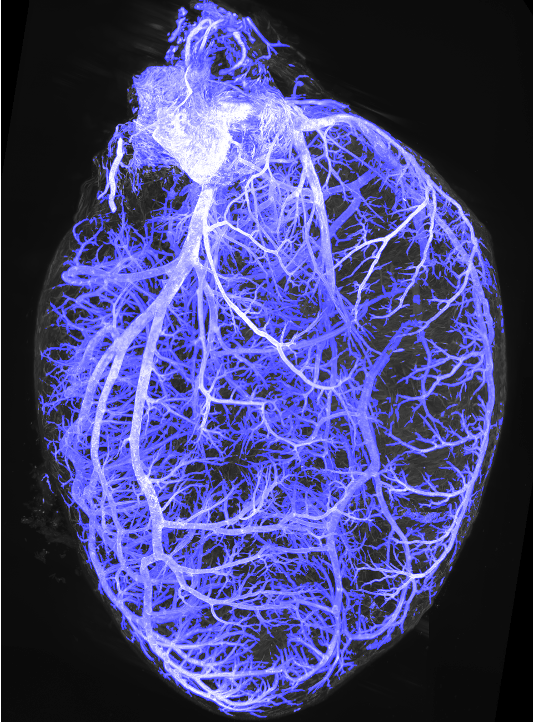
Alpenglow Biosciences: Bringing Revolutionary 3D Imaging to Cancer Diagnostics
In a significant advancement for medical diagnostics, Seattle-based Alpenglow Biosciences has announced a strategic partnership with PathNet, one of America’s leading pathology laboratories. This collaboration marks a pivotal step in bringing Alpenglow’s innovative 3D microscope technology from research settings into clinical applications where it matters most—helping diagnose cancers that affect thousands of patients annually. The partnership will specifically target modernizing diagnostic procedures for prostate and bladder cancers, conditions where accurate visualization and assessment can dramatically impact treatment decisions and patient outcomes. This development comes alongside confirmation of $250,000 in new funding from Mike Rice, former CEO of BioLife Solutions and a member of Alpenglow’s advisory board, further solidifying confidence in the company’s direction and potential.
Founded in 2018 as a University of Washington spinout, Alpenglow Biosciences was born from the frustrations experienced by Dr. Nick Reder during his pathology residency. “I wasted thousands of hours of my time sifting through images and trying to make sense of them,” recalls Reder, who now serves as the company’s CEO. This personal experience drove the development of their groundbreaking technology, which rapidly creates multi-dimensional images from biological tissue samples and employs AI-trained algorithms to analyze them with remarkable precision. The technology doesn’t just visualize tissue—it predicts outcomes: “This is your risk for metastasis,” or “This is the likelihood that you’ll respond to a drug,” explains Reder. “It really adds a lot of value to the diagnostic workflow.” This transition from research labs and pharmaceutical companies to clinical settings represents a significant evolution, requiring enhanced regulatory compliance and validation protocols because, as Reder soberly notes, “People’s lives are depending on it.”
The partnership with PathNet will see Alpenglow’s technology implemented at PathNet’s Little Rock, Arkansas laboratory, where they will develop and validate tools specifically designed for cancer diagnostics. This implementation follows Alpenglow’s ongoing collaboration with international optics pioneer Zeiss, which has been instrumental in engineering the specialized microscope hardware and analytics software necessary for clinical applications. Jason Camilletti, PathNet’s CEO, has expressed enthusiasm about the partnership, describing Alpenglow’s platform as “revolutionary” and highlighting how their collaboration can “modernize genitourinary cancer diagnostics for clinicians and patients across the country.” This validation from a leading industry player underscores the transformative potential of Alpenglow’s approach to tissue analysis and cancer detection.
The startup’s momentum extends beyond this new partnership, with significant financial backing supporting its ambitious vision. With approximately $10 million raised from investors and another $10 million in grant support, Alpenglow has established itself as a serious contender in the medical technology space. Last year, the company received $2 million in federal funding to develop a prostate cancer diagnostic tool in collaboration with CorePlus, a pathology software company. Perhaps most notably, Alpenglow is participating in a multi-institution, five-year project valued at up to $21 million that launched as part of the Biden administration’s Cancer Moonshot initiative. This prestigious project focuses on developing technology to identify tumor margins during cancer surgeries—a critical capability that could revolutionize surgical oncology by enabling more precise tumor removal while preserving healthy tissue.
Alpenglow’s commercial reach already extends to impressive industry players, including pharmaceutical giant GSK (formerly GlaxoSmithKline), InSight Biopharmaceuticals, and various dermatology companies. This diverse customer base demonstrates the versatility and broad applicability of their imaging platform across different medical specialties and research areas. The company now employs 22 people and continues to build on the foundation established by its founders: Reder, Jonathan Liu (an affiliate professor in UW’s Department of Mechanical Engineering), Adam Glaser (now a senior scientist at the Allen Institute), and Lawrence True from the University of Washington. This interdisciplinary founding team brought together expertise in pathology, engineering, and biological imaging—a combination that has proven crucial to developing their innovative platform.
For Reder and his team, seeing their technology progress from an academic concept to a tool poised for clinical implementation represents the fulfillment of their original vision. “Actually getting into the clinic this year and then hopefully regulatory approval next year and all these big landmarks, it’s really exciting,” Reder reflects. “That was always the goal.” As Alpenglow Biosciences continues its journey toward full clinical implementation, the impact could be profound. By enabling pathologists to visualize tissue samples in three dimensions with AI-assisted analysis, the technology promises more accurate diagnoses, better-informed treatment decisions, and ultimately improved patient outcomes. The partnership with PathNet represents not just a business milestone but a significant step toward transforming how we diagnose and treat cancers that affect millions of lives worldwide. As medical imaging and AI continue their rapid evolution, Alpenglow stands at the forefront of a movement to bring these powerful technologies directly to patient care.