

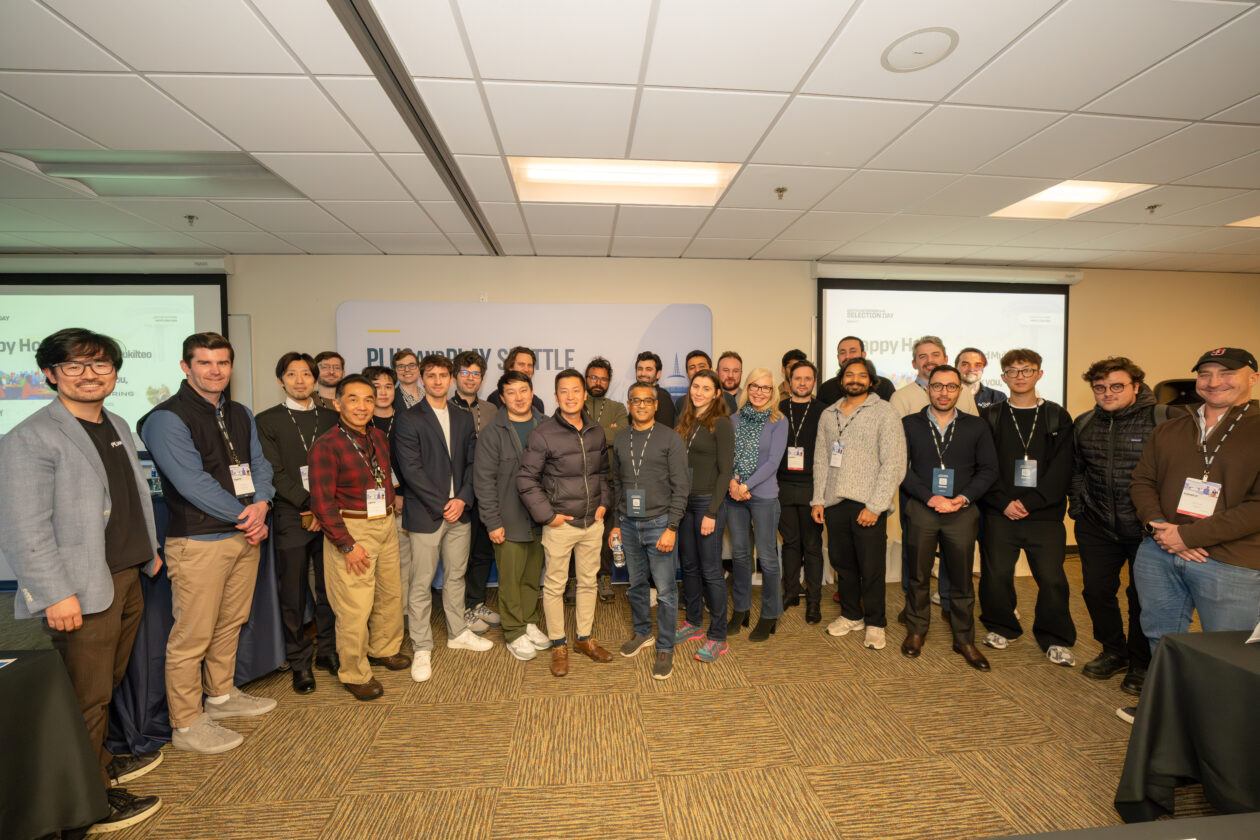
Plug and Play Tech Center has always been about spotting the next big thing in innovation, and their Seattle outpost is buzzing with fresh energy as they celebrate a milestone. Just over a year ago, this Silicon Valley powerhouse decided to plant roots in the Emerald City, expanding their global network of accelerators to tap into Washington’s tech heartbeat. On a crisp Monday morning, they unveiled the stars of their third local cohort—a carefully selected group of 10 startups whose ideas could change how we live, work, and even heal. These entrepreneurs, mostly hailing from Seattle itself, are gearing up for a 12-week sprint through mid-June, tackling everything from enterprise software to biotech breakthroughs. Imagine a quiet office in the University of Washington’s bustling CoMotion Labs where dreams turn into deals. It’s a testament to Seattle’s legendary tech scene, filled with brilliant minds who left big-tech comfort zones to chase their own visions. For these founders, it’s not just about building apps or gadgets; it’s about solving real-world problems with software that thinks, robots that learn, and health insights that save lives. Jack Callaghan, the affable director of Plug and Play Seattle, summed it up perfectly in a release: “Seattle has one of the deepest pools of technical talent in the world, and this cohort reflects that.” He’s right—it’s like gathering a team of innovators who could reshape industries overnight. Each startup in this group is unique, born from late-night coding sessions, offbeat inspirations, and a relentless drive to make an impact. Take Ally AI, for instance, from the heart of Seattle. Their founders likely spent countless hours dreaming up an AI that chats with car buyers like a friendly sales rep, but 24/7 and across every channel—emails, texts, even calls. It’s the kind of tool that keeps dealerships humming in a world where customers expect instant, intelligent responses. Or Clockwork Bio, another local gem, where scientists are using AI to turbocharge drug discovery. Picture researchers poring over biology data, training machines to predict how drugs interact with the human body, speeding up experiments that once took months into days. These aren’t faceless companies; behind each are real people with stories of frustration, Eureka moments, and the thrill of collaboration.
What sets Plug and Play apart is their hands-on, almost parental approach to nurturing these startups. Instead of throwing them into the deep end, they offer personalized one-on-one guidance that’s like having a seasoned mentor hold your hand through the chaos of launching a business. Founders get help refining their business models, crafting go-to-market strategies that actually convert curious ideas into revenue streams, and forging partnerships that could lead to million-dollar deals. It’s not just theory; the program dives into the nitty-gritty of building proof-of-concepts—those early prototypes that prove your wild idea can actually work in the real world. Pilot projects turn into commercial relationships, turning fledgling ventures into formidable players. For many in the cohort, this means transforming hobby projects into scalable enterprises. ElastixAI, for example, is tackling the heavy lifting of AI infrastructure, where machine learning isn’t just fast—it’s customized in real-time to hardware. Their team has probably debugged code into the wee hours, excited about how this could make AI cheaper and more efficient for everyone. Glacis adds a layer of trust, using cryptography to verify every AI decision, ensuring that autonomous systems in factories or hospitals don’t just guess—they prove their accuracy. It’s humanizing AI in a world where transparency matters more than ever. Meanwhile, ImYoo Health, bridging the gap from Sunnyvale to Seattle’s tech scene, empowers individuals with single-cell health insights, connecting people with similar immune profiles for personalized medicine. These aren’t abstract tech talks; they’re conversations about how everyday people can live healthier lives without corporate gatekeepers.
Diving deeper into the cohort’s roster feels like peeking behind the curtain of Seattle’s innovation lab. Reflection Robotics is a standout, with founders likely drawing from robotics hobbyists who built gadgets in garages. Their robot foundation models make automating factory tasks as simple as flicking a switch—no need for custom hardware that costs a fortune. Imagine replacing tedious, error-prone manual work with smart machines that learn on the fly, boosting productivity and safety. Sigma Genetics takes it to the human level, developing devices that deliver vital molecules like DNA into cells non-invasively. For someone battling a tough disease, this could mean treatments that are less invasive and more effective, changing lives one patient at a time. Strum AI addresses the logistics nightmares of supply chains, using AI to make decisions that keep shelves stocked and costs down—think of the relief for CEOs tired of predicting demand swings. Tibbling Technologies blends AI with neuroscience, solving complex problems in health and the brain, perhaps inspired by researchers who’ve seen firsthand how multimodal systems could decode mental health mysteries. And Vicino AI brings creativity to gaming and AR/VR, generating 3D assets from simple text or images, empowering artists and developers to build immersive worlds without needing 3D modeling expertise. Each of these companies carries the DNA of Seattle’s collaborative spirit, where tech talent collaborates in cozy coffee shops or lively hackathons, sharing ideas over lattes and turning “what if” into “how about.”
The human side shines through in these founders’ journeys—the late-nighters fueled by passion, the setbacks that built resilience, and the triumphs shared in huddles at Plug and Play’s offices. Most sessions happen virtually, adapting to our modern, hybrid world where Zoom is a lifeline and face-to-face isn’t always feasible. But when possible, startups pop into the welcoming space at the University of Washington’s CoMotion Labs or the expansive SNBL Global Gateway in Everett. It’s a communal vibe, like a writer’s retreat or a think tank, where isolation gives way to synergy. Events like the upcoming Expo on June 5 at UW’s Kane Hall add a tangible excitement, a chance for these innovators to strut their stuff in front of investors, mentors, and peers. Picture the hall alive with demos—robots whirring, AI chats unfolding, and health devices clinking under bright lights. For many founders, especially those new to the scene, it’s a benchmark to measure their 12-week growth, turning raw potential into polished pitches. Plug and Play’s team, led by the enthusiastic Jack Callaghan, acts as connectors, bridging gaps between ambitious dreamers and the resources they need. It’s not just about funding; it’s about fostering ecosystems where talent thrives, much like how Seattle has long been a hub for aerospace to software giants.
Reflecting on Plug and Play’s roots adds depth to this Seattle story. Founded in Silicon Valley, they announced their local expansion in November 2024—a move that locals greeted with open arms as an injection of venture energy into a region already rife with brilliance. With over 60 global locations, they’re not newcomers to scaling innovation; they’ve been the launchpad for household names like Dropbox and PayPal, which started as scrappy ideas and blossomed into empires. Beyond accelerators, Plug and Play runs corporate innovation programs, where big companies tap into startup magic for fresh ideas, and their in-house venture capital fund backs gems like Guardant Health and Lending Club. This Seattle chapter builds on that legacy, democratizing access to high-caliber guidance. For founders in this cohort, it’s a step toward joining those success stories, but with a personal touch: one-on-one sessions that feel like friendly coaching, not cold corporate handshakes. Seattle’s reputation as a tech cradle, mixing Microsoft alumni with biotech pioneers, makes it the perfect canvas for such programs. It’s affirming that talent knows no borders—Sunnyvale’s ImYoo Health teams up seamlessly with local AI wizards, creating a melting pot of minds.
As the cohort embarks on its journey, there’s a palpable sense of optimism across Seattle’s tech community. These 10 startups aren’t just participants; they’re ambassadors of progress, each carrying the weight of community pride and the spark of possibility. Plug and Play’s event on June 5 will likely be more than a showcase—it’s a celebration of human ingenuity, where code meets compassion, robots dance with reality, and health tech heals divides. For the founders, mentors, and investors involved, it’s about more than profits; it’s about legacy. Imagine the ripple effects: a better auto buying experience here, a faster drug on the market there, or safer factories everywhere. Plug and Play Seattle embodies that spirit, reminding us that innovation isn’t a solitary endeavor but a collective dance of ideas. As they mark their one-year anniversary, the cohort symbolizes renewal—the endless cycle of dreaming, building, and disrupting. In the end, these entrepreneurs aren’t superheroes in capes; they’re everyday people with extraordinary visions, fortified by a program that believes in them. Seattle’s tech scene, with its rainy resilience and inventive soul, stands ready to amplify their voices, one breakthrough at a time. This is more than an accelerator; it’s a human story of ambition, collaboration, and the timeless quest to make the world a bit smarter, healthier, and more connected.