


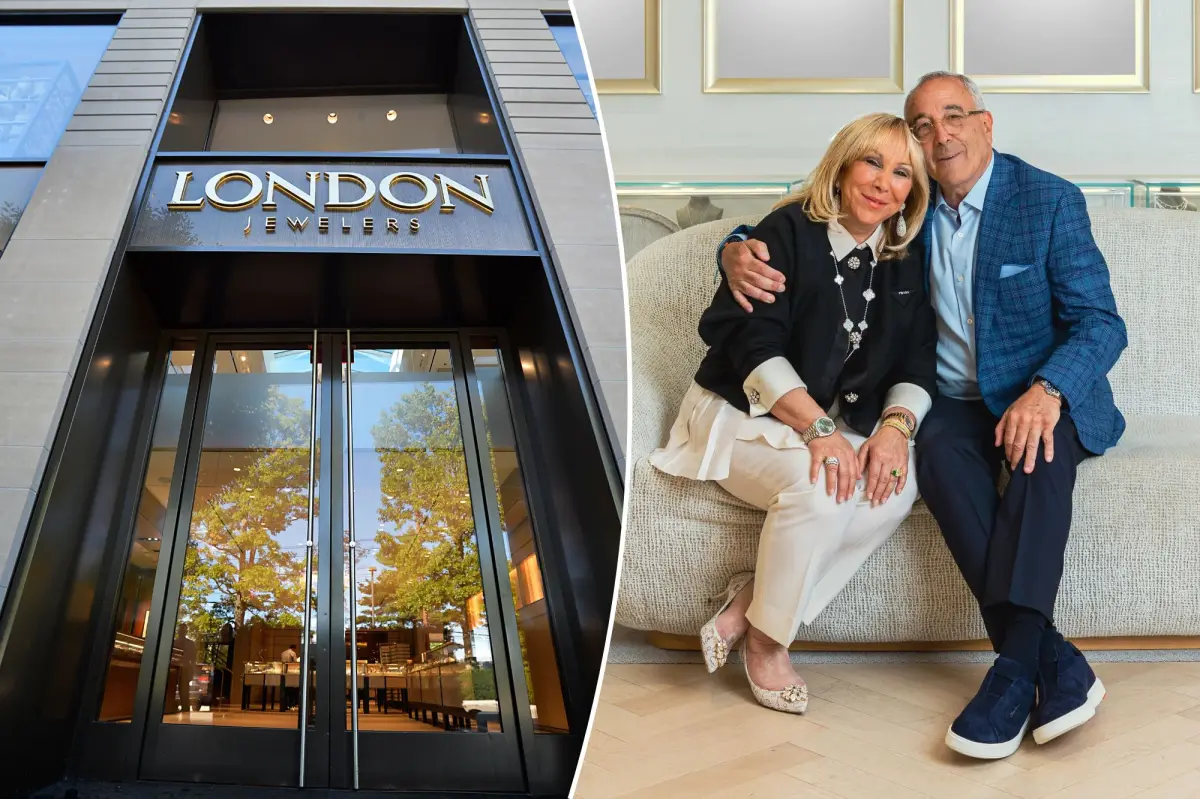
A hundred years is a long time for any business, but for a family-run jewelry house, it is something close to a miracle. It was 1925 when Charles London first unlocked the doors of a modest shop in Glen Cove, New York, with little more than a commitment to craftsmanship and a belief that the right piece of jewelry could mark life’s most treasured moments. A century later, that same commitment still anchors the family, and the business remains firmly in the hands of the founding family, now four generations deep. What began as a single store has blossomed into five distinguished locations across Manhasset, East Hampton, Southampton, Glen Cove, and Short Hills, New Jersey. For Zach Udell, vice president of London Jewelers, the centennial is not just a milestone but a deeply personal celebration. “One hundred is a special milestone for our family, and we don’t take that as a small thing,” he says, and you can hear the weight of those words. To honor the anniversary, the retailer published a commemorative book filled with never-before-seen photographs, warm memories from longtime clients, and reflections from former employees who helped shape the store’s character. The yearlong celebration has been filled with moments like these—moments that remind everyone that a jewel is not just an object, but a vessel for memories. And the party is far from over. The excitement continues at the 16th annual Watch Fair, set to take place October 23–25 at the iconic Northern Boulevard flagship in Manhasset, where the past, present, and future of fine watchmaking will come together under one roof.
The Watch Fair has become something of a marquee tradition for London Jewelers, and it is easy to see why. For Udell, the event is pure adrenaline, and the two weeks of frantic preparation leading up to it feel less like work and more like joy. “It’s just like fun and adrenaline,” he says. “And I think that’s true for our entire staff.” The fair draws watch enthusiasts from across the country, some who have been loyal customers for decades and others who are stepping into the store for the very first time. What makes it so special is the combination of education, experience, and genuine hospitality. Representatives from the world’s finest Swiss watchmakers come to showcase their latest creations, share the stories behind their craft, and explain the intricate mechanics that make each timepiece tick. Attendees get rare access to special-edition pieces, some of which are making their American debut. But the fair is not just about the watches—it is about feeling welcome. London’s legendary hospitality is on full display, with activities, treats, and warm conversations that turn first-time visitors into lifelong friends. The event also marks an unofficial start to the holiday shopping season, and Udell notes that many clients like to get a head start on their gift-giving, especially in the watch world. One of his most memorable moments came last year when a client from Westchester, who had never visited before, fell in love with a vintage Cartier watch that Udell had recently acquired and serviced. They talked for a while, with Udell sharing every detail—why he chose not to polish the case, how he selected the perfect strap, the history of the piece—until the client was completely won over. “It’s so fulfilling to match a customer with the perfect product,” he recalls. That sense of connection is the heart of the entire event.
As if the Watch Fair were not enough, London Jewelers is preparing to reveal something truly extraordinary early next year: a completely reimagined flagship store in Manhasset. The renovation has been a near-total transformation, with the entire structure rebuilt from the ground up. “We literally rebuilt the structure,” Udell says. “Everything from the elevator to the staircase is brand new.” The store, which already spans over 13,000 square feet, is gaining a new third floor, complete with a comfortable lounge and an outdoor seating area designed to host even more events and activations throughout the year. There will also be a custom-built Baccarat bar, a glittering centerpiece that promises to make the space feel less like a retail store and more like an exclusive club for people who appreciate the finer things in life. “It’s going to be very cool,” Udell predicts, and even that understatement feels like an excitement in itself. The renovation is a bold statement of confidence in the future, a way of saying that London Jewelers intends to be here for another hundred years. It is also a beautiful blend of old and new, honoring the traditions that built the brand while embracing a modern, airy aesthetic that will welcome a new generation of collectors. The new watch salon, in particular, has been designed to be a destination—a place where clients can sit, explore, and really take their time discovering timepieces in a setting that feels intimate and luxurious. The third-floor lounge and outdoor terrace will provide a venue for everything from private events to educational workshops, giving the store a sense of community that goes beyond transactions. With the Baccarat bar sparkling under the lights, the flagship will be more than just a place to buy a watch; it will be a place to belong.
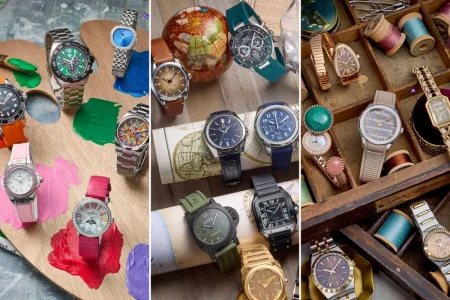
To celebrate the centennial, London Jewelers has also commissioned a collection of exclusive limited-edition timepieces that are as rare as they are beautiful. Each one tells a story of partnership and shared history between the retailer and some of the most respected names in horology. The Gerald Charles anniversary watch, for example, is a striking piece crafted from lightweight titanium, featuring a graduated turquoise dial that shifts in the light like a tropical sea, paired with a matching Velcro strap for a sporty yet elegant feel. Limited to just 100 pieces, it carries the London Jewelers “100th” logo above the date window at 6 o’clock, while the caseback is engraved with the London logo and the famous “LJ” is etched onto the rotor—a subtle, personal signature that only the wearer will truly appreciate. Even more exclusive is the H. Moser & Cie. anniversary timepiece, limited to just ten pieces worldwide. Udell describes it with genuine enthusiasm: “It has a very interesting new dial color they haven’t done before—a gradient orange enamel.” The watch is a perpetual calendar, and true to Moser’s minimalist philosophy, the dial shows no brand name at all, no London logo, just the date window. The names of both Moser and London are engraved discreetly on the caseback, while the stylized Art Deco font on the dial is a clever nod to the roaring twenties, the very era when London Jewelers first opened its doors. It is a watch that speaks softly but carries immense presence—a fitting tribute to a century of quiet elegance, and a reminder that true luxury never needs to shout.
Of course, the anniversary watches are just the beginning of the horological treasures that have caught Udell’s eye this year. He lights up when talking about Vacheron Constantin’s new Traditionnelle Twin Beat Perpetual Calendar, a watch that looks phenomenal from the front, even for someone who knows nothing about watchmaking, and offers a cool technical trick with its twin-beat mechanism. Patek Philippe’s new Cubitus 5840P-001 also earns his praise, with a skeletonized dial that reveals the breathtaking complexity of its perpetual calendar movement, all housed in a platinum case that makes it feel even more special. Then there is the H. Moser & Cie. Streamliner Perpetual Moon Concept Meteorite, a timepiece that challenges everything you thought you knew about moonphase watches. “This is not your typical moonphase,” Udell explains. “It’s the actual silhouette of the moon, and it needs just one correction every 122 years.” That astonishing accuracy is a poetic metaphor for London Jewelers itself—a family and a business that has remained remarkably consistent, true to its values, and beautifully in tune with the passage of time for a century. The fact that the moonphase needs correction after 122 years, just 22 years longer than London Jewelers’ own history, feels like a wink from the universe. Given the family’s track record, they are likely to reach that milestone and beyond, still shining brightly, still welcoming clients with the same warmth and expertise that Charles London brought to his first little shop in Glen Cove.
Beyond the technical marvels and anniversary tributes, the heart of London Jewelers has always been the people who help clients discover their own perfect pieces. Randi Udell-Alper, vice president, has a keen eye for styles that feel both fresh and timeless. She loves the Patek Philippe Nautilus 7118 for its iconic design, comparing it to jewelry because of its bracelet and the delicate wave pattern on its dial—understated yet recognizable, a refined and feminine watch that works day or night. The Cartier Baignoire, with its beautiful proportions and feminine curves, feels like a hybrid between jewelry and a watch, perfect for stacking with bracelets or wearing alone, just as easily dressed up as dressed down. For a fun and instantly recognizable piece, she points to the 100th anniversary Rolex Oyster Perpetual 36, whose multicolored Jubilee dial matches practically everything a woman might wear. And for a true exclusivity, there is the new Chanel Première Galon watch in white gold, which had its global launch at London Jewelers for the anniversary and remains exclusive to the store. “It really looks more like a piece of jewelry than a watch,” she says. Her brother Scott Udell, also a vice president, has his own favorites, beginning with the Vacheron Constantin 1921, a beautiful relaunch of a vintage design with an intriguing case shape, blue hands, and gold-and-blue contrast that pays homage to the brand’s history. He also admires the Cartier Cloche, a rare archival piece brought back in very limited production, with its sideways shape and quintessential Cartier DNA. The new Patek Philippe 5270P-016 perpetual calendar charms him with its fresh blue dial and blue-stitched strap, all wrapped in the grand complication legacy where Patek truly excels. And for sheer rock-star presence, he picks the classic Rolex Day-Date in Jubilee gold with an aventurine stone dial, a beautiful pop of color that balances the company’s new in-house-developed gold alloy with an almost celestial shimmer. All of these remarkable pieces, and so many more, can be found at London Jewelers, at 2118 Northern Blvd. in Manhasset, where a century of tradition continues to sparkle, one watch, one client, and one perfect moment at a time.