


1.
For many universities, the letter from Washington arrived as a sudden, sobering jolt. The Pentagon has ordered 30 American institutions of higher learning to conduct sweeping audits of their financial and research relationships with foreign entities, and the price of noncompliance is stark: loss of federal research funding. This is not a gentle request for increased transparency; it is a mandatory, federally imposed review, and it touches some of the most celebrated research enterprises in the country. Universities that have spent decades building global partnerships, welcoming international scholars, and collaborating on projects across borders are now being forced to confront the uncomfortable possibility that some of those connections may threaten national security. The directive asks each institution to examine its named foreign collaborations, identify any place where sensitive or export-controlled research could have been exposed, and report back with a plan to fix the problem. The language in the announcement leaves little room for ambiguity. “The Department of War has zero tolerance for academic partnerships that compromise our national security,” said Emil Michael, the Under Secretary of War for Research and Engineering, in a statement that was both stern and deeply unsettling to many in academia. “Institutions that receive funding from American taxpayers must uphold the highest standards of research security, and these mandated audits will ensure accountability across the board.” For university presidents, research compliance officers, and lab directors, the message is clear: the government’s patience with unexamined international collaboration has run out, and the era of trust-based academic exchange is now shadowed by the harsh demands of geopolitical scrutiny.
2.
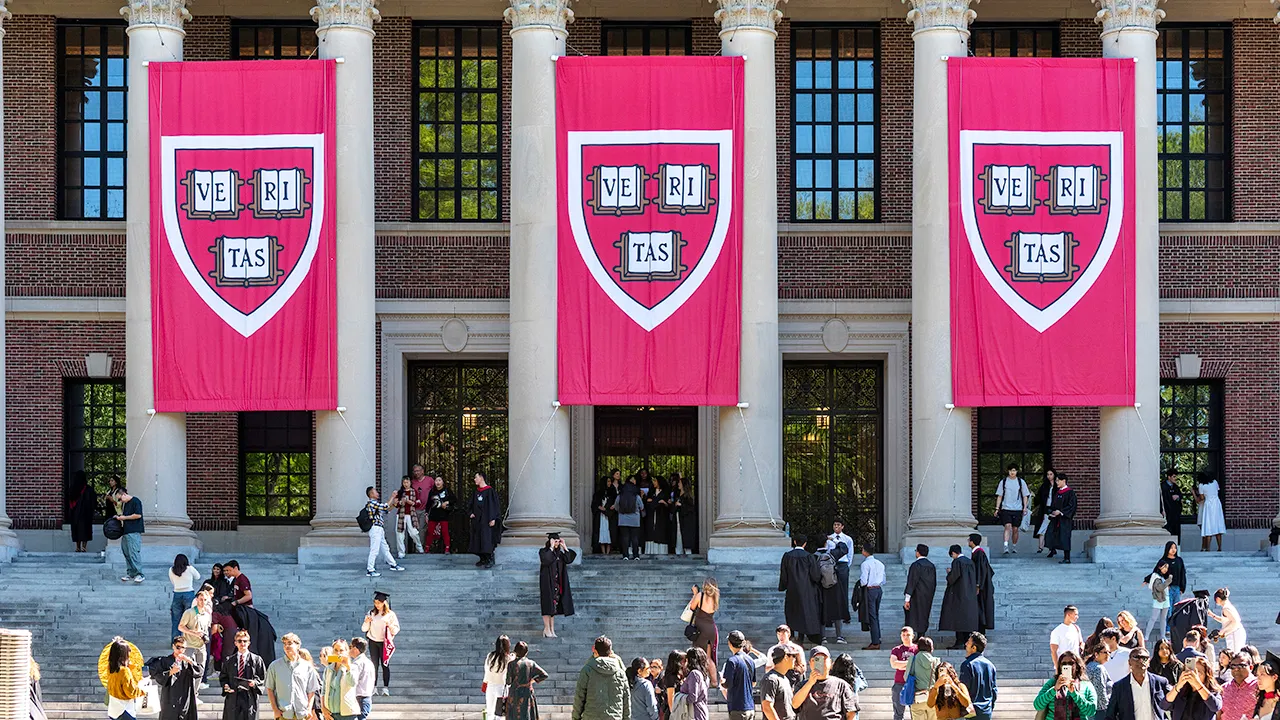
The list of the 30 schools named in the audit order reads like a cross-section of American higher education, spanning elite private universities, massive public research powerhouses, and smaller regional institutions that may have never expected to draw the Pentagon’s attention. It includes Georgetown University, MIT, the University of California at Berkeley and San Diego, the University of Texas at Austin, Emory University, Harvard University, Oklahoma State University, Penn State University, UCLA, the University of Cincinnati, the University of Minnesota, UNC Chapel Hill, the University of South Carolina, the University of Southern California, Virginia Tech, Worcester Polytechnic Institute, Bryant University, Cornell University, Drake University, Duke University, the Illinois Institute of Technology, Johns Hopkins University, New York University, Northeastern State University in Tahlequah, Oklahoma, Portland State University, Southern Illinois University Carbondale, Stony Brook University, the University of Delaware, and the University of Illinois at Urbana-Champaign. The range is striking. Alongside Harvard and MIT are schools like Drake University, a private institution in Iowa better known for undergraduate education than for classified defense research, and Northeastern State University, a regional university in Oklahoma. The inclusion of such a varied group suggests that the Pentagon’s concern is not limited to the usual suspects in cutting-edge military technology. Rather, it reflects a broader unease about the many different ways foreign entities, particularly those tied to China, Russia, and Iran, may be embedded in American academic life, whether through research agreements, faculty exchanges, graduate student funding, or less visible financial gifts. For the universities themselves, the audits represent an enormous administrative burden and an existential test of their relationships with foreign partners. Each institution must now determine which of its collaborations are legitimate and beneficial, which are merely risky, and which are unacceptable enough to terminate altogether.
3.
The substance of the audit goes beyond simply listing foreign grants or partnerships. The schools must evaluate any exposure of sensitive or export-controlled research, meaning they have to trace the flow of information through their laboratories, their data servers, and their people. They must inspect the foreign entities named in their records, compare them against the government’s watchlist, and decide whether any relationship violates national security protocols. If a partnership is deemed problematic, the new rules require the university to terminate it. That is a dramatic step. Cutting off a research relationship, especially one that has produced publications, patents, or shared infrastructure, is rarely as simple as sending a termination letter. It can strand doctoral students, interrupt ongoing clinical trials, and sour relationships with institutions abroad. Still, the Pentagon is unmoved. “Universities are critical partners in executing a wide range of Department of War research programs,” said Dr. Joseph Jewell, Assistant Secretary of War for Science and Technology, “and the Department must therefore ensure that our research investments are well protected from foreign exploitation.” The legal foundation for this push is Section 1286 of the Fiscal Year 2019 National Defense Authorization Act, which produced a list of 130 academic and research institutions located in China, Russia, and Iran that engage in activities “that increase the likelihood of U.S. government-funded research and development efforts being misappropriated.” In other words, the government has concluded that certain foreign institutions are not just competitors to American science; they are potential threats to it. The mandated audits are meant to identify any American researcher or university that has become entangled with these entities, knowingly or not. The institutions are required to submit their findings to the War Department by August 31, which gives them only a few months to conduct what could be a massive internal investigation involving thousands of researchers, dozens of departments, and decades of archived agreements.
4.
The urgency behind this audit order is not abstract. In recent years, investigators in Congress and the intelligence community have documented a pattern of foreign exploitation of American research. A recent report focused on Harvard University, one of the most prominent names on the audit list, found that the Ivy League school failed to safeguard certain research collaborations with Chinese institutions. Harvard researchers co-authored more than 140 publications with researchers at a group of Chinese universities, raising questions about whether U.S.-funded work was being shared in ways that could benefit the Chinese state. Harvard also reportedly received more than $600 million from China under the federal Section 117 foreign-gift disclosure system, more than any other American university, according to the Education Department dashboard referenced in a report from the House Select Committee on the Chinese Communist Party. That kind of financial connection, combined with high-profile research collaborations, has become a serious political liability. The concern is not just about money or papers; it is about how the outputs of American scientific research are being used. Reuters reported in July that China has used outputs from U.S. artificial intelligence models to train its own defense capabilities, meaning that academic openness in highly advanced fields can have direct military consequences. Lawmakers have also raised alarms about Neville Roy Singham, a tech mogul whose $278 million network is accused of spreading Chinese Communist Party propaganda in the United States. The combination of these threats has shifted the mood in Washington from skepticism to confrontation. For universities, this means that research involving artificial intelligence, advanced materials, biomedical engineering, and other cutting-edge fields is now viewed through a national security lens first and an academic lens second.
5.
This audit order is part of a larger, ongoing reexamination of the relationship between American higher education and foreign governments, especially China. One of the most visible symbols of that shift has been the fate of the Confucius Institutes, the Chinese state-supported centers that once dotted American college campuses, offering language classes, cultural programming, and academic exchanges. At their peak, there were approximately 100 such institutes at American colleges and universities. Over the past few years, their numbers have collapsed to fewer than five, according to a 2023 watchdog report. The primary drivers of this rapid decline were federal funding limitations established by various National Defense Authorization Acts and increasing pressure from the government and the public. The institutes described themselves as dedicated to teaching Chinese language and culture, and many students and faculty members genuinely valued their programs. But concerns about their funding connection to Beijing, their governance structures, and the potential for political influence outweighed those benefits in the minds of lawmakers and university administrators. The closures were not always easy. In some communities, the institutes had become cultural bridges, hosting Chinese New Year celebrations, sending students to study abroad, and building connections with local Chinese businesses. Their dismantling was a reminder that the push to sever academic ties with China comes with human costs. Students who had planned to study at partner institutions in China found their options shrinking. Faculty who had collaborated for years on joint research projects suddenly had to navigate new restrictions and funding bans. The same dynamic is now playing out on a broader scale with the audit order. The government is asking universities to look at all their foreign relationships and make hard choices. For many in academia, that feels like a betrayal of the ideal of science as a universal, borderless pursuit. For the Pentagon, it is simply a necessary defense against adversaries who have shown they will take advantage of America’s goodwill.
6.
What happens next is uncertain, but the direction is clear. The 30 universities have until August 31 to deliver their reports, and they must also implement plans to mitigate any actions that violate national security protocols. That is not just a paperwork exercise. It will require difficult, sometimes heartbreaking decisions about which partnerships to keep and which to abandon. A professor who has spent a decade collaborating with a brilliant colleague in Beijing or Moscow may suddenly be ordered to end the relationship, not because the science is flawed, but because the political climate has changed. A university that has relied on foreign students and researchers to advance its labs may find itself explaining why it cannot ensure their work will not be misused. The Pentagon has framed the audits as a way to ensure that taxpayer-funded research is not being stolen or weaponized. The institutions in turn will have to prove that their work is worthy of trust. Fox News Digital reached out to the Department and all 30 schools for comment, and the responses were largely cautious, as administrators absorb the weight of the demand. For the broader academic community, the challenge is to find a way to preserve openness without sacrificing security, to remain places where knowledge can flourish while also recognizing that knowledge can be exploited. That balance has never been more difficult. The audits are a stark reminder that American universities are not ivory towers floating above the world’s conflicts; they are deeply embedded in them. And as the August deadline approaches, the people who run those universities, conduct the research, and teach the students will have to decide what kind of institution they want to be: one that defends its foreign partnerships no matter the cost, or one that recognizes the need for limits in an age of great power competition. Whatever they choose, the era of unquestioned academic openness has ended, and the work of building a more secure, more accountable research enterprise has only just begun.