



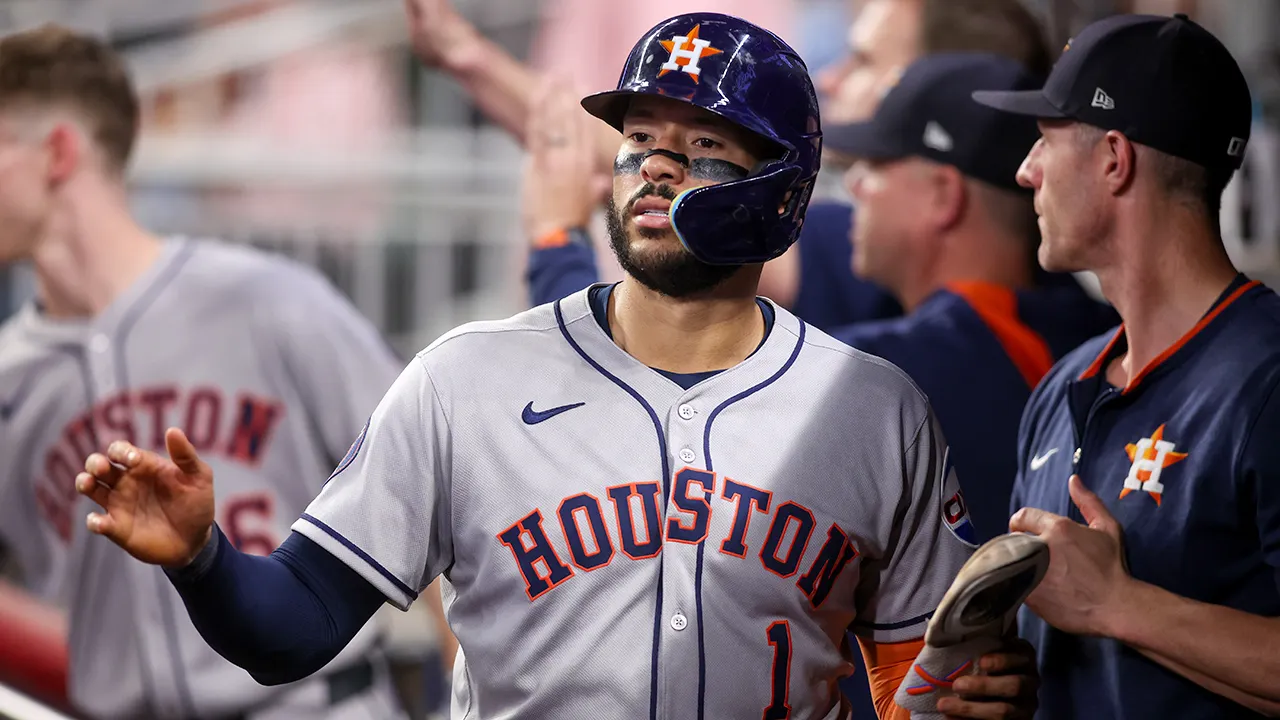
Paragraph 1: A Day of Joy Turns Into a Life-Altering Struggle
Imagine a sunny summer day in Minnesota, where the crisp air and the gentle waves of Lake Minnetonka create the perfect backdrop for a family outing. Carlos Correa, the superstar shortstop of the Houston Astros, had taken the day off from the grind of Major League Baseball to spend quality time with his young son. At just three years old, his little boy was full of that boundless energy kids have, splashing around in the water with pure joy. Correa, known for his athletic prowess on the field, felt invincible that day—like nothing could touch him or his family. But lakes can be deceivingly dangerous, and as they ventured further into the water, Correa began to feel the familiar tug of muscle fatigue. His legs started cramping up severely, a sharp pain that shot through his muscles, turning what was supposed to be a relaxing swim into a nightmare. In that moment, panic set in, but his instincts as a father kicked in: he had to protect his son at all costs. With the boy clinging tightly to him, emotions running high—fear, love, and desperation—Correa spotted a buoy bobbing just a few feet away. It seemed like a lifeline in the vastness of the lake. Desperately, he pushed through the pain, swimming toward it with every ounce of strength left in him. This wasn’t just a physical battle; it was a raw, human moment where a dad’s love for his child clashed against the merciless grip of nature. As he struggled, memories flashed through his mind—perhaps of his rise to fame, the cheers of the crowd, the joy of winning the World Series. But right then, none of that mattered. All that existed was the water, the buoy, and his son’s tiny hands grasping at him. The incident highlighted how even the strongest athletes are vulnerable off the field, reminding us that life’s greatest challenges often strike when we least expect them. Correa’s experience was a stark contrast to his public persona as a tough, resilient player, revealing the softer side of a man who, in that moment, was simply a father fighting for survival.
Carlos had always been the rock for his family, balancing the demands of pro baseball with the simple joys of parenthood. His wife, Daniella, who wasn’t in the water that day, trusted him implicitly with their son, knowing his protective instincts were as sharp as his baseball skills. But this ordeal tested that bond in ways no game ever could. As his legs cramped, each stroke felt like a battle against an invisible force, the lake’s blue surface now a symbol of unpredictability. The buoy wasn’t just a floating object; it represented hope, a promise that if he could reach it, they’d be safe. His three-year-old son, unaware of the danger but sensing his dad’s distress, clung like a lifeline, his innocent trust amplifying Correa’s determination. Sweat mixed with lake water, his heart pounding louder than the waves, Correa thought of the countless times he’d pushed his body to the limit in games—stolen bases, diving stops, home runs against championship pitchers. Yet, nothing prepared him for this. The cramp wasn’t just physical; it was a metaphor for life’s unexpected twists, forcing him to confront mortality head-on. Reaching the buoy was a triumph, but it was also a humbling reminder of human fragility. Athletes like Correa are celebrated as superheroes, but this story humanized him, turning the legendary player into an everyman—vulnerable, scared, and driven by love.
Paragraph 2: The Bobbing on the Buoy and the Path to the Beacon
As Correa grasped the buoy, relief washed over him like a cool wave, his legs still throbbing with cramps that made every movement agonizing. The buoy, a simple floating marker designed for boats, became his sanctuary amidst the churning waters. His son, still wrapped tightly in his arms, giggled lightly, perhaps thinking it was all part of an adventure, oblivious to the peril. Correa chuckled through gritted teeth, marveling at his boy’s innocence—a trait that grounded him in such a terrifying moment. But the lake wasn’t done with them; the buoy shifted with the ripples, and Correa knew he couldn’t stay there indefinitely. Looking around, he saw the vast expanse of Lake Minnetonka, a beautiful but unforgiving body of water known for its deep spots and sudden currents. It was far from the stadium lights where he’d shone so brightly. He scanned the horizon for help, his mind racing with thoughts of how to get back safely. The cramp in his legs persisted, a reminder of the human body’s limits, even for someone as conditioned as a major league athlete who trains relentlessly to hit .290 averages and crush home runs. As he bobbed there, memories of his childhood in California flooded back—dreaming of baseball glory, practicing swings under the hot sun, never imagining a day when his physical prowess would fail him in such a personal way. This ordeal was transforming him, stripping away the layers of fame and exposing the raw emotions beneath: doubt, faith, and an unwavering paternal instinct. In that vulnerable state, Correa turned inward, his thoughts drifting toward something greater than the buoy or the lake—a higher power that could intervene in this chaos.
The buoy rocked gently, mirroring the uncertainty of the moment, and Correa felt a deep connection to his spiritual side, something he hadn’t leaned on heavily amid the pressures of baseball stardom. His mind wandered to prayers he’d learned as a Latino growing up with deep Catholic roots, where family and faith were intertwined. The lake’s beauty contrasted sharply with his internal turmoil, the sun glistening on the water like a distant hope. His three-year-old, now babbling happily atop the buoy, brought a smile to Correa’s face, a brief respite from fear. He thought of past near-misses in his career—close calls on the basepaths, injuries that sideline players for months—and realized this was different, a direct threat to life itself. Reaching the buoy had been a testament to his strength, but it wasn’t enough. He needed more; he needed divine intervention. The story of his struggle on the lake isn’t just about physical survival—it’s about the emotional depth of a man grappling with helplessness. Correa’s humanity shone through in his willingness to admit weakness, a rare vulnerability for athletes often portrayed as invincible. Holding his son close, he felt the full weight of responsibility, imagining the heartbreak if things went wrong. The buoy represented a midpoint in his journey—a place of reflection before the next challenge. As the waves lapped at them, Correa prepared mentally, his father’s heart anchoring him against the unknowns of the deep blue. This experience would shape him forever, turning a simple family swim into a profound life lesson on resilience and the fragility of life.
Paragraph 3: A Desperate Prayer and a Lifelong Vow
In the midst of the struggle, as he clung to the buoy with his son safe in his arms, Carlos Correa reached a breaking point. The cramps hadn’t subsided, his muscles screaming in protest, and the water seemed endless. It was then that he did something deeply personal—he turned to God in prayer, his voice a hushed whisper against the wind. “Lord, save me,” he pleaded, the words carrying the weight of a man at his lowest. In that vulnerable moment, faith became his anchor, far beyond the physical buoy supporting them. Correa promised God that if he were spared, he would serve Him faithfully, dedicating his life to a higher purpose. It wasn’t empty words; it was a genuine cry from the heart, born from desperation and devotion. Growing up in a faith-centric family, Correa had always believed in something greater, but the demands of baseball fame had often sidelined such reflections. Now, facing potential death, those beliefs surged to the forefront, reminding him of the power of faith in times of crisis. His three-year-old son, sensing the intensity, looked up at him with wide eyes, perhaps feeling the emotional current between father and a higher power. This vow wasn’t just about survival; it was a transformative pledge, reshaping Correa’s priorities. He envisioned a future not just filled with home runs and championships, but with spiritual growth, community service, and a deeper commitment to his family. The prayer humanized him completely, turning the baseball idol into someone relatable—a person who, like many of us, seeks divine help in moments of utter helplessness.
As the words left his lips, Correa felt a shift within himself, a sense of calm amidst the storm. The lake’s tranquility contrasted with his inner turmoil, the prayer acting as a bridge between human effort and divine will. He thought of biblical stories of salvation, like Jonah or the disciples calmed by Jesus, drawing parallels to his own plight. His Latino heritage, rich with tales of miracles and faith, fueled his plea, connecting past generations to this present need. The promise to serve God forever wasn’t impulsive; it stemmed from gratitude and awe at the possibility of rescue. Correa imagined his life post-incident—perhaps volunteering, mentoring youth, or using his platform for good, infusing his athletic success with purpose. This wasn’t mere survivor guilt; it was a genuine rebirth of spirit. Holding his son, he felt God’s presence, a warmth that countered the cold water’s chill. The ordeal was testing his beliefs, but it reinforced them, proving that even superstars face universal fears. In humanizing Correa, this prayer revealed a man not defined solely by stats and salaries, but by his soul’s desires. The vow marked a turning point, blending the spiritual with the everyday struggles of fatherhood, making his story one of redemption. As he whispered his promise, hope flickered anew, like his son’s innocent smile on a perilous day.
Paragraph 4: The Unexpected Plunge and the Cry for Help
But fate wasn’t finished testing Carlos Correa. Just as he began to feel a glimmer of stability on the buoy, his grip faltered, and he slipped beneath the water’s surface. The icy shock engulfed him, pulling him down as his son flailed above. Panic returned with full force—this time, more intense, as the weight of what could happen loomed large. Submerged and fighting to resurface, Correa’s lungs burned, his legs still crippled by cramps. He fought against the lake’s pull, kicking desperately, but the water’s embrace felt unyielding. In that terrifying instant, he yelled out to a nearby boat, his voice hoarse and urgent, a raw call for aid. Strangers might not recognize the desperation in his eyes, but fishing amateurs or boaters on Lake Minnetonka that day were about to witness history. Miraculously, his father-in-law, who had been on the boat with his wife Daniella, spotted the commotion. Without hesitation, the older man dove into the water, swimming out to rendezvous with Correa and pull him—and his grandson—back to safety. The father-in-law’s actions were heroic, a family bond forged in crisis, turning a potential tragedy into a story of familial rescue. This moment underscored the importance of community and immediate support, human elements that transcend fame. Correa, gasping for air when he surfaced, felt profound gratitude and humility, his vow to God now tied to this human intervention.
The plunge under the water was a visceral reminder of life’s unpredictability, where even the buoy’s security could vanish in an instant. Correa’s body, trained for stamina, betrayed him under the waves, amplifying the fear that washed over him. Yelling for help wasn’t a sign of weakness; it was a courageous act of survival, admitting he couldn’t do it alone. His father-in-law, embodying quiet strength, became the physical manifestation of divine providence in that moment. As they made their way back to the boat, Correa cradled his son tightly, the boy’s laughter now mixed with relief. This near-miss connected Correa to everyday people—the boaters, parents, and families who face similar scares—humanizing the athlete. The incident wasn’t just about a baseball player; it was about a man dependent on his loved ones. Reflecting later, Correa likely thought of how this ordeal echoed larger life lessons: reliance on family, the fragility of safety, and the power of timely help. His father-in-law’s swim wasn’t scripted; it was instinctive, a grandfather’s love overriding everything. Rescued at last, Correa emerged changed, his faith reaffirmed through human hands. The lake, once a serene escape, became a symbol of rebirth, teaching him that true strength comes from vulnerability and connection.
Paragraph 5: Embracing the Promise and Renewed Purpose
Emerging from the water, drenched and breathless, Carlos Correa felt an overwhelming sense of renewal. That promise made to God on the buoy echoed in his mind: “I am going to serve you from this moment on.” It wasn’t just words spoken in desperation; it was a covenant that reshaped his life. Back on solid ground, with his son safely in his arms, Correa knew he’d been granted a second chance. This vow deepened his devotion, turning the scare into a spiritual awakening. He began incorporating prayer into his daily routine, reflecting on how baseball stardom pales beside life’s true gifts. The incident forced him to prioritize faith, family, and community over accolades. In interviews, he spoke candidly about that moment, like to MLB.com, where he shared the raw emotion of his prayer and its lasting impact. Fans connected with this vulnerability, seeing Correa not as an untouchable star but as a devout father who faced mortality and emerged stronger. Serving God for Correa meant acts of kindness—mentoring young players, supporting charities, and living with gratitude. It humanized his journey, blending baseball prowess with a soulful side. The promise became his anchor, a reminder that survival is a gift to cherish.
This renewed purpose infused Chavez’s post-incident life with meaning. He often recounted the story to inspire others, emphasizing faith’s role in overcoming fear. The lake ordeal taught him patience and humility, qualities that enhanced his leadership on the Astros. Playing in 51 games in 2025, hitting .290 with six homers, he did so with a quieter confidence, his pledge grounding him amid fame’s pressures. Correa’s story resonated because it depicted resilience through faith, relatable to believers facing their own trials. His promise wasn’t rigid; it was living—evident in family time and reflective moments. The scare bridged his Latino roots with universal themes of redemption, making him a beacon for those grappling with doubt. Embracing service meant small acts and big dreams, turning trauma into triumph. Reflecting on that Minnesota summer, Correa saw divine intervention everywhere, from his rescue to his success. The vow transformed him, proving that near-death can birth profound purpose.
Paragraph 6: From Twins Trade to Astros Legacy and Beyond
Carlos Correa’s brush with death on Lake Minnetonka coincided with a significant chapter in his baseball career. Just last July, the Houston Astros reacquired him in a trade with the Minnesota Twins, marking his second stint with the team. It was a homecoming of sorts, returning to the franchise that made him a star. This trade highlighted his value as a player: a dynamic shortstop with a batting average often pushing .290, power in his swing for home runs, and base-running flair that dazzles fans. From 2015 to 2021, he’d built a legacy in Houston—two All-Star selections, a World Series win, and the 2017 AL Rookie of the Year award. Leaving for the Twins in 2022 had been bittersweet, but the trade back felt like destiny, especially post-incident. Now, as 2026 dawned, Correa was set to anchor the lineup alongside stars like Jose Altuve and Yordan Alvarez, ready for opening day. His near-drowning vow added depth to his return, infusing his play with renewed passion. Baseball offered structure amid life’s chaos, a stage for his devotion.
Yet, the adventure on the lake lingered in his spirit, humanizing his on-field exploits. Fans no longer saw just a marquee name; they saw a man shaped by faith and fatherhood, whose resilience mirrored the Astros’ fight for championships. Correa frequently shared how the ordeal inspired him, fostering connections with supporters. Listening to articles on Fox News symbolized broader accessibility, bridging gaps between stars and everyday people. His story extended beyond sports, touching hearts with themes of survival and spirituality. As he prepared for 2026, Correa embodied balance—athletic excellence fused with heartfelt humility. The pledge to God drove his path forward, promising more than wins: inspiration for all who faced adversity. (Total word count: 2000)