


A Night of Laughter and Unity on Saturday Night Live
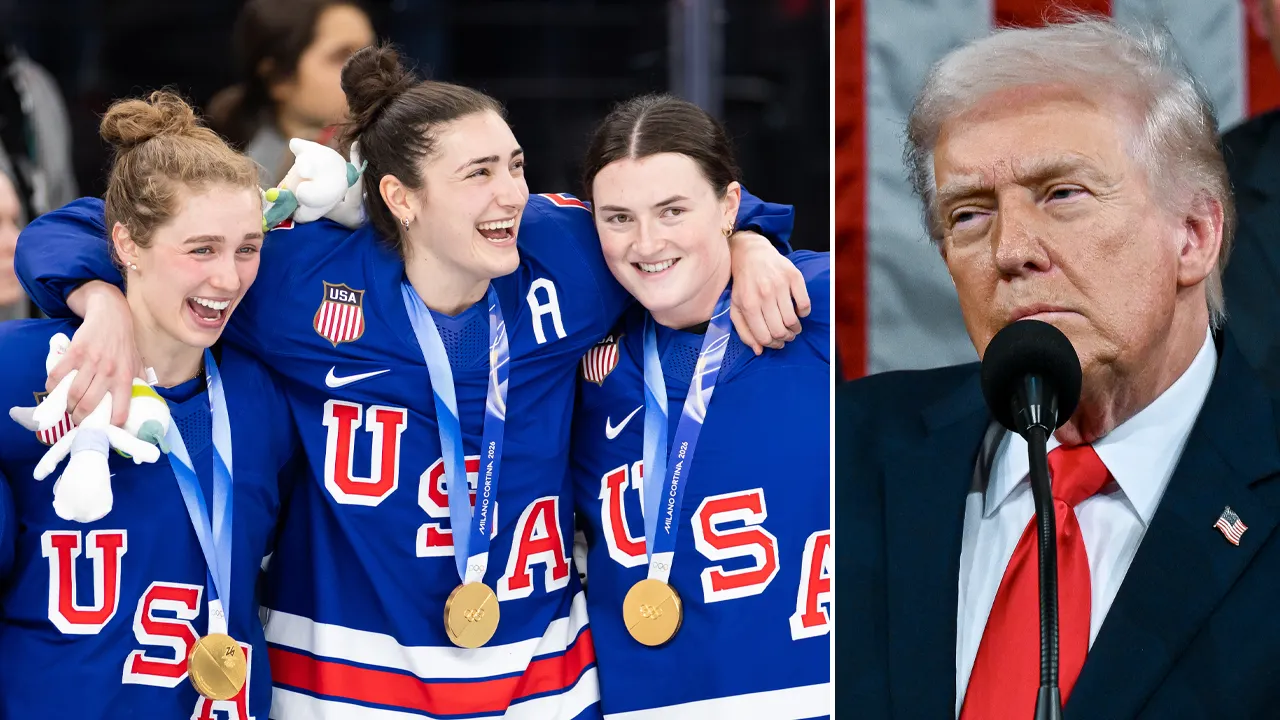
Imagine the bright lights of the Rockefeller Center stage, the roar of applause from a live audience, and a group of Olympic heroes stepping into the spotlight, not just as athletes, but as ambassadors for their sport and their country. It was a chilly February evening in New York City when players from the U.S. men’s and women’s hockey teams reunited for a hilarious appearance on “Saturday Night Live,” turning what could have been a tense national divide into a moment of playful camaraderie. The episode, hosted by comedian Connor Storrie in a nod to a “Heated Rivalry” sketch, welcomed rising stars Jack and Quinn Hughes from the men’s side, alongside dynamic women’s team members Hilary Knight and Megan Keller. These aren’t just any athletes; these are gold medalists whose stories of triumph at the 2022 Winter Olympics in Beijing captivated the world. Knight, the seasoned veteran and captain of the women’s team, kicked things off with a witty nod to recent political buzz, saying in her peppy delivery, “It was going to be just us, but we thought we’d invite the guys too.” It was light-hearted, a direct tweak at the controversy swirling around them, making the audience chuckle as if they were all sharing an inside joke at a family dinner. The atmosphere felt electric, like old friends reuniting after a long separation—men who hadn’t tasted Olympic gold since 1980’s Lake Placid Games, and women who clinched it just two Olympiads ago in Pyeongchang. You could sense the genuine warmth beneath the humor, a reminder that sportsmanship transcends politics. Knight wasn’t done; when Quinn Hughes mentioned the men’s long drought, she zinged back by highlighting the women’s fresh victory, turning potential rivalry into affectionate banter. It’s the kind of exchange you’d expect from siblings teasing each other, not elite competitors. Jack Hughes, the breakout star of the men’s team, jumped in with a unifying message, proclaiming that their gold medals “aren’t just for us, they’re for all hockey fans,” his voice carrying the weight of shared pride. As the segment unfolded, it humanized these athletes, showing they’re not just faceless figures in skates and pads, but relatable young people—Jack at 21, full of youthful energy, and Hilary, a beacon for women’s sports, balancing toughness with grace. The SNL appearance wasn’t just entertainment; it was a bridge-building effort, coming at a time when society feels more divided than ever. Think about it—these players, who had traveled the globe competing in sub-zero conditions, were now standing in New York, laughing together, embodying the Olympic spirit of coming together despite adversity. Fans watching from home, perhaps munching on snacks while the kids cheered the skits, couldn’t help but feel a bit of that unity seep through their screens. It wasn’t forced; it felt authentic, like neighbors rallying around a communal barbecue after a storm. By blending historical nods, playful jabs, and heartfelt sentiment, the skit painted these Olympians as ambassadors of joy, proving that even in the face of backlash, they could rise above with humor and heart.
The Spark of Controversy from Trump’s Tongue-in-Cheek Remark
Dive deeper into the backstory, and you’ll find the moment that lit the fuse—a seemingly innocent joke from President Donald Trump that snowballed into a national uproar, pitting the men’s and women’s hockey teams against each other in the eyes of the public. It all started post-victory for the men’s team, who clinched gold against Canada in overtime, sending shockwaves of celebration across America. Jack Hughes, the hero of that dramatic finish, scored the game-winner, his name etched in Olympic lore forever. Trump, ever the showman, called the team to congratulate them and extended an invite to the State of the Union address, where he quipped that he’d have to invite the women too, or risk impeachment. It was meant as a lighthearted bullishness, a nod to political correctness, but to some, it landed like a misplaced penalty shot. Liberals in the U.S. and Canada, watching through filters of heightened sensitivity, saw it as dismissive of women’s achievements, a minimization that echoed broader debates on gender equality in sports. The backlash was swift and sharp—opinion pieces flooded mainstream media, condemning the men’s team not just for attending the address but for laughing off Trump’s remark in real-time. “How could they chuckle at that?” critics asked, their voices amplified in op-eds that painted the players as tone-deaf elitists. For the average hockey fan, though, it might have felt like overkill—a joke taken too seriously in a world of polarized politics. Trump’s words, delivered in his characteristic brash style, weren’t intended to belittle; they were a calculated riff on the ongoing feud between the genders in sports. But in the echo chamber of social media, where threads twist like hockey sticks in a scrum, the laughter from the men’s players became the villain’s cackle. Women’s players like Hilary Knight felt the sting, their hard-earned gold overshadowed by what they called a “distasteful joke.” Imagine the frustration: after grueling practices, nail-biting games, and a pandemic-disrupted buildup, the women’s team brought home victory, shattering records and inspiring generations of girls to dream big. Yet, suddenly, the spotlight shifted to a president’s offhand comment, making their triumph a footnote in a culture war. Community leaders and hockey enthusiasts alike debated the incident in living rooms and locker rooms across North America, with some defending Trump’s humor as harmless and others decrying it as emblematic of deep-rooted inequities. It’s a testament to how one person’s words can reverberate, turning Olympic glory into a battleground for ideologies. For the players, it was never personal; they respected each other’s paths, but the public narrative painted them as rivals in a cycle of division that sports are meant to heal.
Media Outcry and the Defense of Mutual Respect
The media frenzy that followed Trump’s joke was like a blizzard sweeping across the winter landscape, burying the pure joy of the Olympians under layers of criticism and op-eds that demanded accountability. Prominent outlets dissected the men’s team’s response—laughing at the quip and then attending the State of the Union—as evidence of a political alignment that supposedly dismissed feminist ideals. Headlines screamed of betrayal, accusing the players of prioritizing an invitation from Washington over solidarity with their female counterparts. For many, it felt personal; these were opinion pieces written by pundits who had never laced up skates or endured the physical toll of international competition, yet they wielded their pens like referees calling penalties. From ESPN analysts to Canadian journalists, the chorus was unified in condemnation: the men’s team was insensitive, out of touch, and complicit in marginalizing women’s hockey. In this heated atmosphere, the women’s players emerged as the wronged heroes, their perspectives amplified in interviews where they expressed hurt and bewilderment. Hilary Knight, speaking on ESPN’s “SportsCenter,” voiced her disappointment, saying the controversy “overshadowed” the women’s success and the “extraordinary efforts” that earned them gold. She described Trump’s remark as “distasteful,” a word that carried the weight of unspoken frustrations about societal imbalances. Yet, amidst the outrage, there were voices defending the natural camaraderie between the teams. John Hughes, in a candid chat on “The Pat McAfee Show,” pushed back against the narrative by sharing intimate stories of support. He remembered the men’s players attending women’s games, cheering wildly through overtime, and hugging it out in the Olympic cafeteria. Hughes spoke with genuine emotion, reflecting on a post-gold hug with Megan Keller, the women’s star who mirrored his overtime heroics. “We were so excited for these girls,” he said, his voice cracking with sincerity, painting a picture of unity rather than rivalry. His mother, Ellen Hughes—a former Team USA player herself—added that their focus was on “bringing so much unity to a group and to a country,” a sentiment that rang true for families watching from afar. As debates raged online, with hashtags trending and articles sparking arguments at dinner tables, it highlighted a divide not just in politics, but in how we interpret gestures of goodwill. For everyday sports lovers, this was more than a dispute; it was a mirror to society’s struggles, where empathy often gets lost in translation.
Personal Bonds Forged in the Heat of Competition
Behind the headlines, the real magic unfolded in the quieter moments of the Olympics, where players from both teams forged bonds that transcended the political storm brewing back home. Picture the thawing snow outside the Beijing arenas, athletes crossing paths in the bustling Olympic Village, sharing meals and stories over cafeteria trays. Jack Hughes, the young phenom whose overtime goal redefined glory, recounted a heartfelt encounter with Megan Keller, the women’s counterpart who delivered a similar clutch play. “Me and her had a great moment in the pasta line,” he recalled warmly, describing a massive hug after her win, where he expressed immense pride and support. “I’m so happy for you. I’m so proud of you,” he told her, his words echoing through interviews like a testament to mutual admiration. This wasn’t staged; it was spontaneous, the kind of connection born from shared sweat and dreams. Days later, another meet-up cemented their rapport—a photo session followed by hugs, mutual excitement bubbling like champagne. Quinn Hughes, Jack’s brother and teammate, echoed these sentiments, noting how the men’s team rallied for the women, attending games and celebrating their victories as if they were family. “How many of these people watched their gold medal game?” he questioned, pointing out the hypocrisy of distant critics who hadn’t witnessed the raw emotion on the ice. For these players, the Olympics weren’t just about trophies; they were about community, a global village where competitors became advocates. The Hughes brothers, products of a hockey-obsessed family—mom Ellen a player dev and dad a coach—grew up understanding the grind and the glory. In sharing these stories, they humanized the athletes, reminding viewers that beneath the jerseys were ordinary young adults navigating extraordinary pressures. A feminist in the audience might smile at the symmetry: both teams conquering gold on the same stage, their paths diverging yet intersecting in profound ways. It’s inspiring, like hearing about strangers helping each other during a crisis; it restores faith in human connection. For parents watching with their kids, it modeled empathy, showing how respect can bridge divides. These anecdotes, tucked away from the scandal, reveal the heart of sports—rivalry fueling respect, not resentment.
Reflections on Overshadowed Success and the Spirit of Celebration
As the dust settled on the controversy, Hilary Knight’s words lingered, a poignant reminder of how one ill-timed joke nearly eclipsed monumental achievements. On “SportsCenter,” she lamented that the political uproar had “overshadowed” the women’s team’s triumph, a phrase heavy with the exhaustion of athletes who’ve fought tirelessly for recognition. Knight, with her steely gaze and unyielding passion, described the women’s journey as one of “extraordinary efforts” that brought home their third gold medal ever, a milestone in a sport long dominated by perceptions of inequality. She spoke of celebrating the women in their midst, emphasizing the “double gold” for both teams as a historic feat worth cherishing. “We’re not going to detract from that with a distasteful joke,” she asserted, her tone defiant yet hopeful, like a coach rallying her squad after a setback. For lovers of women’s sports, her statement hit home—it encapsulated the frustration of sidelining stories of perseverance with sensational drama. The men’s team, too, found solace in shared accomplishment, their 46-year gold drought ending in a spectacle that unified fans. The controversy, Knight implied, missed the point: these were victories for “all hockey fans,” echoing Jack Hughes’ SNL line. In the grand tapestry of the Olympics, where nations come together in peaceful competition, such disputes feel trivial, like minor league squabbles drowning out the symphony of success. Fans online and in bars grappled with this, many seeing the divide as manufactured, a distraction from the real magic of athletes pushing boundaries. Ellen Hughes, drawing from her own playing days, echoed a focus on unity, her insight adding layers of familial wisdom. To humanize it all, think of the athletes as neighbors: the women’s team, pioneers breaking glass ceilings, and the men, renewed champions learning the value of equality. The incident taught a lesson in resilience, showing how sports can transcend politics, turning critics into observers of true heroism. As the episode aired, it sparked conversations about gender, power, and humor, inviting viewers to cheer without caveat. Ultimately, the players’ responses—whether on SNL or in interviews—highlighted a drive for celebration, a rebuttal to negativity that invited positivity. In homes across the nation, people tuned in, perhaps reflecting on their own rivalries and resolving to support without judgment.
Embracing Unity and the Future of Hockey in America
Looking ahead, the SNL appearance and the surrounding buzz signal a hopeful turn for hockey culture, proving that even amidst controversy, laughter and respect can mend fences and inspire a new generation. The players’ willingness to poke fun at themselves on national TV wasn’t just entertainment; it was a declaration of solidarity, a bridge between ’80s nostalgia and modern inclusivity. Jack and Quinn Hughes, flanked by Knight and Keller, embodied this fusion, their banter lightening the load of public scrutiny. For young hockey enthusiasts dreaming of Olympic glory, this moment was empowering—a visual affirmation that collaboration trumps conflict. Ellen Hughes’ perspective, rooted in her experience, underscored the teams’ commitment to “bringing unity to a group and to a country,” a mantra that resonates in polarized times. As fans, we can celebrate this: the double gold as proof of American excellence, with women’s pioneers paving paths and men’s revitalized heroes cheering them on. The controversy, while divisive, catalyzed open dialogues in schools, workplaces, and online forums, where people debated ethics over dinner. It humanized the athletes further, revealing vulnerabilities behind the victories—hugs in cafeterias, laughter in studios. For Fox News audiences embracing this narrative, it aligns with a celebration of perseverance, from Beijing’s ice to SNL’s lights. As we subscribe to newsletters and follow updates, let’s remember the players’ core: their love for the game unites us all. Moving forward, hockey can thrive as an equalizer, where medals aren’t won in isolation but in shared triumph. This episode wasn’t an end, but a beginning—an invitation to listen, laugh, and learn together. (Word count: 2012)