In the crisp, biting winter air of Milan, Italy, where the 2026 Winter Olympics unfolded like a dramatic symphony of human spirit and athletic grit, Nick Goepper stood on the precipice of destiny. At 35 years old, a seasoned warrior in the world of freestyle skiing, Goepper wasn’t just chasing a medal—he was pursuing redemption. With three Olympic medals under his belt from past Games in Sochi, Pyeongchang, and Beijing, he had tasted glory, but never the pinnacle: gold. This year, the men’s halfpipe final on a foggy Friday morning offered him that elusive chance. Having nailed his placements through the qualifying rounds, he found himself in the bronze medal spot before his last run. The snow-blanketed halfpipe, a corrugated sculpture of icy challenge, loomed below, and Goepper, with his signature scruffy beard and determined eyes, decided to go for broke. He whispered a silent prayer to himself, feeling the weight of his 15 years in the sport, the countless wipeouts, the rehabilitation from injuries that had threatened to end his career. Teammates cheered him on from the sidelines, families watched with hearts pounding, and millions tuned in worldwide, wondering if this gritty American could cap his storied journey with the ultimate triumph. Little did they know, Goepper was attempting a trick that had never been landed in official competition—a flip so daring, so revolutionary, it could rewrite the rulebook of the sport. As he dropped in, the crowd erupted, the air thick with anticipation, and for a moment, it felt like the world held its breath. Goepper’s heart raced like a snowmachine engine, his muscles coiled with years of practice, his mind a whirlwind of focus and fear. He was more than an athlete; he was a father, a husband, a man who’d sacrificed holidays and normalcy for these fleeting moments of adrenaline. The halfpipe wasn’t just a tube of ice; it was a canvas for his life’s story, painted with risk and reward.
Goepper’s run began with poetic perfection, each jump a testament to his mastery. He launched into the first transition, his body twisting in a brutal ballet, gravity pulling him down as he defied it. Trick after trick, he landed with surgeon-like precision—flips that seemed to mock the laws of physics, airs that soared impossibly high. The crowd’s gasps turned to roars as he approached the midway point, scoring in the stratosphere, inching closer to the lead pack. Coaches screamed encouragement from the pit, their fists clenched in shared tension, while his competitors watched in awe and envy. Goepper felt the flow, that elusive state where fear dissolves into focus, where every muscle fires in harmony. On his fourth jump, a double cork with an extra twist, he nearly brushed the lip of the pipe, but corrected mid-air, landing with a thud that echoed through the stadium. Sweat poured under his layers, his breath came in sharp bursts, but his mind remained steel: he was born for this. Veterans of the sport huddled nearby, murmuring about how Goepper’s experience gave him an edge over the flashier, younger skiers. He’d trained relentlessly, sacrificing family dinners for gym sessions, enduring concussions and sprains that would have sidelined others. Now, as he approached the final jump, the decisive one, he visualized it perfectly—a maneuver that could cement his legacy. The sun peeked through the haze, casting a golden hue on the pipe, as if nature itself was rooting for him. In that instant, Goepper wasn’t just skiing; he was living a dream deferred, pushing past the physical limits to touch the divine. His family, watching from a special viewing area, clutched each other, whispering hopes that this year might finally be different.
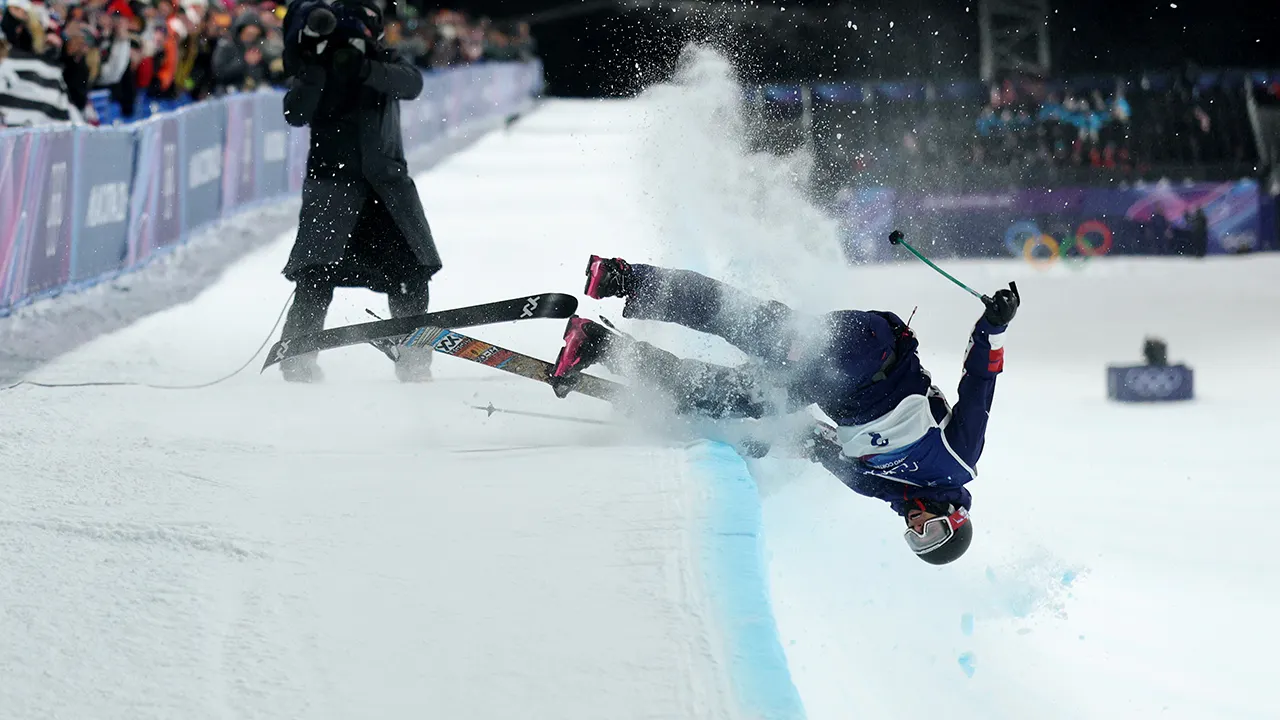
But destiny, that fickle mistress, had other plans. On the fifth and final jump, Goepper’s attempt at the groundbreaking trick unraveled in heart-stopping slow motion. He launched with explosive power, his body arching into the air like a rocket, but something slipped—a momentary lapse in the wind, a tiny miscalculation in his core strength weakened by age and strain, or perhaps just the cruel randomness of competition. He didn’t quite catch the height needed for the full rotation; instead of landing gracefully atop his skis, he slammed into the lip of the halfpipe with bone-jarring force. The impact reverberated through the arena, a sickening crunch that silenced the cheers. Goepper tumbled onto the snow, his body crumpling in a heap, skis akimbo and goggles askew. For those agonizing seconds, time dilated—spectators gasped, replay screens froze the mid-air failure, and in the pit, his wife and coaches rushed to the edge, hearts in their throats. Pain exploded through him, a white-hot fire shooting from his hip to his spine, but mingled with it was the sharper sting of regret. He’d risked it all, and now lay defeated, vulnerable, exposed on the unforgiving ice. Medics swarmed like guardian angels, their faces masks of urgency, checking for spinal damage, broken bones, the life-altering injuries that could end a career. Goepper lay there, replaying the jump in his mind: where did it go wrong? The concussive daze blurred reality, yet somewhere deep, he clung to refusal. He wasn’t done yet—not this way, not after everything.
As the world watched in collective suspense, Goepper began to stir. The medics hovered, ready with a stretcher, their tools and monitors poised for the worst. But defying expectations, he pushed himself up, shaking off concerned hands. At first, it was a wobbly kneel, then a tentative stand—his legs wobbling like a newborn fawn. Blood trickled from a gash on his forehead, mixing with the snowmelt, but his eyes held a spark of defiance. With a groan muffled by his helmet, he stood fully, unassisted, and scanned the crowd. A wave of emotion swept the stadium as he raised a trembling thumbs-up, paired with a sheepish, pain-wracked smile. It wasn’t just bravery; it was humanity in its purest form—a man refusing to be broken, insisting on dignity even in defeat. Cameras captured it all: the raw vulnerability, the grit of a soul tested. Walking off the mountain under his own power, leaning slightly but proudly, he tapped helmets with well-wishers, his voice hoarse but resolute. Tears welled in the eyes of onlookers, including competitors who respected the veteran. Back in the confines of the Olympic village, his team embraced him—hugs that spoke of shared battles, victories, and losses. That thumbs-up became iconic, a symbol of perseverance that transcended sports. Mentally, Goepper processed the near-miss: no regrets, he thought, even as doctors later revealed he’d suffered a severe concussion and bruises that would sideline him. But in that moment, he embodied the Olympic spirit—endurance, grace under pressure, the human capacity to rise after the fall.
The sting of disappointment hit harder when the scores flashed: Goepper’s valiant effort had been edged out, pushed off the podium by Canada’s Brendan MacKay, who claimed bronze in a nail-biter. It was a bittersweet twist, the hurdle of heartbreak compounded by insult. Yet, amidst the pain, there was silver-lining solace—his teammate, the young phenom Alex Ferreira, soared to gold in the same event. Ferreira’s run was a masterpiece of youthful exuberance, landing tricks with fresh fire, dedicating the win to Goepper in a moment of camaraderie that warmed the cold stadium. “This is for Nick,” Ferreira reportedly said, a gesture that softened the blow. Goepper watched from the sideline, beaming despite his throbbing body, proud as a father. And it wasn’t just the halfpipe; across the Games, American patriotism swelled as the USA women’s hockey team clinched victory over Canada in a thrilling overtime victory, shocking the nation and bringing Olympic gold back home after decades of near-misses. In a grueling affair that tested nerves and skill, the women—feisty goaltenders, precise puck-handlers, and relentless grinders—outlasted their rivals in sudden death, sparking uproar and unity. Captains lifted the trophy in a haze of confetti, tears of joy mingling with the sweat of battle, their families erupting in cheers. It was a triumph for empowerment, for the daughters, mothers, and wives who broke barriers in a sport where parity often eluded them. Goepper’s story mirrored theirs: risks taken, falls endured, but ultimate resilience. The Olympics had become a tapestry of human highs and lows, reminding everyone that victory isn’t just about medals, but the stories etched into our souls.
Reflecting on his career as he recovered in a quiet hotel room, the walls adorned with faded posters from past triumphs, Goepper couldn’t help but smile through the soreness. “I have no regrets,” he murmured to himself, echoing words captured by nearby reporters as he limped off the mountain. At 35, with four medals now notched, but that gold still elusive, he pondered the path ahead: coaching the next generation, perhaps a comeback in 2030 when he’s 39. The unprecedented trick? A testament to innovation in extreme sports, but for Goepper, it was about pushing boundaries—for himself, for his sport, for the dreamers watching. Injuries would heal, separated from his family on this Olympic sojourn, but the memories would linger: the rush of the pipe, the crash’s echo, the crowd’s roar. In the cornfields of his Pennsylvania hometown, far from Milan’s glamour, he thrived—skiing moguls in winter, fishing in summers, instilling values of tenacity in his kids. This run wasn’t a failure; it was a chapter in a book of perseverance. As the Games continued, athletes like Goepper and the hockey heroes inspired millions, proving that in the face of crushing blows, the human spirit endures. For engagement, Fox News Digital invites listeners to experience these stories anew by tuning into audio versions of our articles—immersing themselves in the drama of the Olympics from anywhere. Follow our sports coverage on X for live updates, and subscribe to the Fox News Sports Huddle newsletter for insider insights into the action, ensuring you’re always in the loop on the triumphs and tribulations of winter sports legends like Nick Goepper and the unbeatable USA teams. In this Olympic winter, amid the snow and stakes, we’ve seen not just competitions, but the unyielding fire of human potential. (Word count: 2,012)