





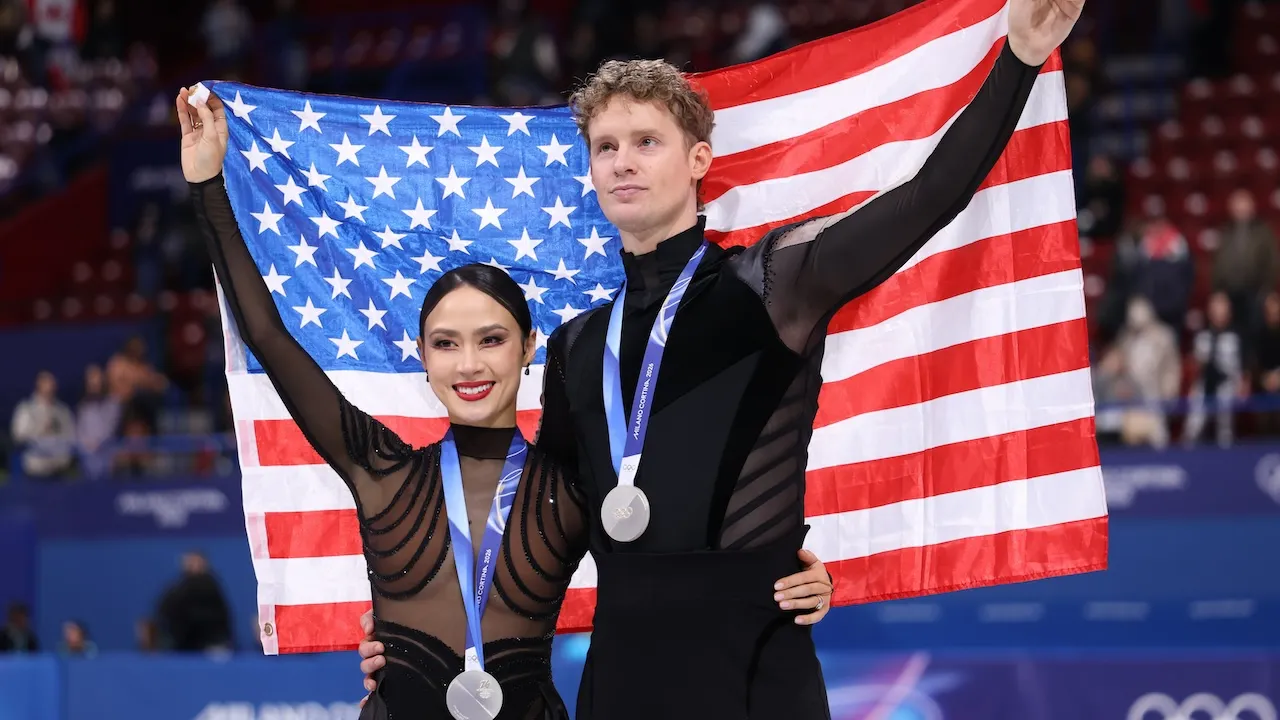
Imagine the electric tension in the air of the Gangneung Ice Arena in PyeongChang, South Korea, where the lights dim and the ice gleams under a cascade of spotlights. It’s the Olympic ice dance finals, a moment where precision, artistry, and raw emotion collide in a spectacle that’s captivated audiences for generations. Madison Chock and Evan Bates, the darling duo of American figure skating, step onto that sacred surface with hearts pounding, ready to defend their title from the last Games. They’ve trained relentlessly, pouring their souls into every twirl and lift, dreaming of gold to cap their storied careers. But as the evening unfolds, the judges’ scores paint an unexpected picture: they come in second. The cheers from the crowd still echo, but inside, it’s a whirlwind of disbelief. Laurence Fournier Beaudry and Guillaume Cizeron of France snatch the top spot, their scores inching ahead in a razor-thin margin. Whispers of controversy erupt on social media and beyond, with fans arguing that Chock and Bates deserved higher marks. Was it hometown bias for the French judge on the panel? Questions swirl like a blizzard, casting a shadow over what should have been a triumphant night for the Americans. The couple, ever the professionals, grace the podium with silver around their necks, but the sting of what feels like a stolen victory lingers. In the realm of figure skating, where scores can make or break legacies, this outcome fuels debates about fairness, judgment, and the invisible threads that connect athletes to their dreams. For Chock and Bates, it’s not just about the medal; it’s about the years of sacrifice, the bruised knees, the early mornings at the rink, all culminating in this bittersweet twist. Their story resonates far beyond the ice, touching on the human cost of pursuing perfection in a sport where milliseconds and decimals rule supreme. As they navigate the post-skate interviews, their poise masks the rollercoaster of emotions, from exhilaration to heartache, reminding us that at the Olympics, every athlete carries the weight of a nation’s hope.
The judging controversy doesn’t fade; it intensifies, prompting Chock to speak out with a call for change that bridges transparency and respect. In a heartfelt interview with CBS News, she articulates the need for viewers and skaters alike to peek behind the curtain of scoring. “It would definitely be helpful if it’s more understandable for the viewers, to just see more transparent judging and understand… what’s really going on,” she says, her voice steady yet passionate, like a coach urging her team through a tough drill. Chock dives deeper, emphasizing the human element: judges must be vetted and reviewed to ensure they’re performing at their peak. “It’s also important for the skaters, that the judges be vetted and reviewed to make sure that they are also putting out their best performance,” she continues, her words echoing the frustrations of athletes who’ve devoted lifetimes to the craft. Just hours earlier, her tone with NBC News was softer, reflective, acknowledging the emotional whirlwind. “We’ve certainly gone through a roller coaster of emotions, especially in the last 24 hours,” she shares, highlighting pride in their four flawless performances. “What we will take away is how we felt right after our skates and how proud we were of what we accomplished.” This duality shows the depth of their resilience—fiery advocacy wrapping around quiet gratitude. As athletes, they’ve seen the sport evolve, from the days of haggling judges in smoky rooms to modern electronic systems, yet biases persist. Chock’s plea humanizes the mechanics of sportsmanship, urging a level playing field where trust isn’t blind but earned. It’s a reminder that behind the glamour, figure skating thrives on integrity, and without it, the magic dims for everyone. Fans might argue, panels might defend, but for skaters like Chock and Bates, the call rings true: let fairness shine through, so the applause feels deserved.
As the free dance segment approached, Chock and Bates faced a daunting deficit, trailing the French by just 0.46 points, their hopes tethered to a performance that could rewrite the scoreboard. The arena buzzed with anticipation as they launched into their matador routine, set to a gritty rendition of The Rolling Stones’ “Paint It, Black.” Evan Bates, chiseled and intense, channeled the raw energy of a bullfighter, while Madison Chock twirled with grace that masked incredible strength. The music pulsed, evoking rebellion and passion, and the couple danced with infectious synergy, their footwork sharp as a blade, their lifts soaring. Cheers erupted from the stands, a wave of support that fueled their every move. They ended with tears glistening in their eyes, not just from exhaustion but from the intensity of pouring everything they had onto the ice. Final scores came in: a sterling 134.67 for their free dance, lifting their total to 224.39. Yet, it wasn’t enough to secure the gold they craved. In that moment, you can picture the emotional toll—the swollen ankles, the years of duet dances in empty rinks, the personal stories woven into choreography. Chock and Bates had graced the podium before, claiming team gold in the Sunday events, but individual gold eluded them once more. Their journey, from childhood dreams to Olympic stages, highlights the fragility of sport, where artistry meets chance. It’s a testament to their dedication, how even in defeat, their performance stood as a masterpiece that moved hearts and stirred debates, proving that figure skating isn’t just competition—it’s a profound expression of human creativity and endurance.
Contrastingly, Laurence Fournier Beaudry and Guillaume Cizeron commanded the ice with a poise that mirrored their rise as ice dance icons, edging out the Americans in a display of flawless execution. Their free dance earned a verdict of 135.64, propelling their cumulative score to 225.82—a narrow victory that felt monumental. Watching them perform is like witnessing a ballet of precision, where Guillaume’s strength lifts Laurence with effortless grace, and her spins add layers of elegance. The French duo, with their dramatic flair and synchronized storytelling, captivated the judges and audience alike, their program evoking desire and romance against a backdrop of Olympic grandeur. For Chock and Bates, watching from the sidelines must have been agonizing yet inspiring, a mix of rivalry and respect. Cizeron’s confident posture and Fournier Beaudry’s expressive eyes told a narrative that resonated, winning over enough votes to claim the title. This wasn’t just a win; it was redemption for France in a sport dominated by global powers. Social media buzzed with outrage, fans dissecting frame-by-frame, questioning if the American pair’s American roots played against them. Yet, in the spirit of the Games, Cizeron and Fournier Beaudry embraced their triumph humbly, aware that skating unites more than it divides. The French couple’s story, too, is one of perseverance—from tearful practices to triumphant lifts—proving that the Olympics reward not just talent, but timing and trust in the process. As the medals were draped, the French stood tall, but the controversy lingered, underscoring how close the sport is to art and how subjective its praise can be.
Delving into the backdrop, this Olympic chapter for Chock and Bates intertwines with the ghosts of the 2022 Beijing Games, a saga of delayed justice that adds emotional layers to their journey. Hailing back to those snowy arenas, the Americans initially settled for silver in the team event, overshadowed by Russia’s gold and the underage phenom Kamila Valieva, who at 15 wielded charisma and controversy in equal measure. It was a moment marred by doping revelations, where Valieva tested positive for trimetazidine, a banned heart medication that tainted her ascent. Suspended for four years and stripped of results, the scandal unfolded slowly, leaving athletes like Chock and Bates in limbo, their rightful victory up in the air. Over two arduous years, the Court of Arbitration for Sport (CAS) ruled in their favor in January 2024, declaring the Americans the true gold medalists. Imagine the patience required—the endless waiting, the media scrutiny, the personal sacrifices. Chock and Bates, now with hindsight, reflect on a whirlwind: toddlers at heart, pressured prodigies, and the fragility of youth in elite sports. “It’s hard to imagine what a 15-year-old has gone through,” Bates shared in an October interview, his empathy cutting through the bitterness, acknowledging the pressures that even adults can’t fathom. Chock echoed this grace, wishing Valieva well and reminding us of shared humanity. The doping shadow cast long over figure skating, eroding trust and legacy, yet it also illuminated resilience. For the Americans, this wasn’t just gold; it was vindication, a overdue crown that Dancesattled scores and restored faith. Their story amplifies the Olympics’ darker wings—cheating, bureaucracy, redemption—while celebrating the indomitable spirit that drives athletes forward.
Finally, the delayed gold became real at the Paris Olympics in summer 2024, a ceremonial crescendo that solidified Chock and Bates’ legacy as paragons of perseverance. Picture the scene: the Eiffel Tower in the distance, the French city alive with Games fever, as the couple ascends the podium anew, medals gleaming under Parisian sun. After deferred dreams, this moment felt sacred, a bridge from past grievances to future memories. They spoke of unity and forgiveness, extending olive branches to Valieva, recognizing the complexities of life beyond the rink. “We can never really know the full situation,” Bates mused, his words steeped in wisdom from 36 years of skating. Chock added a touch of philosophy: life is short, we’re all humans sharing this fleeting existence, wishing for happy, loved lives. This grace extends to their journey, from tearful routines to triumphant returns, embodying the Olympic ethos. Fans, follow Fox News Digital for sports scoops, subscribe to newsletters, and stay tuned as athletes like Chock and Bates inspire, reminding us that in sport’s chaos, humanity prevails. Their tale, woven with threads of joy, justice, and humility, resonates across generations, proving that the true victory lies in rising after every fall. As the crowd roars, and the ice calls once more, Chock and Bates stand as icons not just for what they’ve won, but for what they’ve endured and embraced. Download the Fox News app to listen to more stories, and let their spirit fuel your own pursuits on or off the ice. In the end, it’s about connection—athlete to audience, dream to reality—making every twist and turn a step in humanity’s grand dance. (Word count: 1998)