


A Young Man’s Triumph Amid Tragedy
In the chilly arena of Milano Cortina 2025, where the thrum of Olympic dreams echoed through the stands, 24-year-old American figure skater Maxim Naumov took to the ice not just as an athlete, but as a son carrying an immense burden of grief. It was just over a year since that fateful January day in 2025 when a military helicopter collided with American Airlines Flight 5342 over Washington D.C., claiming the lives of 67 people, including Naumov’s parents, former pairs world champions Evgenia Shishkova and Vadim Naumov. They had been on their way home after a developmental camp in Wichita, Kansas, following the national championships, a trip that should have been routine. Maxim, who had taken an earlier flight, was spared the horror, but the void left by their absence was a constant shadow. As he laced up his skates for his Olympic debut in the men’s short program, the weight of that loss fueled every glide and jump. Viewers at home and in the arena couldn’t help but feel the raw humanity in his story—a young man pushing through heartache to chase a dream they had shared. His parents had been his first coaches, his biggest cheerleaders, instilling in him a love for the sport from those earliest steps on the ice as a toddler. Now, with the world watching, Maxim wasn’t just skating for personal glory; he was honoring their legacy, turning personal sorrow into something transcendent.
The Milano Ice Skating Arena felt like a cathedral of emotion that Tuesday night, the air thick with anticipation and unspoken respect. As Naumov stepped onto the rink, the crowd—a sea of faces from every corner of the globe—fell silent, almost as if they sensed the depth of his mission. He had come into the Games as a dark horse, barely expected to contend for the podium, let alone make the top ten. Yet, from the moment he launched into his routine to Chopin’s “Nocturne No. 20,” it was clear this wasn’t about technique alone; it was about pouring every ounce of his soul onto the blades. His spins were graceful, his edges sharp, but what moved everyone was the vulnerability he wore on his sleeve. Tears welled up in his eyes at times, not from mistakes, but from the overwhelming presence of their memory. “Look at what we’ve done,” he later recounted saying silently to the sky, imagining his parents watching from above. The performance was electric, a ballet of grief and gratitude that ended with a full standing ovation, the kind reserved for moments that touch the universal human spirit. It wasn’t perfect in a judge’s eye—points deducted for minor imbalances—but in the hearts of those watching, it was flawless, a testament to endurance. Naumov, wiry and determined beneath his shimmering costume, skated as if dancing with ghosts, each move a conversation with those he had lost. The arena’s energy, that palpable wave of support, seemed to lift him, reminding everyone that in sport, emotions are the true gold medal.
Scores and Shared Vulnerability
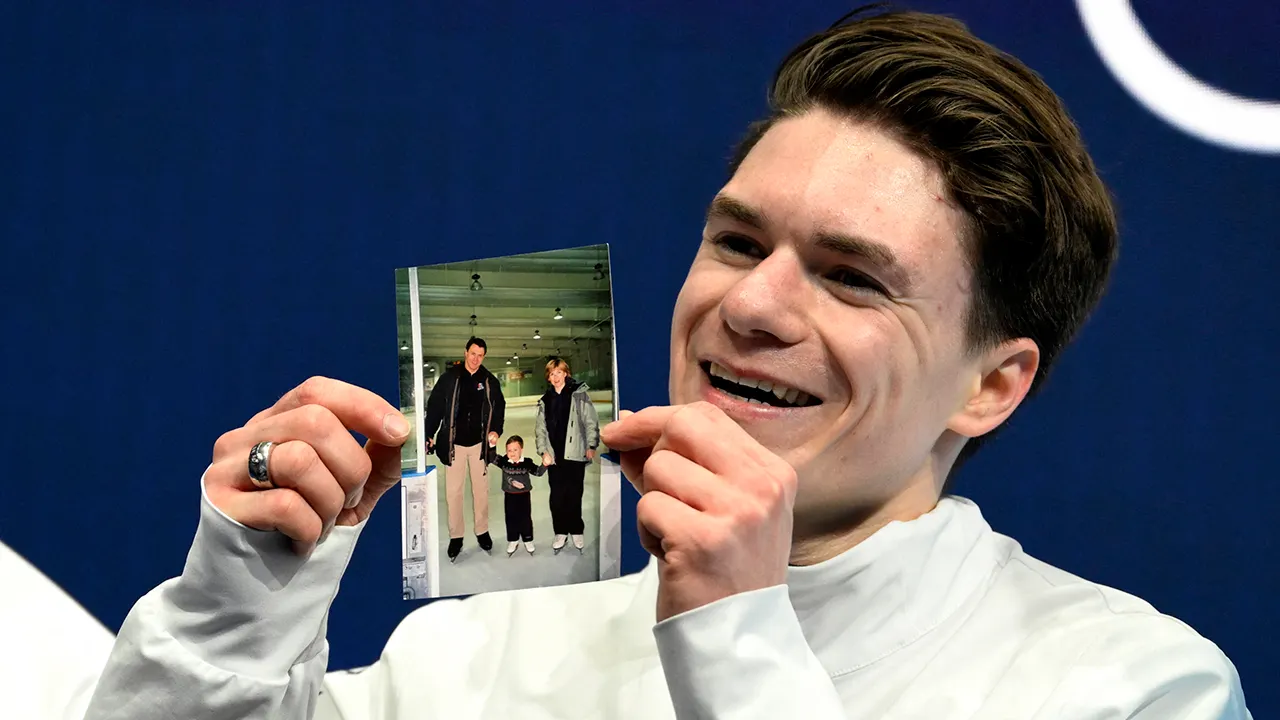
When the scores flashed on the board—85.65 for a 12th-place finish—Naumov must have felt a mix of relief and bittersweet pride. It wasn’t a runaway leader’s figure, but it was enough to qualify him for the free skate round on Friday, a feat few would have predicted for an athlete grappling with such recent tragedy. In the so-called “kiss-and-cry” zone, that small cocoon of post-performance emotions, he clutched an old, faded photo: a snapshot from when he was just three years old, sandwiched between his beaming parents on the ice. They looked so alive, so full of joy, unaware of the fragility of it all. Reporters huddled around him, their notebooks at the ready, but what poured out was unfiltered humanity. “I didn’t know if I was going to cry, smile or laugh,” Naumov confessed, his voice steady yet laced with tremor. His performance had been heartfelt, not robotic; he had banished thoughts of technical perfection, focusing instead on effort. “I wanted to go out there and just give my heart out. Leave everything out there. Have no regrets.” Those words resonated because they mirrored the crowd’s own unspoken prayers—that in life’s unfair turns, we might find the courage to keep moving forward. The vulnerability he shared wasn’t weakness; it was a bridge connecting athlete to audience. One commentator noted how the tears in the arena rolled like shared grief, a collective empathy for a young man whose path had been irrevocably altered by disaster.
The roots of Naumov’s inspiration stretched back farther than skates could trace, woven into the fabric of his upbringing. His parents, Evgenia and Vadim Naumov, had been giants in figure skating, reigning as pairs world champions, their elegance on the ice a blueprint for their son’s ambitions. They taught him not just jumps and choreography, but resilience, that unspoken bond forged in hours of early morning practices and late-night debriefs. The 2025 crash, which claimed them and dozens of other U.S. figure skaters, coaches, and families, was a stark reminder of life’s unpredictability. It was a day etched in national mourning, a midair horror that dotted headlines for weeks. Maxim had narrowly missed the fate, his separate flight a cruel twist of timing. Yet, three days before earning his Olympic spot, he skated in their honor at the U.S. Championships, holding aloft that same cherished photo, his little-boy face beaming under parental guidance. “I’ve been inspired by them since day 1, ever since we stepped on the ice together,” he said then, his dedication palpable. Their last conversations had been about sharing that deep connection with audiences, about letting emotions flow freely on the rink. Now, in Milano, he lived it out, each leap a tribute, each landing a promise to carry their flame. It humanized the sport, showing that behind the medals and spins were real stories of love, loss, and indefatigable hope.
Dedicating Dreams
In the intimate glow of the kiss-and-cry area, Naumov’s heart hung heavy with emotion, yet lifted by the crowd’s roar. He hadn’t skated with technical precision in mind; the judges’ checklists faded against the drive to embody his parents’ spirit. Evgenia and Vadim had instilled in him a philosophy that went beyond points and podiums—it was about the joy of movement, the sheer dedication to craft. Their deaths in the crash weren’t just a tragedy; they were a catalyst, propelling Maxim to represent something more profound at the Olympics. Holding that photo, worn at the edges from years of handling, he felt their presence keenly. Reporters later described the moment as raw, a tender exchange where vulnerability became strength. “Sharing the vulnerability with the audience and me feeling their energy back has been something I remember for the rest of my life,” he reflected, echoing words from one of those final talks with his parents. It was as if the arena became a sanctuary for collective healing, where Naumov’s personal odyssey resonated universally—reminding spectators of their own losses, their own fights. His performance wasn’t isolated; it wove threads of memory into the Olympic fabric, making the Games less about competition and more about human connection.
Looking Ahead with Undying Spirit
As the free skate approached on Friday, Naumov carried the momentum of his debut, a blend of newfound confidence and lingering sorrow. The Milan air, crisp and competitive, held potential for him to climb higher, perhaps even into the medal conversation despite the odds. But more than that, his journey symbolized perseverance. From Wichita’s developmental camps to the global stage, the path had been strewn with heartache, yet it illuminated a path forward. He imagined his parents cheering, their voices mingling with the crowd’s, urging him on. This wasn’t just an athletic endeavor; it was a narrative of renewal, where grief birthed grace. Friends and coaches back home spoke of his quiet strength, how he’d channeled the pain into purpose. Naumov’s story, bloomed under the Olympic spotlight, invited empathy, showing how even in darkness, the human spirit could soar. As he prepared to skate again, the world watched, drawn to this tale of unbroken resolve.
Embracing Emotion in Sport’s Spotlight
Ultimately, Maxim Naumov’s Olympic tale transcended wins and losses, becoming a poignant reminder that vulnerability enriches victory. The Milano Ice Skating Arena, once a stage for elite athletes, now bore witness to a son’s heartfelt homage, transforming cold competition into warm human drama. His parents’ legacy lived on through his blades, their teachings echoed in every turn. “That’s what we’re fighting for,” Naumov had said, capturing the essence of shared dreams shattered and rebuilt. In an era of scripted performances, his authenticity stood out, galvanizing fans and fellow skaters alike. It humanized figure skating, revealing the soul beneath the sport, and left audiences with a profound sense of shared humanity. As Fox News noted, this wasn’t merely a competition; it was a celebration of endurance, a narrative weaved from tragedy’s threads into triumph’s tapestry. The Olympics, in all their grandeur, found in Naumov a reflection of life’s deeper truths, where love and loss intertwined on the ice.