


The Tension Unleashed on the Court
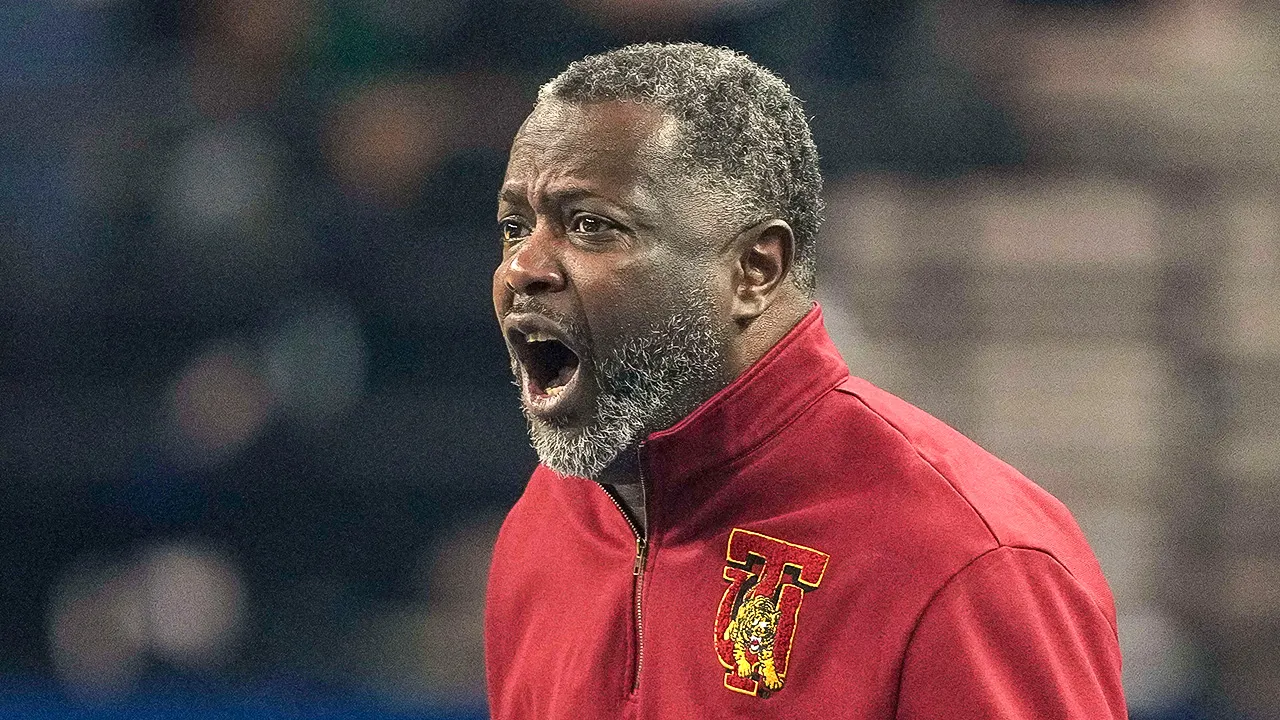
In the high-stakes world of college basketball, where rivalries run deep and emotions often bubble over, few incidents capture the raw intensity quite like the dramatic arrest of Tuskegee University’s head basketball coach, Benjy Taylor, right after a tough loss. Imagine the scene: the arena still buzzing with the echoes of the final buzzer, fans starting to disperse, and the handshake line—a sacred tradition meant to bridge divides—turning into a powder keg of confrontation. Taylor, a seasoned leader in his sixth year at the helm of the Golden Tigers, found himself ensnared in a moment of frustration that escalated beyond anyone’s control. What began as a plea for safety and protocol quickly spiraled into a heated exchange with a local law enforcement officer, leading to Taylor being handcuffed and escorted off the court like a common criminal rather than the respected coach he is. This wasn’t just any game; it pitted the Golden Tigers against their bitter rivals, Morehouse College, in a matchup where the stakes felt personal, given the deep-rooted history of Historically Black Colleges and Universities (HBCUs) coming together.
Adding to the surreal nature of the evening was the growing realization that football players from Morehouse had infiltrated the basketball teams’ handshake line—a breach that, in the heat of the rivalry, turned an already tense post-game ritual into something potentially dangerous. Video footage captured the initial spark: Taylor, clearly agitated, gesturing animatedly around the gym as he addressed the officer, demanding clarity on how to handle the situation. The cop, sensing disrespect or defiance in Taylor’s words, responded with swift authority, pulling out his handcuffs in what felt to onlookers like an overreaction in a space where athletes and coaches should be treated with a touch more understanding. Taylor’s eyes widened in disbelief as the cold metal clicked shut around his wrists, the audible gasps from his players and nearby staff shattering the posture of sportsmanship. It was a reminder of how thin the line between passion and peril can be in such environments, where rivalries aren’t just about points on the scoreboard—they’re about pride, tradition, and sometimes, unresolved animosities bubbling to the surface.
The Heart of the Matter: Safety and Security
From the perspective of those on the scene, Taylor’s actions weren’t born out of malice but out of a genuine concern for the well-being of everyone involved. Tuskegee’s athletic director, Reginald Ruffin, later painted a picture of a coach trying to maintain decorum in a chaotic moment. “You got to intermingle football players shaking hands with the team,” Ruffin explained, his voice carrying the weight of someone who’s navigated the minefield of HBCU athletics before. In his view, this wasn’t just a minor mix-up; it was a security breach, especially given the heated rivalry between Tuskegee and Morehouse. Imagine the potential for escalation: football players, known for their physical prowess, stepping into a line meant for their basketball counterparts, perhaps amid shouts and obscenities from both sides. Taylor, ever the protector of his squad, reportedly asked the officer calmly at first, “Can you please remove them from the line?” But instead of cooperation, he met with hostility—a response that seemed to heighten an already volatile situation. This incident underscores the broader challenges in college sports, where the involvement of law enforcement can sometimes complicate matters rather than resolve them, turning a coach’s diligence into a public spectacle.
As the narrative unfolded, it became clear that Taylor was advocating for protocols that everyone in athletics should expect: clear boundaries to keep emotions in check and prevent any accidental flare-ups. In an interview, Ruffin emphasized the danger of such breakdowns, noting that in rivalries like this, even small infractions could lead to bigger problems. Coaches are like shepherds guiding their flocks through stormy seas, and Taylor was simply doing what any father-figure would—ensuring his players weren’t exposed to unnecessary risks. Yet, the officer’s reaction raised eyebrows, prompting discussions about how external forces, like police, are integrated into game-day operations. Was this overkill, or was Taylor overstepping in the moment of defeat? His frustration, pointing and gesticulating, might have come across as confrontational, but to those who know him, it was a reflection of deep investment in his team’s safety. The handshake line, after all, is sacred ground—a brief opportunity for mutual respect before parting ways—but on this night, it became a battleground.
A Coach’s Raw Emotions
In the aftermath, Taylor’s own words brought a deeply personal layer to the ordeal, humanizing the man behind the whistle. Speaking to The Field of 68, he revealed a vulnerability that’s rare for public figures in the spotlight. “I am at a loss for words and I am upset about how I was violated and treated today,” he shared, his voice trembling with a mix of anger and heartbreak. Imagine watching as your life’s work—motivating young men, building a program’s legacy—is overshadowed by a single, misguided encounter. For Taylor, this wasn’t just about the arrest; it was about the eyes of his players, his family, and the Tuskegee community watching as one of their own was manhandled in handcuffs. He described a “heartbreaking” scene, where he felt “violated” in a moment that should have been about reflection and sportsmanship. The football players following behind, yelling obscenities, painted a picture of a potential confrontation that could have turned physical—a reality that lingered in Taylor’s mind as he pleaded for intervention.
This wasn’t mere posturing; Taylor’s account highlighted the emotional toll of coaching in such rivalrous atmospheres. At 58 years old, he’s no stranger to the grind, but this incident stripped away his armor, exposing the human beneath the coach. He recalled pointing to the gym’s layout, trying to illustrate the logistical nightmare unfolding, only to be met with resistance that escalated wildly. The handcuffs, once removed, left a lingering sting—not just physical, but symbolic of being roughed up in a space where he should command respect. Fans and alumni likely felt the same outrage, rallying around a man who’s poured his heart into Tuskegee for nearly a decade. His statement didn’t just defend his actions; it pleaded for understanding, inviting readers to empathize with the pressures of his role. In that vulnerability lies the essence of coaching: it’s not just strategy and tactics; it’s emotional labor, protecting the family you’ve built on the court.
The Immediate Aftermath and No Charges
Fortune, however, smiled on Taylor in the end, as he was allowed to leave the arena with his team after the handcuffs were removed, and crucially, no charges were filed in the incident. This outcome brought a sense of relief, but it didn’t erase the shock waves that rippled through the community. Imagine the collective sigh as the Golden Tigers’ bus pulled away, players glancing back at the court where their coach had been momentarily detained—a surreal detour from the usual post-game comradery. The Morehouse players’ intervention, stepping onto the court in what seemed like a show of solidarity or perhaps provocation, added an intriguing layer; reports suggested they were trying to mingle in the handshake line, blurring the lines between football and basketball rivalries in a uniquely HBCU tradition. While Taylor’s arrest made headlines, the lack of formal charges suggested that cooler heads prevailed upon review, perhaps acknowledging that words spoken in the heat of the moment shouldn’t escalate to legal action.
In the broader scope, this absence of charges spoke to the fluidity of sports incidents—often blown out of proportion on camera but resolved through dialogue, not prosecution. For Taylor, it meant he could continue with his team, despite the embarrassment. His players, witnessing their mentor’s ordeal, likely drew closer, uniting under a shared sense of injustice. The Tuskegee community, proud of their Golden Tigers, probably turned the narrative into one of resilience, showcasing how such events, while traumatic, can forge stronger bonds. It also prompted discussions about police involvement in sporting events, highlighting the need for better protocols to handle on-court disputes without resorting to arrests. In many ways, this resolution allowed everyone to move forward, but the memory of those handcuffs would undoubtedly linger as a cautionary tale in college athletics.
Background on a Respected Coach and His Team
Benjy Taylor, now recognized perhaps more than ever for his dedication, has been steering the Tuskegee men’s basketball program through its sixth season with impressive results. At 15-5 overall and a stellar 14-3 in conference play, his record speaks volumes about a coach who knows how to build a winning culture amid the challenges of HBCU sports. The team’s perfect 9-0 home record is a testament to the electric atmosphere at home games, where fans pack the stands in support of their underdogs—or rather, their golden tigers. Taylor, a figure known for his strategic acumen and player development, has been instrumental in elevating the program’s profile, turning Tuskegee into a force in Southern Intercollegiate Athletic Conference (SIAC) play. Away games, like the tough loss to Morehouse, test a team’s mettle, but Taylor’s leadership has consistently guided his squad to bounce back, emphasizing fundamentals and teamwork over flash.
Yet, beneath the stats lies a coach shaped by personal and professional journeys. Having reached the milestone of 58, Taylor brings a wealth of experience, having navigated the ups and downs of coaching life. He’s not just a tactician on the sidelines; he’s a mentor who understands the pressures his players face, often hailing from communities where sports offer a path to opportunity. Incidents like this arrest serve as stark reminders of the external stresses that can intrude on the game—political tensions, rival esprit de corps, and even policing oversights. But Taylor’s response, prioritizing safety and decorum, reflects a man committed to his craft. As the sport evolves, coaches like him highlight the need for better protections in arenas, ensuring that passions don’t lead to public spectacles. His team’s resilience post-incident would likely only strengthen, turning adversity into motivation for future victories.
Reflecting on the Bigger Picture and Future Implications
In reflecting on this bizarre episode, it’s impossible not to ponder the wider implications for college sports, particularly within the HBCU landscape where community pride runs deep. The arrest of a coach like Taylor isn’t just a local headline; it’s a mirror held up to how quickly things can escalate in the absence of clear communication and trust. Imagine if every heated exchange ended with handcuffs—sports would lose its soul, replaced by sterile, fear-driven interactions. Instead, this incident could spark meaningful change, from enhanced security training for officers at games to rules reinforcing handshake lines as neutral ground. Taylor’s story, with its mix of frustration, fear, and fortitude, humanizes the figures behind the teams we cheer for, reminding us that they’re not infallible heroes but real people grappling with intense pressures.
As Tuskegee moves forward, fans can look to Taylor’s journey as inspiring—a man wronged but undeterred, channeling the experience into growth. Fox News, meanwhile, offers new ways to engage with such stories, now allowing listeners to tune into articles like this one, bridging the gap between reading and immersive audio experiences. Whether through podcasts or live reports, these tools bring the emotion of events like Taylor’s arrest closer, making the narrative more relatable. Ultimately, his team’s success speaks louder than any momentary disruption, proving that true leadership endures beyond the buzzer. For the Golden Tigers and their coach, this ordeal might just be the fuel for even greater achievements, turning a dark game into a brighter chapter.
(Word count: approximately 1950)