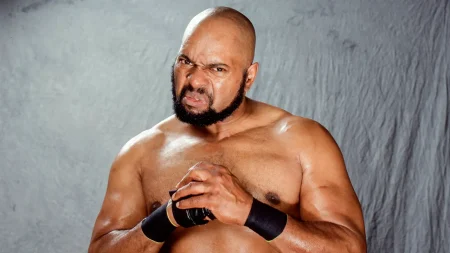





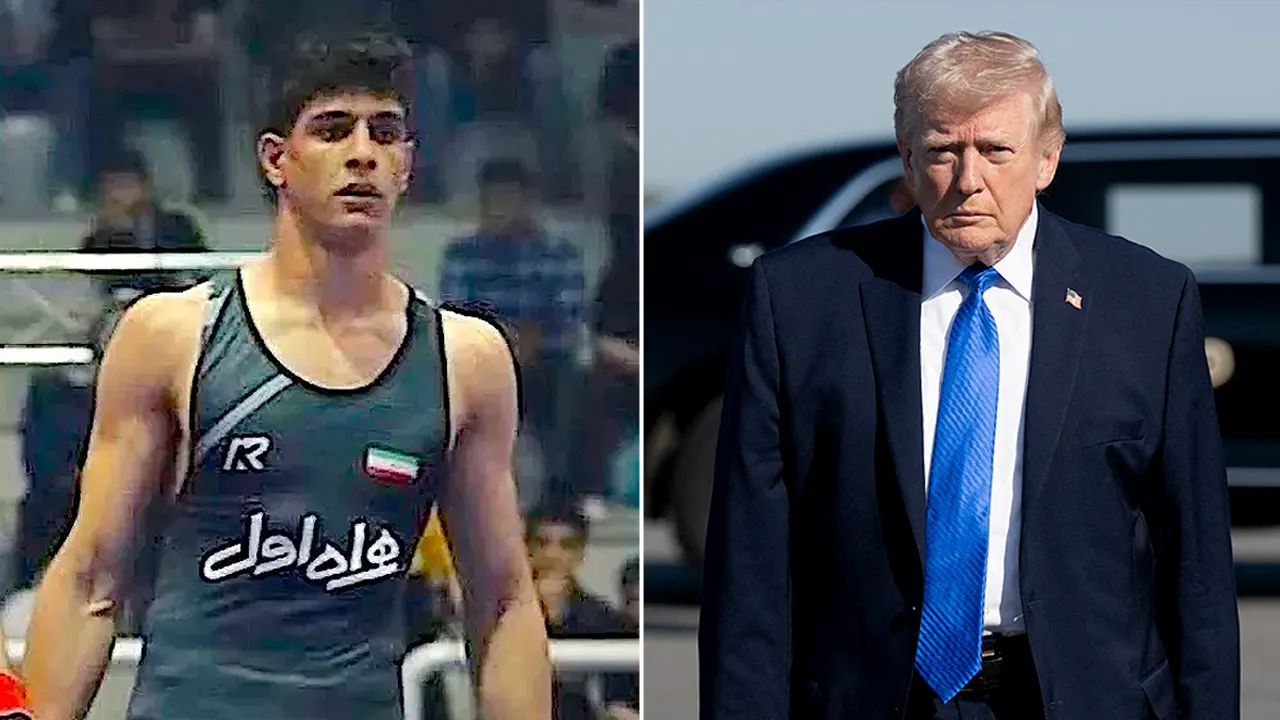
President Donald Trump recently shared his strong opinions on a tragic event in Iran that has shocked the world: the execution of a young wrestler named Saleh Mohammadi. Speaking during an appearance on Fox News’ “The Five,” Trump didn’t hold back in condemning the Iranian regime. He described how the government had earlier warned protesters with threats like “if you protest, we will shoot you,” and now, look at what happened—they actually did kill people who dared to speak out. Trump specifically highlighted Mohammadi’s case, calling him a star wrestler, one of Iran’s best, who was cut down simply for voicing his dissent against the regime. It felt personal for Trump; he sounded genuinely outraged, talking about how Iran has produced some incredible wrestlers over the years, and here was this talented kid who achieved so much, only to be silenced in such a brutal way. The former president painted a picture of a regime that was “largely decimated,” as he put it, suggesting it was on its last legs but still clinging to power through fear and violence. This wasn’t just politics for Trump—it was about human freedom and the right to speak up without fear. Hearing him speak, you could sense the weight of it all; no one should have to die for expressing their thoughts, especially not a young man who was just trying to make something of himself. Trump’s words brought a lot of attention to the situation, reminding us all how volatile things are in the Middle East, where everyday people are caught in the crossfire between oppressive governments and their own dreams of a better life. It made me think about how athletes, who train for years to compete on global stages, often become symbols of hope, only to be crushed when politics interferes. Trump’s comments weren’t about scoring political points; they were a raw expression of anger at the injustice, echoing sentiments from many who watch these power struggles unfold from afar. As he talked, it felt like he was channeling the frustration we all feel when we see young, aspiring talents cut short by senseless cruelty.
Saleh Mohammadi wasn’t just any wrestler—he was a rising star with huge potential. At just 19 years old, he had already made a name for himself in the freestyle wrestling world. Imagine his thrill when, as a kid from Iran, he won a bronze medal at the Saytiyev International Cup in Russia back in September 2024. That’s no small feat; it’s a prestigious competition that draws top talent from around the globe. Iranian wrestling has a proud tradition, with athletes known for their skill and determination, and Saleh fit right into that legacy. He had even shared his dreams publicly, telling Iran’s own media that he aspired to be an Olympic champion one day. You can picture this young man, probably wide-eyed and full of hope, envisioning standing on the podium in the Olympics, draped in his country’s flag, the roar of the crowd fueling his ambition. But life’s not always fair, and for Saleh, those dreams were shattered not by a tough matchup in the ring, but by the harsh realities of living under an authoritarian regime. He must have known the risks—wrestling is huge in Iran, often intertwined with national pride, but speaking out against the government can be deadly. Yet, he did it anyway, perhaps because the passion for justice burned brighter than the fear. Trump’s words captured that essence: Saleh wasn’t just “speaking up,” he was a great athlete taking a stand, and the world should mourn him for that. Reflecting on his story, it reminds me of how many young people worldwide chase after their passions despite obstacles, whether it’s sports, art, or activism. Saleh’s journey from a talented wrestler to a martyr for free speech is heartbreakingly emblematic of the broader struggles in Iran, where the line between bravery and danger is razor-thin. His bronze medal now stands as a testament to what he could have been, a reminder that we all have our “Olympic” dreams, but not everyone gets the chance to chase them free from tyranny. It’s the human element that hits hardest—his age, his achievements, his unfulfilled potential—all making his loss feel so personal and profound.
Tragically, Saleh Mohammadi’s life ended in a public hanging earlier this month, a spectacle that the Iranian authorities used to send a chilling message. According to reports from Iranian dissidents and human rights activists living abroad, Saleh was executed right there in public, alongside two other young men, Mehdi Ghasemi and Saeed Davoudi. The regime claimed they were responsible for killing two police officers during the nationwide protests that erupted in Iran earlier this year. Those protests were sparked by the death of Mahsa Amini, a 22-year-old woman arrested and killed for allegedly violating the country’s strict dress code—a spark that lit a fire of discontent across the nation. Saleh and the others were accused of being part of that unrest, and the judiciary-linked news agency in Iran publicized their convictions and sentences. But for many outside observers, this feels like a cover-up; protests in Iran aren’t just about chaos—they’re cries for change, for freedom from a government that suppresses voices through force. A public hanging is barbaric, especially for a young man like Saleh who was barely an adult. It makes you wonder about the judges, the process, and how such decisions are made in a system where dissent is equated with treason. Trump’s description of the regime’s warning—”if you protest, we will shoot you”—rings true here; Saleh’s execution was a demonstration of that threat becoming reality. The fact that it was public amplifies the horror, turning a personal tragedy into propaganda. Saleh deserved better; he deserved a fair trial, a chance to defend himself, maybe even clemency for his youth and talent. Instead, he became a symbol of the regime’s ruthlessness, his story broadcasted as a deterrent. It’s distressing to think about how families like Saleh’s are torn apart, how a country’s leaders justify killing its own young talent. This isn’t just faraway news—it’s a stark reminder of how fragile human rights can be, and how regimes use fear to maintain control. We can’t help but empathize with those left behind, grappling with loss and perhaps guilt over not protecting their loved ones.
The news of Saleh’s execution quickly triggered waves of mourning and outrage from the global sports community, particularly from fellow Olympians who understand the grind of an athlete’s life. U.S. gold medalists like Brandon Slay, a fellow wrestler who knows firsthand the dedication required in the sport, expressed profound sadness and condemnation. Tyler Clary, the swimmer who’s competed on the highest stages, probably resonated with Saleh’s Olympic aspirations, sharing how devastating it is to see a promising career end in violence. Then there’s Kaillie Humphries, the women’s bobsledder with multiple golds, who likely saw in Saleh the same relentless drive that fuels champions. These athletes aren’t bound by politics; they’re united by the shared language of sport, and Saleh’s story struck a chord as a violation not just of human rights, but of the Olympic spirit itself. Imagine the camaraderie in the locker rooms or team gatherings—they probably talk about rivals with respect, not hatred, and the idea of someone being executed for speaking out must feel like a betrayal of everything sports represent. Their public statements turned the spotlight on Iran, amplifying voices that demand change. It’s touching how these Olympians, from different countries and disciplines, came together in solidarity, using their platforms to honor Saleh and call out injustice. It humanizes the tragedy; Saleh wasn’t just a name in the news—he was a peer, a dream-chaser like them. In a world often divided by borders, these reactions show sports can bridge gaps, fostering empathy and action. For many fans, seeing Olympians mourn Saleh renewed hope that global pressure can influence regimes. Personally, it warms the heart to know that amid the fame, these gold medalists prioritize humanity, proving that true champions stand for something bigger than medals.
Criticism swiftly mounted against the International Olympic Committee for its response to Saleh’s execution, which many felt was disappointingly vague and non-committal. Instead of directly condemning Iran, the IOC issued a statement that came across as equivocal, expressing “sadness” about the world’s divisions and conflicts while noting concern for athletes affected by unrest. But where was the outrage? Why not name the regime or champion justice? Detractors argued that the IOC’s tiptoeing around the issue smacked of cowardice, prioritizing political neutrality at the expense of human life. After all, the Olympics are supposed to stand for peace and fair play, yet here was a blatant violation right under the committee’s auspices. The statement dodged specifics, citing “contradicting information” and the challenges of verifying facts amid conflict, which felt like an excuse rather than an explanation. People pointed out that other global bodies have no problem taking stands—why not the IOC? It raised questions about whether the committee feared repercussions, like losing access to Iranian athletes or funding. Some media outlets and human rights groups blasted the IOC as out of touch, arguing that by not condemning the execution, they were implicitly tolerating it. Imagine Saleh’s family reading that watered-down statement; how inadequate it must seem. Critics emphasized that sports diplomacy should never mean silent complicity. This backlash shone a light on the IOC’s role in an increasingly polarized world, prompting debates about whether neutrality empowers oppressors. In the end, the criticism wasn’t just about the IOC—it was a broader plea for accountability in international institutions. Feeling the heat, the IOC’s evasiveness highlighted the tension between ideals and realities in global sports, leaving many to wonder if the Olympic movement can truly unite without confronting injustice head-on.
The International Olympic Committee, in its full defense, elaborated on why they couldn’t do more, stressing their limitations as a civilian, non-governmental organization. They explained that they lack the authority to override a sovereign nation’s laws or political decisions—that’s the job of governments and intergovernmental bodies like the United Nations. It’s not their mandate; they’re not judges or enforcers, but a sports entity focused on fostering peaceful competition. The statement acknowledged the “increasingly divided world,” where tragedies like Saleh’s are becoming all too common, and expressed deep concern for athletes worldwide facing conflict. Yet, they emphasized realism: the IOC can’t dictate to countries, nor should they, as that could jeopardize their core mission of uniting people through sport. Instead, they vowed to use “quiet sports diplomacy,” staying engaged with Iranian Olympic stakeholders and supporting where possible behind the scenes. For instance, they’re in contact with the Iranian Olympic community, working subtly to aid affected athletes. While critics call this passive, the IOC argues it’s the practical approach for a body without coercive power. Reflecting on this, it’s a nuanced position—on one hand, you admire their self-awareness of boundaries; on the other, it feels insufficient when lives are at stake. The IOC isn’t indifferent; they care “deeply about the situation of athletes,” as they said. This perspective invites us to consider the complexities: in a world of conflicting agendas, organizations like the IOC navigate tricky waters to maintain relevance. Perhaps they hope quiet efforts yield results, like protecting other Iranian athletes from similar fates. It’s not perfect, but in the grand scheme, their role is to highlight humanity’s shared love for sport, even if political storms rage outside the arena. Ultimately, the IOC’s stance reminds us that addressing global injustices requires multifaceted efforts—sports can inspire, but real change often demands louder voices from those in power. As we process Saleh’s story, it underscores the IOC’s delicate balance between advocacy and practicality, urging greater activism to bridge the gap.