

Trump’s Stance on Protecting Women’s Sports Takes Center Stage
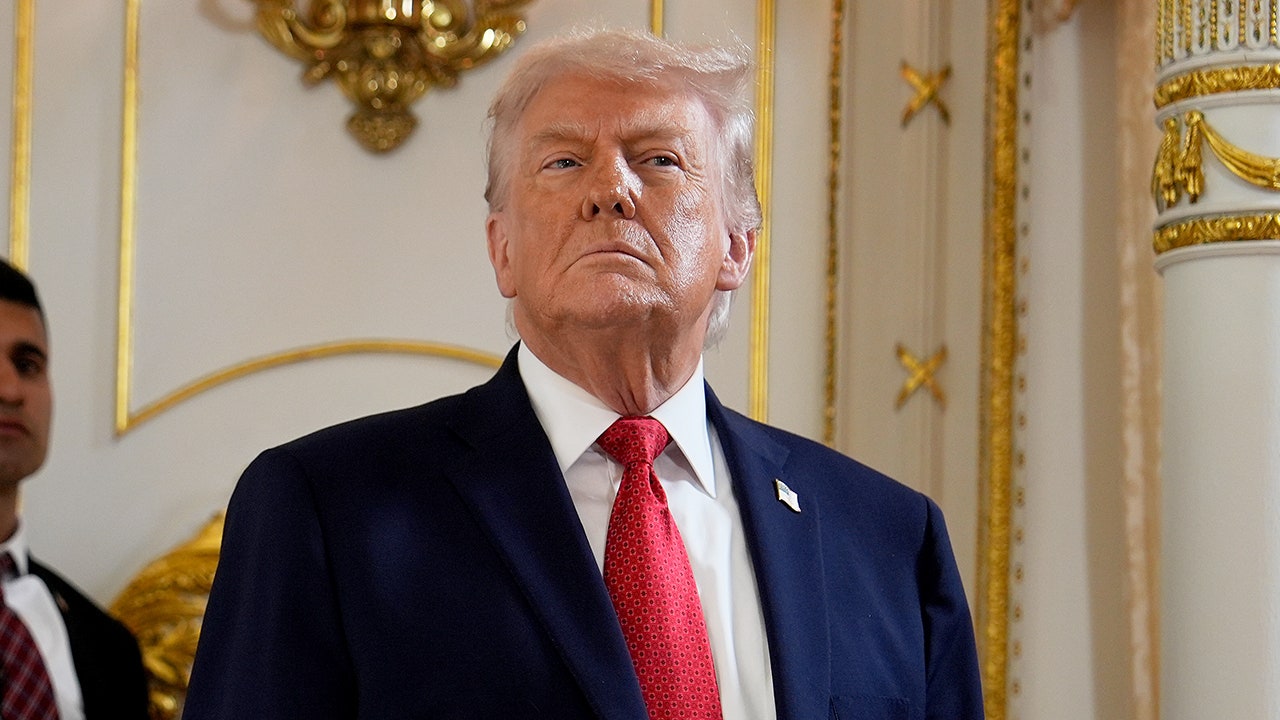
In a recent ceremony at his Mar-a-Lago estate in Palm Beach, Florida, former President Donald Trump confidently declared, “We got men out of women’s sports.” This statement comes just days after the Supreme Court heard oral arguments in two pivotal cases concerning state laws designed to protect women’s athletics. Trump’s remarks underscore his administration’s commitment to what has become one of the most contentious cultural issues in American society today – the participation of transgender athletes in women’s sports competitions. “Transgender insanity is out of our schools and out of our lives,” Trump stated, suggesting the issue enjoys overwhelming public support. “Everyone said, well, that’s an 80/20 issue. No, that’s a 98/2 issue. I don’t even think it’s 98/2,” he added, implying near-universal agreement with his position despite the deeply divided public discourse on transgender rights.
The protection of women’s sports has been a cornerstone of Trump’s second term agenda. In February, he took executive action by signing the “Keeping Men Out of Women’s Sports” order, which had immediate ripple effects throughout the athletic world. The NCAA quickly responded by updating its policies to restrict women’s competition to biological females, with other sports governing bodies following this precedent. However, the implementation hasn’t been smooth across all states. Several Democrat-led jurisdictions—notably Maine, California, and Minnesota—have resisted compliance with these directives, leading to a series of legal challenges that have now reached the highest court in the land. The Supreme Court is currently examining whether laws in Idaho and West Virginia that restrict transgender participation in women’s sports violate constitutional equal protection guarantees and Title IX provisions that prohibit sex discrimination in educational settings.
White House Press Secretary Karoline Leavitt has been vocal in defending the administration’s approach, particularly in light of Tuesday’s Supreme Court hearing where some justices appeared to question fundamental biological distinctions between males and females. “The administration has taken action on a number of fronts against these states who are failing to uphold the president’s executive orders and this administration’s policy of simply protecting women and women’s sports and women’s private spaces,” Leavitt stated during a press briefing. She emphasized what she characterized as the common-sense position that “women’s sports and private spaces should be protected and that there are two genders, there are two sexes—that is not something we should be afraid to say in this country.”
At the heart of this controversy are questions about fairness, inclusion, and the nature of gender identity in competitive sports. Advocates for transgender athletes argue that excluding them from participation in categories aligned with their gender identity constitutes discrimination and denies them equal access to educational opportunities. They point to varying hormone treatments and physical differences among all athletes to suggest that competitive advantages aren’t solely determined by biological sex assigned at birth. Conversely, supporters of restrictions contend that biological males retain physical advantages even after hormone therapy, including bone density, height, lung capacity, and muscle memory, which they believe creates an uneven playing field for biological females who have fought for decades to secure their own competitive spaces in athletics.
The legal challenges before the Supreme Court—Little v. Hecox from Idaho and West Virginia v. B.P.J.—will likely establish precedent for how schools, athletic associations, and governments nationwide approach this issue going forward. The Court’s decision, expected later this summer, will need to balance competing interpretations of Title IX, which was originally enacted to ensure equal educational opportunities for women but is now being invoked by both sides of this debate. Transgender advocates argue that the law protects against discrimination based on gender identity, while others maintain that its original intent was to create separate and protected categories based on biological sex to ensure fair competition for women.
The outcome of these cases will have far-reaching implications beyond sports, potentially influencing policies regarding gender-segregated facilities such as bathrooms and locker rooms, and even healthcare provisions related to gender identity. As the nation awaits the Supreme Court’s ruling, the Trump administration has signaled its intent to continue enforcing its executive order and challenging states that don’t comply. Meanwhile, athletes, parents, coaches, and advocacy groups on both sides remain deeply invested in a resolution that will shape athletic competition for generations to come. Regardless of the Court’s decision, the conversation about balancing inclusivity with competitive fairness in sports is likely to continue evolving as society grapples with changing understandings of gender, identity, and physical competition.