






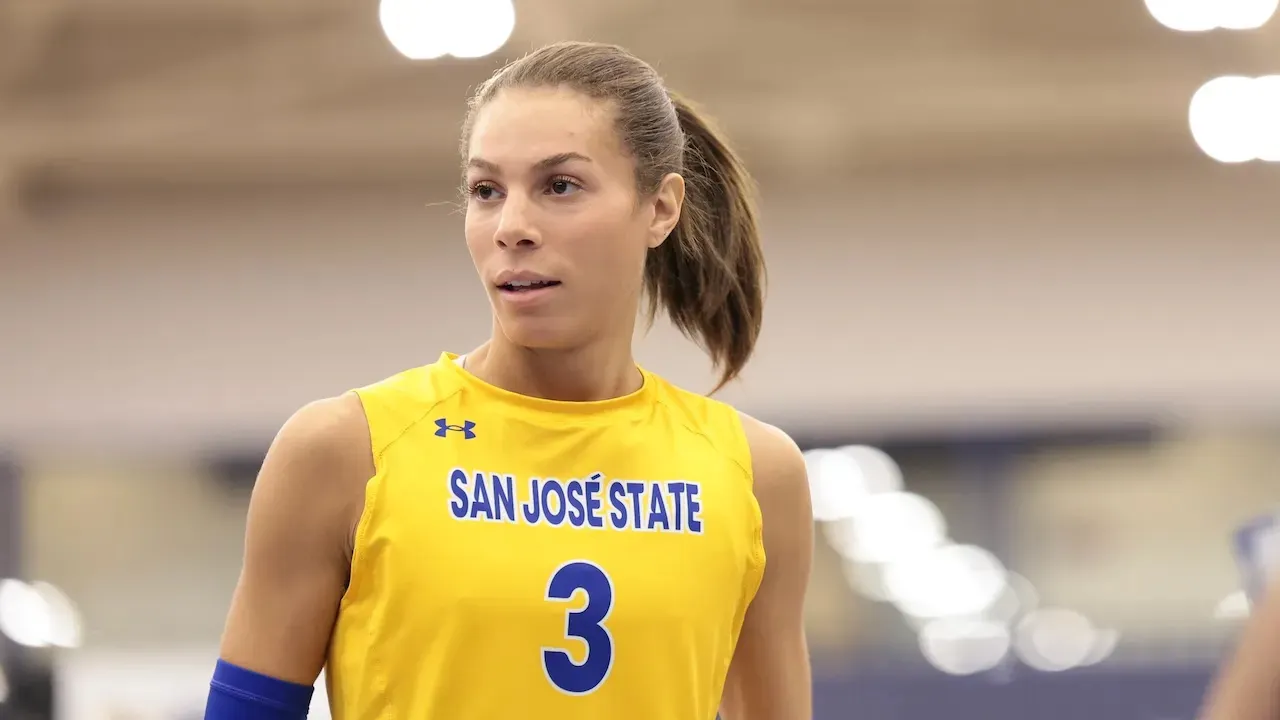
In the heart of a heated national debate over fairness in women’s sports, the U.S. Department of Education dropped a bombshell announcement last Wednesday, ruling that San Jose State University had violated Title IX by allowing a transgender athlete to compete on its women’s volleyball team. This wasn’t just administrative paperwork—it was a stark reckoning with how the university handled the presence of Blaire Fleming, a biological male who played for the SJSU women’s squad. The ED’s investigation, sparked by a controversial 2024 season where seven teams forfeited games rather than face off against SJSU, now demands swift action: the school has just 10 days to comply with a set of agreements or face “imminent enforcement.” At its core, this case pits the rights of female athletes against evolving interpretations of gender, shining a light on real people’s lives disrupted by policy clashes. Picture Brooke Slusser, a former co-captain who felt her world crumble when she discovered she’d been sharing locker rooms and bedrooms with someone society labels as male. The ED concluded that SJSU denied women like her equal opportunities, from scholarships to playing time, all while retaliating against those who dared to speak out. Kimberly Richey, the Assistant Secretary for Civil Rights, didn’t mince words: “SJSU caused significant harm… by allowing a male to compete… creating unfairness in competition, compromising safety, and denying women equal opportunities.” This isn’t abstract law—it’s about young women whose athletic dreams were overshadowed by confusion and betrayal.
The saga began in earnest during the 2024 volleyball season, a time when sportsmanship collided with identity politics. IUP College paid a hefty fine and forfeited a game after veteran players complained about the unfairness of competing against a biologically male opponent. That ripple effect led to forfeits from teams like Arizona State, Boise State, and others, turning what should have been a season of triumph into a national controversy. Central to it all was Blaire Fleming, whose participation raised alarms among female athletes who believed it skewed the playing field. Brooke Slusser, standing at an imposing 5-foot-11, had trained relentlessly for years, only to face an opponent whose physical advantages—height, strength, and muscle mass—seemed undeniable. In lawsuits against the NCAA, the Mountain West Conference, and SJSU representatives, Slusser and others alleged secrecy and discrimination. They claimed they weren’t told about Fleming’s biological sex, forced into intimate spaces together, and silenced when they protested. Assistant coach Melissa Batie-Smoose echoed this, filing her own Title IX complaint after learning the truth piecemeal: a head coach casually dropping the bombshell mid-conversation, threatening her job if she disclosed it to players or parents. “Oh, by the way, Blaire is a male,” she’d been told, as if it were an afterthought. The administration’s response? Stonewalling, with officials like Laura Alexandra reinforcing the no-talk policy. This wasn’t just sports; it was about trust shattered, lives upended, and a system that seemed to prioritize one voice over the chorus of frustrated women.
Delving deeper into the allegations, the ED uncovered disturbing details that go beyond mere competition, revealing a potential conspiracy that turned athletics into something sinister. Slusser and Batie-Smoose alleged that Fleming conspired with an opposing player, Malaya Jones from Colorado State, during a meeting on October 2, 2024, just days before a match. The plan? To have Slusser deliberately spiked in the face, an act of targeted violence disguised as gameplay. Imagine the fear: knowing you’re a target not just because of skill, but perhaps out of spite or spiteful alliance. Slusser described overhearing talk of “leaving the net open” for a brutal hit. The ED found that SJSU failed to investigate this credible threat, which flew in the face of safety mandates under Title IX. Instead, when Slusser publicly referenced Fleming’s gender in interviews, labeling it “misgendering,” she faced a Title IX complaint from the school. Retaliation at its ugliest—where speaking truth leads to punishment. The Mountain West hired a law firm, Willkie Farr & Gallagher, to probe the claims, but ironies abounded: the very firm was defending the conference against Slusser’s lawsuit, which included these allegations. Investigator Timothy Heaphy, once a key figure in probing the January 6 Capitol riots, led the inquiry, yet even with direct witness accounts—like a teammate recalling the charged meeting—no disciplinary action followed. Slusser poured out her frustration: “Based on what I was told, exactly what one of my teammates had seen go on that night… was told to those lawyers. So, that should have been sufficient evidence.”
The ED’s findings painted a damning picture of institutional indifference, with the university ignoring sex-discrimination claims while weaponizing Title IX against outspoken women. Athletic Director Jeff Konya admitted uncertainty about the allegations’ truth, telling Fox News Digital, “I have no idea if she’s telling the truth or not,” when confronted with Slusser’s account. Even when shown a video of Slusser recounting the events, Konya remained evasive, unable to confirm if witnesses corroborated Fleming’s role in the conspiracy. This opacity fueled lawsuits; Batie-Smoose sued the CSU Board of Trustees, branding her suspension “retaliatory.” She described a toxic environment where truth was obscured, and her pleas for clarity went unanswered until she pieced it together herself. The ED echoed these sentiments, declaring SJSU’s failures not just bureaucratic oversights but egregious harm. Richey’s statement hammered home the stakes: “Even worse, when female athletes spoke out, SJSU retaliated… This is unacceptable. We will not relent until SJSU is held to account.” The investigation revealed a pattern where male participation disrupted women-only spaces, compromising not just games but the very integrity of women’s sports. In a world grappling with transgender rights, this case forced uncomfortable questions: How do we balance inclusion with equity? For Slusser and Batie-Smoose, it was personal—they’d invested blood, sweat, and years into athletics, only to feel diminished by decisions made in boardrooms, far from the court.
On a deeply human level, the fallout extended beyond stats and scores, etching real emotional scars on those involved. Brooke Slusser, once a powerhouse athlete reveling in the thrill of the game, crumbled under the stress. The ordeal triggered severe anorexia, her weight plummeting from 160 to 128 pounds, her menstrual cycle vanishing for nine grueling months. “I went from around 160 to 128 in that one semester,” she reflected, her tall frame betraying the toll. Panic attacks morphed into disordered eating, a direct response to the harassment and hostility she endured. Her father, Paul Slusser, recalled the heart-wrenching decision to pull her out: After seeing the physical toll—perhaps lasting mental health struggles—during winter break, he and his wife intervened. “As soon as the season was over, she came home for Christmas, and we were like, ‘You’re not going back.'” Online classes followed, but Brooke dropped them, forfeiting her Division I scholarship. The family bore the financial blow, paying tuition and housing out of pocket—a tangible cost of standing ground. Batie-Smoose, too, faced professional fallout, her contract not renewed amid her advocacy. These women weren’t just collateral damage; they were voices silenced, bodies strained, futures rerouted. Their stories humanize the abstract debates, reminding us that policies aren’t just ink on paper—they shape lives, for better or worse.
Amid this turmoil, the Trump administration’s resolve shines through, positioning the ED’s actions as a pivotal stand for women’s sports. The required resolutions are clear and uncompromising: SJSU must adopt biology-based definitions of “male” and “female,” separate sports and facilities by biological sex, and avoid delegating Title IX compliance to discriminatory entities. They must restore usurped records and titles to female athletes, apologizing personally to those affected, from volleyball players to forfeited opponents. Letters of regret will go to every woman on the 2022-2024 indoor teams, the 2023 beach squad, and those on rival teams forced to choose protest over play. This echoes successful resolutions with the University of Pennsylvania and Wagner College, but underscores failures with Maine and California’s state agencies, leading to lawsuits. As President Trump vows to “save women’s sports,” this case could set precedents nationwide. It’s a call to accountability, humanizing the struggle by centering athletes like Slusser—resilient, outspoken, forever changed. In the end, as Fox News urges listeners to tune in for updates, the real story is one of courage against odds, and a fight for a fair playing field where biology doesn’t bend to policy, but policy bends to protect the vulnerable.