


The Evolving Landscape of Women’s Sports: Stephanie Turner’s Stand Against Transgender Inclusion in Fencing
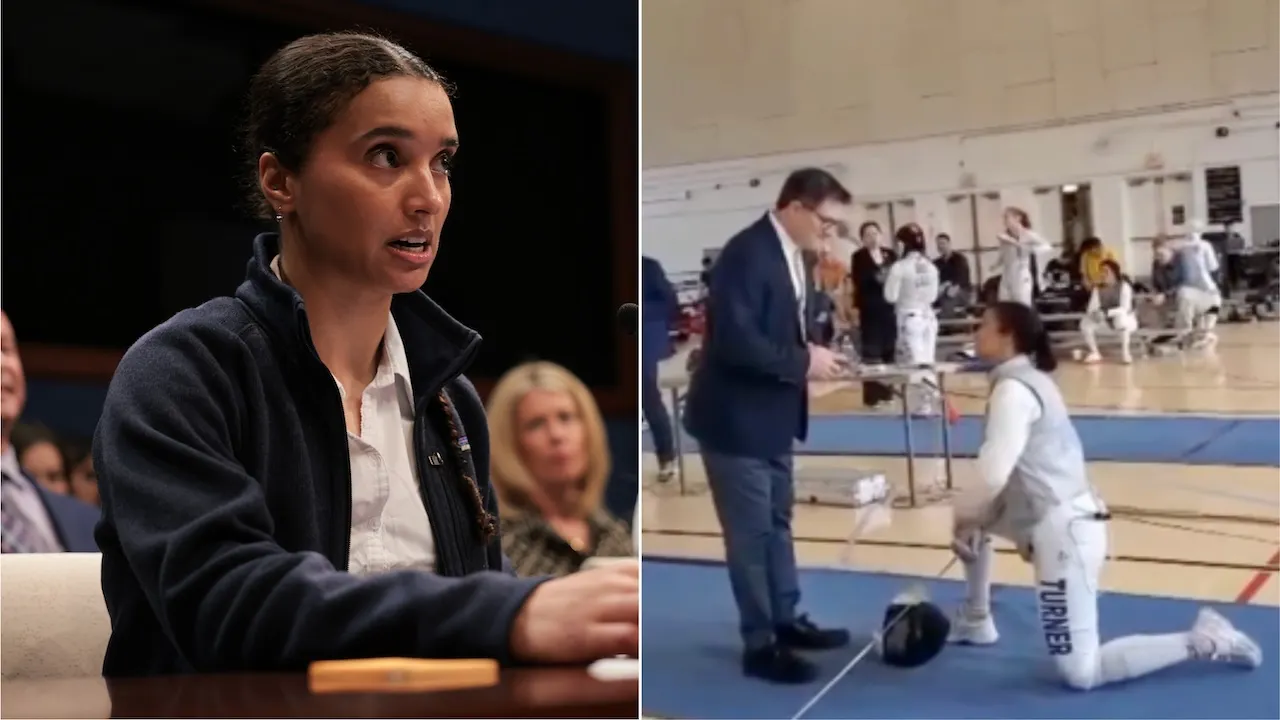
In April 2025, fencer Stephanie Turner became a symbol of resistance in the debate over transgender athletes in women’s sports after her kneeling protest against a transgender opponent went viral. This act of defiance, which occurred at the Cherry Blossom Open in Maryland, earned her a black card—the most severe penalty in fencing—resulting in her disqualification from the event, removal from the venue, and a 12-month probation from USA Fencing. Rather than serving this probation, Turner chose to step away from the organization entirely and channel her energy into activism for women’s sports protection. Her protest sparked a chain reaction that put USA Fencing under intense scrutiny, including a congressional hearing, multiple lawsuits over transgender inclusion policies, significant leadership changes, and ultimately a revision of their gender eligibility rules to only permit females to compete in women’s competitions.
Despite these substantial changes within USA Fencing, Turner remains cautious about returning to competition. “This change of leadership at USA Fencing is merely a game of musical chairs,” she told Fox News Digital. “These Board members are cut from the same woke cloth and, without a watchful eye, they will resort to the same policies that got them a Congressional hearing in the first place.” Her skepticism reflects a deeper concern that the organizational changes might be superficial rather than representing a genuine philosophical shift in how the organization approaches gender and competition. USA Fencing, for its part, has stated that Turner would be welcome back, emphasizing that they “welcome participation from any eligible athlete who meets our current membership requirements and competition rules” while maintaining their commitment to “fostering a safe, respectful, and positive environment for everyone involved in the sport.”
Following her protest, Turner became increasingly involved in political advocacy, testifying at the Department of Government Efficiency (DOGE) subcommittee hearing on transgender athletes—a hearing that became a significant focal point in the national debate about women’s sports. After the May hearing, Turner had expressed her intention to lobby for leadership changes within USA Fencing, stating, “I’m going to be pushing for people to resign, to be honest. I’d like to see some people resign for the comments that they’ve made, especially publicly, ones that are harassing and meant to humiliate concerned women, mothers and daughters.” Her activism appears to have contributed to a series of policy changes within the organization, including amendments to policies that had prioritized LGBTQ-friendly states for competition venues and potentially prevented the playing of the national anthem at certain events.
The most significant change came in July 2025, when USA Fencing revised its transgender participation policy to permit only female competitors in women’s categories. This revision was framed as ensuring compliance with the U.S. Olympic and Paralympic Committee’s updated athlete safety policy, which cited President Donald Trump’s executive order titled “Keeping Men Out of Women’s Sports.” This policy change represents a major shift in how USA Fencing addresses the controversial issue of transgender participation in women’s sports, aligning the organization more closely with those advocating for sex-based rather than gender-identity-based eligibility requirements in women’s competitions.
Further organizational changes followed in October when Damien Lehfeldt, the former USA Fencing board chair, declined to seek re-election. His replacement, Dr. Scott Rodgers, a Paralympic medalist, made history as both the first active athlete and first parafencer to lead the board. This leadership transition occurred against the backdrop of ongoing legal challenges, including a lawsuit filed by U.S. Olympic fencer Margherita Guzzi Vincenti and fellow competitive fencers Emma Griffin and Patricia Hughes. Their lawsuit alleges that USA Fencing knowingly allowed biological males to compete in women’s divisions while advertising events as female-only at the 2025 North American Cup in January. These legal challenges highlight the continuing tensions surrounding transgender inclusion policies in fencing and broader women’s sports.
As USA Fencing attempts to navigate these controversies and rebuild trust, the organization released a statement in November expressing their commitment “to earning and maintaining the trust of our athletes, fans, and the wider fencing community.” The statement emphasized that Dr. Rodgers’ election reflected their “dedication to athlete-centered governance and the continued growth of fencing at every level,” while acknowledging “the challenges of the past several months.” Despite these controversies, USA Fencing continues to expand, announcing that Arcadia University in Pennsylvania and Fairleigh Dickinson University in New Jersey will add men’s and women’s fencing teams to their varsity sports programs starting in fall 2027. However, Turner’s hesitation to return to competition with USA Fencing until “the dust settles” illustrates the ongoing nature of this controversy and the deep divisions that remain within the sport about how to balance inclusivity with competitive fairness. Her stance—and the organization’s response—represents a microcosm of the larger societal debate about transgender athletes’ participation in women’s sports.