






The Framing of a Legacy: Chuck Noll’s Long Shadow Over Pittsburgh
The Pittsburgh Steelers, a franchise synonymous with grit, resilience, and undeniable blue-collar heart, found themselves at a pivotal crossroads earlier this month. For just the third time since 1969, when the legendary Chuck Noll took the helm and transformed a downtrodden team into one of the NFL’s most storied dynasties, the Steelers embarked on a head coaching search. Noll, a man of immense integrity and strategic brilliance, wasn’t flashy—he was the architect who built the Steel Curtain defense, guiding the Steelers to four Super Bowl victories and etching their name into football immortality. His successors, Bill Cowher and Mike Tomlin, emerged from relative obscurity, much like Noll himself, each leaving Pittsburgh not just with rings on their fingers but with Hall of Fame legacies that fans still whisper about in smoky bars and tailgating setups throughout the city. Cowher, the fiery competitor who led the team to yet another Lombardi Trophy, and Tomlin, the calm, cerebral leader who won two of his own, instilled a sense of continuity. But on January 13th, Tomlin’s unexpected announcement to step down after 19 seasons—nineteen years of blood, sweat, and thousands of plays that defined an era—sent shockwaves through Steelers Nation. Fans, many of whom had followed the team since the days of Bradshaw and Greene, felt a mix of gratitude and apprehension. Who could step into shoes that seemed too big for mortal men? This search wasn’t just about finding a coach; it was about reuniting a community that bleeds black and gold. The candidates they interviewed were a nod to that heritage—young, hungry assistants, echoes of the unknowns who became giants. It was as if the Steelers were searching for the next chapter in an epic story written in Franco Harris touchdowns and icy turf battles. Paul Valter, the general manager, alongside owner Art Rooney II, sought someone who understood the weight of the legacy, someone who could inspire players to chase not just victories but the kind of excellence that lifts a city’s spirit. Imagine the tension in those interviews—the room thick with the ghosts of past coaches, the expectations palpable. Each conversation was a dance, a chance to prove one’s mettle against the backdrop of Pittsburgh’s proud history. It wasn’t merely a job; it was an inheritance, a chance to honor the men who turned a steel town into a football dynasty. And amidst all this, the city watched, hopeful yet cautious, knowing that the soul of the Steelers hung in the balance. The team’s identity, forged in the fires of Noll’s training grounds and Cowher’s intensity, demanded a leader who could carry that flame forward. For die-hard fans like Johnny down at the local diner, who bleeds Steelers’ blood through thick and thin, this search represented more than roster changes—it was the beating heart of what makes Pittsburgh tick. They reminisced about chilly Sundays at Heinz Field, where the echoes of “Here We Go Steelers” still ring loud. Tomlin’s departure wasn’t just an end; it was an invitation for a new storyteller to pick up the pen. In this process, the Steelers interviewed an array of talents, but one stood out—Matt McCarthy. A Pittsburgh native, he embodied that local pride, that unbreakable connection to the city that had birthed legends. His path, much like his predecessors, was one of quiet determination. The team sought freshness, innovation with roots deep in tradition. It was a careful selection, ensuring the new coach could navigate the egos of star players while inspiring the rookies. Pittsburgh wasn’t interested in flash-in-the-pan hires; they wanted substance. And in McCarthy, they saw potential—a man who could weave the threads of the past into a vibrant future. This decision would ripple through the community, affecting tailgates, appetites, and even the conversations at family dinners. As the search unfolded, tensions mounted, with fans debating on forums and sports talk shows. Who would it be? The answer would soon become clear, setting the stage for what could be the dawn of another golden era.
A Son of Pittsburgh: Matt McCarthy’s Emotional Homecoming
When Matt McCarthy stepped into that introductory press conference at Acrisure Stadium, the air wasn’t just charged—it was electric, thick with the raw emotion of a prodigal son returning home. Surrounded by the gleaming silver walls of the stadium that had witnessed so much history, McCarthy, born and raised in Pittsburgh, couldn’t help but let his guard down. His voice cracked, his eyes glistened with unshed tears as he gazed out at his family members scattered among the crowd—a mother, perhaps, beaming with pride, siblings exchanging knowing glances, and maybe even a few cousins who’d spent their youth dreaming of this moment. “I thought I’d at least be able to get started,” he said, the words tumbling out in a flustered attempt to steady himself, but the lump in his throat betrayed the depth of his feelings. For a man who’d coached at the highest levels, this ramped-up vulnerability was unexpected, yet endearing. It’s human, after all, to feel overwhelmingly moved by the gravity of your roots. Pittsburgh isn’t just a city to McCarthy; it’s woven into his DNA, the place where he learned to love football on frosty autumn afternoons, tossing a ball in the backyard with dreams of suiting up for the Steelers. Growing up in a blue-collar town, he likely idolized the likes of Mean Joe Greene and Jack Lambert, heroes who turned the underdogs into champions. Now, at 43, assuming the head coaching role for the team he’d cheered for as a kid felt surreal, like a fairy tale coming true. The press conference, which turned emotional at times, showcased not just a professional milestone but a personal triumph. Reporters, veterans of countless such events, felt the poignancy—McCarthy wasn’t just hired; he was reclaimed. His pride beamed like a lighthouse as he spoke of the honor, the privilege of leading the Steelers. You could see it in his body language, the way he straightened up, drawing strength from the familiar sights of the stadium. For fans watching live or replaying the clips later, it was a moment of connection. Here was a guy they could root for beyond wins and losses; he was one of them. The emotional outburst wasn’t scripted—it was genuine, a testament to the power of home. McCarthy’s journey had been one of perseverance. Drafted into coaching through his love for the game, he’d cut his teeth in the trenches, learning from masters of the craft. Now, for his third head coaching gig, he was stepping onto the big stage in the city that shaped him. Pittsburghers, known for their steel-spine stoicism, nonetheless felt a wave of empathy. After all, returning home isn’t always triumphant; it’s fraught with memories of high school football fields and family reunions. McCarthy’s tears were a bridge, reminding everyone that beneath the facade of a tough sport lies the heart of a man feeling the weight of possibility. His confidence shone through, too, as he outlined his vision for the team. “This is going to be about hard work and unity,” he might have implied between chokes. For the media, it was a humanizing clip, not just a presser but a story of resilience. Coaches are often seen as distant figures, barking orders from sideline chewsticks, but here was proof of their humanity. McCarthy’s family in the stands added layers—sons or daughters who might one day follow in his footsteps, inspired by dad’s soaring moment. It was more than an interview; it was a celebration, a reminder that football, at its core, ties into our deepest emotions. As the conference wrapped, with McCarthy composing himself amid applause, Steelers fans exchanged messages online: “Finally, someone who gets what this city means.” The hire wasn’t just about skill; it was about soul.
Echoes of Green Bay: McCarthy’s Brotherhood with Aaron Rodgers
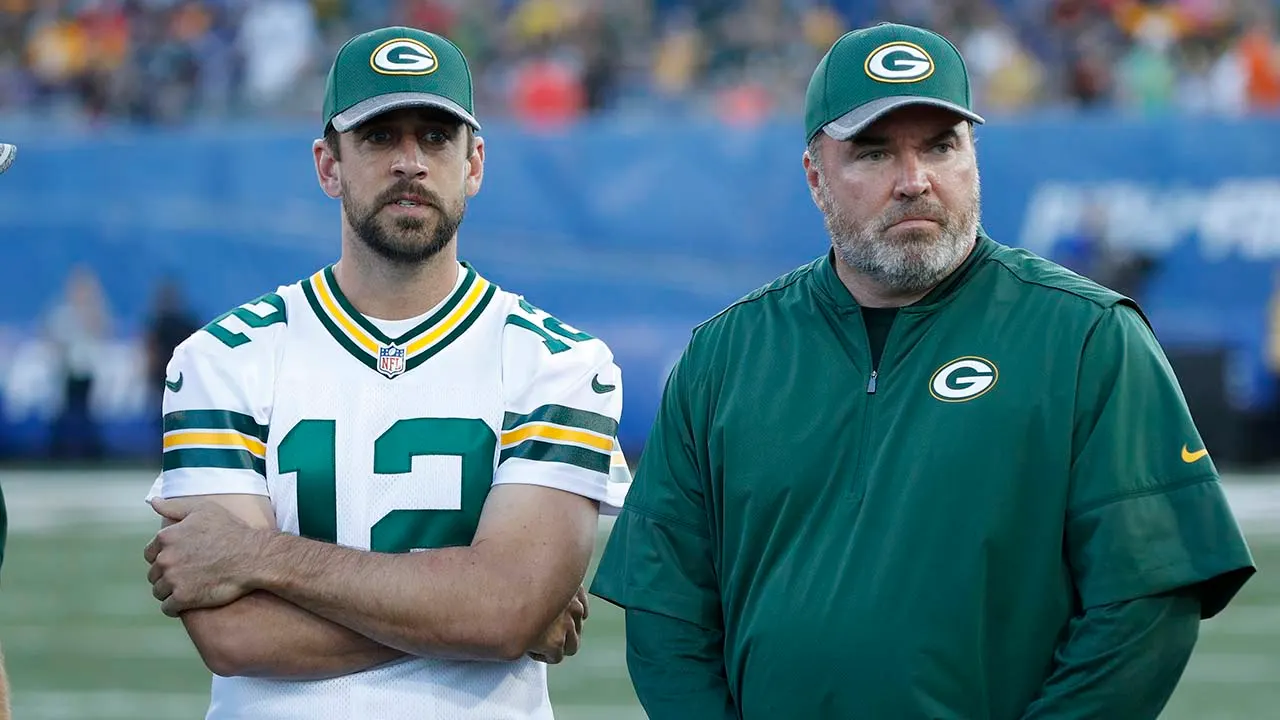
Delving deeper into Matt McCarthy’s storied career, it’s impossible to overlook his transformative tenure with the Green Bay Packers, where he coached from 2006 to 2018, leaving an indelible mark with a sterling 125-77-2 record. Those were the golden years of cheeseland football, a relentless grind in the shadow of Lambeau Field’s frigid winds and roaring crowds of cheeseheads. McCarthy, a cerebral strategist with a knack for fostering loyalty and precision, built a legacy there that still resonates in the NFL. His teams were models of consistency, blending offensive innovation with defensive grit, though the ultimate prize—a consistent postseason dominance—remained elusive for stretches. Yet, it was the relationships forged in that locker room that truly defined his era. Enter Aaron Rodgers, the enigmatic quarterback whose brilliance illuminated the Packers’ fortunes. McCarthy and Rodgers forged a bond over those dozen seasons, a partnership that blended the coach’s methodical approach with the young star’s instinctive flair. Rodgers, drafted from Cal, burst onto the scene as the Packers’ savior after Brett Favre’s retirement, but it was McCarthy who molded that raw talent into a force of nature. Together, they navigated the highs of triumphant campaigns and the lows of disappointing exits. McCarthy’s tutelage turned Rodgers into a four-time MVP, a player whose laser throws and leadership electrified games. Fans remember those epic drives, fueled by McCarthy’s play-calling prowess and Rodgers’ unyielding drive. But as time wore on, the relationship soured—a tale as old as football itself, where egos clash and ambitions diverge. McCarthy was abruptly fired late in the 2018 season, a turning point that stung deeply. Rodgers, in his prime at 29, watched his mentor depart, setting in motion a chain of events that would redefine careers. Green Bay without McCarthy felt different, as if a vital piece of the puzzle was missing. Yet, McCarthy carried that Packers ethos with him, a disciplined mindset honed in one of the league’s most passionate environments. His coaching philosophy—emphasis on fundamentals, mental toughness, and team chemistry—was shaped by the frigid Packer winters, where only the strong survive. Reflecting on those years, one sees McCarthy’s coaching not just as tactics but as mentorship. He shaped young minds, instilling confidence and discipline in players who became pros. For Rodgers, who thrived under his guidance, McCarthy was more than a coach; he was a compass. The dynamic between them was electric, a blend of intellect and instinct. Post-firing, McCarthy endured, bouncing back with stints elsewhere, proving his mettle in Dallas and beyond. He spoke of those Packers days with fondness, a chapter brimming with memories of late-night meetings and sideline huddles. The 2010 Super Bowl victory, Green Bay’s lone under McCarthy’s watch, cemented their legacy, a triumph that brought McCarthy eternal honor. Yet, beneath the success lay complexities—the pressures of high expectations, the sting of public scrutiny. Humanizers would see McCarthy as a dedicated family man amidst the chaos, balancing coaching demands with home life. His time in Green Bay wasn’t just about wins; it was about building a brotherhood. When he left, Rodgers acknowledged a shift, but time has softened the edges. Reconnecting with Packers roots evokes nostalgia for fans, reminding them of simpler times when football united rather than divided. McCarthy’s Packers era remains a testament to resilience, teaching that even in defeat, lessons are learned. As he embarks on this new chapter, echoes of Lambeau linger, shaping his vision for Pittsburgh.
Rodgers’ Journey: From Packers Icon to Steelers Adventurer
Aaron Rodgers’ career, a rollercoaster of triumphs and tribulations, took a new turn after parting ways with the Packers, culminating in his arrival at the Steelers, where his journey intersects once more with destiny. The 42-year-old quarterback, a maestro with the ball, left Green Bay in 2023 after a 2022 season that felt anticlimactic, his despedida marked by a decision to explore pastures anew. The sting of McCarthy’s firing lingered, but Rodgers, ever the maverick, sought fresh challenges. He landed with the New York Jets for two transformative years, a stint filled with promise and frustration. In East Rutherford, Rodgers attempted to reinvent the Jets’ offense, bringing his signature precision and improvisational genius. Yet, injuries nipped at his heels, and the team’s inconsistency mirrored a partnership that never fully ignited. Rodgers’ expressive personality clashed with the Jets’ rigid structures, leading to a season of highs—like dazzling comebacks—and lows, including playoff disappointments. It was a trying period, where the weight of age and demands reminded him of football’s unforgiving nature. Fans watched with bated breath, marveling at his endurance but sensing the sunset approaching. The man who once defined an era was now navigating transitions, his body and spirit tested by the grind. Mentally, it was taxing—relocating families, adapting to new cultures, questioning loyalties. Yet, Rodgers’ resilience shone; he embraced challenges, using yoga and routine to combat adversity. His time with the Jets broadened his worldview, forging epiphanies about teamwork and resilience. Then came the one-year deal with the Steelers in the offseason, a bold move that surprised the league. Pittsburgh, a city of steel and salt-of-the-earth folks, welcomed this veteran with open arms. His first season was profoundly productive, blending veteran wisdom with on-field magic. Rodgers redefined the Steelers’ attack, his deep balls and scrambles breathing life into an offense hungry for dynamism. Age looms large, however; at 42, retirement whispers in the background. Will he return in 2026, chase another ring elsewhere, or bow out gracefully? The uncertainty adds intrigue, a narrative of legacy and longing. Pittsburgh has felt like home, its die-hard fans adopting him, sharing stories of perseverance. Rodgers, in turn, has infused the team with his philosophy—mindfulness, dedication, pushing boundaries. His journey reflects football’s human side: the joys of triumphs, the pain of setbacks, the quest for meaning. From Packers’ fairy tale to Jets’ experimental phase to Steelers’ reclamation project, Rodgers embodies evolution. Fans empathize with his razor’s edge existence, the pressure to perform incessantly. Beyond the arm, he’s a thinker, a businessman, a seeker of truth. His productive year in Pittsburgh hints at remnants of glory, but the clock ticks. Decisions approach, career crossroads looming. As McCarthy steps in, Rodgers’ chapter intertwines anew, friendship and fate aligning. For gamers and dreamers alike, his story inspires, reminding that greatness endures.
The Reunion Dream: McCarthy and Rodgers Rekindling Ties
The spark of reunion between Matt McCarthy and Aaron Rodgers ignited curiosity during Tuesday’s news conference, a tantalizing prospect that fans of the Steelers and beyond couldn’t ignore. As reporters peppered McCarthy with questions, his eyes lit up with genuine optimism, a rare glimmer of unguarded enthusiasm from a usually composed coach. “Definitely, I don’t see why you wouldn’t,” he replied smoothly, his voice steady yet infused with warmth, addressing the possibility of coaching Rodgers once more. It was more than a professional nod; it felt personal, like revisiting an old flame with fond memories intact. McCarthy, ever the tactician, recognized the synergy they once shared—a quarterback who elevated his plays and a coach who harnessed that brilliance. Their Packers days resonated, a brotherhood tested by time and distance. Fast-forward to 2024, and the idea of reunion danced in the air, evoking nostalgia for cheeseheads and Steelers alike. Rodgers, on the other end, had reflected on their bond with maturity. In 2022, ahead of a Cowboys game at Lambeau, he spoke eloquently about separation’s gift. “It’s probably normal in any relationship you have,” Rodgers mused, his tone reflective amid the stadium’s roar. Time away had accorded him appreciation, gratitude seeping into his words. He saw McCarthy not as a foe post-firing but as a teacher, shaping his formative years. Their paths diverging after 2018, with McCarthy’s stern dismissal and Rodgers’ ascendance, had bred introspection. Now, potential Reload felt serendipitous. McCarthy’s zeal stemmed from familiarity; he knew Rodgers’ intricacies, the cues that unlocked magic. Coaches and quarterbacks often form symbiotic bonds, built on trust and intuition. Imagine the huddle energy, strategies honed by history. Yet, football’s volatility breeds caution—ages, motivations, team dynamics could complicate matters. Rodger’s sunset career adds stakes; it’s not just business but legacy. McCarthy’s response bred excitement, a narrative twist appealing to romantics of the game. Team owners might see roster synergy, but fans dream bigger—a duet rekindled for glory. Behind the scenes, it’s human: shared laughs, fiery debates, moments of triumph. Their partnership epitomized football’s soul, blending calculation and charisma. As McCarthy voiced hope, attendees sensed possibility. Rodgers’ words from yesteryear echoed, prompting “why not?” vibes. This potential alliance humanizes giants, revealing vulnerabilities. Coaches grapple with egos, seeking redemption. Could this be healing? Only time will tell, but the optimism buoyed spirits. Steelers panels buzzed with speculation, envisioning Super Bowl runabouts. McCarthy’s candor bridged divides, fostering hopeful outlook. In a sport rife with drama, their story warms hearts.
A City’s Championship Call: McCarthy’s Bold Vision
Matt McCarthy’s declaration at the press conference reverberated through Pittsburgh like a rallying cry, igniting hopes for a championship that has eluded the Steelers and their beloved coach since their storied days. “It’s time to bring another championship back to this great city,” he proclaimed, his words laced with determination and a touch of reverence, as if channeling the spirits of Cowher and Noll. Pittsburgh, a tapestry of blue-collar dreams and gridiron glory, hasn’t tasted that elusive Lombardi Trophy since 2008, and McCarthy understands the void it leaves—a city craving validation, a team hungry for vindication. For residents who’ve pounded the pavement in steel mills and cheered from icy sidelines, football isn’t mere entertainment; it’s therapy, identity, a unifying force amid life’s hardships. McCarthy, with roots entwined in these streets, feels this pulse intensely. He’s seen the passion in fans’ eyes, the generations raised on Steelers lore. His mission isn’t just wins; it’s revival. Drawing from Packers’ resilience, he plans discipline and innovation. Todd Haley or Art Rooney II could testify—McCarthy’s methods emphasize fundamentals, fostering synergy. But it’s personal too; he juggles family amidst the vortex, embodying ordinary man in extraordinary role. The Associated Press lens adds depth, portraying McCarthy’s earnestness. Follow Fox News Digital for more tales; each game weaves narratives of redemption. McCarthy’s era dawns with promise, analysts prophesying breakthroughs. Yet, challenges loom—rivalries, injuries, expectations. Steelers fans, stubborn optimists, rally behind. Tailgates turn communal feasts, kids dreaming McCarthy’s successors. His pledge resonates, preventing apathy, sparking joy. In football’s microcosms, champions rise from soil enriched by hope. McCarthy’s call isn’t empty; it’s a promise, humanizing the grind. As seasons unfold, spectators root for his dreams, watching legacies bloom. The city pulses with anticipation, ready for another legend. This isn’t just roster talk—it’s Pittsburgh’s heartbeat, amplified.