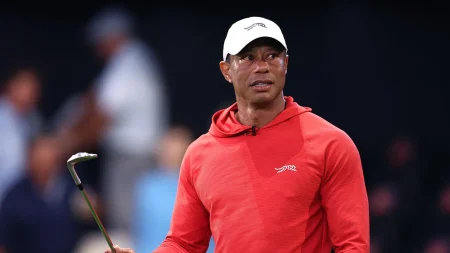






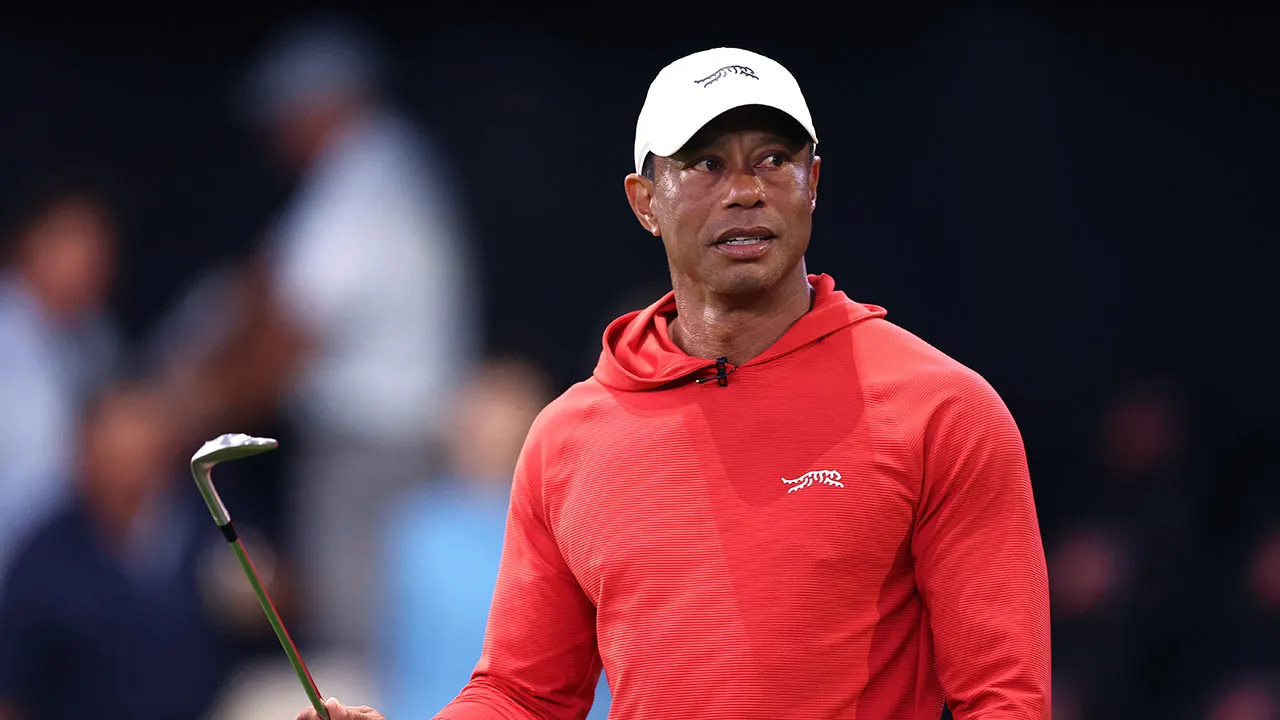
The rolling hills of Jupiter Island, Florida, have always been a serene backdrop for the lives of the wealthy and elite, a place where million-dollar homes overlook calm waters. But on a fateful Friday, that tranquility was shattered by the screech of tires and the crush of metal. Tiger Woods, the legendary golfer whose name is synonymous with dominance on the golf course, found himself in the heart of a nightmare once more. After a high-speed collision that flipped his vehicle and left it on its side, Woods was taken into custody by the Martin County Sheriff’s Office. Eyewitnesses and officials paint a vivid picture: a sports icon, battered and disoriented, crawling out from the passenger side window, his body bearing the scars of past triumphs and tragedies. It’s hard not to feel a punch to the gut when imagining this— a man who once soared as the king of golf, reduced to escaping a wreckage like a wounded animal. This incident, coming on the heels of previous crashes, feels like the universe’s cruel reminder that even legends aren’t invincible. Sheriff John Budensiek, standing firm at the press conference podium, detailed the chaos without flinching. Woods had been racing along the road at an alarming pace, Budensiek explained, his car veering into another vehicle with devastating force. The impact caused Woods’ SUV to roll over dramatically, landing driver-side down as shards of glass and twisted metal scattered the scene. But it was the aftermath that truly humanized this tale: Woods, visibly shaken and sporting fresh injuries from the crash, didn’t just walk away; he crawled, pulling himself through the window on the passenger side, his movements slow and labored, a far cry from the fluid power we associate with his golf swing. In those moments, one can’t help but wonder about the pain etched on his face—not just from the accident, but from the accumulations of a life lived on the edge. Family, friends, and fans watching from afar must have held their breath, recalling how this isn’t the first time Woods has starred in such a drama. His resilience has been awe-inspiring before, surviving near-fatal accidents and coming back stronger, but each recurrence chips away at the myth. As the sun set over Jupiter Island that Friday, it wasn’t just an arrest; it was a cry echoing through the annals of sports history, begging the question: when will enough be enough for a man who’s given so much joy to millions?
Law enforcement diving deeper into the scene uncovered another layer of complexity, one that peels back the facade of invincibility. The sheriff’s team noted that Woods exhibited clear signs of impairment, his behavior at the crash site raising red flags among seasoned investigators. Breathalyzer tests came back with zeros across the board—no alcohol in his system, which ruled out one potential culprit. Yet, the refusal to submit to further testing, like a urine analysis that could have shed light on other substances, painted a picture of a man protecting secrets born from chronic pain and perhaps reliance on prescribed or illicit aids to dull the edges of discomfort. Sheriff Budensiek was candid in the briefing, acknowledging that Woods cited his extensive medical history—countless surgeries on his back, neck, Achilles tendon, knee, and beyond—as reasons for his altered state. Those tests on the roadside were thorough, probing balance, coordination, and cognitive function, and they added up to suspicion of impairment, even if not from liquor. It’s a human story here, one of a champion athlete whose body has been pushed to its limits, repaired and remodeled time and again by top surgeons, becoming a patchwork of scars and steel rods. Imagine the toll: waking up each day with the weight of not just physical wounds, but the psychological burden of knowing your instrument—your very livelihood—is fragile. Woods’ refusal of the urine test led to charges piling up: driving under the influence (DUI), damaging property, and evading a lawful testing request. For onlookers, this wasn’t just about tsk-tsking a celebrity; it was a sobering glimpse into how painkiller dependencies can creep into the lives of those in perpetual agony, turning chess masters of the course into victims of habits formed in solitude. As investigators wrapped up their work, the jail cell became a temporary sanctuary, but the real confinement lay in the unrevealed battles raging within Woods’ mind and body. Fans worldwide, who’ve cheered him from victory lap to victory lap, couldn’t help but feel protective, urging him to seek the help that’s eluded him before.
Sheriff Budensiek’s words carried the weight of authority, delivered with a steady gaze that spoke of years unraveling personal tragedies in his community. He recounted how the crew arrived to find the scene awash in the echoes of Woods’ relentless pace behind the wheel, the high-speed impact forcing a rollover that could have been catastrophic. Thankfully, no one else was gravely injured—no pedestrians caught in the crossfire, no innocents in the other vehicle—leaving only property damage as collateral. Yet, Budensiek’s emphasis on impairment was methodical, almost empathetic, as he factored in Woods’ history of operations that have reshaped his physique. It’s not hard to empathize with the sheriff’s position: balancing protocol with compassion for a man whose fame outstrips his frailties. The triple-zero breath test was conclusive for alcohol absence, but the refusal of urine screening whispered volumes about potential narcotics, perhaps opioids or similar, used to stave off the rebellion of a body that’s endured too much. This pattern, as the sheriff noted, mirrors others in sports where repeated surgeries lead to slippery slopes of addiction. For Woods, the master strategist on 18 holes, the wheel becomes a battleground equally treacherous. His counsel in dropping hints about getting help—suggestions of hiring a chauffeur to avoid temptations—rings true, especially with priors showing Woods’ brushes with impaired driving before. We’ve all felt that twinge of worry for someone close who’s spiraling, and here it’s amplified to global proportions. By charging him and releasing him on bail later, authorities sent a message not of punishment alone, but of concern for public safety and, indirectly, for Woods’ wellbeing. In a world quick to cancel, their approach felt humane, recognizing he’s not just a defendant but a human tapestry of pain and persistence.
Fox News contributor Jim Gray, seated comfortably on “Special Report,” offered a perspective drenched in the kind of seasoned insight that only decades in sports journalism can forge. His voice, warm yet tinged with sorrow, called the unfolding saga a “sad story” that’s far from resolved, one that’s written chapters marked by survival against odds. Think about it—Woods, the prodigy who dazzled us as a teenager winning majors, the icon who redefined artistry in golf, now entangled in yet another crash that’s his third in as many reckonings. Gray’s reflection wasn’t cold commentary; it was personal, evoking shared memories of Woods’ electrifying drives, both on the greens and off. “He’s a national treasure,” Gray proclaimed, elevating him above mere athlete to cultural lodestar, rivaling even Jack Nicklaus’ haul of trophies. But the pattern Gray highlighted cuts deep: these incidents scream for intervention, questioning who surrounds him and why the wheel remains his vice. With his history of surgeries amounting to a resume of resilience, Gray speculates on pain as the root, leading to crutches in substances that blur judgment. He hasn’t conversed directly with Woods or his doctors, yet patterns from peers in painkiller ruts—athletes wrestling demons post-injury—are evident enough to diagnose the issue. Thankfully, this crash spared him and others the grievous harm of the last one, where lives hung in the balance. Gray’s plea is heartfelt: “Somebody has to get to him,” urging surrounds to provide a driver, to lift the burden from his hands. It’s a cry for a friend in need, reminding us that beneath the fadeaway swings and furtive escapes hide a man in agony, whose family—his children especially—deserve the father unmarred by these cycles. Gray’s empathy shines through, hoping for Woods’ return to normalcy, smiling through the pain, embracing life beyond the leaderboard.
Delving into Tiger Woods’ golfing odyssey, it’s impossible not to weave the threads of his recent struggles with the crash’s timing, as the Masters Championship looms just around the corner on April 9 at Augusta National. Woods, at 48, hasn’t stood on a professional tee since the PGA Championship in May 2023, where he missed the cut, capping a sparse year of just five starts across majors and invitational events like the Genesis Invitational, from which he withdrew. In the fourteen majors post his 2019 Masters victory, the green jacket that cemented his status, Woods hasn’t cracked the top 20 even once—a drought eerily mirroring his rookie years in ’95-’96. His last 26 majors yield a meager four top-20 showings, with a high point of tied ninth at the 2020 Farmers Insurance Open and a low of tied 37th at the 2020 PGA Championship. These stats aren’t mere numbers; they’re a legacy under siege, a once-unassailable force grappling with the ravages of age, injury, and perhaps the shadow of off-course distractions. Gray notes Woods hasn’t ruled out teeing off at the Masters, yet whispers of comeback feel more like faint hopes than robust declarations. It’s heartbreaking for aficionados who’ve pinned their dreams on his rallies, glimpses of that young tiger resurfacing in a fleeting birdie or eagle. Surgeries have amassed—a back fused, neck braced, tendons mended, knees reinforced—turning each round into a testament of grit against overwhelming odds. Yet, punishes for consistency evade him, cuts missed, withdrawals mourned. In humanizing this, we see not a slipping icon, but a man whose passion for the game fights relentless physical betrayals. His children, watching from afar, must carry the weight of inspiration amid worry, just as fans revel in evolutions while mourning the Masters missed in droves.
Ultimately, Jim Gray’s closing thoughts encapsulate a shared yearning for redemption, envisioning Woods not as a monument to past glories, but as a living, breathing presence unplagued by ordeal. “It would be a joy for all of us to see him get himself back together,” Gray intones, painting a canvas of Woods smiling anew, surrounded by family, functioning without the chains of chronic pain. His canon of accomplishments—15 majors, records unbroken—stands immortal, untouched by woes, a mosaic of triumphs that won’t fade. Yet the plea persists: surrender to healing, embrace aids like dedicated drivers, retreat from habits that ensnare. Gray’s optimism, tempered by realism, urges intervention before patterns claim more tolls. For admirers, it’s personal—edit memories of Woods’ thallium arcs with prayers for peace. As the Masters approaches, whispers of participation stir hopes, but true victory lies in wholeness. Woods’ journey, from prodigy to phoenix, embodies humanity’s dance with frailty, inspiring us to cherish the now. Gray’s yearning reflects ours: Tiger not as icon trapped, but liberated, joyous, whole. In summarizing this saga, we humanize it as a reminder that even legends seek solace, and in their fragility, we find our shared strength.