


The streets of Mexico erupted in chaos and tension this past Sunday, casting a shadow over what should have been an ordinary day of passion for football fans across the country. As families gathered around television screens or prepared for stadium outings, news broke that four professional soccer matches had been abruptly postponed in the wake of violence near Guadalajara, a vibrant city buzzing with excitement as one of the official host sites for the 2026 FIFA World Cup. Imagine the disappointment: parents consoling kids who were dreaming of cheering for their favorite teams, while local businesses in Guadalajara fretted over the ripple effects on tourism and commerce. Liga MX officials made the tough call to cancel two big fixtures—Querétaro’s clash against Juárez FC in the men’s league and the women’s matchup between Chivas, Guadalajara’s beloved home team, and América, a fierce rival. On top of that, two second-division contests were scrapped due to escalating security concerns. It wasn’t just about the games; it felt personal, like an invisible line had been drawn across Mexico’s sporting landscape, forcing everyone to grapple with the harsh realities of the nation’s ongoing struggles with cartels and crime. For many living in Jalisco and nearby states, soccer is more than a sport—it’s a cultural heartbeat, a way to escape the grind of daily life. But this violence, sparked by a dramatic military operation, turned that heartbeat irregular, reminding folks that even in the midst of global events like preparing for World Cup glory, old problems linger in the background. Guadalajara, with its colonial charm and modern ambitions, was set to host four matches in 2026, including games featuring South Korea, adding a layer of international flair that now hangs in uncertainty. People could almost hear the echoes of fans’ chatter turning to worried whispers: “Is our city safe anymore?” while authorities scrambled to reassure that not every event was doomed, with Mexico’s national team still on track for a friendly against Iceland in Querétaro—a small glimmer of normalcy amid the turmoil.
The root of this unrest traced back to a high-stakes military operation earlier that day in Tapalpa, a picturesque town about two hours southwest of Guadalajara, where the Mexican military, backed by U.S. intelligence, went after one of the most notorious names in the underworld: Nemesio Oseguera, better known as “El Mencho.” Picture this: El Mencho, a former police officer turned cartel kingpin, had built a fearsome reputation through years of orchestrating violence, drug trafficking, and power plays. His death was no small feat—it was the culmination of intense coordination between Mexican forces and American authorities, who provided crucial intelligence to pinpoint his location. For the soldiers and agents involved, this must have been a tense, adrenaline-fueled operation, one that brought a sense of triumph mixed with the weight of knowing it could ignite reprisals. El Mencho, perched atop the Cartel de Jalisco Nueva Generación (CJNG), was no ordinary criminal; he was a symbol of impunity, outlasting even legendary figures like Joaquín “El Chapo” Guzmán after Chapo’s 2016 arrest. His organization had ballooned from a regional gang into a sprawling empire, infiltrating communities across Mexico and even wielding influence overseas. Killing him felt like a victory, but in the minds of everyday Mexicans, it raised questions: Would this finally stem the tide of bloodshed, or just provoke more? As the news spread, people wondered about the human cost—families affected, lives disrupted—turning El Mencho’s demise into a moment of reflection on Mexico’s complex war on drugs. Travelers heading to Guadalajara might have paused their plans, double-checking for any personal safety risks, while locals in Tapalpa recounted stories of how such operations often come with unintended consequences like mistrust in law enforcement. It was a stark reminder that beneath the layers of Mexican hospitality and culture, there’s an undercurrent of danger that no amount of global sporting fever can fully overshadow.
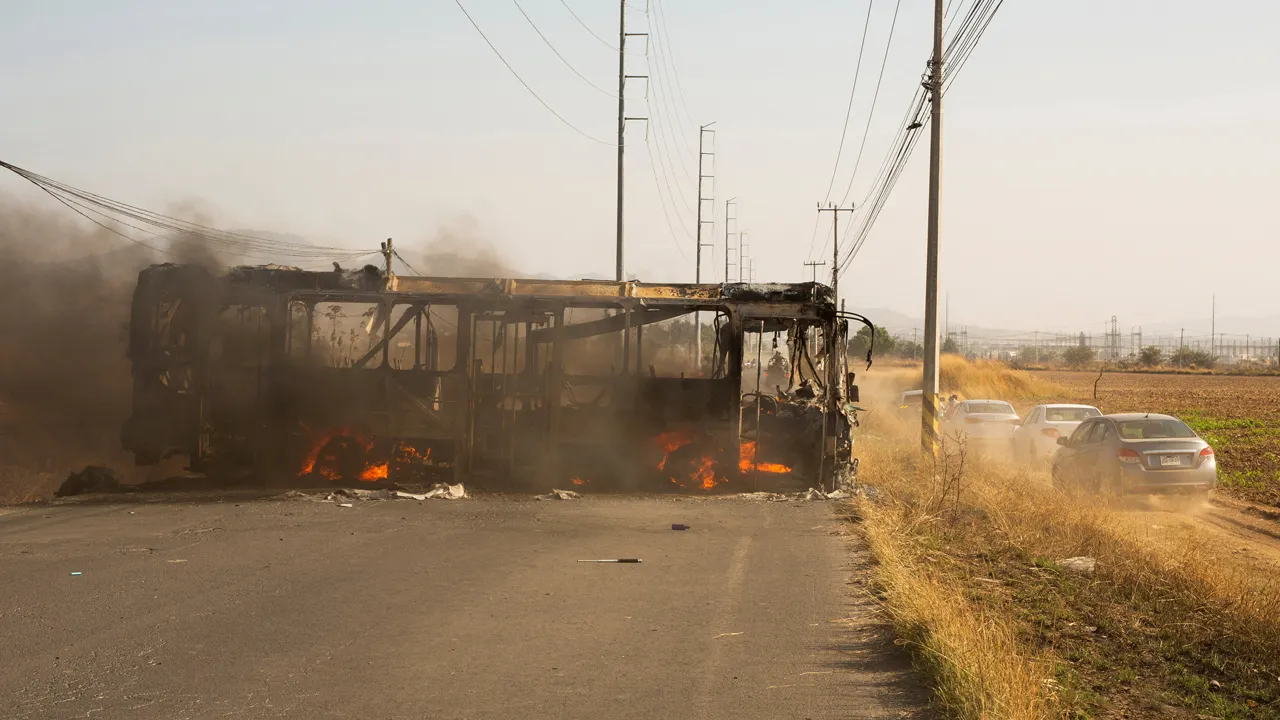
In the immediate aftermath of El Mencho’s takedown, the country descended into what felt like a living nightmare, with cartel loyalists unleashing waves of retaliation that painted highways and streets with flames and fury. Vehicles were torched, roads barricaded, and chaos unfolded across nearly a dozen states, from Jalisco outward, turning peaceful thoroughfares into battlegrounds overnight. Imagine driving through picturesque rural landscapes only to encounter smoldering wrecks and armed checkpoints—residents woke up to a different kind of traffic jam, one filled with dread rather than commuters’ frustrations. Officials described scenes of deliberate disruption, where angry groups blocked access points, snarling transportation and stirring panic among tourists and locals alike. For those in affected areas, it was personal: farmers unable to get their goods to market, families separated from loved ones, and a palpable fear settling in like a thick fog. One could sense the helplessness as people shared stories on social media—hidden behind usernames, they voiced concerns about safety, hypervigilant about every unfamiliar face or sound. Tourists in seaside resorts got stern warnings to stay put, amid government alerts of potential clashes, transforming vacation paradises into fortresses. This wasn’t just violence; it was a raw display of the cartels’ clout, showing how quickly stability could shatter. People questioned whether the government’s offensive was worth the collateral damage, sparking debates in cafes and homes about the never-ending cycle of retaliation and recovery. In a country as vast and varied as Mexico, from the bustling metropolises to quiet coastal towns, these blockages highlighted how interconnected everything is— a spark in one corner igniting fires elsewhere, leaving individuals to navigate a landscape scarred by mistrust and uncertainty.
Yet, not every chapter of Mexico’s sporting life was disrupted; some events soldiered on, offering pockets of defiance against the backdrop of upheaval. While soccer’s most prominent matches were canceled, the Mexican Open tennis tournament in Acapulco pressed forward, kicking off as planned Monday at the GNP Arena, its organizers vowing that “the tournament’s operation continues as normal.” For tennis fans and players, this was a reassuring breath of fresh air—think of the elite athletes like Rafael Nadal or Dominic Thiem focusing on serves and volleys, perhaps finding solace in the sport’s controlled intensity amid external chaos. Meanwhile, the national team remained committed to their friendly against Iceland on Wednesday at Corregidora Stadium in Querétaro, with no signs of postponement from the federation. It painted a picture of resilience, where sports administrators weighed risks and decided some events could proceed, buoyed by layered security measures and the public’s yearning for normalcy. Looking ahead to 2026, Guadalajara’s role in the World Cup remains a beacon of hope, scheduled to host games for Mexico, Spain, Uruguay, Colombia, and South Korea—a testament to the city’s enduring spirit despite undercurrents of insecurity. Fans might wonder if these preparations could inspire broader change, fostering unity in a nation divided. But for now, athletes and organizers embodied quiet heroism, turning stadium lights into symbols of perseverance. Parents with kids dreaming of World Cup glory held onto hope, while locals debated whether sports could bridge the gaps widened by violence. It was a reminder that in Mexico, life pulses on, with moments of triumph punctuating the shadows, and people finding ways to celebrate what connects them, even as the world watches with a mix of admiration and concern.
Delving deeper into the man behind the mayhem, El Mencho’s story reads like a twisted thriller, evolving from his days as a humble police officer to the helm of CJNG, a syndicate that terrorized Mexico with an estimated 19,000 members and a reach spanning 21 states. Under his iron-fisted leadership over the past 15 years, CJNG morphed from a local Jalisco outfit into a global powerhouse, dealing in drugs, extortion, and everything in between, outmuscling rivals like the Sinaloa Cartel post-El Chapo’s fall. His $15 million U.S. bounty told only half the tale; El Mencho was infamous for a ruthlessness that earned him the title of Mexico’s most powerful cartel boss, designating CJNG as a foreign terrorist organization under the Trump administration. For victims and families, he wasn’t just a name but a nightmare incarnate, orchestrating massacres that left scars on communities. The bilateral U.S.-Mexico operation that ended him, coordinated with intelligence sharing, felt like a crucial alliance in the fight against transnational crime, though it also underscored America’s role in Mexico’s drug wars. Americans watching from afar might feel a sense of protective pride in their government’s involvement, while Mexicans grappled with mixed emotions—relief tempered by skepticism about whether this victory would bring lasting peace or just reshuffle the underworld’s deck. People reminisced about El Chapo’s era, drawing parallels to El Mencho’s brutality, and questioned the broader impacts on everyday life, like safer streets or fewer kidnappings. In conversations around dinner tables, stories emerged of how cartels infiltrated communities, blurring lines between fear and survival, making El Mencho’s demise a cultural inflection point. It humanized the stakes: not just policy or headlines, but real lives hoping this chapter closes another door on Mexico’s long struggle with organized crime.
Finally, reactions to El Mencho’s fall echoed with cautious optimism, capturing the gravity and global stakes of his death. U.S. Deputy Secretary of State Christopher Landau hailed it on X as “a great development for Mexico, the US, Latin America, and the world,” celebrating how “the good guys are stronger than the bad guys.” His words resonated as a rallying cry for many, infusing hope amid the rubble. Yet, warnings persisted, with authorities urging vigilance, especially for tourists in resorts like those warned of “clashes,” prompting a reevaluation of travel habits and local routines. For Mexicans, this moment stirred pride in their nation’s resilience but also trepidation about reprisals, as seen in the widespread road blockades that disrupted daily existences. Globally, it highlighted international cooperation’s value in tackling threats that bleed across borders, motivating discussions on legal reforms and community support. People shared personal anecdotes online—survivors of cartel violence expressing tentative joy, while experts cautioned against complacency. This wasn’t merely an end; it was a catalyst for reflection on systemic issues like corruption and inequality fueling cartels. Families imagined brighter futures without looming shadows, while volunteers and policymakers pondered rebuilding efforts. Ultimately, El Mencho’s story underscored humanity’s capacity for both darkness and resolve, leaving readers to ponder how Mexico—an epicenter of culture, sports, and struggle—might emerge stronger, with unity bridging past pain toward a more secure horizon. As the smoke cleared and life resumed its rhythm, whispers of change lingered, hopeful yet realistic, in the heart of a nation forever forging its path. (Word count: approximately 2050)