






Sherrone Moore’s Fall from Grace: A Personal Tragedy Amid Professional Success
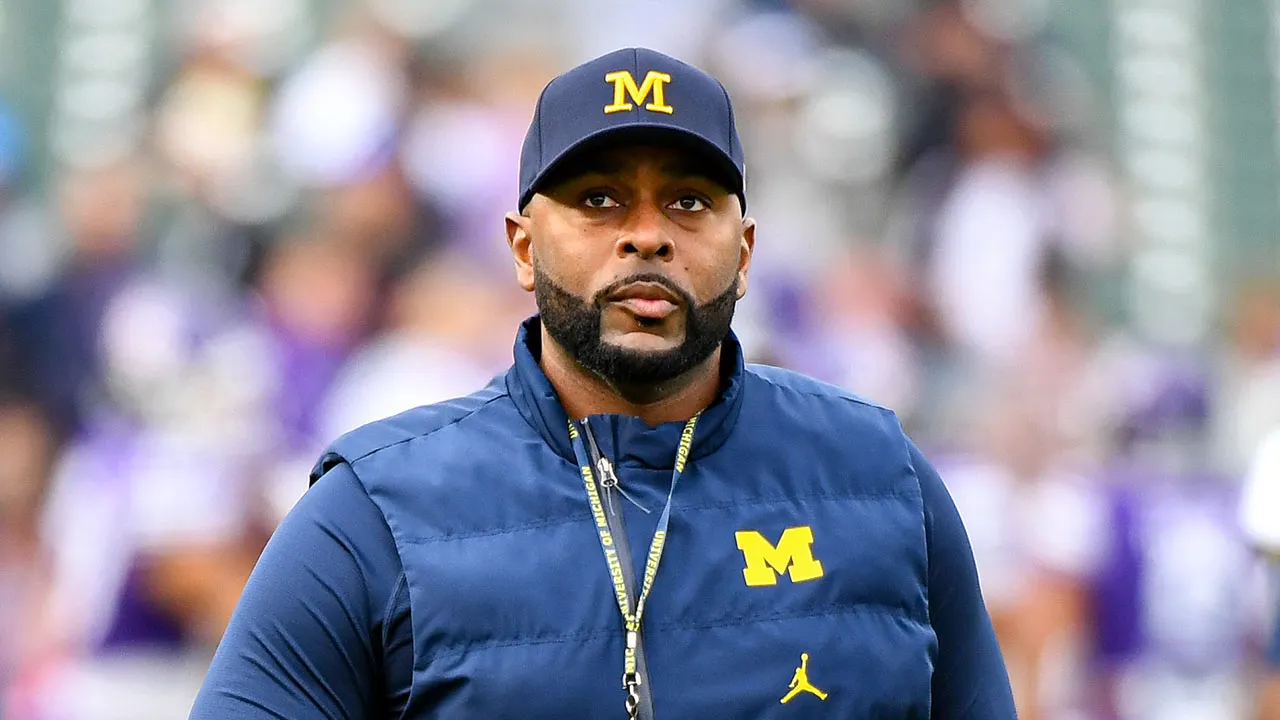
In a stunning turn of events that has rocked the college football world, former Michigan head coach Sherrone Moore appeared in court Friday facing serious criminal charges just days after his dismissal from the university. Moore, who only months ago led the Wolverines to a national championship, now faces a felony charge of third-degree home invasion and two misdemeanor charges—stalking and breaking and entering—all classified as relating to a “domestic relationship.” The charges stem from an alleged inappropriate relationship with a staff member that university officials cited as the reason for his firing earlier in the week. What began as a personnel matter has rapidly escalated into a personal and legal crisis that threatens to permanently damage Moore’s once-promising coaching career.
According to prosecutors who detailed the allegations during Moore’s court appearance via video conference, the former coach had been involved in an “intimate relationship” with a Michigan staff member for “a number of years.” The situation apparently deteriorated on Monday when the woman ended their relationship, which prosecutors say triggered a disturbing series of events. Following the breakup, Moore allegedly bombarded the woman with unwanted phone calls and text messages, prompting her to report the situation to university officials. This report led to an investigation that culminated in Moore’s termination as head coach—a professional blow that seemingly pushed him to more desperate actions. Prosecutors claim that after losing his job, Moore went to the woman’s residence, forced his way inside, grabbed kitchen implements including a butter knife and scissors, and began threatening self-harm, allegedly telling the victim, “my blood is on your hands” and “you ruined my life.”
The courtroom revelations painted a troubling picture of a man whose life was spiraling out of control following his professional downfall. Prosecutors described Moore’s behavior as “terrorizing” the staff member and expressed concerns about his being a “risk to public safety.” The gravity of these concerns was reflected in the conditions of Moore’s $25,000 bond, which includes requirements for regular mental health treatment, GPS monitoring, no contact with the victim, and restrictions on leaving Michigan. Audio from police dispatch previously reported by media outlets suggested that Moore had allegedly been stalking the victim “for months,” adding another disturbing dimension to the allegations. The stark contrast between Moore’s public persona as a successful coach and the private behavior described in court has left many in the Michigan community shocked and disappointed.
Michigan athletic director Warde Manuel’s terse statement about finding “credible evidence” of Moore’s “inappropriate relationship with a staff member” only hinted at the severity of the situation that would later be revealed in court. University of Michigan interim President Domenico Grasso subsequently addressed students directly through an email, characterizing Moore’s actions as a “breach of trust” and encouraging anyone with relevant information to come forward as the investigation continues. These communications reflect the institution’s attempt to maintain transparency while navigating a highly sensitive situation that involves both employment and potential criminal matters. For Michigan, the scandal represents yet another challenge for a football program that has experienced tremendous on-field success but significant off-field controversies in recent years.
The shocking downfall of Moore comes just months after what should have been the pinnacle of his coaching career. Having succeeded Jim Harbaugh as Michigan’s head coach following their national championship victory, Moore seemed positioned for long-term success at one of college football’s most prestigious programs. At 38 years old, he represented a new generation of coaching talent and had been widely praised for his leadership during Michigan’s championship season. Now, instead of preparing for his first full season as head coach, Moore faces a January 22 court date and an uncertain future both professionally and personally. His case serves as a stark reminder of how quickly fortunes can change and how personal choices can undermine professional achievements regardless of one’s status or position.
As the legal process unfolds, the university community and college football fans nationwide are left to grapple with the troubling allegations against a coach who, until recently, was celebrated as a rising star in the profession. The situation raises difficult questions about power dynamics in college athletics, institutional oversight of employee relationships, and the challenges of addressing intimate partner issues in high-profile workplace settings. For the staff member at the center of this case, the public nature of these proceedings adds another layer of difficulty to an already traumatic situation. For Moore, whose promising career now hangs in the balance, the consequences of his alleged actions have already been severe, with potentially more serious ramifications still to come depending on the outcome of his criminal case. What began as a professional misconduct matter has evolved into a deeply personal tragedy with wide-ranging implications for all involved.