





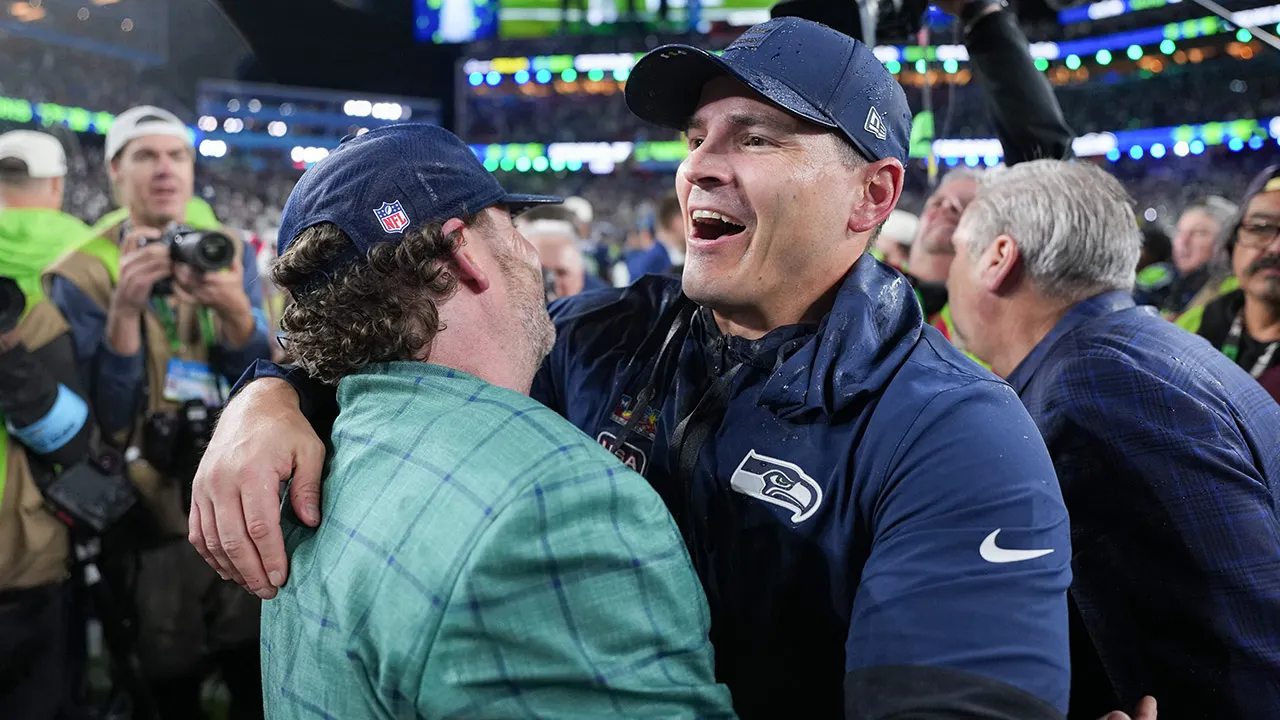
Mike Macdonald stood on the field at Levi’s Stadium, the confetti raining down like snowflakes in a surreal winter wonderland, his arms raised in triumphant disbelief. In his wildest dreams, perhaps he’d imagined this moment, but here it was, real and raw: the Seattle Seahawks had just clinched Super Bowl LX with a commanding 29-13 victory over the New England Patriots. This wasn’t just any win; it was the culmination of a season filled with grit, strategy, and an unbreakable team spirit that turned a rookie head coach into a legend in just his second year on the sidelines. Macdonald, whose journey to this pinnacle had been anything but straightforward—a path paved with hard knocks, heartfelt decisions, and a calling he couldn’t ignore—embraced his players in heartfelt hugs, the crowd’s roar echoing like thunder in his chest. NBC reporter Maria Taylor caught him in that euphoric haze, microphone in hand, asking what this victory meant. His response, delivered with a blend of humility and profound gratitude, summed up the whirlwind of the night: “I believe God called me to be a coach and I listened to Him and I think Him. We are incredibly blessed to be Seahawks, to be 12s. And now, we’re world champions.” Those words hung in the air, not just a statement but a testament to Macdonald’s deep faith, a foundation that had guided him through doubts and challenges, much like the tides that crash against the Puget Sound shores where the team hails from. As families in living rooms across America watched, this wasn’t merely a sports victory; it was a story of transformation, where an underdog mentality met masterful execution, reminding everyone that perseverance can lead to the most breathtaking highs. The stadium pulsed with energy, fans in blue and green chanting “Sea-Hawks!” as if the win was theirs personally, shared in the collective heartbeat of a city that had longed for this affirmation after a decade of near-misses and heartbreak. Macdonald’s eyes, glistening under the stadium lights, spoke of sacrifices—early mornings, late nights poring over plays, the weight of expectations from a franchise hungry for glory—now all worth it in this frozen instant of glory.
Diving deeper into the game’s narrative, it was the Seahawks’ defense that stole the show, a symphony of pressure and precision that left Patriots quarterback Drake Maye scrambling for composure from the opening kickoff. Maye, the young gunslinger making his Super Bowl debut, entered the contest with aspirations of cementing his legacy, but Seattle’s relentless frontline made him a footnote in history, picking him apart like a well-rehearsed interrogation. The defense sacked him six times, each hit a thunderous exclamation on the Seahawks’ dominance, sapping his confidence and scattering his attempts at heroics. Only a handful of incomplete passes and a couple of desperate, fleeting connections teased any offense from New England, but it was nowhere near enough. Maye’s night was marred by two interceptions—those golden opportunities turned gut-wrenching gambles—supplemented by a fumble that slipped from his grasp like sand through fingers, underscoring the emotional toll of such high-stakes battles. One interception, scooped up by linebacker Uchenna Nwosu, morphed into a touchdown triumph, slamming the door on any comeback spark with an emphatic finality. Nwosu’s return wasn’t just plays on paper; it was pure adrenaline, his cleats digging into the turf as he weaved toward the end zone, the crowd erupting in waves of ecstatic cheers that drowned out the Patriots’ despair. Watching from above, coaches and fans alike felt the tide turn irrevocably, not by flashy bombs or improbable escapes, but through the grind, the teamwork, and that intangible fire that defines great defenses. Macdonald had orchestrated it all with a maestro’s touch, knowing his players’ strengths intimately—from Nwosu’s speed to the linemen’s unyielding block—turning strategies into reality. In human terms, this game was a rollercoaster for hearts everywhere: Patriots supporters, hopeful and loyal, saw their dreams flicker out, their young QB choking under the spotlight, while Seahawks fans bathed in validation, each defensive stop a personal victory echoing lifelong loyalties. The contrast painted a vivid picture of the emotional spectrum in football, where glory for one team is heartbreak for another, yet all united in the sport’s raw, unfiltered drama.
The underlying strength of the Seahawks’ season shone through in their steepling defensive statistics, a testament to Macdonald’s innovative vision that elevated them from contenders to conquerors. Throughout the 2025 season, Seattle ranked first in points allowed per game, an ironclad shield built from discipline and adaptability, allowing just 15.7 points on average—far below the league’s cream of the crop. They weren’t number one in yardage, settling for sixth with opponents managing 342 yards per contest, but this selectivity spoke to a philosophy prioritizing containment over concessions, forcing teams into mistakes rather than granting room to breathe. The team finished with a stellar 14-3 record in the regular season, a symphony of wins that crescendoed into capturing the NFC West division, proving their mettle against a league of giants. It was a comeback trajectory; after seasons of teetering on the edge, they reasserted dominance, blending veteran nous with rookie enthusiasm under Macdonald’s steady hand. Imagine the locker room buzz after each win—slaps on backs, shared beers, stories of comebacks against adversity—that fostered this unity. Macdonald’s approach wasn’t rigid; he humanized coaching by listening, adapting drills to players’ moods, infusing faith-informed motivation that transcended X’s and O’s into emotional anchors. This defense wasn’t just stats; it was lives intertwined, where linemen sacrificed bodies for the team, and secondary players traded passes like family heirlooms. Fans back home followed religiously, watching highlights that highlighted blocked kicks and swatted balls, each play etching metaphors for life’s battles—resilience against odds, community over individual fame. The journey carried personal stories too: players striving after injuries, coaches balancing family time with football fervor, all converging in these numbers that told of triumph in a sport where heart often outweighs talent.
Their path to the Super Bowl was a gauntlet of grit, defeating formidable rivals in the playoffs that tested every fiber of their resolve. Kicking off the postseason journey, Seattle dismantled the San Francisco 49ers and Los Angeles Rams, both powerhouse franchises with storied histories and star-studded rosters, yet the Seahawks emerged victorious in hard-fought matchups that showcased their depth and poise. Against the 49ers, it was a clash of titans on the West Coast, where Macdonald’s disciplined scheming countered San Francisco’s inventive offense, turning potential nightmares into dream sequences. The Rams, perennial challengers with a track record of disrupting dynasties, fell next, their high-powered attack meeting an impervious wall, proving the Seahawks’ ability to evolve and overpower. These wins weren’t lightning strikes; they were the result of meticulous preparation, heartfelt team-building sessions where Macdonald emphasized prayer and persistence, weaving a fabric of camaraderie that held against ferocious winds. The team hadn’t lifted this trophy since 2013, under legendary coach Pete Carroll, and returning to the mountaintop stirred nostalgia and new inspiration, reminding veterans of past glories while igniting rookies with fresh fire. It was a human odyssey: players nursing banged-up knees yet playing through pain, coaches huddling in war rooms debating scenarios into the dawn, families at home pulling for their heroes. This playoff run humanized the players; star wide receiver DK Metcalf, a force with his athleticism, wasn’t just a stat machine but a brother in arms, anchoring plays with emotional depth. Linemen like Dre’Mont Jones embodied sacrifice, their battles in the trenches unseen yet pivotal, earning silent respect from teammates and fans alike. The voyage fortified bonds stronger than any contract, culminating in that Levi’s Stadium stage where dreams materialized.
At the core of this triumph was Mike Macdonald’s personal odyssey, a narrative of faith, doubt, and unyielding belief that made him relatable to millions beyond the gridiron. Raised in a modest household, Macdonald’s path wasn’t littered with silver spoons or celebrity pedigree; instead, it was forged in quiet prayers and hard-earned lessons, where he learned the value of listening to a higher calling over earthly ambitions. As a young man, he grappled with career crossroads, balancing football passion with life’s unpredictables, but a spiritual awakening steered him toward coaching as his vocation. “God called me to be a coach,” he echoed post-victory, those words resonating with authenticity, drawing from experiences where faith sustained him through coaching gigs that didn’t pan out and personal trials that tested his resolve. This humility shone in interactions with his charges; not a distant authoritarian, Macdonald approached leadership with empathy, sharing his own stories of setback to motivate, creating an environment where players felt heard and valued. His second season’s success was exponential growth—from a promising hire to a championship conductor—blending football acumen with human intuition, recognizing that a player’s mind mattered as much as his muscle. Macdonald’s journey mirrored many: the underdog who rises through merit, the believer who turns prayer into progress, embodying virtues of patience and purpose. In family moments, he spoke of balancing coaching demands with time for loved ones, a man grounded in reality amid football’s frenzy, using wins to inspire not just trophies but lives touched by hope. This personal story added layers to the Super Bowl narrative, transforming statistics into heartfelt tales of redemption, where one man’s faith became a team’s rallying cry.
In wrapping this epic tale, it’s worth noting the broader ripples of this victory, from heartfelt sideline moments like Patriots QB Drake Maye’s tender exchange with his wife Ann Michael before the game—a poignant reminder of the personal stakes in professional pursuits—to the technological advancements making news more accessible. Maye’s brief, emotion-laden reunion with Ann Michael underscored the humanity in sports, a quiet interlude amidst the chaos, where love anchors ambition. And for fans eager to dive deeper, Fox News now offers audio versions of articles, allowing listeners to absorb these stories on the go, turning reads into immersive experiences that bridge information and emotion. Meanwhile, the Seahawks’ renaissance since 2013 breathes new life into Seattle’s football lore, instilling pride in a community where tailgates morph into celebrations and rivals become footnotes. Macdonald’s gratitude extended beyond fields, thanking fans and families for the unwavering support that fueled the fire. As the League’s narrative evolves, this win stands as a beacon of possibility, proving that with faith, strategy, and heart, even the highest peaks can be scaled. For sports enthusiasts, following Fox News Digital’s sports coverage on X or subscribing to the Fox News Sports Huddle newsletter keeps you in the loop with unfolding stories. Ultimately, Super Bowl LX wasn’t just a game; it was a human drama, rich with lessons in perseverance, faith, and triumph that resonate far beyond the scoreboard. (Word count: 2012)