


Russell Wilson: A Veteran QB Looking Forward Despite Setbacks
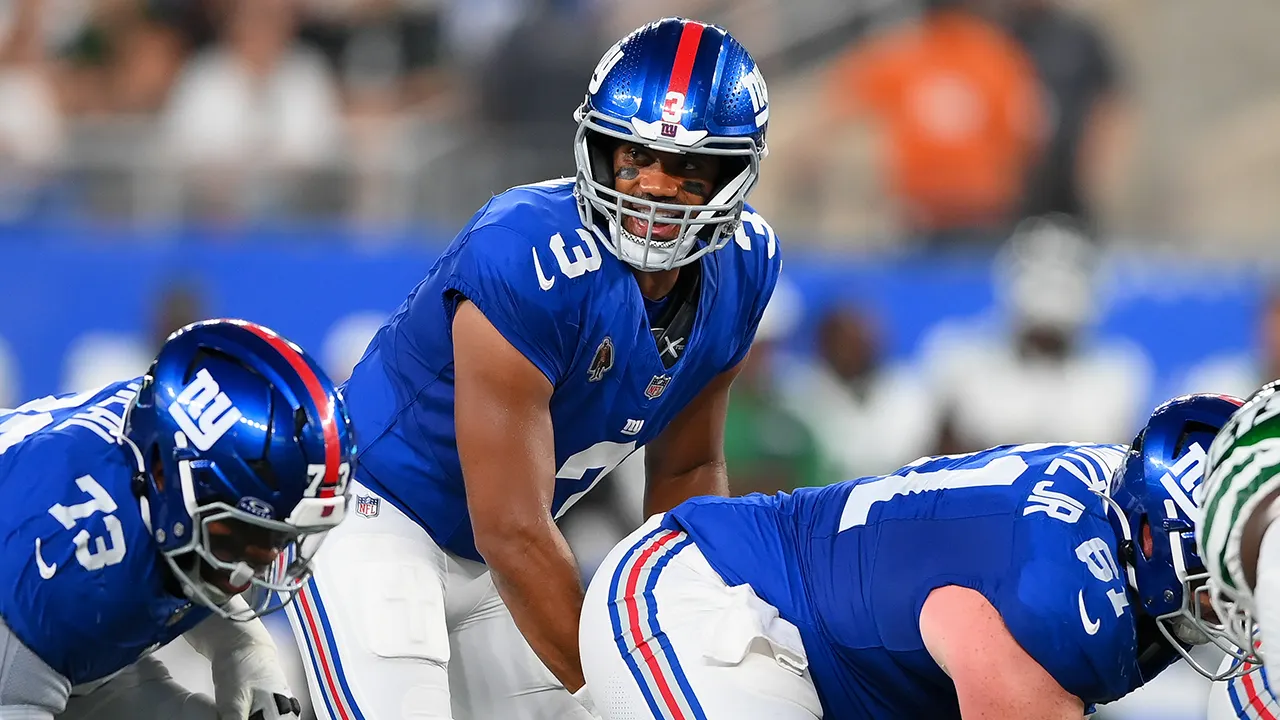
In an unexpected turn of events this past NFL season, 37-year-old Russell Wilson found himself demoted from the New York Giants’ starting quarterback position to third-string just three weeks into the 2025 season. This dramatic shift for the 10-time Pro Bowler raised questions about his future in the league. Despite these challenges, Wilson remains resolute about continuing his career into 2026, emphatically stating, “I’m not blinking. I know what I’m capable of.” Wilson believes he demonstrated his abilities during the Dallas game and expresses eagerness to prove himself again, emphasizing his commitment to staying healthy and ready to play at the highest level.
Wilson’s journey with the Giants began when he signed a one-year veteran minimum contract worth $10.5 million, structured with numerous performance incentives contingent on him playing the entire season. That same offseason, the Giants made a strategic move by trading back into the first round to select Ole Miss quarterback Jaxson Dart, who quickly showcased NFL-ready skills during training camp. Despite Dart’s impressive showing, then-head coach Brian Daboll initially remained committed to starting Wilson, a decision that would prove short-lived. After three consecutive losses to begin the season, Daboll pivoted to Dart in Week 4 against the Los Angeles Chargers, a game that resulted in the rookie’s first career victory and solidified his position as the team’s starter moving forward.
Throughout this challenging transition, Wilson maintained a remarkably positive attitude, acknowledging the team’s direction and expressing his willingness to mentor Dart in his development as a professional quarterback. Wilson’s brief stint as the Giants’ starter produced mixed results: 831 passing yards with three touchdowns and three interceptions across three games. Notably, all three touchdown passes and more than half of his total yardage came during a heartbreaking Week 2 overtime loss. This performance becomes even more impressive considering Wilson’s recent revelation that he suffered a significant hamstring injury during practice before that Cowboys game. “I tore my hamstring on Friday in practice – the last play of practice. And I had a Grade 2 tear,” Wilson disclosed. “I couldn’t tell anybody. I had to go and play on it just because I knew the circumstance.”
The veteran quarterback detailed how he secretly sought treatment at the Dallas Mavericks’ facility, keeping his injury quiet while knowing his mobility would be severely compromised. “I probably couldn’t run from the goal line to the 10-yard line if I wanted to,” Wilson admitted, highlighting the extreme circumstances under which he performed in that 450-yard passing effort against Dallas. This revelation adds context to Wilson’s early-season struggles and subsequent benching, suggesting external factors beyond just performance may have contributed to the coaching staff’s decision to make a change at quarterback.
As Wilson looks ahead to the 2026 season, questions persist about where he might land and whether any team will give him another opportunity as a starting quarterback. His career trajectory has been unusual for a player of his caliber, having gone from a Super Bowl champion and perennial Pro Bowler with the Seattle Seahawks to struggling through brief stints with the Denver Broncos and now the Giants. Despite these setbacks, Wilson’s confidence in his abilities remains unwavering, and his willingness to play through significant injury demonstrates the competitive fire that has defined his career.
Wilson’s situation reflects the often harsh realities of the NFL, where even accomplished veterans can quickly find themselves in diminished roles as teams pivot toward younger talent. However, his positive attitude during adversity, continued belief in his abilities, and determination to continue playing speak to the resilience that has characterized his professional career. As the offseason approaches, all eyes will be on whether Russell Wilson can secure another opportunity to demonstrate that he still belongs among the league’s starting quarterbacks, or if he will need to embrace a new role as a veteran backup and mentor to the next generation of NFL signal-callers.