





The Rise of the Quad God: Ilia Malinin’s Olympic Journey
Imagine the roar of a packed arena in Milan, Italy, where the snow-capped peaks of the Dolomites loom like silent giants just outside the Olympic Village. It’s February 2026, and figure skater Ilia Malinin steps onto the ice, not as just another athlete, but as a modern legend in the making. Dubbed the “Quad God” for his mastery of quadruple jumps—those breathtaking, gravity-defying leaps that twist four times in the air before landing—Malinin has captivated fans worldwide with his blend of technical brilliance and raw passion. Growing up in nearby Virginia, Ilia discovered skating early, turning rinks into his playground. His dad, convinced his son’s fidgeting was a sign of genius, enrolled him at age five. By his teens, Ilia was shattering records, nailing quadruple loops and salchows with the ease of someone born for the sport. But Malinin isn’t just about jumps; he’s a warrior on skates, pushing boundaries while respecting the ice’s unforgiving nature. Picture him on a quiet morning practice, visualizing routines that blend athleticism with artistry, his mind always balancing the thrill of innovation against the sobering reality of potential injury. This Olympics wasn’t his first rodeo; he’d charmed the 2022 Beijing Games, but 2026 felt different—more personal, more profound. As he laced up his skates, one could sense the weight of history on his shoulders, yet his eyes sparkled with that mischievous energy, ready to rewrite skating’s narrative. Fans tuning into the live broadcasts or now audio versions of Fox News articles could hear the excitement in commentaries, turning cold data into tales of human triumph. Malinin’s spirit resonates with anyone who’s ever dared to chase a dream, making his performances less about scores and more about sheer, unfiltered courage.
A Daring Backflip Ignites Olympic Glory
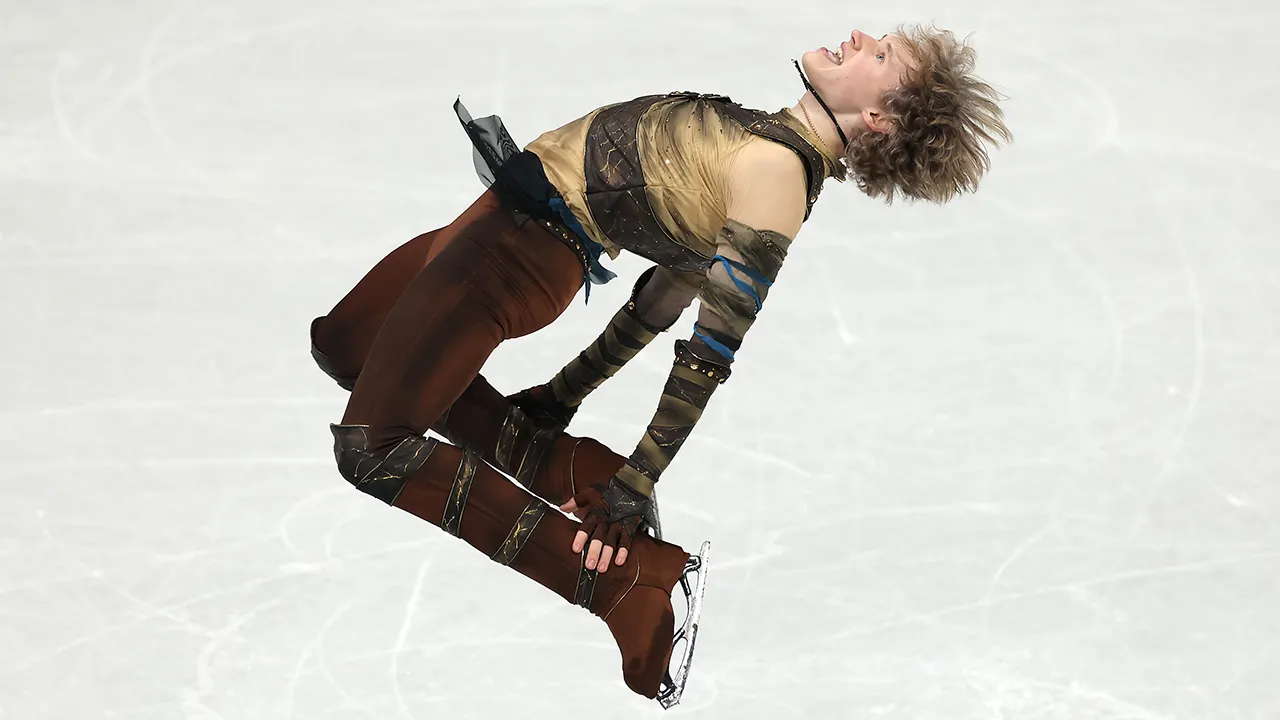
The moment that defined the 2026 Milan Cortina Olympics unfolded on the team event ice, where Malinin unleashed a move straight from skating’s outlawed past: the backflip. Landing it flawlessly, his body sailed backward over his head, defying physics and igniting the crowd into a frenzy. This wasn’t just a trick; it clinched gold for Team USA, a victory that felt like redemption after previous near-misses. To understand the gravity, rewind to 1976 Innsbruck Games, where officials banned the backflip (and other somersaults) due to safety risks—skaters tumbling headfirst onto the ice could end careers or worse. The last legal backflip at the Olympics belonged to American Terry Kubicka, a hero in his own right, who nailed it decades ago. Fast-forward, and Malinin revives the maneuver legally after the International Skating Union (ISU) lifted the prohibition in June 2024, citing modern training and protective gear as reasons to embrace the spectacular. Imagine the relief in Kubicka’s aged eyes, perhaps watching from home, as Ilia honored that legacy. For Malinin, the backflip isn’t just points; it’s a conversation with the audience. He thrives on that suspense—the gasp when he launches, the explosion of applause on landing. Off the ice, he’s humble, admitting it stems from childhood joyrides on skateboards, morphing into skating’s edgier elements. This gold wasn’t isolated; it boosted team morale, turning competitors into a cohesive unit. As Malinin skated off clutching his medal, the images of his emotion—tears of joy mixing with sweat—humanized him further, showing that beneath the “Quad God” nickname is a young man driven by passion, not perfection. Viewers following Fox News’ sports updates could dive deeper into interviews, feeling the palpable energy as if they were rinkside, sharing in the collective high.
The Backflip’s Rocky History and Surprising Return
Delving into the backflip’s saga reveals a sport fearful yet fascinated by its daredevil origins. Banned in 1976, it echoed a broader tension in figure skating: innovation versus safety. Judges worried about public liability amid increasing injuries, as somersaults lacked the controlled landings of traditional jumps. Yet, they admitted, banning aesthetics stifled creativity. Flash forward to 2024, when ISU delegates, gathered in a no-frills conference room, debated vehemently. Advocates like Malinin’s coach, Virgina’s Rafa Harutyunyan, championed reintegration, arguing that updated padding and biomechanical studies made flips viable. An ISU agenda plainly stated: “Somersault type jumps are very spectacular and nowadays it is not logical anymore to include them as illegal movements.” Malinin, already testing it in practice, became the poster boy. For him, landing a backflip feels liberating, like releasing a bottled-up force. He recalls early attempts, laughing about falls that bruised egos more than bodies, and how that resilience fed his warrior spirit. Without a fixed point value, it’s risky—better one than risky, he says—but Malinin sees it as audience engagement, a way to bridge elite sport with everyday wonder. Growing up, I imagined kids mimicking him in backyard rinks, turning backyard sofas into safety nets, dreaming of Olympic flips. This shift symbolizes skating’s evolution from rigid rules to fluid expression, inspiring gymnasts and skateboarders alike. Listening to Fox News articles now features audio recaps, allowing fans to absorb this history while commuting, making complex sports lore accessible and thrilling.
Prioritizing Safety Amid Olympic Dreams
As the Olympics pressed on, Malinin shifted sights to Friday’s men’s free skate, poised as the gold favorite with a podium streak unmatched. Yet, beneath the confidence lies a measured soul who knows skating’s cruelty—fractured ankles, torn ligaments, the mental toll of high-stakes failure. In Tuesday interviews, he spoke candidly: “I’m hoping that I’ll feel good enough to do it (on Friday),” he told reporters, his voice steady yet vulnerable. Safety tops his list, far above dazzle. Visualizing the quadruple axel looming—the Olympic first, a jump twisting four and a half times if landed wrong would mean disaster—he prioritizes mindset. “I really want to put myself in the right mindset where I’ll feel really confident to go into it and not have that as something that I’m going to risk,” he added, echoing athletes who’ve scelto caution over glory. Off the ice, Malinin’s life mirrors this balance: strict routines blending vegan diets, yoga for core strength, and therapy for mental fortitude. He shares stories of lonely hotel rooms post-practice, journaling dreams and doubts, humanizing a prodigy into a relatable everyman. Imagine thousands emulating him, trading coffee for protein shakes, embracing wellness as competition prep. This approach stemmed from mentors who warned against burnout in a sport where youth peaks early. Malinin’s ethic inspires skeptically, proving prowess and prudence intertwine. Fans tracking via Fox News’ newsletter, the Sports Huddle, get insider scoops, fostering a community where viewing becomes… conversation, not mere consumption.
The Quest for the Quadruple Axel: A Leap of Faith
The quadruple axel wasn’t just rumor; it was Malinin’s Everest, a jump so mythical it redefined “impossible.” Named for its four full rotations plus half, plus the landing edge challenge, it demands speed—tea breaks of 30 mph—and split-second precision. No one had nailed it at Olympics yet, but Ilia eyed it for 2026, training shrouded in secret to avoid pressure. He joked about it feeling like “a rollercoaster you can’t afford to miss,” blending fear and exhilaration. Why attempt? To honor skating’s pioneers like Dick Button and Katarina Witt, who dreamed big first. Malinin’s preparation involved sim Simon coworkers—custom ramps simulating ice dynamics, virtual reality for mental rehearsal. Physically, it’s grueling: deflected ankles bearing 500% body weight on impact. Yet, Ilia saw beauty, not burden, likening it to his first quad flip as a teen, where failure bred mastery. Personal stories from him reveal emotional depths—supporting friends through injuries, coping with haters online who dismissed him as luck cherubic. This humanizes, showing greatness as nurtured, not inherent. Pondering this, one sees Malinin’s legacy: innovator pushing sport’s envelope while staying grounded. Audiences appreciating Fox News’ audio features can サ live commentary, feeling Olympic pulse like in-house event goers.
Celebrating Greatness: Follow the Quad God’s Path
In wrapping Malinin’s tale, his impact endures beyond medals, teaching that resilience trumps talent. The 2026 Olympics spotlighted skating as soulful spectacle, where backflips and quads aren’t stunts but stories of grit. Follow Fox News Digital’s sports coverage on X for real-time Gw updates, and subscribe to the Fox News Sports Huddle newsletter to stay immersed in such narratives—now with listenable articles for on-the-go thrills. Malinin’s journey reminds us all: dream boldly, skate safely, and cheer loudly. Whether you’re a rink rat or armchair fan, his spirit invites emulation, proving sport unites diverse dreams into one triumphant tapestry.