





Trump’s Presence at Army-Navy Game Sparks Protests in Baltimore
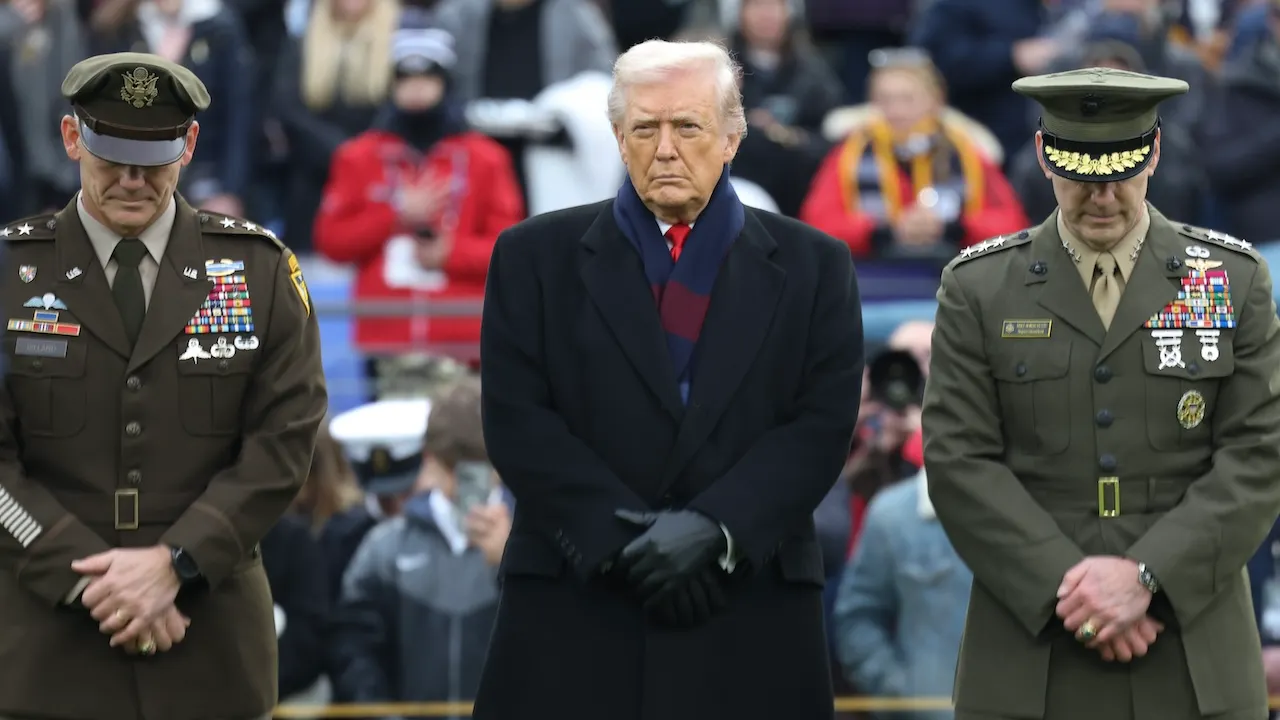
President Donald Trump’s attendance at the 126th Army-Navy football game in Baltimore on Saturday became a flashpoint for political demonstration, as protesters lined the streets outside M&T Bank Stadium. The scene highlighted the deep political divisions that continue to characterize American public life, with demonstrators carrying signs expressing opposition to the former president in the predominantly Democratic city.
The protests were not unexpected, particularly given Trump’s previous comments about potentially deploying the National Guard to Baltimore to address crime concerns. Baltimore has consistently ranked among America’s cities with the highest crime rates, often appearing in the top five for violent crimes—particularly homicides and robberies. This context added tension to Trump’s visit, as his proposed solutions for urban crime have often been contentious points of debate between his supporters and critics. The left-wing activist organization Free State Coalition had previously announced its intention to organize demonstrations, framing their protest as a stand against what they characterized as authoritarianism. A spokesperson for the group told the Baltimore Fishbowl, “Baltimore refuses to be silent in the face of authoritarianism. Protest is not un-American, but fascism is; this country was born in dissent against tyranny. We want to send a message to our neighbors who are feeling isolated and afraid to speak out: you are not alone.”
The demonstrations in Baltimore occurred against the backdrop of sobering international news, as officials announced that two U.S. Army soldiers and an American interpreter had been killed in an ambush in Syria on the same day. Trump attributed the attack to ISIS and promised “very serious retaliation” in response to the deaths of what he called “three Great American Patriots.” The timing created a stark juxtaposition between domestic political tensions and the ongoing sacrifices of American military personnel abroad—particularly poignant given that the Army-Navy game traditionally celebrates the service and commitment of America’s armed forces. In a Truth Social post, Trump noted that Syrian President Ahmed al-Sharaa was “extremely angry and disturbed by this attack,” and that the three injured soldiers were reportedly “doing well.”
The Army-Navy game, a storied American tradition that dates back to 1890, has long transcended sports to become a celebration of service and national unity. Presidents have frequently attended the annual contest, typically receiving warm welcomes from the crowd of service members, veterans, and their families. However, Trump’s appearance this year transformed the area surrounding the stadium into a visible demonstration of America’s political polarization. Social media footage showed protesters lining streets leading to the stadium, creating a gauntlet of dissent that attendees had to navigate before entering the venue for what is normally considered an apolitical celebration of military service.
The Free State Coalition’s framing of their protest as a defense of American values against perceived authoritarianism reflects the rhetorical battle over what constitutes patriotism in contemporary America. Their statement positioned protest itself as fundamentally American, referencing the nation’s revolutionary origins and suggesting that dissent represents a continuation of foundational national values. This perspective stands in contrast to views that criticize such demonstrations at military events as disrespectful to service members—highlighting how even patriotic symbols and traditions have become contested terrain in America’s political landscape.
The convergence of a traditional military celebration, political protest, and news of military casualties abroad created a complex moment that encapsulated several dimensions of America’s current national experience. As attendees gathered to watch the historic rivalry between Army and Navy, the environment surrounding the game reflected broader tensions about leadership, values, and the proper expression of patriotism. The day served as a reminder that even long-standing traditions that once stood apart from partisan politics now frequently become stages for the expression of deeply held and divergent views about the nation’s direction and character. As the football game proceeded inside the stadium, the scenes outside illustrated how Americans continue to wrestle with questions of national identity and democratic expression during a period of pronounced political division.