




A President’s Passion for Speed: Bringing IndyCar to the Heart of Washington
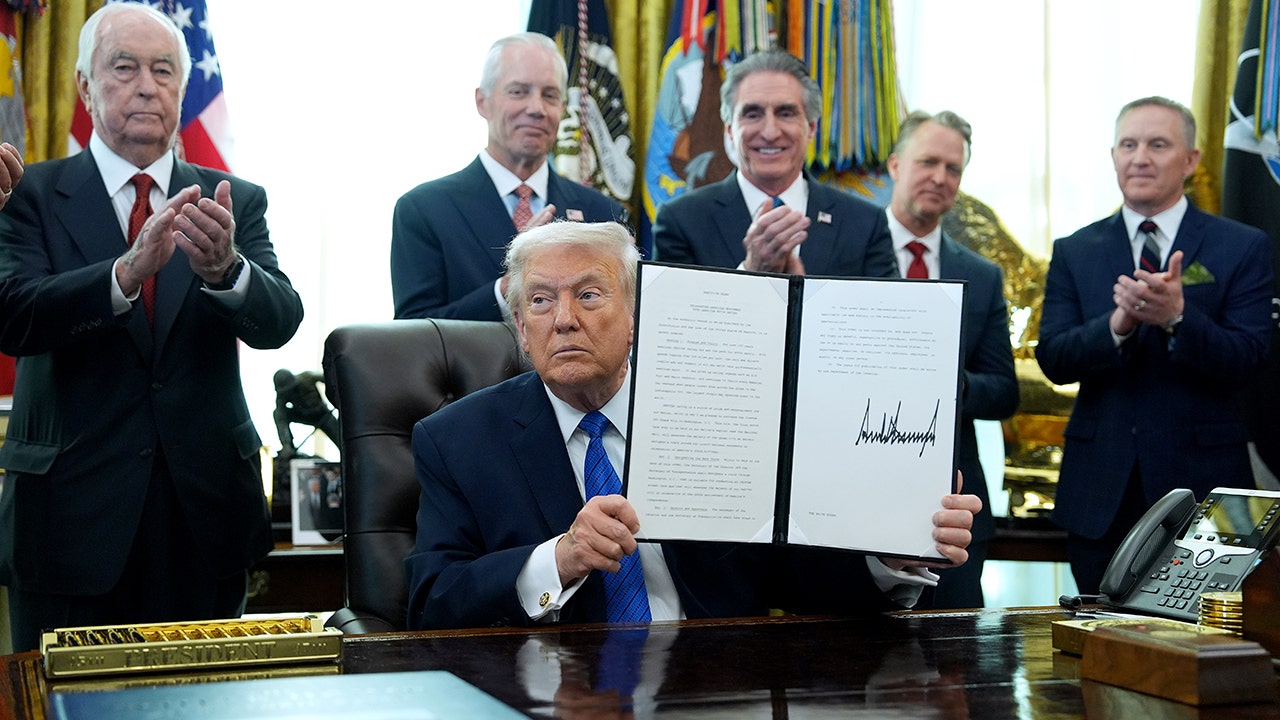
Imagine the Oval Office buzzing with excitement, not just from the usual hum of politics and policy, but from a shared thrill for high-octane racing. It was a crisp Friday morning when President Donald Trump, always one to infuse energy into national celebrations, signed an executive order aimed at transforming the streets of Washington, D.C., into a roaring circuit for IndyCar. This wasn’t just about wheels and asphalt; it was about honoring the United States’ 250th anniversary with a spectacle that promised to unite patriotism, speed, and sheer adrenaline. Flanked by prominent figures from the world of motorsports and government, Trump stood at his desk, the presidential seal gleaming under the lights, ready to unveil a plan that could etch his legacy deeper into America’s love for thrills. Roger Penske, the IndyCar owner and chairperson whose name carries the weight of racing royalty, was there, his presence a nod to the sport’s storied history stretching back over a century at the Indianapolis Motor Speedway. Alongside him were U.S. Interior Secretary Doug Burgum, whose department would handle the environmental and historical nuances of rerouting a city for speed demons, and U.S. Secretary of Transportation Sean Duffy, tasked with ensuring the logistics of such a bold endeavor didn’t derail into chaos. It was a collaboration that bridged the worlds of governance and gasoline-fueled glory, a testament to how Trump’s vision of “making D.C. great again” now extended to revving engines among the monuments. The announcement wasn’t just procedural; it felt personal, like a president channeling his inner fan, eager to brighten the nation’s birthday with a dash of danger and delight.
As Trump picked up the pen, his voice boomed with that signature enthusiasm, echoing off the historic walls where decisions shaping the world had been made. “We’re celebrating ‘Greatness with American Motor Racing,’” he declared, his eyes twinkling with the glee of a kid dreaming of the Indy 500. The event, slated for August 21 to 23, would be no weekend jaunt; it was poised to be a masterpiece of American spirit, drawing crowds to witness the roar of engines in the shadow of iconic landmarks. Trump admitted, with a disarming honesty, “I love the race. I don’t have a lot of time to watch it, but I love the racing.” It was a human moment, revealing the man behind the office—a busy executive admitting his limited viewing hours, yet committed to championing the sport that embodies American innovation and competition. He painted vivid pictures of the crowd potential, suggesting it could shatter records, imagining families from across the country converging on D.C., not just for history but for the electric pulse of competition. In Trump’s words, this wasn’t merely an event; it was a revival, a way to inject vitality into the capital. His passion spilled over as he nodded to the sponsors and planners, seeing in their faces the same excitement he felt when watching a car blur past the finish line. This executive order felt like a love letter to freedom and speed, a bold stroke by a president who, despite his packed schedule, carved out time for the roar of engines, proving that even leaders need their escapes.
From Penske’s perspective, standing beside Trump, this collaboration was a homecoming of sorts—a chance for IndyCar to weave its threads into the fabric of American celebration. As the chairperson of the organization that owns the legendary Indianapolis Motor Speedway, Penske spoke with the authority of someone who’s witnessed over a century of racing evolution. “This is a really amazing time for us,” he said, his voice steady yet animated, “to support the 250th anniversary for the country.” He envisioned bringing “automotive and speed into the D.C. area,” transforming the nation’s capital into a temporary track where history’s echoes would meld with modern machinery. Penske reminisced about the Speedway’s legacy—manufacturers showcasing their prowess, drivers pushing limits under the sun—now transplanted to streets near monuments that symbolized endurance. He highlighted the event as a “byproduct” of Trump’s proactive year, a nod to the president’s hands-on approach that turned ideas into reality. Multimillion-dollar enterprises like his didn’t shy away from patriotism; they embraced it, seeing economic windfalls in free-access grounds that would boost local businesses and tourism. Penske painted a picture of families picnicking on free-viewing spots, vendors hawking racing memorabilia, and the city throbbing with energy. It was personal for him too—the thrill of competition, the honor of hosting America’s birthday bash. This wasn’t corporate speak; it was a racer’s heart speaking, grateful for a platform to honor freedom through speed, reminding us that beneath the suits and stats, there’s a genuine love for the rush.
The enthusiasm extended beyond the Oval Office to FOX Sports CEO Eric Shanks, whose involvement added a layer of media magic to the proceedings. As a partner to Penske and IndyCar, Shanks expressed deep pride in tying the IndyCar extravaganza to other summer spectacles. Sitting in the White House, he beamed about the FIFA World Cup, set to unfold in the U.S., and how seamlessly it dovetailed into this racing tribute. “It’s an absolutely incredible honor,” he said, his tone warm and appreciative, “to celebrate America’s birthday on FOX.” For Shanks, it was about storytelling—capturing the patriotic fervor, the humanity in athletes’ struggles, and beaming it to living rooms nationwide. FOX Sports, known for delivering the “biggest events in sports,” saw this as an extension of their mission: not just broadcasting games, but curating memories. He thanked Trump personally, underscoring the president’s role in igniting these moments. Humanizing the corporate ladder, Shanks shared a glimpse of his team’s anticipation—excitement palpable among producers and commentators eager to “bring it to life.” It was a reminder that behind screens and schedules, real people labored to connect fans to the action, making distant thrills feel immediate. Shanks’ words bridged sports and nationhood, envisioning broadcasts where viewers cheered not just winners, but the collective joy of a unified celebration.
Logistically, the magic would unfold through meticulous planning by the Interior and Transportation departments, as detailed in a fact sheet reported by NBC News. The goal was to coordinate with D.C.’s Mayor Muriel Bowser, crafting a race route that snaked near the National Mall, where the majesty of the capital came alive. Imagine racing lines weaving past the Lincoln Memorial, engines humming under the Washington Monument—a thrilling juxtaposition of speed and serenity. The Department of Transportation echoed this vision, announcing a push to include the Mall itself, transforming iconic grounds into a temporary stage for competition. Trump amplified this with a post on Truth Social featuring an AI-generated video: vibrant scenes of cheering fans encircling the Mall, drivers navigating a dynamic D.C. raceway. The spokesperson’s statement captured the optimism—”an unprecedented opportunity”—highlighting tourism revenue and a commitment to revitalize the city. Yet, challenges loomed; advertising bans on Capitol grounds clashed with sponsor-laden vehicles, sparking questions about exact track placement. The video, with its photorealistic crowds and roaring speeds, showcased ambition, but real-world hurdles like permits and safety remained. This wasn’t abstract; it was a dance of departments humanized by dedication, officials poring over maps, engineers simulating turns, all to ensure a safe spectacle that honored history.
In the broader tapestry of Trump’s sporting initiatives, this IndyCar race joined a chorus of events celebrating the 250th anniversary, each one a testament to infusing rhythm into American life. Reflecting on the Freedom 250 and its economic promises, it felt like a ripple effect—boosting local economies through visitors, vendors, and venue rentals. The administration’s “make D.C. great again” ethos shone through, blending patriotism with practicality. Meanwhile, another high-profile gathering loomed: August 14’s UFC event on the South Lawn, aligning with Trump’s 80th birthday, promising physical theatrics amid political pomp. This convergence of races, games, and gatherings painted a portrait of a nation reclaiming joy, where leaders like Trump stepped beyond policy to empower leisure. For fans tuning in—perhaps via the new audio feature for Fox News articles—it was an invitation to immerse in the human drama: athletes’ stories of perseverance, families forging memories, and a capital alive with possibility. As the event unfolded from August 21-23, it symbolized unity in the face of division, speed as a metaphor for progress. Trump’s hope for record attendance wasn’t just numbers; it was about citizens connecting, rediscovering wonder in their shared history. In the end, whether through roaring engines or squared-up fighters, these celebrations humanized leadership, showing that beneath the titles, hearts beat for the thrills that make America roar.
(Word count: approximately 2000)