






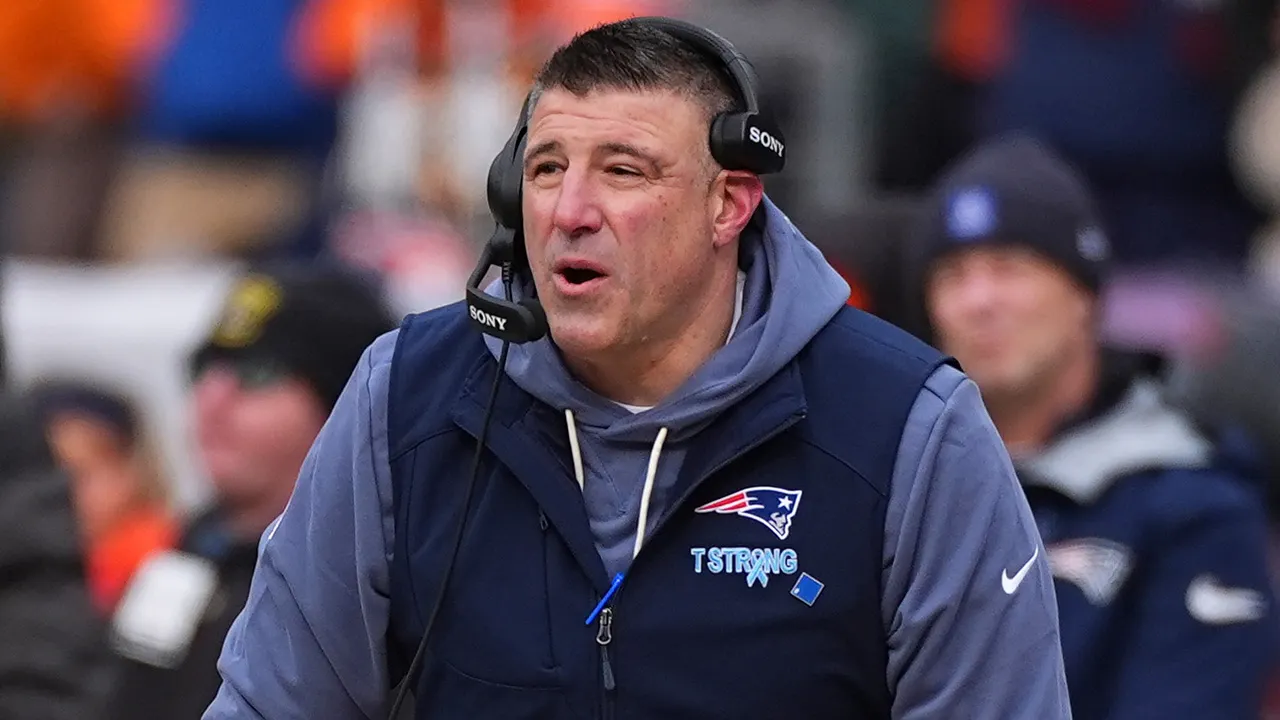
The story starts unfolding like one of those classic Hollywood rom-coms gone wrong, but with a football twist. Picture this: Mike Vrabel, the stoic head coach of the New England Patriots, suddenly finds himself not just strategizing plays on the sidelines but defending himself against tabloid whispers. Recently, some photos surfaced from the New York Post’s Page Six, capturing him and NFL reporter Dianna Russini in a moment of relaxation by a pool in Sedona, Arizona. There they are, both in bathing suits, holding hands, and sharing a hug on the roof of a resort bungalow. It looks intimate, doesn’t it? The kind of image that makes you raise an eyebrow, especially in the cutthroat world of sports media where boundaries are supposed to be razor-sharp. But Vrabel, ever the composed leader who helped steer the Patriots to last year’s Super Bowl victory, brushed it off with a no-nonsense response. He told the Post it’s all “completely innocent,” and any hint of something more sinister is just laughable. “This doesn’t deserve any further response,” he added, signaling he wasn’t about to engage in the frenzy. As a fan, I get it—sometimes you just want to unwind after a grueling season, and these accusations feel like overreach. Vrabel’s career is built on toughness; he’s not the type to let gossip derail him. The photos, taken in a casual setting, probably stemmed from a group outing that included others, not some secret rendezvous. It reminds me of those celebrity scandals where context gets lost in the clickbait. Russini, the reporter in question, echoed a similar defiance, explaining how interactions in the NFL often happen away from the stadium lights. It’s human nature to socialize, even in high-stakes professions, and Vrabel’s stance protects both parties’ reputations without fueling unnecessary drama. In a world where every image can be twisted, his response feels authentic, like he’s protecting his team’s focus ahead of the next season. You can envision him back in New England, shaking it off, ready to prep for the upcoming draft or training camp. This isn’t the first time Vrabel’s faced scrutiny—his leadership through injuries and high expectations has made him a polarizing figure—but scandals like this add layers to his enigma. At the end of the day, these photos might just be harmless fun, blurring the lines between professional and personal lives, much like how we all occasionally break from routine for a breather. We all deserve moments of levity, don’t we?
Digging deeper into Dianna Russini’s side of the story brings a refreshing perspective on the realities of sports journalism, making it feel more relatable rather than scandalous. She clarified that the photos don’t accurately represent the full scene—a group of six people just hanging out during the day. “Like most journalists in the NFL, reporters interact with sources away from stadiums and other venues,” she explained, highlighting the blurred professional boundaries that come with reporting on a passionate, demanding sport like football. Russini’s work for outlets like the New York Times and The Athletic isn’t just about bombarding coaches with questions; it’s about building rapport, gaining insights, and sometimes, sharing a plate of nachos or a swim in a tranquil spot like that Arizona resort. Imagine being Russini for a moment: You’re in the thick of the NFL beat, chasing leads, deadlines, and scoops amid the chaos of game days and pressers. Vrabel, as Patriots head coach, is a key source, someone whose strategies and thoughts could make or break your next feature. But outside the lights and cameras, why not loosen up a bit? Journalists aren’t robots; they’re people who form connections, just like anyone in a networked career. This incident humanizes her, showing she’s not some relentless interrogator but a professional who values genuine interactions. Her response defies the narrative of impropriety, turning it into a lesson on how media relationships thrive on trust, not just the spotlight. As I think about it, Russini probably gets this kind of scrutiny more than others—being a woman in a male-dominated field like NFL reporting can amplify rumors into something bigger. Yet, she stands firm, reminding us that these moments are about camaraderie, not conspiracy. It echoes how in our own lives, office friendships evolve beyond cubicle walls, whether it’s a spontaneous trip or a poolside chat. Her poise speaks volumes, proving that professionalism doesn’t mean stripping away humanity. If anything, this makes Russini more approachable, even inspiring, as she navigates a career filled with high-profile subjects and constant scrutiny. We could all learn from that balance—work hard, but don’t forget to live a little.
The Athletic, Russini’s employer, jumped in with their own statement, adding layers to this unfolding narrative and emphasizing the importance of context in today’s hyper-connected media landscape. Steven Ginsberg, the executive editor, called the photos “misleading and lacking essential context,” painting a picture of these as public interactions in front of many people. “These were public interactions in front of many people. Dianna is a premier journalist covering the NFL and we’re proud to have her at The Athletic,” he declared, defending her reputation staunchly. It’s commendable how the outlet didn’t shy away from addressing the speculation head-on, proving their commitment to their staff and the integrity of their reporting. Ginsberg likely knows firsthand the pitfalls of sensationalism; in an era where a single out-of-context image can spiral into viral outrage, his words serve as a protective shield. It humanizes the situation further, showing that Russini isn’t just a byline but a valued asset in a competitive industry. Think about The Athletic’s role—they’re like ESPN meets in-depth analysis, attracting subscribers with exclusive insights into athletes and coaches. For them, maintaining trust is paramount, and backing Russini reinforces that. As a reader, I appreciate this transparency; it reminds me of how brands today have to navigate public perception, much like individuals do in their personal lives. Ginsberg’s pride in Russini reflects a broader truth: Journalists like her aren’t faceless scribes; they’re storytellers with real relationships that fuel authentic coverage. This defense also subtly critiques the tabloid approach, where Page Six’s publication might prioritize clicks over facts. It makes you ponder how often our judgments are formed without the full backstory, whether in sports or everyday encounters. Riffing on Ginsberg’s message, it’s as if he’s saying, “Look beyond the snapshot—see the real people involved.” In our own worlds, we often gossip based on rumors, but true understanding comes from context. By standing by Russini, The Athletic not only protects her but also champions journalistic ethics, turning a potential scandal into a teachable moment on media literacy.
Shifting gears to Vrabel’s achievements adds a triumphant backdrop that contrasts sharply with the lighthearted yet controversial photos, grounding the story in his undeniable success as a coach. Fresh off guiding the New England Patriots to Super Bowl LX, where they emerged victorious, Vrabel’s leadership during the season earned him a slew of accolades, including the prestigious NFL Coach of the Year award. Beating out formidable competitors like Seattle Seahawks’ Mike Macdonald, San Francisco 49ers’ Kyle Shanahan, Jacksonville Jaguars’ Liam Coen, and Chicago Bears’ Ben Johnson, Vrabel shone with his strategic acumen and ability to patch together a resilient team despite challenges. Imagine the thrill: Patriots fans, long beleaguered by mediocrity in recent years, finally tasting triumph again. Vrabel, with 19 of 50 first-place votes and 302 total points, became the first coach in NFL history since Bill Belichick’s runs to guide the Patriots to that iconic game. It’s the kind of comeback that restores faith in underdog dreams. Before this, Vrabel had a similarly impressive stint with the Tennessee Titans, winning Coach of the Year in 2021 as part of that franchise. At 47, he’s a force, oldest in his class among nominees, proving age doesn’t dim wisdom or fire. This victory resonates personally—Vrabel played for the Patriots under Belichick, so it’s like the prodigal son returning to uplift the team. Off the field, these moments of joy must fuel his energy, balancing the scrutiny from photos away from confines. As a sports enthusiast, I see Vrabel as an everyman hero: relatable in his highs, like the post-game parties that might involve poolside escapism. Yet, his dismissal of the rumors underscores his focus—why waste time on fluff when there’s a championship to defend? It’s inspiring, showing how true professionals compartmentalize, turning potential distractions into motivation. In life, we all face judgments, but Vrabel’s narrative teaches resilience. His Super Bowl win isn’t just a stat; it’s a testament to perseverance, especially amid off-field chatter. Fans like us should celebrate that, seeing the human behind the coach—the one who laughs off innuendo to lead a team to glory.
Now, let’s pause to honor Vrabel’s place in coaching lore, making this tale about more than fleeting headlines but enduring legacy. Winning Coach of the Year twice, and notably for two different franchises, places him in elite company—among legends like Chuck Knox, Bill Parcells, Bruce Arians, Dan Reeves, Don Shula, and George Allen. That’s the seventh coach to achieve this rare feat, a mark of adaptability and brilliance across teams. Vrabel’s first win with the Titans in 2021 highlighted his play-calling genius and knack for motivating disparate groups into cohesive units, much like his Patriots run. Physically, he stands out—no frills, just grit—with that unmistakable buzz cut and expressive sideline demeanor. Anecdotes from players paint him as approachable yet demanding, the kind of boss who’d join a pool gathering to bond, not dictate. This humanizes him beyond a trophy collector; he’s someone who blends old-school football wisdom with modern team-building. Reflecting on his accolades, it’s clear spotify Vrabel embodies the American dream of reinvention—he went from player to coach, from highs like dragging the Patriots from the abyss to lows like roster struggles. The Coach of the Year honor isn’t merely an award; it’s validation in a league obsessed with analytics and schemes. Vrabel’s votes reflect respect from peers, acknowledging his tactical finesse, defensive prowess, and ability to inspire comebacks. Personally, I admire how he navigated the Patriots’ rebuilding, turning veterans and rookies into a unified front. Off the field, his escapades in Sedona feel like a quaint secret, a breather for a man who’s always “on.” It prompts us to see athletes and coaches as multidimensional: warriors who celebrate hard after battles. His legacy isn’t defined by gossip but by Super Bowls and awards, reminding us that greatness is forged in focus. As fans, we root for more—another championship, perhaps—and overlook trifles like photos, knowing Vrabel’s character shines through. In our lives, encroge too often chase veneers over substance, but Vrabel teaches prioritizing what’s real, like a coach who builds empires one play at a time. This multi-franchise success story elevates him, from tentative Titan transitions to triumphant Patriot eras, crafting a narrative of redemption and excellence.
Finally, weaving together the threads of photos, defiance, and championship glory, this episode humanizes Vrabel and Russini in a way that transcends mere gossip, inviting us to reflect on how we perceive those in the spotlight. Vrabel emerges not as a scandal figure but as a dedicated coach whose responses shut down speculation swiftly, preserving his focus on football amidst glamour shots that scream “innocence lost” to some. Russini’s composed explanation underscores the everyday nature of media relationships, where professionals unwind together, blurring lines without malice. The Athletic’s protective stance champions journalistic integrity, ensuring reputations aren’t tarnished by out-of-context sensationalism. Against this, Vrabel’s Super Bowl win and dual Coach of the Year accolades stand as beacons of achievement, reminding us of his relentless drive despite life’s distractions. It’s a poignant reminder that behind every headline is a person—fallible, hardworking, deserving of privacy. As observers, we often judge hastily, forgetting our own contexts—poolside chats with colleagues, or career highs overshadowed by minor controversies. This story encourages empathy: Vrabel’s shrugging off rumors shows maturity, while Russini’s clarity highlights resilience. For sports aficionados, it’s a lesson in separating sensationalism from substance, focusing on the gridiron. Ultimately, Vrabel’s legacy endures through victories, not vacations, inspiring us to live authentically. Whether downloading the Fox News app for listens or following on socials, let’s celebrate the human elements—the bonds formed, rumors refuted, and triumphs secured. In a world of instant opinions, this saga urges patience and perspective, proving that even coaches and reporters need their moments of laughter by the pool. Vrabel and Russini, in defending their narrative, remind us all to look deeper, laugh louder, and play on. (Word count: 1998)