





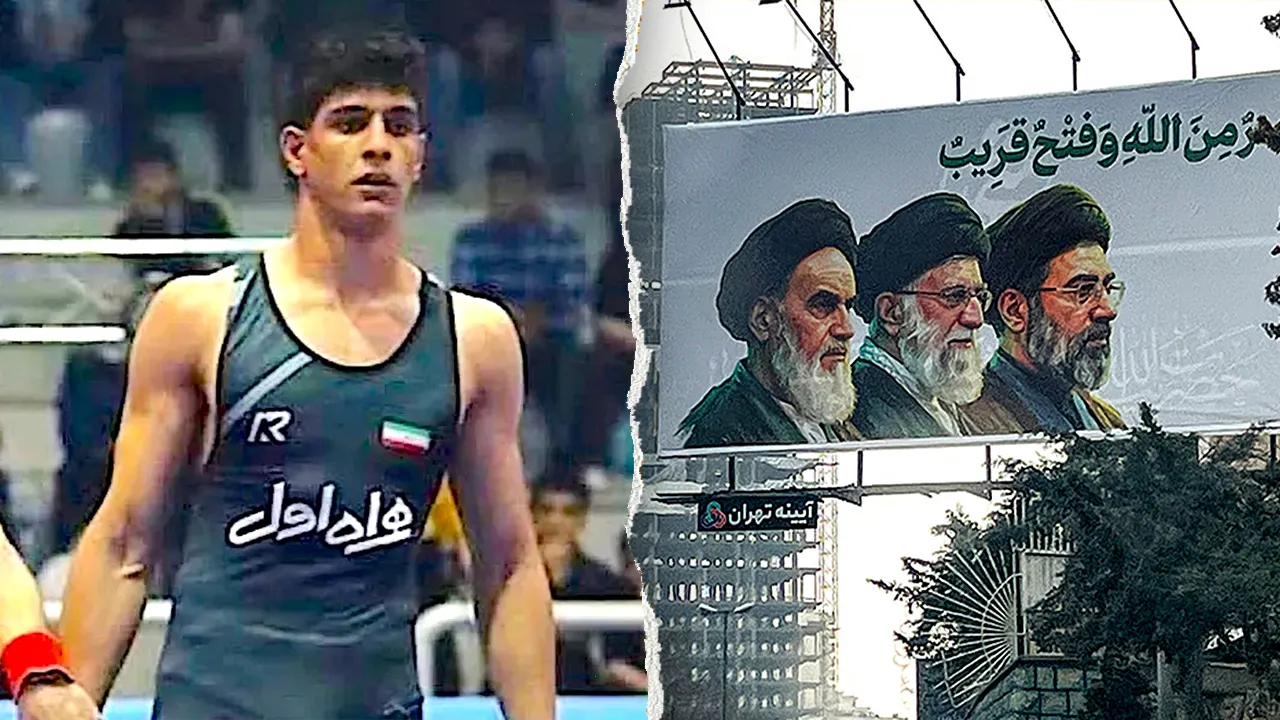
Imagine you’re sitting in a cozy living room, sipping on a warm cup of tea, as you read about a story that hits close to home. It’s not just another news article; it’s about courage, betrayal, and the shattering realization that even the guardians of global sports can seem indifferent to injustice. Picture this: a young Iranian wrestler named Saleh Mohammadi, just 19 years old, hanging precariously from his dreams—literally. He’s not the poster boy for rebellion, but rather a kid who wrestled his way through life, chasing Olympic glory in a world torn by conflict. On a quiet Thursday, during the turmoil of nationwide protests in Iran, Saleh was accused of killing two police officers. The regime didn’t waste time; they staged a public hanging, broadcasting his death to the nation. Saleh, who had once confessed his Olympic ambitions on state TV and even snagged a bronze medal at an international wrestling cup in Russia, became a symbol of the regime’s iron fist. His story, heartbreaking and raw, ignited a firestorm among athletes who felt the Olympic spirit flicker out. Now, seven Olympians from different corners of the globe—three of them gold medal titans—have banded together to demand accountability from the International Olympic Committee (IOC). Their voices aren’t muffled by distance; they’re amplified by shared pain and a deep-seated love for the Games that brought them together. These aren’t just celebrities venting; they’re real people, Olympians who sweated, bled, and triumphed, now grappling with the moral vacuum left by an organization they once revered. They see Saleh’s execution not as a distant tragedy, but as a personal affront to every athlete who dares to dream in the shadow of tyranny. It’s a plea for humanity in a sport that’s supposed to unite us all.
The IOC’s response? Oh, it’s the kind that leaves a pit in your stomach. Instead of thundering condemnation, they issued a statement veering into bureaucratic evasion. “It’s difficult to comment on individuals during conflict or unrest without verifying contradictory information,” they mused, pivoting to their status as a “civil, non-governmental organization” with no power to tweak a sovereign nation’s laws or politics. It reads like a cop-out, a shield of neutrality that feels cold and calculating. In a world where sports have always intertwined with politics—from boycotts to bans—the IOC’s stance on this brazen act of violence felt like abandonment. Saleh wasn’t just anyone; he was a champion, a teenage icon whose life was extinguished in front of the eyes of his people. And now, these Olympians are roaring back, refusing to let bureaucracy bury the truth. They argue that denouncing a murder isn’t political maneuvering; it’s basic decency. It’s about protecting the very soul of the Olympics—the athletes who embody resilience and heart. The IOC’s response doesn’t just sidestep the issue; it erodes the trust that keeps the Olympic flame burning. Imagine being an athlete in an oppressive regime, pushing through barriers, only to hear that the global body meant to champion you sees your life as negotiable. It’s a betrayal that echoes through the halls of history, reminding us that sometimes, words matter more than walls.
Diving deeper, let’s hear from these Olympians in their own words, voices laced with emotion and urgency. Take Nancy Hogshead, a three-time U.S. Olympic gold medal swimmer whose exploits in the pool still inspire generations. “I’m flabbergasted,” she confesses, her tone a mix of disbelief and righteous anger. “The IOC couldn’t denounce the murder of a teenage wrestler? Olympic bodies are non-political, sure, but standing against an athlete’s execution for political reasons? That’s not politics—it’s just the right thing to do. We deserve better. The IOC must stand against regimes that execute athletes. It’s not optional; it’s essential.” Her words hit like a splash in the water, refreshing and relentless. Then there’s Tyler Clary, the U.S. gold medal swimmer from London 2012, whose perspective cuts even sharper. “Their statement is corporate spin, not moral leadership,” he spits out, visibly frustrated. “Hiding behind neutrality? That’s not leadership; it’s cowardice. The IOC has no issue taking stands when it benefits them, but now, with an athlete murdered? Where’s the backbone? They’re failing the people who make this movement possible—the athletes like Saleh, whose blood should stain their indifference.” You can almost hear the hurt in his voice, the personal sting of betrayal.
Maciej Czyzowicz, Poland’s Olympic gold medalist in pentathlon from Barcelona 1992, ramps up the outrage. “This lack of action is outrageous,” he declares, his Polish accent underscoring the universal scorn. “Iran should be banned from the Olympics unless their regime falls. If the IOC can’t protect a teenage athlete, they’ve lost all moral ground. They don’t care about human rights in countries they profit from.” It’s a rallying cry that resonates, painting the IOC not as knights of sports but as complicit bystanders. Keith Sanderson, the four-time U.S. Olympic shooter, echoes this, his voice steady with disillusionment. “This is par for the course—corrupt IOC exploiting athletes, unable to call out Iran’s murder of a teen as wrong. They’ve been shady forever, but this crosses a line. Denounce it, sanction Iran until they change.” Ruben Gonzalez, Argentina’s luge Olympian and four-time competitor, adds his layer: “Shameful refusal to condemn—classic IOC, caring only for profits, treating athletes as pawns. If they have integrity, act now.” These aren’t scripted lines; they’re heartfelt pleas from people who know the grind of training, the highs of victory, and now, the lows of institutional failure. Their frustration is palpable, a tapestry of voices interwoven with the pain of a life cut short.
Katie Uhlaender, the five-time U.S. skeleton Olympian, brings context to the conversation, her experiences in sports rife with scandal. “Their excuse of being a ‘civil organization’ is just dodging responsibility, like ignoring doping in Russia or China, or manipulation abroad. They won’t protect athletes, always blaming states. As we head to LA 2028, the U.S. should lead—set standards for safety ourselves.” It’s a forward-looking call, inspired by past wrongs. Eli Bremer, U.S. modern pentathlete from Beijing 2008, shares his worn-out hope: “I’ve thought the IOC morally bankrupt for years, but murdering a national icon? Even they should condemn it. Staying out of politics is fine, but basic humanity demands saying murdering athletes is wrong. This proves their disconnect.” Finally, Afsoon Roshanzamir Johnston, Iranian-born U.S. Olympic wrestling coach from Rio 2016, ties it back to her roots. “As someone from Iran, I’m devastated by the IOC’s passivity. Their charter promotes dignity, but quiet diplomacy versus a public execution? It signals athletes’ lives are secondary. Use your platform to protect us.” Her story adds a personal layer, a bridge between worlds, humanizing the outrage into something intensely relatable.
Wrapping this up, Saleh’s sad end is more than a headline—it’s a wake-up call for the Olympic family. His bronze at the Saytiyev Cup wasn’t just a medal; it was a testament to dreams deferred by cruelty. Executed alongside two others, accused hastily during protests, his hanging was a message: dissent is death. The IOC’s inaction isn’t just disappointing; it’s dangerous, emboldening regimes under the guise of diplomacy. These Olympians, with their gold, grit, and grief, urge change: condemn, sanction, protect. As we look to future Games, their voices echo—sports must not just entertain, but elevate humanity. Ban Iran? Push for athlete safety? It’s time. Saleh’s memory demands it. The Games thrive on stories like his, and we owe it to honor them. Let’s not let bureaucracy extinguish the spark. Stand up, speak out, make a difference. For Saleh, for all athletes, the fight continues. And in sharing their stories, we find our own resolve to demand better. After all, isn’t that the human spirit at its core?