

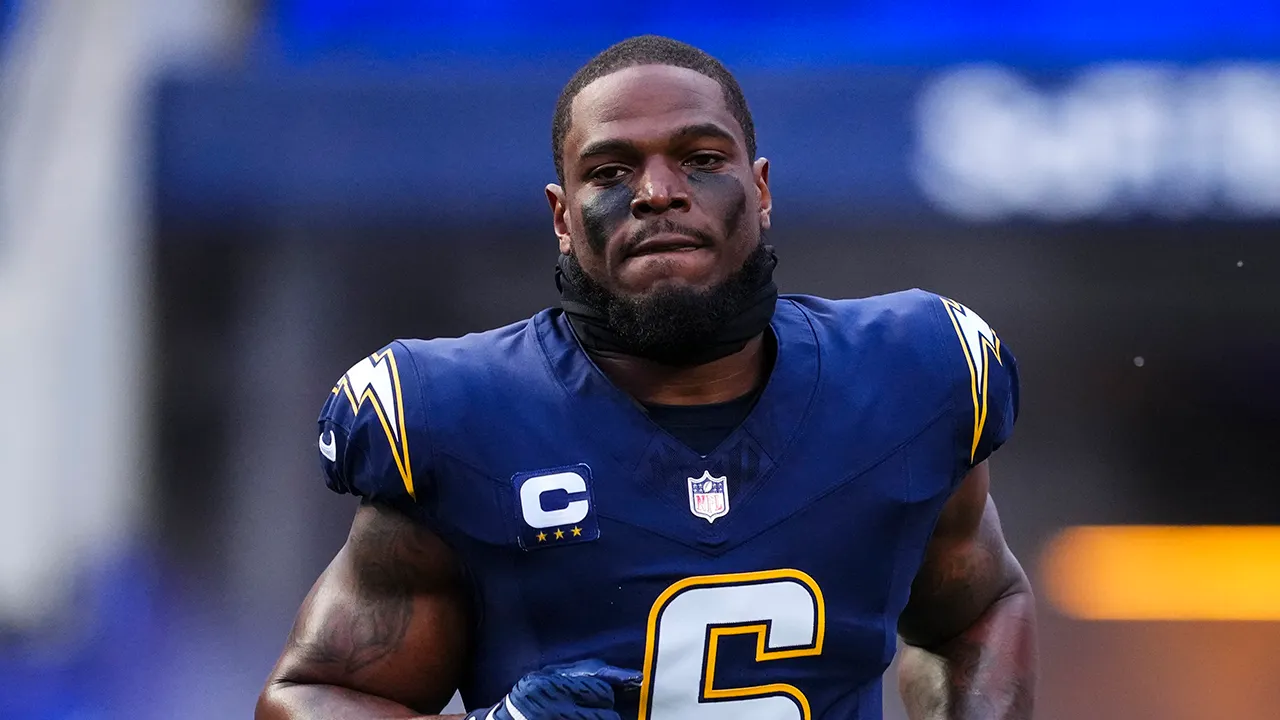
NFL Suspends Chargers’ Denzel Perryman for Repeated Safety Violations
The National Football League has suspended Los Angeles Chargers linebacker Denzel Perryman for two games without pay following what the league described as “repeated violations of playing rules intended to protect the health and safety of players.” The latest incident occurred during the Chargers’ recent victory over the Dallas Cowboys, where Perryman was flagged for an unnecessary roughness penalty after delivering “a forcible blow to the helmet” of Cowboys wide receiver Ryan Flournoy, who was already on the ground. This violation specifically broke the NFL’s rule prohibiting “using any part of the helmet or facemask to butt or make forcible contact to an opponent’s head or neck area” – a policy designed to reduce the risk of concussions and other serious head injuries that have become a major focus for the league in recent years.
For the 33-year-old Perryman, this suspension represents another chapter in a troubling pattern of similar infractions throughout his 11-year NFL career. Just last season, he served a three-game suspension for impermissible use of his helmet, and his disciplinary record includes four additional fines for either improper helmet use or roughing the passer penalties. These repeated violations suggest either a difficulty adapting to the NFL’s evolving safety standards or a playing style that consistently pushes the boundaries of what’s considered acceptable physical contact in today’s game. According to multiple reports, Perryman plans to appeal the suspension, though the NFL’s recent history of upholding such safety-related penalties suggests he may face an uphill battle in having the punishment reduced or overturned.
The timing of Perryman’s suspension could not be worse for the Chargers, who are making a strong push for the playoffs in the final weeks of the regular season. Their remaining two games pit them against the Houston Texans in Week 17 and the Denver Broncos in Week 18 – both crucial matchups with significant playoff implications. The Chargers-Broncos finale could potentially determine the division title, depending on how both teams perform in the preceding week. As it stands, the Chargers would enter the playoffs as the top wild card team in the AFC, but would still need to play their first playoff game on the road – a scenario reminiscent of last season when they fell to the Texans in Houston during postseason play.
Perryman’s absence will be felt on a Chargers defense that has been one of the NFL’s best units this season. Since being drafted by the Chargers in the second round of the 2015 NFL Draft out of Miami, Perryman has become a cornerstone of their defensive scheme. This season alone, he has accumulated 47 combined tackles and three passes defended across 10 games. His physical presence and experience have been valuable components of a defensive unit that ranks third in the league in yards allowed per game (283.1) and eighth in points allowed (20.1). Under the leadership of defensive coordinator Jesse Minter, the Chargers’ defense has been a key factor in the team’s success this season, often compensating for inconsistencies on the offensive side of the ball.
The suspension highlights the ongoing tension in the NFL between maintaining the physical nature that has long defined the sport and implementing necessary safety measures to protect players. For veterans like Perryman who began their careers when different standards of contact were accepted, adapting to the league’s evolving rules presents a significant challenge. The NFL has progressively strengthened its policies on helmet-to-helmet contact and unnecessary roughness in recent years, responding to growing concerns about the long-term neurological impacts of repeated head trauma. These changes have fundamentally altered how defensive players must approach tackling and contact, requiring adjustments that some players find difficult to consistently implement in the split-second decisions made during gameplay.
For the Chargers organization, Perryman’s suspension creates both immediate tactical challenges and broader questions about player development and coaching. In the short term, the team must reconfigure its linebacker corps without one of its most experienced players for two potentially season-defining games. Looking beyond this season, the Chargers’ coaching staff may need to work more intensively with Perryman on technique modifications that would allow him to maintain his aggressive playing style while staying within the boundaries of the NFL’s safety rules. As the league continues to prioritize player safety through both rules and enforcement, teams and players that can successfully adapt will gain a competitive advantage over those that accumulate penalties and suspensions for safety violations, making this not just a matter of player health but also of strategic importance in the modern NFL.