





Navy Clinches Commander-in-Chief’s Trophy with Thrilling Victory Over Army
In a gripping display of determination and grit, the Navy Midshipmen secured the prestigious Commander-in-Chief’s Trophy for the second consecutive year by defeating Army 17-16 in one of America’s most cherished sporting traditions. The annual Army-Navy game lived up to its reputation for intensity and drama, with momentum swinging back and forth throughout the contest before Navy ultimately prevailed in a nail-biting finish. The victory was especially meaningful for the Midshipmen as it completed their sweep of service academy rivals, having already defeated Air Force earlier in the season to claim the coveted trophy that symbolizes supremacy among the military academies.
The Midshipmen started the game with tremendous energy, orchestrating an impressive 75-yard opening drive that culminated in quarterback Blake Horvath rushing for a touchdown. Horvath was the catalyst on this drive, contributing 45 rushing yards and completing an 11-yard pass to set the tone early. However, Army responded with equal determination, matching Navy’s intensity with their own 13-play, 75-yard drive that ended with Cale Hellums finding the end zone to even the score. What followed was a display of the defensive prowess both academies are known for, as Navy’s offense struggled to maintain its early momentum. Their next three possessions ended unproductively with a punt, fumble, and interception, while Army capitalized on these opportunities by adding three field goals to build a 16-7 lead heading into the latter stages of the third quarter.
The tide began to turn when Navy managed a field goal late in the third quarter, cutting Army’s lead to just six points and setting the stage for a dramatic final period. The defining sequence came early in the fourth quarter when Navy’s defense forced a crucial interception, giving their offense excellent field position. Though they initially fumbled at the goal line on a quarterback sneak, losing seven yards in the process, Horvath demonstrated remarkable poise by connecting with Eli Heidenreich for a touchdown on the very next play. The subsequent extra point gave Navy a 17-16 lead—their first advantage since the opening drive of the game. What followed was a defensive masterclass as Navy forced a three-and-out, regaining possession with less than five minutes remaining.
The game’s most tension-filled moment came as Navy attempted to secure the victory by running out the clock. What initially appeared to be a devastating fumble while trying to convert a crucial first down was overturned upon review, preserving Navy’s possession at a critical juncture. Faced with a fourth-and-1 situation that would determine the outcome, Navy’s coaching staff displayed unwavering confidence in their offense, keeping them on the field rather than punting. The gamble paid off as they successfully converted the first down, allowing them to run out the remaining time and secure their razor-thin victory. This moment perfectly encapsulated the boldness and strategic acumen that has defined Navy’s successful campaign.
True to tradition, the contest showcased the distinctive style of football that has become synonymous with service academy matchups. Both teams predominantly relied on ground attacks, with the game featuring only 24 pass attempts compared to a remarkable 86 rushing plays. This old-school, ground-and-pound approach highlights the unique identity of service academy football—emphasizing discipline, physicality, and execution rather than flash and spectacle. For the players involved, many of whom will go on to serve their country rather than pursue professional football careers, this game represents the pinnacle of their athletic endeavors and a cherished chapter in a storied rivalry that transcends sports.
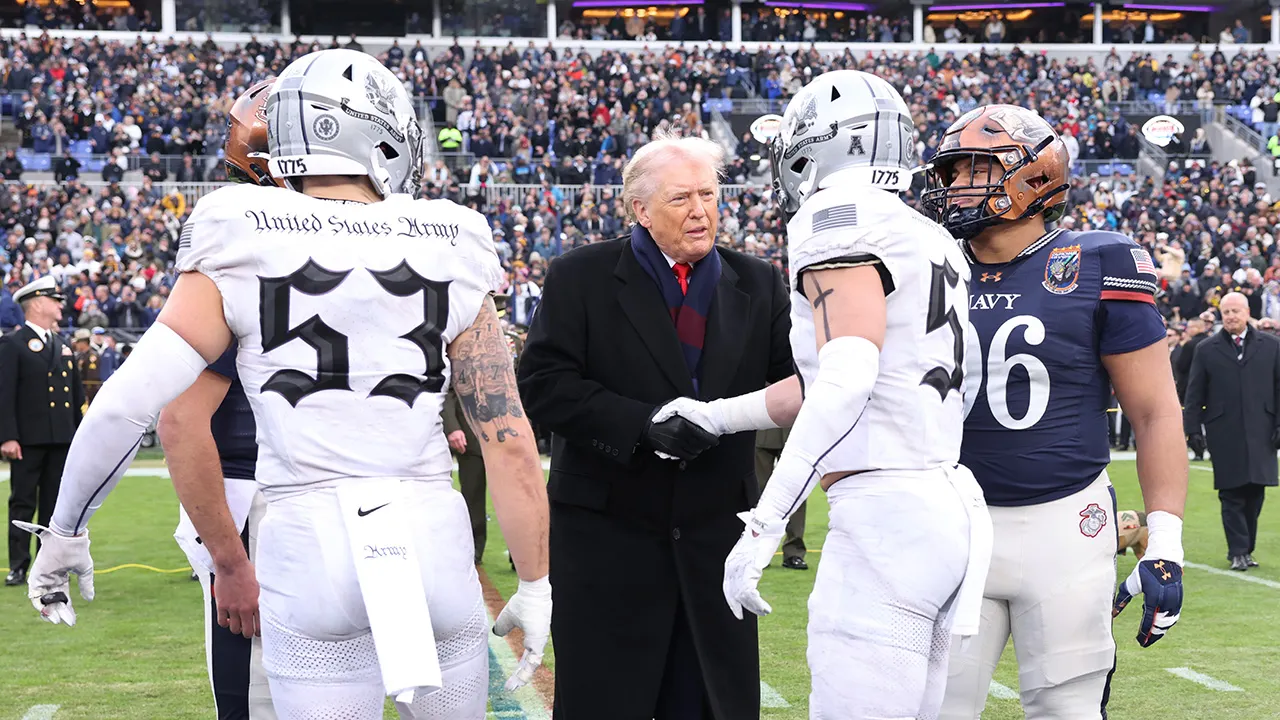
The game was attended by President Donald Trump, marking his seventh appearance at the Army-Navy game and second consecutive attendance since his re-election. Trump participated in the pre-game coin toss amid a backdrop of both support and protest. Outside the stadium, demonstrations took place in response to Trump’s previous suggestions about deploying the National Guard to address crime issues in Baltimore, the blue-leaning city hosting this year’s contest. The political backdrop, while notable, ultimately remained secondary to the main event—a thrilling contest between future military leaders that exemplifies the highest ideals of sportsmanship, service, and sacrifice. Tragically, the day was also marked by news that two U.S. Army soldiers and an interpreter had been killed in an ambush in Syria, a somber reminder of the greater purpose these student-athletes will soon serve beyond the football field.