


Michigan Football Scandal: Former Coach’s Relationship with Staffer Leads to Legal Troubles
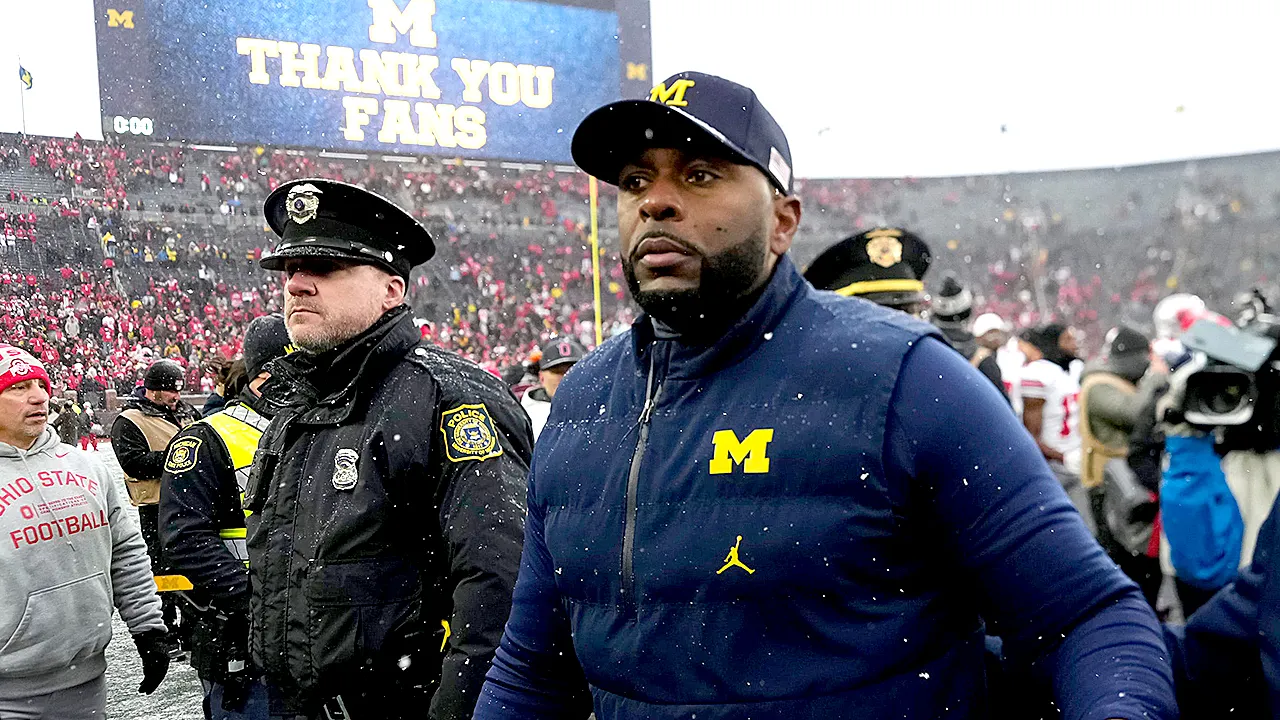
In a stunning development at the University of Michigan, recently fired head football coach Sherrone Moore is facing serious legal charges following the revelation of an alleged romantic relationship with a university staffer. The woman, who served as Moore’s executive assistant, remains employed by the university amidst the scandal that has rocked the prestigious football program.
The relationship, which prosecutors claim had been ongoing “for a number of years,” reportedly ended just days before Moore’s termination. Following the breakup, Moore allegedly sent numerous text messages and made repeated calls to the woman, eventually prompting her to report the situation to university officials. This communication pattern led to Moore’s arrest and subsequent arraignment on multiple charges, including third-degree home invasion (a felony) and two misdemeanor counts of stalking and breaking and entering without permission. The severity of the situation became apparent when prosecutors revealed that after his firing, Moore allegedly forced his way into the woman’s residence, grabbed kitchen utensils, and threatened self-harm, reportedly telling the staffer, “My blood is on your hands” and “You ruined my life.” These troubling details led prosecutors to describe Moore as having “terrorized” the woman and characterize him as a “risk to public safety.”
Financial aspects of this relationship have raised additional questions. Public payroll records show the staffer’s salary nearly doubled in recent months, jumping from approximately $58,000 in 2023-2024 to $99,000 for the 2025 fiscal year according to university salary disclosure reports. This significant increase has added another layer of complexity to an already controversial situation. The university has confirmed that despite the scandal, “there is no change in her employment status,” suggesting she will continue in her role at Michigan while the legal process unfolds.
The personal implications for Moore extend beyond his professional downfall. Married since 2015 to his wife Kelli, with whom he shares three daughters (Shiloh, Solei, and Sadie), Moore now faces uncertainty about whether he can return to his family home. When reporters questioned Moore’s attorney, Joseph Simon, about whether the coach would be returning to his wife and children, Simon declined to answer, stating, “I’m just going to not answer that question.” This response has fueled speculation about the state of Moore’s marriage amid the public scandal. The court has imposed strict conditions on Moore’s release on $25,000 bond, including requirements to wear a GPS tracker, continue mental health treatment, and prohibitions against contacting the victim.
The University of Michigan acted swiftly once the allegations surfaced, terminating Moore’s position after finding what they described as “credible evidence” of an “inappropriate relationship” with a staff member. This decisive action reflects the institution’s zero-tolerance approach to workplace misconduct, particularly within its high-profile athletic programs. The football program, which has a storied history and nationwide following, now faces the challenge of rebuilding its leadership and restoring its reputation following this unexpected controversy. The timing is particularly unfortunate as it follows a period of athletic success for the program.
The Moore case highlights broader issues of power dynamics in workplace relationships, especially within hierarchical organizations like university athletic departments. The significant salary increase awarded to the staffer raises questions about whether appropriate professional boundaries were maintained in the department. As this situation continues to unfold, it serves as a sobering reminder of how quickly careers can be derailed and reputations damaged when professional and personal boundaries become blurred. For Michigan, a university that prides itself on integrity and excellence, this incident presents not only a personnel challenge but a test of institutional values and accountability systems.