


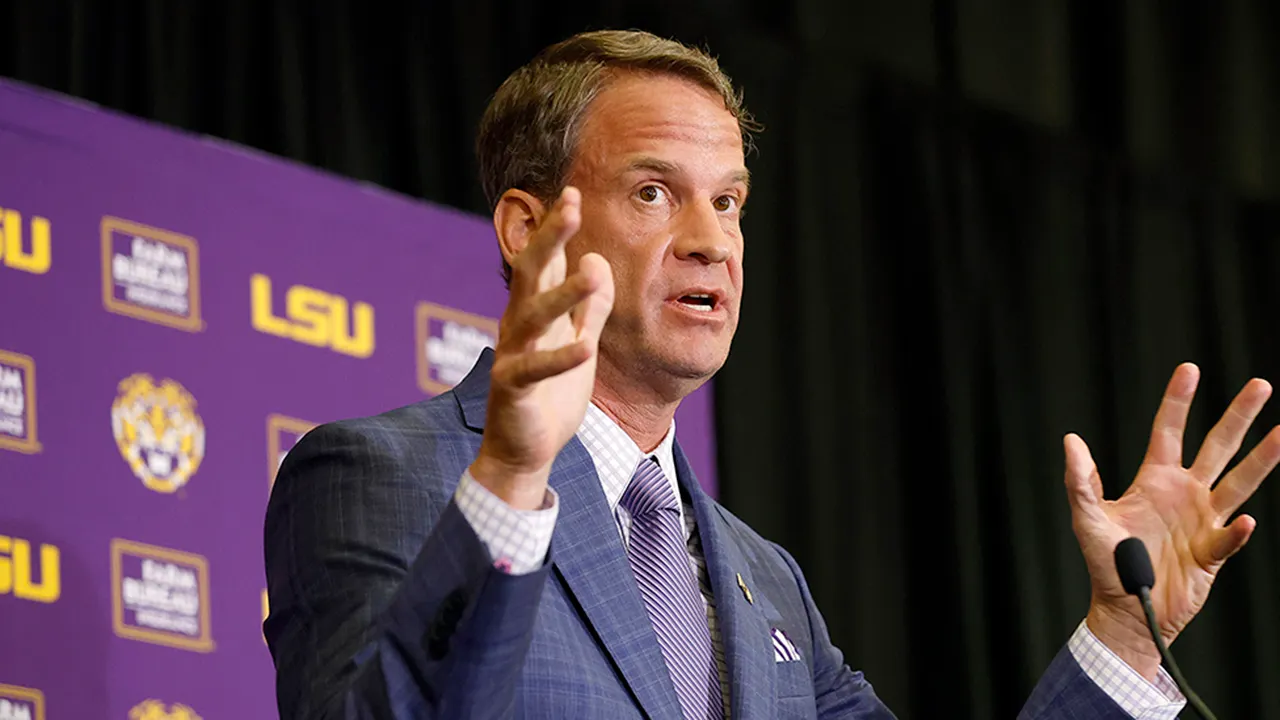
Lane Kiffin’s Social Media Controversy Sparks Debate Among LSU and Ole Miss Fans
Lane Kiffin, LSU’s high-profile head coach, found himself at the center of controversy once again after posting LSU-themed hats with the phrase “Make Baton Rouge Great” on social media. The slogan, clearly reminiscent of Donald Trump’s “Make America Great Again” campaign message, initially included a tag to the former president, drawing immediate attention from fans and critics alike. When the post generated mixed reactions, Kiffin quickly deleted it and reposted with LSU tagged instead of Trump. The damage was done, however, as users were quick to comment that “the internet remembers,” highlighting the permanent nature of social media activity even when posts are removed.
This isn’t Kiffin’s first brush with controversy in his coaching career. He previously stirred significant debate when he left Ole Miss while the team was pursuing a national championship to accept the head coaching position at LSU. Known for his outspoken nature and sometimes polarizing persona, Kiffin has developed a reputation for creating headlines both on and off the field. His social media presence has become part of his brand, though this recent post crossed into political territory that many coaches typically avoid, especially at major programs where fan bases span the political spectrum.
In an apparent attempt to defuse tensions following the controversial post, Kiffin shared a follow-up message addressed to both LSU and Ole Miss fans stating, “Remember Red and blue make purple. We can all get along.” The reconciliatory tone seemed aimed at bridging divides not just between the two rival schools but possibly also addressing the political undertones of his earlier post. This gesture reflects the delicate balancing act coaches must perform when they have large, diverse fan bases that may interpret their personal expressions through different lenses.
Kiffin’s move to LSU came with significant financial incentives, including a seven-year contract worth $91 million that places him among the highest-paid coaches in college football. The substantial investment LSU made in bringing Kiffin to Baton Rouge demonstrates the high expectations placed on him to deliver championship-caliber results. Interestingly, part of his compensation arrangement included LSU’s agreement to honor the bonus structure from his Ole Miss contract, allowing him to benefit from his former team’s success even after his departure.
This unique contractual situation led to Kiffin receiving a $500,000 bonus when Ole Miss reached the playoff semifinals, despite him no longer coaching the team. This financial windfall, coming as a result of his former team’s success under different leadership, created another talking point around his controversial transition between the SEC rivals. The substantial payout for achievements he didn’t directly contribute to in their final stages has raised eyebrows among college football observers and added another layer to the already complex narrative surrounding his coaching change.
While Kiffin’s social media activity and coaching moves continue to generate discussion and occasionally controversy, they also represent the evolving nature of college football coaching in the digital age. Today’s high-profile coaches must navigate not only the traditional pressures of recruiting, game planning, and winning, but also managing their personal brand through social media platforms where messages can be amplified, misinterpreted, or scrutinized in ways unimaginable to previous generations of coaches. As Kiffin settles into his role at LSU, both his on-field performance and his off-field communication will remain under the microscope, particularly in the passionate football culture of the Southeastern Conference where rivalries run deep and fan engagement is intensely personal.