




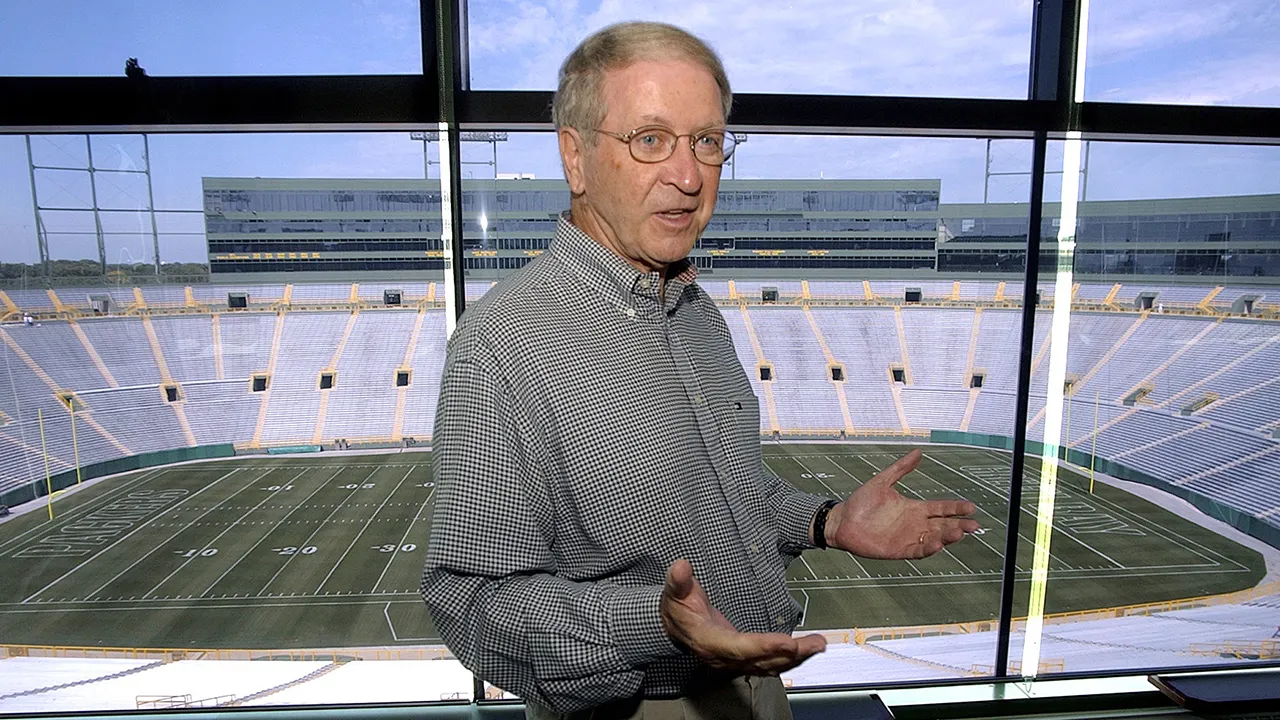
Bob Harlan’s passing at the age of 89 marked the end of an era for the Green Bay Packers, a franchise that he had practically breathed life back into during his nearly two decades as president and CEO. Imagine a man whose quiet determination turned a struggling team into a powerhouse, all while navigating the pressures of a publicly owned institution in a competitive league like the NFL. The announcement came on a Thursday, shrouded in a sense of sudden loss after Harlan battled a brief illness, culminating in his hospitalization with pneumonia. For Packers fans worldwide, this wasn’t just the death of an executive; it was the dimming of a light that had illuminated their beloved team’s golden age. His family, grappling with grief, chose to inform the organization first, allowing the team to share the news delicately. Current president and CEO Ed Policy took to social media with a heartfelt statement, his words echoing the collective sorrow. “The Packers family was saddened to learn of the passing of Bob Harlan,” he wrote, painting a picture of Harlan as a “visionary leader” whose transformative impact still resonated deeply. Policy highlighted Harlan’s role in resurrecting the team’s fortunes through inspired decisions like hiring general manager Ron Wolf, who would orchestrate the trades and drafts that rebuilt the roster. Without Harlan’s tireless efforts to redevelop Lambeau Field into the hallowed ground it remains today, the Packers might not have reclaimed their status as a model of consistency and community pride. As Policy extended sympathies to Harlan’s wife Madeline and the entire Harlan family, it felt like a farewell from a man who had treated the franchise as his extended kin. The outpouring of tributes underscored how Harlan’s legacy wasn’t confined to boardrooms but seeped into the hearts of those who cheered from the stands and watched from afar.
Delving into Bob Harlan’s journey, it’s essential to appreciate how he wasn’t born into the football world but grew into it with a steadfast commitment that mirrored the humble roots of Green Bay itself. Born in an era where perseverance was paramount, Harlan began his Packers tenure in 1971, far from the spotlight, serving in various capacities that allowed him to learn the intricacies of the organization. Picture him as a diligent observer, soaking in the challenges of a small-market team grappling with mediocrity and financial uncertainty. It wasn’t until 1989 that he ascended to the presidency and CEO role, a position he held with unwavering dedication until his retirement in 2008—a span of 19 years that turned Harlan into the steady captain of the Packers ship. During those decades, Green Bay wasn’t just a job for him; it evolved into a passion project, where every decision carried the weight of community expectation. Friends and colleagues often described him as approachable, the kind of leader who valued the input of janitors as much as coaches, fostering an environment of inclusivity that made the organization feel like a family. As drafts turned to trades and ambition fueled innovation, Harlan’s calm demeanor became the backbone of a rebirth. Stories from that time paint him as a man who believed in the Packers’ ethos—not just as a business, but as a custodian of tradition. His life story, woven through the tapestry of NFL history, showed how one person’s quiet resolve could shift the course of a championship-caliber legacy, reminding fans that behind every winning play was a leader who prioritized people over profit.
At the heart of Harlan’s vision was a deep-seated belief in revitalizing the Packers’ identity, transforming them from underdogs to titans through strategic foresight and a refusal to compromise on core values. He saw the franchise as more than a sports entity; it was a symbol of resilience for a community hungry for glory. Hiring Ron Wolf in 1991 proved pivotal, a move that rekindled the team’s on-field magic after years of disappointment. Wolf’s genius acquisitions, including Brett Favre from the Atlanta Falcons, injected new energy and talent into a squad primed for resurgence. Harlan’s approach was emblematic of a man who understood teamwork at its finest—delegating authority while providing unwavering support, much like a coach encouraging his players through setbacks. He envisioned a self-sustaining model for Green Bay, where smart investments in talent yielded long-term dividends. As NFL Commissioner Roger Goodell noted, Harlan didn’t just focus on wins; he championed the league’s ethos, ensuring smaller cities like Green Bay could thrive amid the glamour of megacities. This wasn’t mere corporate speak; Harlan lived it, advocating for fairness in an industry often dominated by resources. His leadership style humanized the executive suite, proving that compassion and competitiveness could coexist. Anecdotes from Packers lore recall Harlan as the steady voice in turbulent seas, a man whose decisions weren’t driven by ego but by an authentic love for the game and its people. In restructuring the team’s foundation, he laid the groundwork for eras of dominance, turning potential into palpable success.
Perhaps Harlan’s crowning achievement lay in the monumental renovation of Lambeau Field, a project that encapsulated his transformative influence and breathed new life into the Packers’ beating heart. Imagine the iconic stadium before his touch: a relic of past victories, in need of modernization to match the team’s ambitious trajectory. Harlan spearheaded a $295 million overhaul, evolving Lambeau from a nostalgic shrine into a state-of-the-art fortress that amplified the fervor of every fan. This wasn’t just about bricks and mortar; it was about preserving the soul-stirring tradition of pack pride, where generations could relive the excitement of NFL Sundays. The upgraded venue became a magnet for visitors, blending cutting-edge amenities with the cherished green turf that witnessed countless touchdowns. Under Harlan’s watch, the Packers amassed winning seasons from 1992 to 2004, a streak that spoke volumes about his strategic acumen. High points included crossing paths with powerhouse eras led by stars like Brett Favre, culminating in a Super Bowl triumph that etched Harlan’s name into immortality. Goodell praised him for restoring excellence, reminding smaller markets that with visionary leadership, they too could compete at the pinnacle. Salvaging Lambeau wasn’t merely functional; it symbolized Harlan’s empathy, creating spaces where families could bond over football, turning spectators into lifelong devotees. His fingerprints were everywhere—from the frenzy of tailgating lots to the roar of the crowd—ensuring that every game felt like a celebration of enduring spirit.
On a personal level, Bob Harlan’s impact extended far beyond statistics and stadiums, touching lives in ways that revealed his compassionate humanity. Brett Favre, the legendary quarterback who became synonymous with Green Bay glory, spoke eloquently of Harlan’s kindness during his turbulent tenure. “Bob Harlan’s leadership of the Green Bay Packers was outstanding,” Favre shared, his words resonating with raw emotion. Harlan’s support didn’t waver through Favre’s on-field heroics or off-field challenges, including family hardships that tested the athlete’s resolve. Favre credited Harlan with providing opportunities that redefined his career, transforming a raw talent into a franchise cornerstone. This paternal guidance wasn’t transactional; it was genuine, as Harlan offered a listening ear and steadfast backing that made Favre feel valued amidst the chaos. Harland’s fatherly demeanor extended to the locker room, where he prioritized player well-being, fostering an atmosphere where individuals could thrive without fear of abandonment. As the father of broadcast legend Kevin Harlan, whose voice narrates NFL moments with resonating flair, Bob Harlan bridged familial pride with professional legacy. Madeline, his devoted wife, stood by him through all, sharing in the quiet joys of retirement after his 2008 departure. Colleagues reminisce about Harlan as “a great and kind man,” whose humility made him approachable even in the glare of fame. His death evoked not just loss but a poignant reminder of how one figure’s warmth could uplift an entire community, turning personal connections into enduring memories.
In reflecting on Harlan’s legacy, it’s clear his influence transcended generations, securing the Packers’ place as an NFL beacon of tradition and triumph. As the Associated Press and Fox News echoed sentiments from across the league, Harlan’s blueprint for success—blending innovation with integrity—provided a roadmap for franchises everywhere. He proved that small-market teams could flourish on the NFL stage, standing against the tide of commercialization with a commitment to authentic fandom. Funerary tributes poured in, with fans sharing stories of how Harlan’s decisions ignited passions dormant since the team’s founding. The renovated Lambeau, the Super Bowl moments, the nurtured careers—all were testaments to a man who dreamed big and acted with heart. As Ed Policy and others mourned, they celebrated a guardian who ensured the Packers’ flagship status endured. Going forward, Harlan’s example inspires, reminding us that visionary leadership rooted in empathy can conquer even the grandest challenges. In the end, Bob Harlan wasn’t just a CEO; he was a storyteller of resilience, a weaver of dreams into reality, leaving an indelible imprint on a sport and its people. Fans, family, and colleagues alike find solace in knowing his spirit lives on in every Packers win, every cheer at Lambeau, and every family legacy inspired by his unyielding dedication. As the Green Bay community grieves, they also remember with gratitude a man who turned potential into perpetuity, embodying the very essence of Packer pride.
(Word count: 1,998)