





The Unexpected Bounce Off the Court
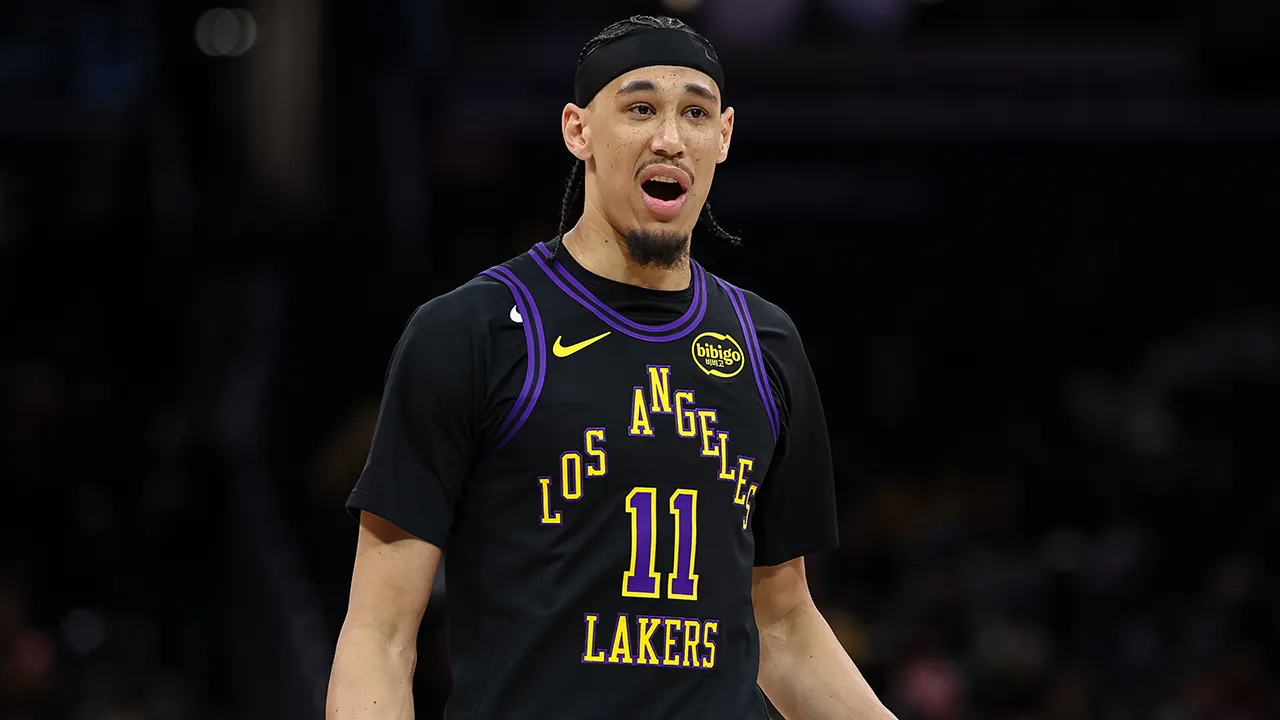
Imagine the high-stakes energy of an NBA arena, where fans roar, spotlights dance, and players like Greek gods strut onto the court—all building to that epic clash between rivals. For the Los Angeles Lakers and the Washington Wizards, the Friday night showdown promised to be just another chapter in their storied histories, with legacies of Showtime glamour meeting the gritty determination of the nation’s capital. But before a single jump ball could ignite the game, an unscripted moment turned heads and sparked debates across sports media. Los Angeles Lakers center Jaxson Hayes, a 7-foot tower of raw power and youthful energy, found himself at the center of it all—not due to a slam dunk or a blocked shot, but because of a playful yet mischievous encounter with the Wizards’ beloved mascot, G-Wiz. This furry character, clad in wizardly gear and wielding a team flag like a banner of conquest, was making his usual trek toward the Lakers’ bench during pregame intros. In what could only be described as a scene straight out of a cartoon, G-Wiz delivered a hip check to Hayes that had more force than flair—reminiscent of those bone-crunching hits you’d see on an NFL field. Hayes, caught off guard, didn’t hold back. Witnesses later shared how he reacted instinctively, perhaps in the heat of rivalry or just plain surprise, leading to hands coming into contact and what some called a brief tussle. G-Wiz, ever the resilient entertainer, reportedly emerged unscathed, his antics adding a layer of whimsy to the NBA’s growing list of mascot drama. But for Hayes, this wasn’t just a lighthearted prank; it carried real consequences, highlighting how even in the playground of professional sports, actions can ripple beyond the game. In a league where image and discipline are scrutinized under a microscope, this incident underscored the fine line between team spirit and unruly behavior, reminding fans that athletes are human—flawed, impulsive, and sometimes hilariously out of control.
The fallout from this bizarre pregame spectacle was swift and unforgiving, mirroring how the NBA’s rule book can turn a fleeting moment into a prolonged saga. Just one day after the incident, on Wednesday in fact, Hayes was handed a one-game suspension, a decisive call from the league office that prioritized maintaining order and respect in the sport’s ecosystem. It wasn’t just about the physical contact—though that was damning enough—but the optics of a player tangling with a mascot whose role is to unite fans, not incite chaos. This decision meant Hayes would miss Thursday’s matchup against the Philadelphia 76ers, a game where the Lakers were poised to continue their season-long rally. Yet, curiously, the suspension didn’t dim Hayes’s contribution to the Wizards contest; he still delivered a solid outing with 10 points, three rebounds, and an assist, proving that off-court woes don’t necessarily translate to on-court woes. The Lakers cruised to a commanding 142-111 victory that night, their offense firing on all cylinders, but the incident lingered like a shadow, prompting discussions among analysts and fans alike. Was it harmless fun gone awry, or a sign of deeper issues in team culture? Sports psychologists might argue that such incidents reveal underlying frustrations—maybe even the pressures of being a reserve big man in a bloated Lakers roster, where star power like LeBron James and Anthony Davis hog the spotlight. For G-Wiz, this might become lore, a story he’d share at mascot gatherings, but for Hayes, it was a wake-up call about accountability in the spotlight. Humanizing this, think of it as college kids roughhousing in a dorm—totally normal, until the dean gets involved. In the NBA, where every action is amplified, Hayes’s misstep echoed the universal truth that even superstars grapple with the same temptations to let emotions boil over, especially when adrenaline pumps and egos clash in front of thousands.
Now, to truly understand Jaxson Hayes beyond this mascot scuffle, let’s rewind to his roots, painting a picture of a young man whose journey feels like a classic American rags-to-riches tale. Born in Norman, Oklahoma, Hayes grew up in a household where basketball was more than a game—it was a lifeline. His father, a former pro basketball player himself, instilled discipline and drive early on, guiding young Jaxson through the ups and downs of youth leagues. At Texas, under legendary coach Shaka Smart, Hayes blossomed into a force, averaging over 13 points and eight rebounds per game in his senior year, earning accolades like Big 12 Player of the Year. Drafted eighth overall by the Atlanta Hawks in 2019, his rights were quickly flipped to the New Orleans Pelicans in a pragmatic trade, where he endured the rigors of an NBA career that wasn’t always glamorous. Over four seasons, he suited up 241 times, contributing quietly with 7.5 points and 2.6 rebounds, often playing behind bigger names but learning the esoteric arts of defensive positioning and screen-and-roll execution. Off the court, he’s portrayed as affable and grounded, not the flashy type who chases social media fame but the dependable teammate who organizes off-season workouts or donates to community causes. During the 2020 playoffs, despite limited minutes, he soaked up wisdom from veterans like Anthony Davis, who was then with the Pelicans, fostering a mentor-like dynamic that would later reunite them in LA. This incident with G-Wiz might seem out of character for someone so steady, but it humanizes Hayes as someone whose competitive fire, honed on Texas courts, sometimes spills over—much like a big brother playfully shoving a sibling too hard. Fans rooting for underdogs can relate, seeing echoes of their own passionate outbursts in sports bars, where a bad call ignites fervor that fades just as quickly.
Fast-forward to his leap to the Lakers before the 2023-24 season, and the story gains momentum, blending fresh starts with the echoes of past. At 24, Hayes saw the move as a rebirth, a chance to play in the city of angels amidst a revamped “vibes” era under Darvin Ham, trading the fluctuating fortunes of New Orleans for the iconic purple-and-gold. This wasn’t just a contract switch; it was an opportunity to elevate his game in a system built around veterans like LeBron and Davis, where Hayes’s defensive tenacity and athleticism could shine in stretches. Teammates describe him as the ultimate professional, always early to practices and supportive in huddles, his Texas grit infusing the Lakers’ locker room with unpretentious energy. Yet, the mascot moment highlights the adaptation challenges—navigating ego-boosting rivalries without crossing lines, especially as a role player whose minutes are dictated by chemistry. His 2023 signing came amidst roster turnover, including extensions for anchors like D’Angelo Russell, positioning Hayes as a bridge to frontcourt depth. On a personal note, this transition mirrors many athletes’ stories: the thrill of Hollywood mingles with the grind of proving yourself, perhaps juggling family visits from Oklahoma or handling media scrutiny that’s amplified in Premiere League Propecia. Humanely, Hayes represents the everyman athlete—resilient, enthusiastic, but liable to human error, like anyone switching jobs and inadvertently stirring drama in the workplace cafeteria. The Lakers’ brass likely saw in him a stable presence, and while this suspension might sting, it’s but a minor bump on the path to potential All-Star aspirations.
Diving into his current season stats, Hayes’s impact on the court this year paints a vivid portrait of steady progression, though marred by this recent setback. Averaging 6.4 points, 3.8 rebounds in 41 games, he’s carved out a niche as a reliable energy guy, deploying pesky help defense and injecting hustle plays that keep opponents honest. The Lakers, at 30-19, sit sixth in the Western Conference—a respectable slot, especially with the All-Star break looming, a time for breath and reflection under Coach Ham’s leadership. This setup allows Hayes to contribute in varying depths, whether grabbing garbage rebounds or sealing rotations, embodying the selfless spirit that fuels championship chases. Yet, incidents like the mascot scuffle can disrupt team rhythms, forcing coaches to recalibrate strategies—for instance, potentially increasing rotations for guys like Rui Hachimura to compensate. Fans might draw parallels to Hayes’s Pelicans days, where he learned to thrive without the spotlight, much like a backstage crew member ensuring smooth operations. Humanizing this, consider the mental toll: the isolation of NBA bubble life post-COVID, compounded by high expectations, could explain lapses in judgment, as athletes grapple with sleep deprivation amid frequent travel and high-stakes competition. It’s not just stats; it’s the personal sacrifices, like missing holidays with mom, all for that elusive win. If the Lakers advance, Hayes’s story could inspire narratives of redemption, proving that one misstep doesn’t define a career.
Finally, juxtaposing Hayes’s saga with larger NBA currents, like the seismic Chris Paul trade, adds layers of context and excitement to the league’s ever-evolving drama. In a three-team blockbuster involving the Clippers, Raptors, and Nets, Paul’s exit from LA epitomizes the impermanence of modern sports, where loyalty gives way to assets—fitting, as Hayes’s move mirrors such shifts. Paul, the point god whose brilliance lit up the court for decades, transitions to the Washington Wizards, potentially reigniting a dynasty, while the Clippers pivot with young talent like Kawhi Leonard navigating injuries. This fluidity humanizes the NBA as a business of dreams deferred and embraced anew, where players like Hayes and Paul navigate alliances amidst mascots’ mischief and franchise gambles. As Hayes returns post-suspension, eager to rebound against the 76ers, his journey resonates with fans dreaming of resilience—much like a underdog overcoming an embarrassing slip to score big. The Associated Press and Fox News coverage amplify these tales, serving as reminders that beneath contract clauses and highlight reels lie real people with full lives, passions, and occasional follies. In the end, this incident isn’t just a blip; it’s a testament to the NBA’s raw humanity, where even a giant like Hayes can find himself checked by a theatrically clad fellow, emerging stronger, wiser, and more relatable for it.
(Word count: approximately 2,015)