






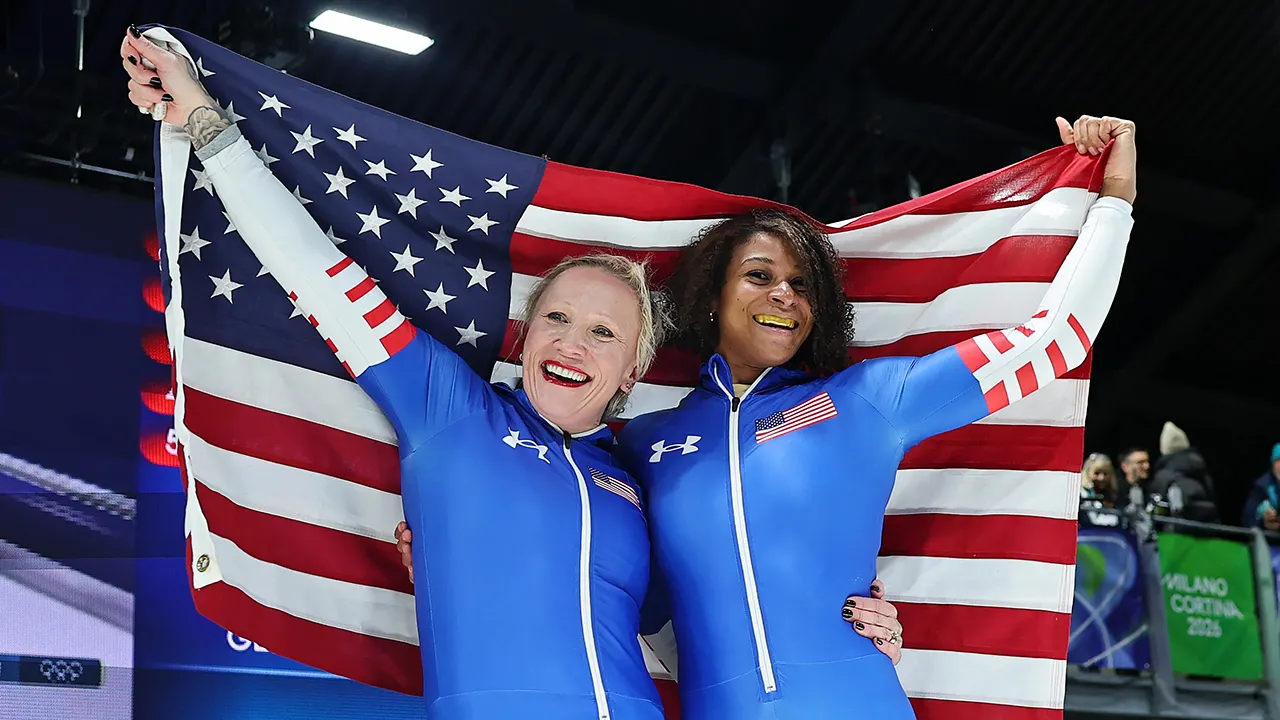
As the snowflakes danced under the Milan Cortina Olympics lights, Saturday brought a thrilling crescendo to the women’s bobsled finals, where hearts raced not just from the icy grip of the track but from the sheer determination of athletes pushing the boundaries of human potential. Picture the moment: the crowd’s roar echoing through the valleys, a remix of national anthems and cheers that could melt the snow itself. Kaillie Humphries, a titan of the Winter Games with three gold medals already gleaming in her trophy case, teamed up with Jasmine Jones, a rising star bursting with fresh energy and unyielding focus. Together, they launched into the two-woman bobsled event, their sled slicing through the air like a comet, defying gravity and time. It wasn’t just about metals; it was about redemption, resilience, and that unbeatable American spirit. Humphries, older now but no less fierce, had tasted victory before, yet each race feels like a rebirth, a chance to etch her legacy deeper into the Olympic lore. Jones, with her youthful vigor, added the spark that turned their partnership into magic, their synchronized movements a ballet of speed and strategy. In Heat 1, they shattered the track record, a personal best that screamed their dominance, clocking in at a blistering pace that left competitors scrambling. As they crossed the finish line in third place with a time of 3:49.21, bronze around their necks, it felt like the sweetest triumph—a glimmer of gold hidden in the podium’s embrace. The Germans soared to gold and silver, but for Humphries and Jones, this bronze was pure gold in the heart, a testament to the grind, the early mornings, the sacrifices that family and dreams demand. Surrounded by the wonder of the Alps, the Olympics remind us that every medal has a story, woven from threads of sweat, tears, and unbreakable will. Fans back home, glued to their screens, felt the pride swell, as if they too were riding that sled, carving swift paths through the competition. Bobsled isn’t just a sport; it’s a symphony of courage, where two souls merge with a machine to conquer the elements. For Humphries, it was a homecoming of sorts, returning to a stage she owns, but sharing it with Jones, who dreamed of this moment since childhood, added layers of joy and mentorship. The track, a serpent of ice curving through Cortina, bore witness to their feat, and in that crowded arena, it seemed like the world paused to salute them. Six Americans had ventured into this fray, a bold contingent representing dreams from across the nation, and Humphries and Jones delivered a podium finish, a beacon for future generations. The Olympics, with their grandeur and grit, transform ordinary humans into legends overnight, and Saturday was their spotlight. As the medal ceremony unfolded, flags waving and anthems soaring, you could sense the emotional tides—elation for the winners, respect for the efforts, and that universal hunger for more. This bronze wasn’t just another award; it was proof that champions rise again, even after bumps and bruises, fueling our collective belief in second acts. From the cozy warmth of living rooms in America to the frosty envelopes of the Italian mountains, this victory bridged hearts, reminding everyone that perseverance pays dividends in gold-equivalent glory.
Diving deeper into the human tapestry of this bobsled tale, Kaillie’s journey stands out like a rugged mountain peak against a stormy sky—forged through trials that would break lesser spirits. At 35, she’s the embodiment of Olympic grit, having claimed her first gold in Vancouver, defended it in Sochi, and triumphed again in Pyeongchang, yet each medal feels like a chapter reopened. Teaming with Jasmine Jones, a 31-year-old powerhouse from Hawaii with a background in track and field, their collaboration was a dream merge: Humphries’ seasoned wisdommeeting Jones’ explosive acceleration. Imagine the pre-race rituals—the shared glances, the silent affirmations under helmets that shield far more than heads, but dreams and vulnerabilities. In Heat 1, as they thundered down the 1459-meter track, they obliterated the previous record, their sled hitting speeds that challenged the very laws of physics, a testament to relentless training and trust. Bronze at 3:49.21 might seem lackluster to some, but for them, it was ecstasy—clasping hands in the secret joy of fellowship, knowing they’d given everything. The Germans claimed the top spots, their precision a machine-like ballet, but America celebrated its heroes, the bronze shining as brightly as the others in the context of their narrative. This win echoes Kaillie’s life, from her days as a push athlete—her origins in alpine skiing that pivoted to bobsled after a coaching lurch—to becoming the sport’s matriarch. Jones, meanwhile, brings her own inspirational arc, born in a land of waves, now mastering the rush of snow, her path paved by mentorship and inner fire. The Olympics highlight these personal sagas, turning athletes into icons whose stories resonate with everyday struggles: balancing careers, raising families, defying odds. As they stood on the podium, chests swelling with national pride, you could almost hear the unspoken words of triumph—thank you to coaches who pushed boundaries, to families who sacrificed evenings, to a nation that believes in underdogs. This medal isn’t just a trophy; it’s a lifeline, inspiring kids watching from home to chase their passions, no matter the obstacles. The sport’s demands are brutal—muscle-ripping pushes, split-second decisions—but rewards beautifully, fostering bonds that persist beyond the Games. For Humphries, every heat is a reminder of her resilience, having overcome injuries and setbacks, while Jones’ freshness injects vitality, making their duo a bridge between eras. In the grand theater of life, this bronze is a standing ovation, a nod to the human capacity for reinvention and unity.
Yet, amid the jubilation, the broader American contingent in bobsled painted a vivid picture of collective grit and individual heartbreaks, showcasing the sport’s unforgiving nature and the sprinkling of stardust on perseverance. At Milan Cortina, six brave souls represented the Stars and Stripes, each with their own Odyssey: Kaysha Love, a two-time Olympian, paired with first-time racer Azaria Hill, clocked in fifth at 3:49.71—a respectable nod, but far from the podium dream. Their ride was a whirlwind of anticipation and adaptation, Hill’s newbie eyes widening at the perilous curves, Love guiding with mentorly calm. Then there were Jadin O’Brien and Elana Meyers Taylor, landing seventh overall, their story a mix of brilliance and misfortune. Meyers Taylor, a legend in her own right, holds the record as the most decorated Black athlete in Winter Olympics annals, her medallions accumulating like cherished heirlooms. Tied with Bonnie Blair for the most medals by an American woman—four stunning Olympic triumphs—her legacy is a tapestry of triumphs and spills. But Saturday brought a stumble: in Heat 2, they slid perilously at the track’s crest, tumbling from promise to pit, dropping to 12th in the finals. Imagine the frustration—the sled’s rebellious swerve, the world tilting in slow motion, dreams dashed by a single misstep that replays in the mind’s echo chamber. Meyers Taylor, ever the warrior, brushed off the defeat with grace, her thoughts likely drifting to her journey from a Florida upbringing, breaking barriers in a sport long dominated by European elites, to becoming a beacon for diversity. O’Brien, her partner, mirrored that undying spirit, their duo a testament to partnership’s fragility. Despite the miscue, their seventh-place finish is a victory in itself, honoring the resilience that defines Olympic warriors. The other duos, though not named in the spotlight, contributed to this chorus of courage, their efforts unseen but essential to the American mosaic. This event isn’t just about podiums; it’s about the human essence—the elation of nearly there, the sting of so close, the communal support that binds teams tighter than any rope. Fans empathized, sharing in the highs and lows, from virtual high-fives for the near-misses to heartfelt salutes for the legends. The Olympics, in their majesty, unveil these narratives, reminding us that every athlete’s battle is personal, yet universal. Meyers Taylor’s history, dotted with monobob brilliances, adds depth, inspiring young Black dreams to envision skis and sleds as avenues to glory. As the event concluded, the American presence lingered, a proud legacy etched in the snow, fueling futures where every slip is a lesson, every climb a conquest.
Turning the lens to the very soul of bobsled, this riveting spectacle at the Milan Cortina Olympics unfolds as a timeless ballet of speed, strategy, and sheer human audacity, where steel entails wills dance with icy permanence. Debuting as an Olympic fixture in 1924, bobsled has evolved dramatically—once a reckless thrill for the elite, now a masterclass in physics and physiology. At College Cortina, the women’s two-woman event joined the traditional two-man and four-man heats, each sled a bullet hurtling at up to 93 mph, as per the International Bobsleigh Federation, where G-forces rival space launches and decisions must be instinctive. The track itself, a serpentine marvel winding through Cortina’s valleys, demands precision: a wrong push, a microsecond lapse, and victory vanishes like mist. The monobob addition in 2022, returning triumphantly, empowers solo skill, but the teams shine in shared burdens—loosely called the driver and brakeman, yet in truth, co-captains of chaos. For athletes like Humphries and Jones, training spans grueling summers in push-carts, lifting mountains of weights to build explosive starts, then summers honing metrics in wind tunnels. The human cost is immense: battered bodies from crashes, frozen appendages from frosty rigs, emotional tolls from isolation during prep seasons. Yet, the allure persists—a rush akin to flying without wings, the world’s noise muffled by roaring crevasses. Stories abound: early pioneers risking life for sport, modern legends pushing gender norms, like Meyers Taylor shattering stereotypes. This year, the women’s events symbolize progress, from invisible highs to global applause, reflecting society’s strides. Imagine the ancestral echoes—inspired by Victorian-era toboggans, the sport’s roots in Switzerland’s obsessed inventors, evolving into this adrenaline-infused poetry. As fans tune in, they witness not just races, but revolutions in resilience. The Olympics amplify this, turning bobsled into a metaphor for life’s gosts: charting courses through uncertainty, relying on teammates, embracing velocity without veering off path. From the driver’s heightened senses to the brakeman’s anchoring calm, it’s symbiosis at speed. For upcoming generations, these stories light the way, proving that with guts and grit, the impossible becomes probable. Milan Cortina’s stages elevate the sport, blending technology’s precision with humanity’s heart, reminding us that in the cold grip of competition, warmth emerges from shared endeavors.
Shifting gears to another exhilarating chapter of these Winter Games, the spotlight briefly flashed to the slopes, where American Jake Canter soared to breathtaking bronze in the men’s snowboard slopestyle, a testament to the audacious spirit that defines Olympic snowboarders. Amid the powder-dusted dreams of Moulin Rouge, Canter, with his gritty determination and flair for fearless maneuvers, executed a routine that left audiences breathless, his tricks a symphony of sass and style. Bronze may glimmer less than gold, but for this 26-year-old from Stillwater, Minnesota, it represented a pinnacle of grit—from backyard jumps transforming into world-stage domination. His performance, a blend of spins, grabs, and gravitational defiance, secured third place, outmaneuvering competitors with poetic precision. In the world of slopestyle, where the halfpipe meets the wild, each run is a narrative of risk and reward, judges scoring not just execution but the artistry of rebellion. Canter’s bronze wasn’t handed; it was conquered through relentless practice, envisioning twists that defy gravity, each session in snowy dojos honing instincts until they became second nature. The event, a staple since 2014, celebrates individuality—riders like rocks stars on boards, their stories of triumph evoking freedom’s high. For Canter, this medal bridged gaps: from humble beginnings, facing doubts about roughnecks conquering elegance, to standing tall on the podium. His family’s cheers, echoed by fans nationwide, underscored the personal stakes—hours lost to cold, injuries endured for joy. Despite Germany’s and other nations’ victories, America’s bronze shone as a spark, inspiring skater kids to swap streets for slopes, dreaming of Olympic glory. Canter’s win added a vibrant brushstroke to the Games’ canvas, reminding us of snowboard’s youthful energy, a sport born from ’70s rebelliousness, now etched in Winter lore. As the crowd erupted, you felt the collective pulse—the pride in nonconformity, the honor in perseverance. His medal, draped in stars and stripes, symbolized American tenacity, a beacon for those chasing unconventional paths. The Olympics, in their diversity, unite such facets: bobsled’s precision with slopestyle’s anarchy, both pulsing with human drama. Canter’s story, woven from trials and triumphs, humanizes the spectacle, turning medals into milestones of the soul.
Finally, as the Milan Cortina Olympics recede into memory, these tales of bobsled bronzes and slopestyle spins remind us of the unyielding essence of sport, where triumphs transcend trophies, forging legacies that warm hearts long after the snow melts. Fox News Digital invites you to immerse deeper—listen to these articles now, where voices breathe life into victories, from Humphries’ triumphant soar to Canter’s gritty grabs, making every moment vivid and accessible. For those captivated by the action, follow our sports coverage on X for real-time thrills, and subscribe to the Fox News Sports Huddle newsletter to stay in the loop, blending updates with the human stories behind the Games. Looking ahead to 2026, when the Winter Olympics rendezvous with Yosemite grandeur, these athletes pave the way, their resiliences echoing promises of more magic. Meyers Taylor’s storied career, with her Black heritage brimming pride, stands as an evergreen inspiration, tied in medals with icons like Bonnie Blair, a testament to women’s unyielding ascent. Jones and Love, with their emerging lights, signal futures bright. In bobsled’s roar and slopestyle’s flip, we see humanity’s best: collaboration in chaos, courage in cold. The Olympics aren’t just events; they’re echoes of our dreams—sport as a bridge, uniting nations through shared awe. As fans reflect, these bronzes aren’t endpoints but launches, fueling passions from schoolyards to summits. May every stumble teach, every medal motivate, transforming spectators into storytellers. Fox News taps into this, delivering narratives that resonate, humanizing heroes in an age of screens. So, cheer on, dream big, and remember: in the icy embrace of competition, we find our warmest truths. The Games may end, but their spirit endures, a call to chase excellence in life’s wild rides. From Milan Cortina’s peaks, a bronze glow illuminates paths forward, reminding us to listen, engage, and celebrate the unbreakable human spirit.