





A Heartfelt Tribute on Ice
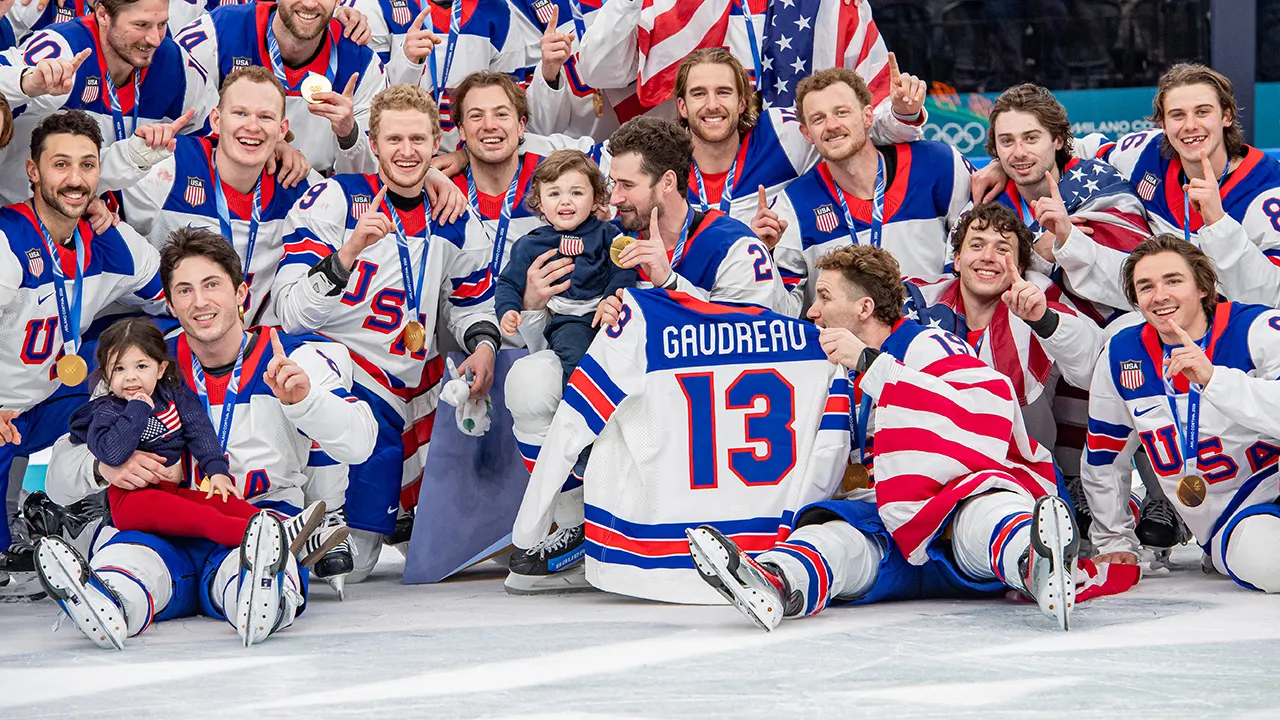
In the crisp air of the Beijing Olympic arena, the U.S. men’s hockey team etched an unforgettable moment into history on Sunday, clinching gold in a nail-biting 2-1 victory against Canada. But amid the jubilant cheers and champagne showers, the players took a poignant pause to honor Johnny Gaudreau, the talented forward who had tragically lost his life just months earlier. Gaudreau’s jersey was carried onto the ice, flanked by his two young children—Johnny Jr., on his second birthday, and Noa—creating a scene that tugged at the heartstrings of fans worldwide. For those watching, it wasn’t just a win; it was a tender act of remembrance, blending triumph with sorrow in a way that felt deeply human. Gaudreau, a star for the Columbus Blue Jackets, would have likely skated with these very teammates if not for the cruel twist of fate that robbed him and his brother Matthew of their futures. Their passing in a horrific drunk-driving accident in New Jersey in August 2024, while attending their sister’s wedding, left a gaping void in the hockey world. This overture by Team USA wasn’t scripted; it was spontaneous, a genuine outpouring of respect from athletes who understood loss firsthand. Witnessing Gaudreau’s kids stepping onto that frozen stage, wide-eyed and innocent, reminded everyone that life is fragile, and legacies live on through simple, loving gestures that connect strangers in grief.
Katie Gaudreau, the resilient sister left to carry the family’s torch, shared her raw emotions in an interview on Fox & Friends the following Monday, her voice steady yet laced with the weight of recent tears. She expressed profound gratitude for how Team USA went above and beyond, weaving in details that painted a picture of everyday kindness in the midst of national celebration. They brought out Johnny’s jersey during crucial moments, letting it wave proudly as the team battled through rounds of play. Katie recounted how, even after the medal ceremony, when the team gathered for photos, they didn’t rush—it felt like a deliberate choice. Her memory flooded back to the Olympics, watching “Johnny Junior” and Noa being tenderly lifted onto the ice by these big-hearted athletes. For her, this wasn’t just an honor; it was a fulfillment of Johnny’s dreams for his children, those “once-in-a-lifetime opportunities” he worked tirelessly to pursue. Gaudreau, with his infectious smile and on-ice wizardry, was the kind of guy who lit up a room—now, his spirit was alive in those kids, experiencing hockey’s highest pedestal. Katie’s words evoked the warmth of family, the ache of absence, and the beauty of how strangers can bridge that gap, turning a sports victory into a personal balm for healing hearts.
The game itself was a thrilling edge-of-your-seat affair, decided by Jack Hughes’ overtime heroics after Canada squandered multiple golden chances to pull ahead. It was the kind of match Gaudreau and his brother would have adored—a rollercoaster of near-misses and defensive dramas. Katie couldn’t help but muse on what seemed like a touch of divine providence, wondering aloud if something intervened to keep Canada’s shots from finding the net. “They might have had a little help behind the net,” she chuckled softly, her eyes probably glistening at the thought of her brothers “chirping” everyone from the sidelines in their playful rivalry. This wasn’t about superstition; it was her way of processing a world turned upside down, finding threads of joy in the absurdity. For the Gaudreau family, hockey wasn’t just a sport; it was a lifeline, a shared language of resilience. Johnny and Matthew’s absence loomed large, yet victories like this offered flickers of their vibrant personalities, reminding Katie that grief doesn’t erase the love and laughter they brought to life. In sharing these sentiments, she humanized the loss, transforming a public tribute into an intimate whisper of remembrance that anyone could feel in their bones.
Yet, beneath the excitement and the honor, Katie laid bare the enduring shadow of grief, admitting there’s no easy way to “process” such a tragedy. She spoke of taking it one day at a time, leaning heavily on the hockey community and the outpouring from across North America. No family should endure this—a beloved son, brother, husband, dad, and uncle swept away in an instant—but through this support, they’ve found strength to press on. It’s the kind of solace that comes from knowing you’re not alone, from ice rinks to living rooms, where people rally around with words, gestures, and unwavering presence. Katie’s reflections painted a portrait of vulnerability in the face of unimaginable pain, yet underscored the power of collective empathy. “We’re still here, step by step, honoring the boys,” she said, her voice a testament to human spirit’s quiet power. This wasn’t just about a medal or a game; it was about connection, about how communities weave safety nets for those crumbling under loss. The Gaudreau story became a mirror for many, prompting reflection on our shared fragility and the kindness that can mend it.
Echoes of Johnny and Matthew
As the celebrations faded, the Gaudreau siblings’ memory lingered, not as ghosts but as living tributes in the little things—like jerseys held aloft and children lifted high. Johnny’s kids, experiencing the magic of Olympic gold, embodied the dreams he once championed, dreams cut short but not extinguished. For Katie, seeing them on that ice wasn’t just emotional; it was transformational, a bridge between past joys and uncertain futures. Hockey, with its blend of thrill and brotherhood, had become the family’s anchor, a place where loss met love in palpable ways. Community wasn’t an abstract concept here; it was tangible acts—tweets of support, donations for their kids, and moments like this Olympic nod—that stitched the family back together. In a world often defined by divisions, Gaudreau’s story highlighted unity, showing how sport can heal divides and foster genuine human connections. Fans like you and me, glued to screens or sharing stories with friends, probably felt a lump in the throat, reminded that champions aren’t just winners—they’re mirrors of our own struggles and strengths.
The ripple effects of Gaudreau’s honor extended far beyond the rink, inspiring conversations about safety, sobriety, and the devastating impact of drunk driving. Katie’s open-hearted sharing on Fox & Friends turned a personal sorrow into a public call for awareness, humanizing the statistics into flesh-and-blood faces. Here was a family navigating tragedy with grace, not bitterness, finding solace in a sport that had defined their brothers’ lives. As she expressed thanks to the “outpour of love and support,” it was clear this was more than a news story—it was a plea for compassion, an invitation to check on loved ones and cherish fleeting moments. Gaudreau’s legacy wasn’t in records alone but in the warmth he inspired, now carried forward by his sister’s courage and a hockey world that embraced change. This event wasn’t just a closure; it was a beginning, a renewed commitment to live boldly, love deeply, and support fiercely in the face of life’s unpredictable storms. For anyone grieving or struggling, the Team USA gesture offered hope: even in darkness, light finds a way to shine through human hearts.