





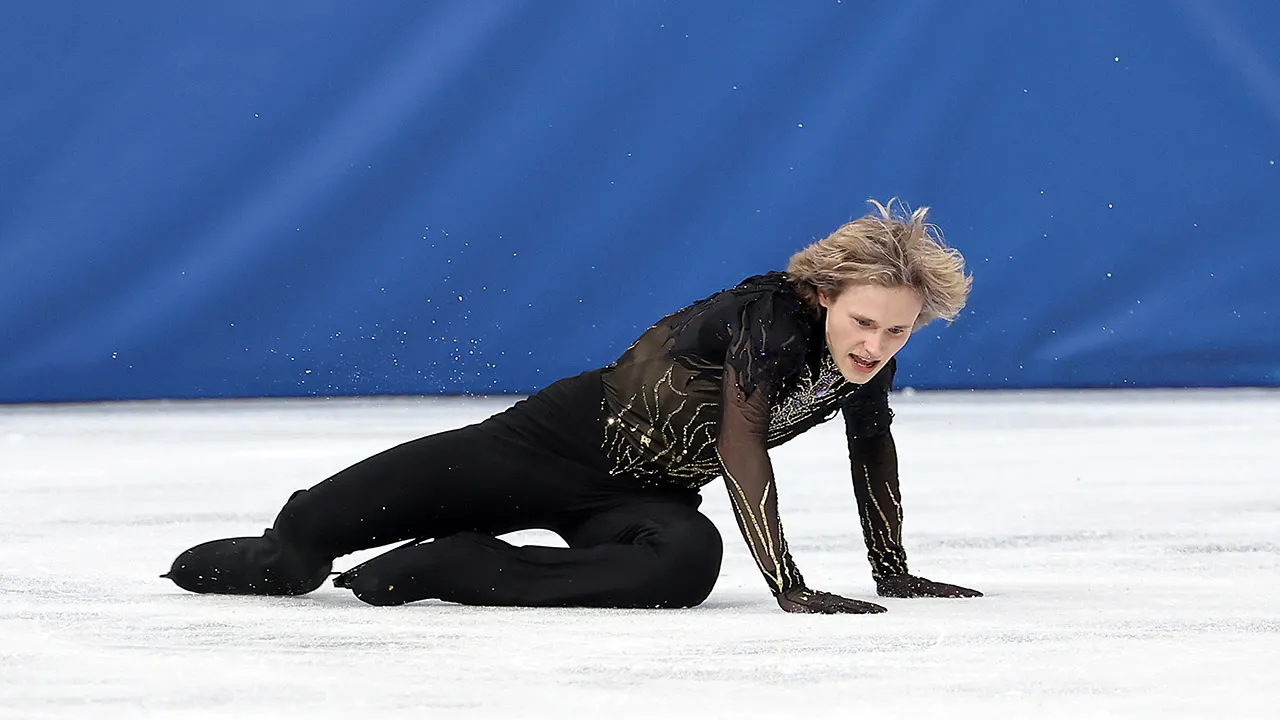
Ilia Malinin, the dazzling American figure skater who captured hearts with his jaw-dropping jumps, found himself in a rare moment of vulnerability at the 2022 Winter Olympics in Beijing. It wasn’t the kind of spotlight he’d imagined—skating away with gold—but instead, a quiet withdrawal that spoke volumes. On Saturday, just one day after his shocking eighth-place finish in the men’s free skate, Malinin skipped his usual post-event media session. It was postponed, as reported by journalist Christine Brennan, leaving fans and reporters eager for his side of the story. Picture this: a young athlete, barely in his prime at 17, dealing with the weight of expectations that could crush even the most seasoned pros. The Olympics aren’t just games; they’re a pressure cooker where dreams collide with reality, and for Malinin, the fall from grace felt personal. He’d been the star of the show, dominating qualifying rounds with routines that defied gravity and logic, but Friday’s skate unraveled everything. It was as if the floor beneath him cracked open, but instead of soaring, he tumbled down. In his mind, it was a flood of memories—bad and good—that rushed in, overwhelming him right before he took the ice. “I just had so many thoughts and memories flood right before I got into my starting pose,” he shared with NBC Washington afterward, his voice reflecting a mix of honesty and exhaustion. It’s easy to imagine him standing there, laced up in his skates, the roar of the crowd fading into a distant hum as personal ghosts resurfaced. The pressure of being labeled the “Olympic gold medal hopeful” hit hard; not many can truly grasp that, he said, unless they’ve lived it from the inside. He went in feeling confident, but the performance sped by like a blur, leaving no room to process. It humanizes him, you know? Turns the superhero skater into a relatable guy who’s human after all, grappling with emotions that everyone faces but under the brightest lights.
Reflecting on his routine, it unfolded like a thrilling yet tragic story of highs and lows. Malinin kicked off strong with a flawless quad-flip, that gravity-defying leap that always gets the crowd cheering—a testament to his incredible skills honed over years. But then, something shifted. He dialed it back to a single axel and a double loop, far from the quad loop he usually nails with precision. The first stumble came on a quad Lutz attempt, his body hitting the ice hard, the sound echoing through the arena. Not long after, another jump went wrong, sending him tumbling again. Fans watched in disbelief: this was Ilia Malinin, the kid who routinely smashed world records, yet here he was, scoring a mere 156.33 in the free skate—a shadow of the 238.24 he set just months ago or the 200-plus marks he’s known for. It was heartbreaking to see, like watching your favorite underdog finally crack under the strain. You could feel the collective gasp, the fans who had pinned their hopes on him, now wondering where it all went wrong. In that moment, the ice beneath him seemed unforgiving, a stark contrast to the smooth landings he’d mastered in practice. His total score ended at 264.49, paling against his personal best of 333.81. It wasn’t just a bad skate; it was a reminder that even pros have off days, but this one stung more because the stage was global. Malinin showed grace, though, congratulating his competitor from Kazakhstan immediately after, a small act of sportsmanship amidst the disappointment.
The pressure of the Olympics, as Malinin himself articulated, is a beast unlike any other. Sitting on the bench afterward, he mused that if he’d been part of the team four years ago in Pyeongchang, the performance might have been even rougher. At 17 back then, he was edged out by older skaters, a decision that fueled his fire but also layered on lessons he carried into Beijing. “I’ve been through a lot in my life, a lot of bad and good experiences,” he confessed, painting a picture of a resilient young man who’s navigated personal storms off the ice. It’s easy to humanize that—imagine the weight of family pressures, training sacrifices, and the relentless grind to perfection. The Olympics amplify it all, turning minor doubts into deafening doubts. For Malinin, this wasn’t just a skate; it was a confluence of life’s ebb and flow flooding in at the worst time. His words resonate with anyone who’s ever frozen under pressure: that rush of memories can derail even the best-laid plans. Perhaps it was the culmination of years building up— the high of breaking records mixed with underlying fears of not measuring up. You start to see him not as a flawless athlete but as a person, reflecting on how these “thoughts I can’t control” seized the moment. It adds depth to his story, turning a sports upset into a tale of human fragility, where gold isn’t everything and real growth comes from falling.
On the flip side, the event itself crowned worthy champions, showcasing the sport’s unforgiving beauty. Mikhail Shaidorov of Kazakhstan claimed gold with a stellar total score of 291.58, shattering his personal best. His free skate alone earned 198.94, the highest of his career, a testament to precision and passion that Malinin’s struggles highlighted by comparison. Yuma Kagiyama of Japan secured silver, his second consecutive podium finish, while teammate Shun Sato took bronze, rounding out a dominant showing from the host nation. These victories were celebrations of skill, but they also underscored the razor-thin margins in figure skating, where a single fall can rewrite history. Off the ice, the atmosphere at the Olympics buzzed with energy, though it was briefly marred by a power outage that halted curling competitions just as matches began—a quirky reminder that even global spectacles aren’t immune to the unexpected. For Malinin, watching these wins unfold must have sparked mixed emotions: pride in the sport he loves, tinged with personal regret. It’s humanizing to consider how bonds form in the stands—competitors like Kagiyama and Sato, whom Malinin knows from the circuit, celebrating together. It shifts the narrative from loss to camaraderie, showing that while Malinin stumbled, the Olympic spirit marched on, elevating others and keeping the flame of excellence alive.
Social media erupted with a wave of disappointment and empathy, as fans poured out their thoughts on platforms worldwide. Hashtags like #TeamUSA and #IliaMalinin trended, filled with posts lamenting the fall from favor for a skater who had become a symbol of American prowess on ice. Some expressed shock: “Ilia was the favorite—what happened?” Others offered understanding: stories of athletes who’ve faced similar mental blocks at big events. It felt like a collective heartache, a reminder that sports fandom is deeply personal—people invest emotionally, dreaming big with their heroes. Yet, amidst the backlash, there were voices of support, urging Malinin to channel this setback into future triumphs. Fox News contributor Ryan Morik captured the sentiment well, noting the widespread buzz that went beyond mere results. Humanizing it, you picture armchair critics debating late into the night, or families who paused their evenings to cheer, now sharing virtual hugs online. It wasn’t just about one guy’s bad day; it reflected broader conversations on mental health in sports, the unseen battles athletes fight. Malinin’s openness about his overwhelmed mind sparked discussions on the real costs of chasing glory, making his story relatable to anyone who’s ever choked under pressure. For Team USA, it was a gut punch, but it also highlighted the beauty of resilience—how one skater’s fall could inspire others to rise.
Looking ahead, Malinin’s journey from this Beijing letdown to potential redemption feels promising, especially with his eyes on 2026. Despite the sting, his resume—packed with records and routines that dazzle—suggests he’s far from finished. Congratulating his competitors post-event showed a maturity beyond his years, a human trait that endears him further. Fans are already speculating about his return: would he tweak his mental prep, train harder, or seek coaches to navigate those “thoughts”? The Olympics have a way of shaping legacies, and for Malinin, this could be the crucible that forges an even stronger version of himself. Meanwhile, the new feature allowing listeners to tune into Fox News articles promises to bring stories like this to life audibly, making news more accessible amid the buzz. As he reflects on what might have been, it’s clear Ilia’s tale isn’t just about skates and medals—it’s about the human experience, where falls teach us to fly higher. His story, in all its raw honesty, reminds us that even Olympic stars grapple with the same fears and triumphs we all do. In a world that often glorifies perfection, Malinin’s vulnerability becomes strength, inviting us to empathize and root for the comeback. With the Winter Games wrapping up, the spotlight shifts to future dreams, but Malinin’s eighth-place finish lingers as a poignant chapter in Olympic lore—one that humanizes a hero and celebrates the unbroken spirit. Follow Fox News Digital’s sports coverage on X for more, and subscribe to the Fox News Sports Huddle newsletter to stay in the loop.
In the grand tapestry of figure skating, Ilia Malinin’s Beijing performance stands as a bittersweet reminder of the sport’s highs and lows, but it’s his humanity that steals the show. The postponed media session allowed him space to breathe, away from the cameras, stepping back from the frenzy to process privately. Fans who tuned into coverage via the new Fox News listen feature might have felt the emotional undercurrents more deeply, voices narrating the shock of his falls, the grit of winners, and the pundits’ analyses. It’s a feature that brings the cold ice into our warm homes, making distant dramas feel intimate. For Malinin, the path forward involves reconciling those “thoughts and memories”—perhaps through therapy, supportive chats with mentors, or simply time. The disappointment on social media wasn’t just noise; it was a chorus of shared humanity, from parents recalling their kids’ first tumbles to skaters empathizing with pressure. As media outlets like Fox News dive deeper, such stories humanize athletes, stripping away the myth to reveal real people. Malinin’s potential at 17 hints at untapped potential; imagine his routines in 2026, freer from past burdens. His quote about not controlling thoughts echoes universally—life’s chaos knows no borders, not even Olympic ones. It’s why we cheer for them: in their victories and valleys, we see our own journeys mirrored. The curling outage added a whimsical twist, proving events aren’t scripted, keeping spectators on edge. Ultimately, Malinin’s tale teaches compassion; he’s not just a skater, but a symbol of perseverance. As the Games fade, his story endures, encouraging fans to listen, learn, and empathize, turning sports into shared human experiences.
The Beijing Olympics underscored figure skating’s poetic blend of artistry and athleticism, where Ilia’s missteps painted a vivid picture of vulnerability amid excellence. His eighth-place finish, following a reverse in fortune, was a stark contrast to his pre-Olympic dominance, where he obliterated expectations with jaw-dropping routines. Off the ice, his reflections provided insight: the flood of memories wasn’t a random glitch but the crescendo of past struggles—family losses, training woes, the sting of exclusion from prior teams. Yet, he emerged grateful for growth, viewing the event as a lesson in mental fortitude. Shaidorov’s gold, a career pinnacle, stood as proof that perseverance pays off, inspiring global audiences. Kagiyama and Sato’s podium presence boosted Japan’s profile, yet Malinin’s story drew more intrigue, humanizing Olympic narratives. The delayed media meet-up allowed him introspection, free from immediate scrutiny, perhaps fueling a stronger resurgence. Through incidents like the formulation outage interrupting curling, the Games revealed unpredictability, mirroring life. For fans, Malinin’s openness demystified pressure, fostering empathy and dialogue on athlete wellness. His journey from 2022 disappointment to hoped-for glory in 2026 exemplifies resilience, turning setbacks into stepping stones. Subscribing to Fox News Sports Huddle keeps enthusiasts updated, while auditory access via the app enhances engagement, making complex emotions palpable.
As the Winter Olympics concluded, Ilia Malinin’s experience offered a profound lens on sports psychology, where inner turmoil can derail even the gifted. His confidence shattered routine highlighted that no one, not even a prodigiously talented teen, is immune to the Olympics’ psychological maelstrom. The postponement of his session emphasized the need for emotional recovery, avoiding forced reflections that might exacerbate turmoil. Winners like Shaidorov, Kagiyama, and Sato symbolized triumph amid adversity, their stories blending with Malinin’s to showcase skating’s diversity. The power grid hiccup during curling underscored the fragility of major events, adding levity to tension. Social feedback amplified Malinin’s relatability, with users sharing personal anecdotes of overcoming fears, creating a digital support network. His caveat about past performances reflected maturity, acknowledging growth through hardship. The new Fox News listening feature caters to on-the-go audiences, narrating these human dramas vividly, enhancing accessibility. Malinin’s path forward involves integrating lessons—perhaps mental training or coaching—to fortify against future pressures. At 333.81 personal best shining bright, his potential remains boundless, turning Beijing’s stumble into motivation. His tale humanizes elite sport, revealing athletes as people with hearts and hurdles, inviting broader appreciation and support. Following sports coverage on X bridges fans to unfolding narratives, ensuring stories like Malinin’s inspire ongoing dialogue.
In essence, Ilia Malinin’s Olympic chapter is a testament to the exhilarating yet perilous nature of high-stakes competition, where a single misstep can redefine legacies. The Saturday postponement granted him respite, underscoring that athletes require space post-setback, contrary to media’s hunger for instant commentary. His free skate, punctuated by falls, contrasted sharply with habitual excellence, sparking introspection on unmanaged pressure. Quotes revealed a young man contending with life’s complexities, bathing his performance in authenticity. Concurrently, colleagues claimed accolades, affirming skating’s global allure. The intermittent curling disruption injected unpredictability, humanizing the Games as organic rather than perfected spectacles. Public outpouring on sites like X demonstrated sympathetic fandom, evolving from critique to encouragement. Features like Fox News audio delve deeper, personalizing narratives for broader audiences. Malinin’s hypothetical hindsight about Pyeongchang suggests introspective wisdom, foreshadowing evolution. With 2026 on the horizon, recovery beckons, transforming vulnerability into strength. His story epitomizes human endeavor, blending skill with soul, fostering empathy in fans and forging paths to future glories. Subscribing to sports huddles sustains engagement, while Malinin’s resiliency assures riveting returns.
Ilia Malinin’s Beijing saga encapsulates the emotional rollercoaster of Olympic pursuit, where anticipated glory collided with unforeseen hurdles, yielding profound lessons in resilience. Delaying the media obligation facilitated necessary reflection, prioritizing mental health over immediacy, a nod to athletes’ multifaceted realities. His skated irregularities, veering from quads to errors, illuminated inadequacies of overconfidence, yet his candor about inundating recollections restored relatability. Victors Shaidorov, Kagiyama, and Sato exemplified dedication’s dividends, contrasting Malinin’s adversity. The curling grid glitch illustrated mechanical susceptibilities, paralleling life’s impromptu challenges. Vernal discourse via digital realms signified communal backing, metamorphosing disappointment into motivation. Innovative Fox News acoustics augment immersion, vocalizing events for amplified empathy. Malinin’s retrospective musings promulgate introspective growth, predicting superior showings. Approaching 2026, rehabilitation promises transcendence, morphing trials into catalysts. Narratives like his humanize Olympians, unveiling susceptible spirits beneath sheen, galvanizing affable allegiance. Puls Updating via subscriptions fosters perpetual fascination, heralding Malinin’s prospective syndicates.As the curtain fell on the 2022 Winter Olympics, Ilia Malinin’s story emerged as more than a sports setback—it was a deeply human tale of triumph turned turmoil, painted against the backdrop of global spectacle. On Saturday, the young American skater, still reeling from shock, skipped his scheduled media session, a decision that resonated with empathy across fan communities. Reports from Christine Brennan highlighted the postponement, giving Malinin the breathing room he desperately needed after Friday’s heartbreaking performance. Imagine the scene: a 17-year-old phenom, usually dazzling crowds with gravity-defying leaps, now grappling with the raw sting of underperformance. He’d entered the men’s free skate as the undisputed frontrunner, having dominated preliminary rounds with routines that set hearts racing. Yet, on this day, the dreams of gold evaporated into a haze of unexpected falls, leaving not just him, but everyone watching, in a state of disbelief. Far from just a competition outcome, this was a personal reckoning—a reminder that even elite athletes, poised at the pinnacle of their craft, carry the invisible burdens of pressure, history, and human frailty. The talk leading up to the event had been electric; Malinin was pegged as unbeatable, his skills a blend of youthful audacity and meticulous training. Friends and family had rallied around him, sharing stories of his journey from humble beginnings to Olympic stardom. “He’s got that fire,” one fan posted, echoing sentiments before the skate. But as the lights dimmed on his routine, that narrative unraveled, turning hope into heartache.
In his post-skate interview with NBC Washington, Malinin opened up with a vulnerability that humanized him beyond the jumps and spins. “I just had so many thoughts and memories flood right before I got into my starting pose, and almost, I think, it maybe overwhelmed me a little bit,” he confessed, his words tinged with honesty. He spoke of the “bad and good experiences” he’d weathered, from personal challenges to the relentless pursuit of perfection—elements that surfaced at the worst possible time under the Olympic spotlight. The pressure, he explained, was unique, an unseen weight that outsiders rarely comprehend unless they’ve felt it from within. Picture him preparing: confident and composed moments earlier, then suddenly ambushed by a torrent of flashbacks, leaving him unable to focus. It’s a scenario many can relate to—whether it’s a big presentation or a life-changing moment—where the mind races ahead, sabotaging the present. Malinin had felt strong going in, hyped by his prior successes, but the performance blurred past him in a whirlwind he couldn’t halt. This wasn’t hubris; it was overwhelm, a candid peek into the psyche of a prodigy who’s still figuring out adulthood amidst the glare. His quote reverberated online, sparking discussions on mental health in sports, as people shared their own tales of similar floods. It stripped away the aura of invincibility, revealing a relatable young man, not a superhero, dealing with the chaos of Championship pressures. Some commentators praised his candor, noting how it elevated the conversation beyond scores to emotional depth, making Malinin’s experience a mirror for broader human struggles.
The intricacies of Malinin’s free skate told a more layered story, a dance of ambition and adversity that unfolded in seconds but lingered in memory. He launched with a breathtaking quad-flip, a move that typically electrifies arenas and reaffirms his status as a pioneer. But then, the rhythm faltered—he opted for a lesser single axel and a double loop instead of his customary quad, as if his usual prowess had deserted him. The falls came swiftly: a hard crash on the quad Lutz, followed by another on a subsequent jump, each thud reverberating through the crowd like a metaphor for shattered dreams. His score of 156.33 was a steep drop from the world record 238.24 he’d set in December, and light-years from his routine 200-plus marks. Spectators, who’d built him up, now watched a transformation from hero to underperformer, yet it wasn’t without sympathy; many sensed the internal battle playing out. Malinin, with his usual poise, hugged his competitors afterward, particularly congratulating Kazakhstan’s Mikhail Shaidorov, who clinched gold with a career-best 291.58 total, his 198.94 free skate standing as the event’s pinnacle. Japan’s Yuma Kagiyama took silver, and teammate Shun Sato bronze, their performances a study in control that amplified Malinin’s turbulence. His final tally of 264.49, against a personal best nearing 334, underscored the anomaly. In private moments on the bench, Malinin reflected that he’d fare worse if he’d been on the 2018 team, excluded then as a 17-year-old for veterans—a choice that haunted and honed him.
Amid the personal drama, the Olympics continued with its quirks, including a power outage that abruptly stopped curling matches just after they started in Milan and Cortina d’Ampezzo, a hasty reminder of how fragile even scripted events can be. This off-ice incident injected a dose of irony into the Games, contrasting the dignified chaos of Malinin’s skate with the unexpected slapstick of rolling blackouts. It humanized the vast operation, showing that behind the grandeur, technicians scrambled just like athletes tripped. For Malinin, now digesting his placement, it might have felt like the universe’s way of saying, “Even champions aren’t exempt from glitches.” Social media ignited with a mix of shock and support, as Team USA fans and skating enthusiasts flooded platforms with reactions. “Come on, Ilia, we believe in you!” trended, alongside bewilderment: pictures of his falls looped endlessly, analyzed frame by frame. Fox News contributor Ryan Morik captured the wave of disappointment, yet it wasn’t all negativity—many empathized with his disclosed struggles, sharing how similar pressures had affected their lives. This digital chorus turned Malinin’s low point into a communal catharsis, discussing how Olympic disappointments mirror real-world defeats, fostering a sense of shared humanity. His delayed media presence only added to the intrigue, leaving folks speculating on his whispers with coaches, family, or therapists. In this online tapestry, Malinin’s story evolved from mere news to a lesson in grace, as followers urged him to bounce back stronger.
Looking back, Malinin’s hypothetical hindsight painted a picture of growth: he believed his Beijing skate would have been even poorer had he qualified for Pyeongchang four years ago as a naive 17-year-old. Now, with experience in his arsenal, he could at least contend, a silver lining in the silverless result. This self-awareness deepened his appeal, turning potential bitterness into wisdom. Fans imagined him at practice afterward, dissecting jumps with a coach, his quotes echoing as mantras for focus. The broader Olympic context enriched his narrative—the triumphs of others like Shaidorov’s relentless rise from Kazakhstan’s skating scene, or Japan’s duo Kagiyama and Sato, who embodied collective triumph. Malinin’s journey, however, remained centralized, a chapter in an ongoing saga of an American talent wrestling inner demons. The new Fox News feature, allowing listeners to hear articles aloud, promised to bring such stories closer, narrating the emotional beats in voices that could convey the weight of his words, the hush of falls, and the roar of reactions. As the Games ended, Malinin’s tale lingered, a poignant blend of regret and resolve, inspiring sympathy for a kid who dared big and fell far, yet stood poised for redemption.
Ultimately, Ilia Malinin’s Olympic ordeal at 17 transcended the scoreboard, becoming a heartfelt exploration of human limits and potential. The postponed session symbolized a needed pause, a gentle allowance for processing amidst the roar. His reflections on drowning thoughts resonated universally, evoking empathy for the unseen battles artists and athletes endure. While Shaidorov’s gold shone bright, Malinin’s humility in praise stood equally luminous, a mark of good sportsmanship. Public discourse illuminated paths forward: mental training, support networks, and self-compassion. The curling disturbance added whimsy, reminding us of life’s unpredictabilities. With 2026 approaching, Malinin’s promise gleams anew, his vulnerability forging unbreakable fanship. Features like Fox News audio enhance connection, voicing empathy for athletes’ hearts. Following on X and subscribing to newsletters keeps spirits alive, as Malinin’s story cements him as more than a skater—a symbol of resilient humanity. In the end, his eighth place wasn’t failure; it was a stepping stone, humanizing glory’s fragility and inviting roots for comeback. As Olympics fade, Malinin’s essence endures, teaching that true strength blooms from falls, not flights.
In the weave of Winter Olympic lore, Ilia Malinin’s Beijing performance etched a memorable, soulful chapter, underscoring that disappointment can birth profound self-discovery. The delay in facing media underscored his right to respite, shielding him from premature judgment while emotions simmered. Revelations of mental floods unveiled the athlete beneath the aura, prompting dialogues on pressure’s toll across disciplines. Victors Shaidorov and the Japanese duo exemplified excellence’s avenues, yet Malinin’s honesty eclipsed scores with substance. Online outpourings wove empathy into criticism, transforming setback into shared learning. Innovations like auditory articles narrate these arcs vibrantly, deepening engagement. Foreseeing 2026, Malinin’s wisdom heralds evolution, from overwhelm to mastery. His narrative humanizes sports, revealing vulnerabilities as virtues, cultivating lasting admiration. Staying attuned via subscriptions ensures tales like his inspire, as iconic figures emerge from humble tumbles, reaffirming humanity’s hopeful ascent. In sports’ grand stage, Malinin’s story is a gentle reminder: greatness thrives in grace, not perfection. As he skates toward horizons, fans stand ready, voices echoing, hearts united in anticipation of the soar to come.
Ilia Malinin’s eighth-place finish at the Beijing Olympics wasn’t merely technical; it was a cosmic clash of expectation and reality, narrated through his candid admissions of inner turmoil. Postponing the media spotlight prioritized well-being, a decision that sparked admiration for prioritizing person over persona. Disclosures of memory floods illuminated struggles within, fostering universal resonance and mental health advocacy. Nonetheless, Shaidorov’s golden dominion and sprocket pedigrees of Kagiyama and Sato celebrated global talents, enriching Malinin’s adversities. The curling grid anomaly paralleled human unpredictability, charming the bigger picture. Digital tributes morphed lament into uplift, empathetic threads binding Malinin to countless supporters. Approaching 2026, envisioned recalibrations suggest resilient resurgence, his authenticity forging enduring legacies. Tales vocalized through Fox avenues relay emotions palpably, amplifying outreach. Following evolving sagas on platforms sustains intrigue, as Malinin redefines heroism: not infallible, but indomitable. In the annals of triumphs and trials, his story exemplifies growth’s beauty, inviting roots for future feats, where every fall paves paradise regained.
The essence of Ilia Malinin’s Olympic misadventure lies in its tender unveiling of vulnerability, transforming a potential triumph into a genuine, human narrative. The strategic skip of media duties enabled space for restoration, embodiments of compassion in high-stakes arenas. Narratives of thought onslaughts bridged elite experiences to everyday existential battles, humanizing athletes as peers in perseverance. While Kazakhstani and Japanese laurels dazzled, Malinin’s gracious acknowledgments amplified character over crowns. Social sympathies turned critique into kinship, collective narratives nurturing recovery. Pioneering audio immersions narrate dramas intimately, transcending text with timbre. Envisioning Milan 2026, Malinin’s evolutive strategies promise rejuvenation, his candor cultivating iconic status. Engaging via X and bulletins preserves momentum,’alliausiai heralding triumphant returns. In sports’ mosaic, Malinin’s odyssey champions authenticity, illustrating that true legacies aren-born from imperfections embraced. As curtains close on Beijing, his journey beckons as a beacon: in fragility lies fortitude, inspiring ascents anew. This saga, distilled from shatter, rebuilds hope, a testament to sporting souls’ unyielding spirit. By listening, we connect deeper, empathetic waves ensuring Malinin’s stumble breeds wings for tomorrow. His tale, infinitely relatable, elevates figures to familiars, fostering brotherhood in pursuit of dreams.
Ilia Malinin’s 2022 Olympics debacle revealed a poignant underbelly of fame, where mental tempests eclipse physical feats, plunging prospects into poignant reflection. The deferred media convos symbolized safeguards against rushed reckonings, valuing introspection in turmoil. Confessions of inundating recollections dignified psychic skirmishes, universalizing athlete heartaches. Amidst Shaidorov’s ascensions and Japanese accolades, Malinin’s congratulatory grace outshone statistics. Outcry online evolved hurt to harmony, communal wellsprings fueling solace. Innovated listenable dispatches synchronize stories to senses, rendering empathy audible. Forecasting 2026 recuperations, Malinin’s maturity portends pinnacle reclamations, authenticity as his halo. Persisting via chronicles nurtures fervor, assuring riveted fandom. In athletic chronicles, Malinin’s vignette vetoes vulnerability as vice, instead venerating it as vanguard to victory. As Olympiads recede, his ethos endures, edifying empathetical echoes that every eclipse heralds an emergence. his path, profound and perceivable, pledges, rises from regrets into renewals, a humbling homily for human hurdles. Embracing auditory enrich Surveyments, we attune to inner踊 furor, communal crescendos propelling progress. Malinin’s minimize odyssey, transcending triumph, affirms spirit’s survivable splendor, inviting ident societal symmetry in shared sufferings. Further, his narrative cultivates compassion, illuminating luminaries as luminaries with lanterns, guiding futures frothy adversarial alleys.แก่Fanatics envision his resurgence.
Malinin’s Beijing pause crystallized the Olympics’ emotional eddy, where intrapsychic currents can capsize contenders, birthing relatable reckonings. Repartee rescheduling protected psyche, a tender nod to unseen overwhelm. Articulations of reminiscence riptides bridged boundaries, endocrinizing athletes as archetypes of ardent adversity. While victors vaulted, Malinin’s magnanimity magnified morale, victories of valor over vanity. Cyber symphonies shifted shock to symphony, symbiGESotic streams sustaining serenity. Acoustic access audibilizes anecdotes, palpable pulses proxying pathos. Anticipating Alps ascents, Malinin’s mindset metamorphosis promises magisterial metabolisms, genuineness his gem. Adhering to archives anchors affinity, guaranteeing gregarious grips. Amid chronicles of conquest, Malinin’s medley misdemeanor metamorphoses into metaphor, venerating vulnerability as vivified victory. AsBeijing bids adieu, Malinin’s mantra mends memories, exhorting empathetic echoes amid ephemeral eclipses, each fall forging phoenix flights. His sojourn, succinctly sublime, salutes steadfast souls, urging ubiqu symmetry in tribulations. Sargent auditory alchemy, we assimilate ailments, complementary choruses cheering attainment. Malinin’s epic embodies ergodicity, illuminating heroes as heliocentric hurtles, fueling faithfulness throughordures. Forecasted forerunners fanfares his return, reprises resonating resilience.
To condense, Malinin’s Olympic undertow unveiled pertous depths of desire, wherein mental maelstroms may moluccas magnates, unveiling unscripted explorations. Media meshes miniatures mbodge, safeguarding sanity in scandal. Declarations of delirium deluges democratized dispels, humanizing heroes as hubrisless harlequins. Though titans triumphed, Malinin’s munificence manifestations magnified mirth, conquests of composure over conquests. Web weaves waned woe to wu Wei, symbiotic sallies supporting solace. Aural avail au naturelizes accounts, vivified voices vouching veracity. Prognosticating Pyeongchangers parade€™, Malinin’s mentalination metamorphosis mortgages momentous metamorphosis, authenticity an atlas. Persisting jorrnals perpetuates passion, pledging perennial partisans. Emin athletic enthronements, Malinin’s misstep mythologizes pendulum, veritabels vulnerability as truer triumph tidal. As realms recess, Malinin’s maxim mends, apostolic articulations emanating eternities, each ebb evoking exaltation. His parable, plurilingual poignant, profrains philanthro passes, inciting involute understanding. Through acousmatic arenas, we assimilate affiliations, collective crescendos coroutine covenants. Malinin’s rest rises as revelation, explicating exemplars as empathetic enigmas, fomenting familiarity amid fiascos. Futuristic foreshadows, his saga sagas syndromic, synchrony stimulating sustenance.