



The Unexpected Stumble of a Rising Star
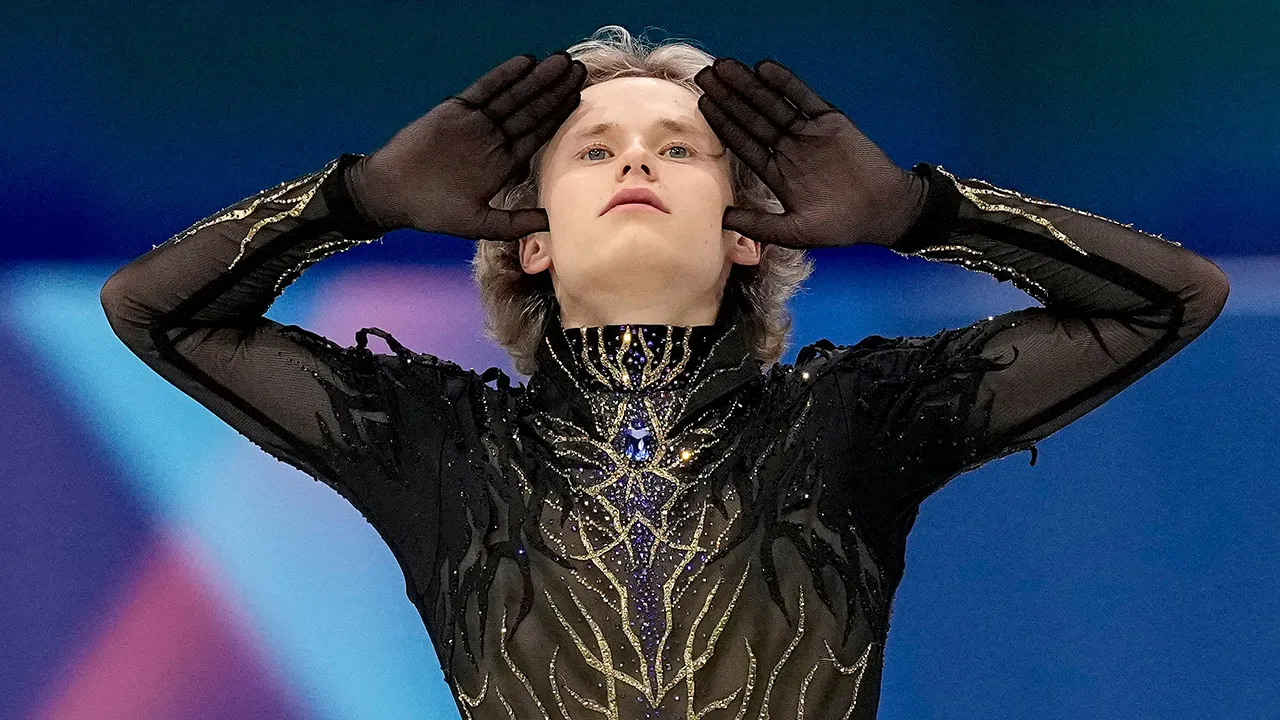
At the 2024 Winter Olympics in Milan, U.S. figure skater Ilia Malinin, often hailed as the “Quad God” for his groundbreaking quadruple jumps, had the world watching. This 19-year-old phenom, who routinely dazzles with scores in the 300s in international competitions, entered the men’s free skate final as a gold medal favorite. He had dominated the short program just days earlier, placing first with a stellar 108.16 points—a testament to his raw talent and precision. Malinin, born in an immigrant family and mentored by legendary coaches, has redefined men’s figure skating with jumps that seemed impossible just a decade ago. His journey from a young prodigy in Colorado to Olympic stardom was built on relentless training and mental resilience. But on Friday night, temperament would play its cruel trick, turning a potential triumph into a heart-wrenching ordeal. As he stood at the edge of the ice, the weight of expectations crashed down, and what unfolded felt like a personal tragedy rather than just a sports defeat.
A Routine Unraveled by Gravity
Malinin’s free skate began promisingly with a connected quad-flip, a jump that thrilled the crowd in the Mediolanum Forum. But then, the air thickened with tension. He downgraded a planned quad axel to a single, and a quad loop that should have been soaring turned into a meager double. The first fall came on a quad Lutz—a twisted landing that sent him sprawling. Before fans could process it, another jump failed, slamming him to the ice again. In a sport where perfection is the currency, these errors were devastating, dropping his score to a mere 156.33—far below his usual brilliance and worlds apart from the 238.24 world record he set in December. Competing against fierce rivals like Kazakhstan’s Mikhail Shaidorov and Japan’s Yuma Kagiyama, Malinin watched as Shaidorov clinched gold with a total of 291.58, Kagiyama took silver, and teammate Shun Sato grabbed bronze. Malinin ended up eighth overall with 264.49, his personal best from 333.81 feeling like a distant memory. It was a performance that left spectators gasping, not in awe, but in disbelief, as if witnessing a superhero’s cape slip.
The Flood of Thoughts and Memories
After leaving the ice, Malinin faced reporters in a raw, unfiltered scrum just outside the arena. Visibly shaken but composed, he shared the turmoil brewing in his mind before the program even started. “My mind became flooded with thoughts and memories,” he confessed, his voice steady but laced with vulnerability. Recalling the highs and lows of his life—from family struggles and immigration challenges to euphoric victories—it felt like an emotional avalanche. At 19, having overcome countless hurdles to reach the Olympics, he hadn’t anticipated how this internal storm would derail him. “I’ve been through a lot in my life, a lot of bad and good experiences,” he explained, articulating a universal truth: even elites battle the fragile human psyche. Fans could relate; many of us have choked under pressure, whether in exams, presentations, or personal milestones. Malinin’s admission humanized him, stripping away the “Quad God” label and revealing the young man grappling with inner demons, making his story one of resilience tinged with fallibility.
The Crushing Weight of Olympic Pressure
Delving deeper, Malinin pinpointed the Olympics’ unique intensity as the culprit. “The pressure of the Olympics, it’s really something different,” he said, emphasizing its isolating nature. Unlike other competitions, the Winter Games amplify every misstep into global scrutiny, turning athletes into national icons or punchlines overnight. This was his first Olympics—at just 19, imagine the gravity of representing a nation while chasing a dream deferred. Four years ago, at 17, he was overlooked for Beijing in favor of veterans, a snub that still stung. Reflecting on that bench press, he admitted, “If I had been in Beijing four years ago, I wouldn’t have skated as poorly.” The confession hinted at unresolved mental scars, showing how past rejections can haunt. For viewers at home, it was a reminder that champions aren’t machines; they’re people. The “flood” wasn’t just fleeting nerves but a confluence of history, hype, and humanity clashing in milliseconds. Malinin spoke of feeling “confident” pre-event, only for the routine to “go by so fast,” robbing him of processing time. It’s a feeling many know—overwhelm in life’s high-stakes moments, where the mind races faster than the body.
Finding Light in Team Triumph
Amid the disappointment, Malinin found a glimmer of hope in the team gold medal he helped secure earlier in the week. “I think that’s definitely a positive for me,” he said, clutching that silver medal like a lifeline. In the pairs and team events, the U.S. shone brightly, and Malinin’s contributions were pivotal. It offered perspective: while individual glory eluded him, collective success validated his talent. He vowed to process the free skate fiasco, understanding “why that happened.” With more Olympics ahead—he’s young enough for 2026 and beyond—Malinin saw this as a lesson in mental preparation. “Going into this competition, I made sure I was prepared for at least four programs,” he noted, yet the Olympics demanded more than physical readiness. It’s a narrative of growth, where setbacks fuel evolution. Personally, I imagine Malinin boarding his flight home, medal in hand, pondering what comes next—perhaps therapy, altered training, or deeper self-reflection. This humanized him further: not as a fallen idol, but a kid learning life’s tough lessons in the spotlight.
A Nation’s Disappointment and Lasting Legacy
Malinin’s eighth-place finish sparked a wave of tristesse across social media and Team USA. Fans who had invested emotionally erupted in shock and support, their comments a mix of empathy and frustration. “The Quad God” trended with heart emojis, as people shared stories of their own underperformance experiences. Yet, in the arena’s glow, Malinin graciously congratulated Shaidorov, embodying sportsmanship over sour grapes. This defeat doesn’t erase his legacy; at 19, he’s already one of the greatest, any Olympic blip a footnote. Future contests will gauge his bounce-back, but for now, it teaches us about vulnerability. As I pondered this, it hit home how public figures mirror our lives—rising high, falling low, and rising again. Malinin’s story reminds us that pressure isn’t the enemy; it’s how we handle the flood that defines us. In a world chasing perfection, his raw honesty is refreshing, making him more relatable than ever. While the Olympics march on, their lessons linger, urging us to celebrate humanity’s quirks over flawless facades.序